
Do Kids Really Need DHA? Food Sources, Omega-3 Benefits & When Gummies Make Sense
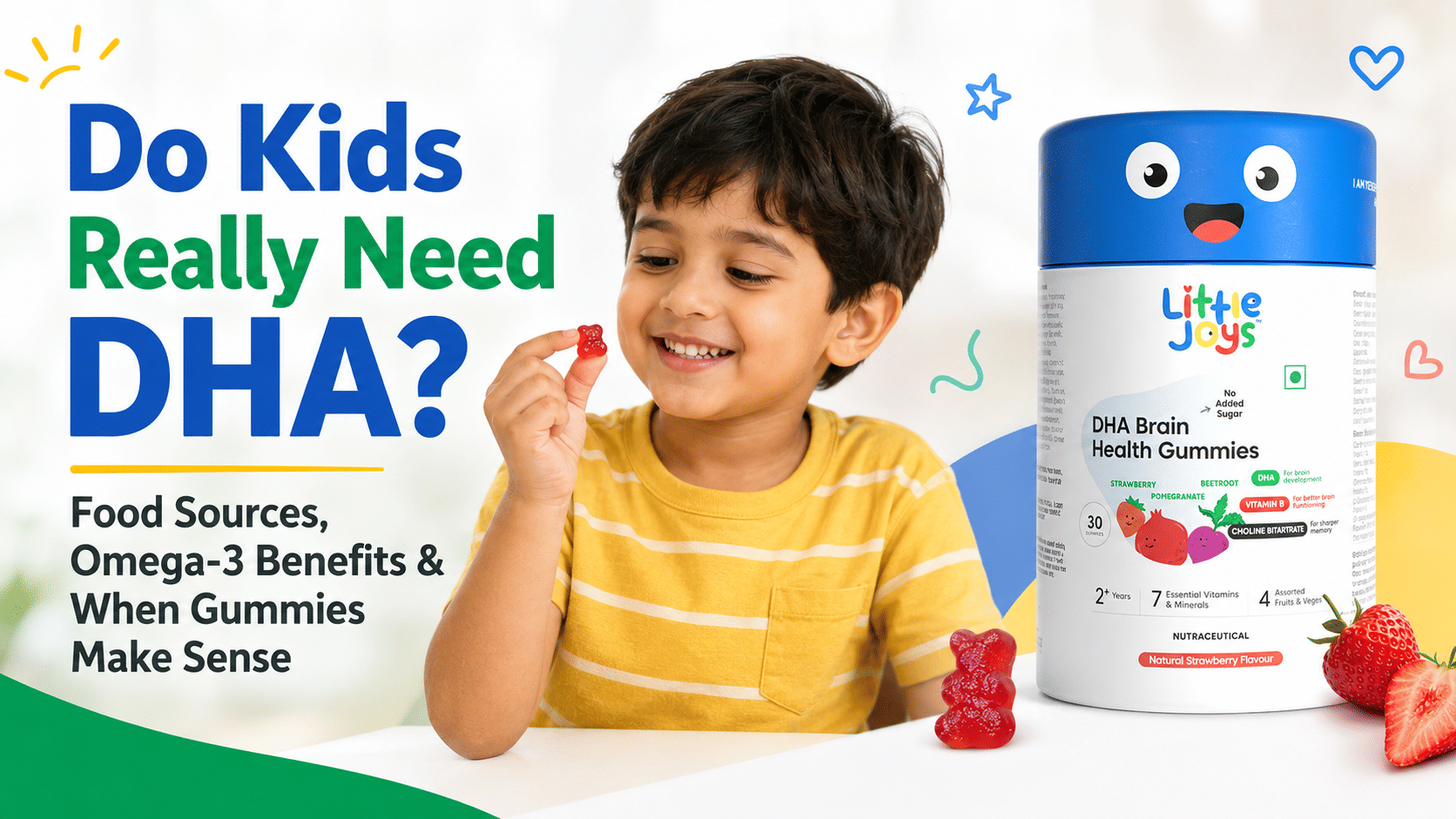
As parents, it is easy to hear the word “DHA” everywhere and wonder one simple thing: does my child actually need DHA, or is it just another supplement trend?
The short answer is: DHA is an important omega-3 fatty acid that plays a role in brain and eye development. Children can get omega-3s through foods like fish, eggs, walnuts, chia seeds, flaxseeds and fortified foods. But for picky eaters, vegetarian families, or kids who do not eat DHA-rich foods regularly, parents may consider a DHA supplement after checking age suitability and medical guidance.
DHA gummies can be one convenient format, especially for kids who struggle with capsules, syrups or strong-tasting fish oil. But they should support a balanced diet, not replace it.
What is DHA?
DHA stands for docosahexaenoic acid. It is a type of omega-3 fatty acid. Omega-3s are essential fats, which means the body needs them but cannot make enough of them on its own. They need to come from food or, in some cases, supplements.
There are three commonly discussed types of omega-3s:
| Type of omega-3 | Common sources | Why parents hear about it |
|---|---|---|
| ALA | Flaxseeds, chia seeds, walnuts, soybean, canola oil | Plant-based omega-3 |
| EPA | Fatty fish, fish oil, some algae sources | Often linked with heart and inflammation support |
| DHA | Fatty fish, fish oil, algae-based sources | Commonly discussed for brain and eye development |
DHA levels are especially high in the retina of the eye, and omega-3s are studied for their role in health and development.
 Little Joys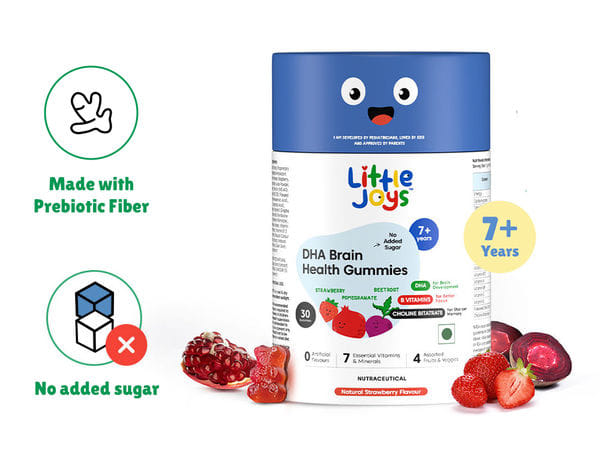
Why is DHA important for kids?
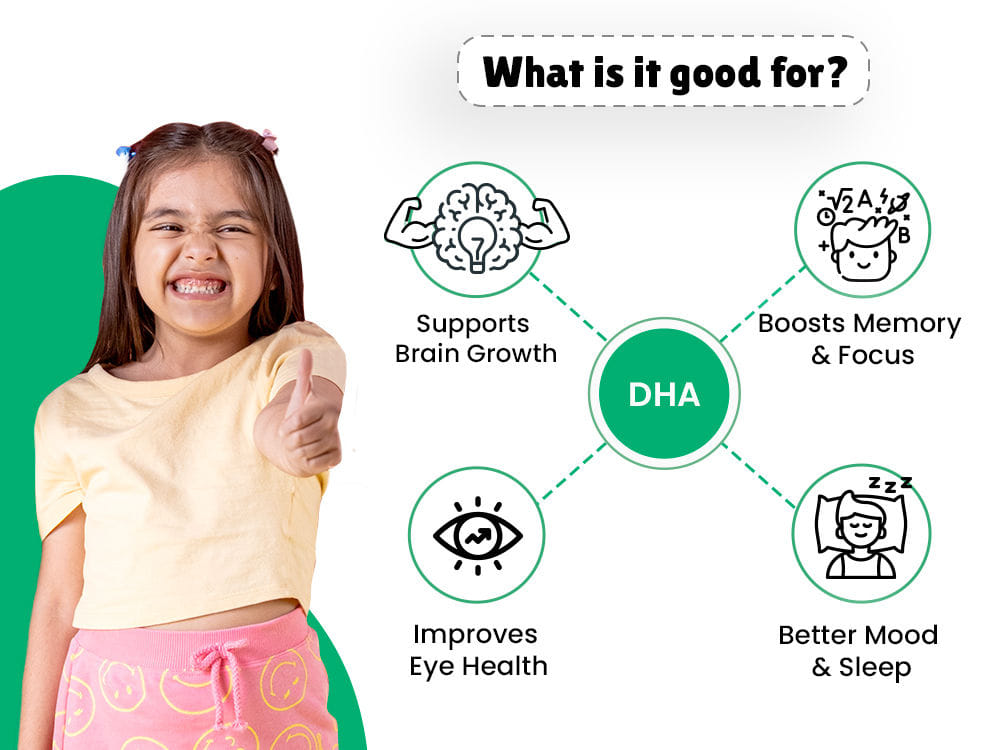
DHA is commonly discussed for children because early childhood and school years are important stages for brain, eye and nervous system development.
DHA does not work like a magic “memory booster.” It is better understood as one of the nutrients that supports normal development, along with protein, iron, zinc, iodine, Vitamin D, B vitamins, choline and an overall balanced diet.
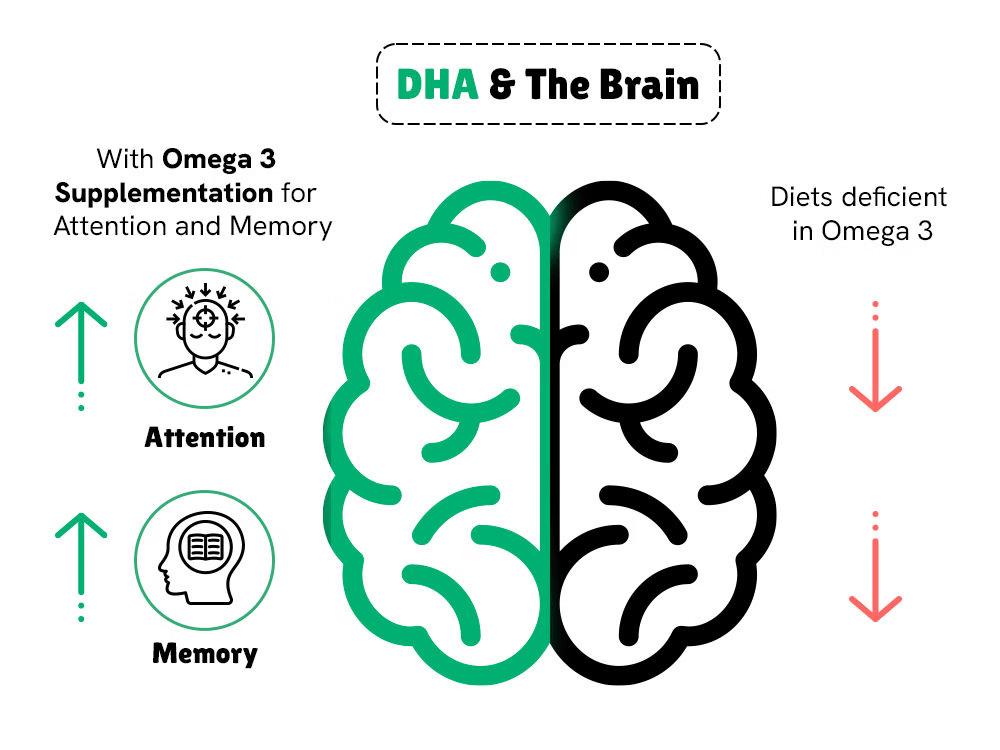
For parents, the practical question is not “Will DHA make my child smarter overnight?” The better question is:
Is my child getting enough DHA or omega-3-rich foods regularly?
If the answer is yes, a supplement may not be necessary. If the answer is no, it may be worth checking food options and, if needed, an age-appropriate DHA supplement.
Do kids need omega-3 every day?
Children need omega-3 fats as part of their regular diet. The Academy of Nutrition and Dietetics lists age-wise daily omega-3 fat needs, including 0.7 g/day for ages 1–3, 0.9 g/day for ages 4–8, and 1.0–1.2 g/day for ages 9–13 depending on gender.
These numbers are for total omega-3 intake, not only DHA. That is why parents should focus on a mix of food sources first.
Best DHA and omega-3 food sources for kids
A food-first approach is always the best starting point.
Good omega-3 food sources for kids include:
- Fatty fish like salmon, sardines and tuna
- Eggs, especially omega-3 enriched eggs
- Walnuts
- Chia seeds
- Flaxseeds
- Soybean
- Fortified foods
- Algae-based DHA sources
For Indian households, omega-3 intake can be tricky because many children do not eat fish regularly. Vegetarian children may get ALA from nuts and seeds, but conversion from ALA to DHA in the body is limited. This is where parents often start looking for DHA-rich fortified foods or algal DHA supplements.
Does a vegetarian child need DHA?
Not always. A vegetarian child can still get omega-3s from foods like walnuts, chia seeds and flaxseeds. But these mostly provide ALA, not direct DHA.
If a child does not eat fish, eggs or DHA-fortified foods, parents can speak to a pediatrician or nutritionist about whether an algal DHA option makes sense. Algal DHA is plant-derived and is often preferred by vegetarian families looking for a direct DHA source.
When do DHA gummies make sense for kids?
DHA gummies may make sense when:
- The child does not eat fish or DHA-rich foods regularly
- The child is vegetarian and has limited direct DHA sources
- The child is a picky eater
- The child refuses capsules, syrups or fish oil
- Parents want an easy chewable format
- The product is age-appropriate and clearly labelled
DHA gummies should not be used as a replacement for meals. They should be seen as a supportive option for nutritional gaps.
What should parents check before choosing DHA gummies?
Before choosing DHA gummies for kids, parents should check:
Age suitability
A 2-year-old and a 9-year-old do not have the same needs. Pick a product meant for the child’s age group.
DHA source
Check whether the DHA comes from fish oil or algal sources.
Added sugar
Many gummies taste good because of sugar. Look for options with zero added sugar or cleaner sweetening systems.
Other nutrients
DHA works well when the child’s overall nutrition is also taken care of. Nutrients like choline, B vitamins, zinc and Vitamin D may also matter in daily nutrition.
Medical guidance
For younger kids, existing health conditions, allergies, medication use or special dietary needs, parents should check with a pediatrician or certified nutrition expert.
Safety and label clarity
NCCIH notes that omega-3 supplements usually do not have negative side effects, but minor gastrointestinal symptoms can occur. It also advises caution for fish or shellfish allergies and for people taking anticoagulants or NSAIDs because omega-3s may extend bleeding time.
DHA gummies for 2–6 years and 7–12 years
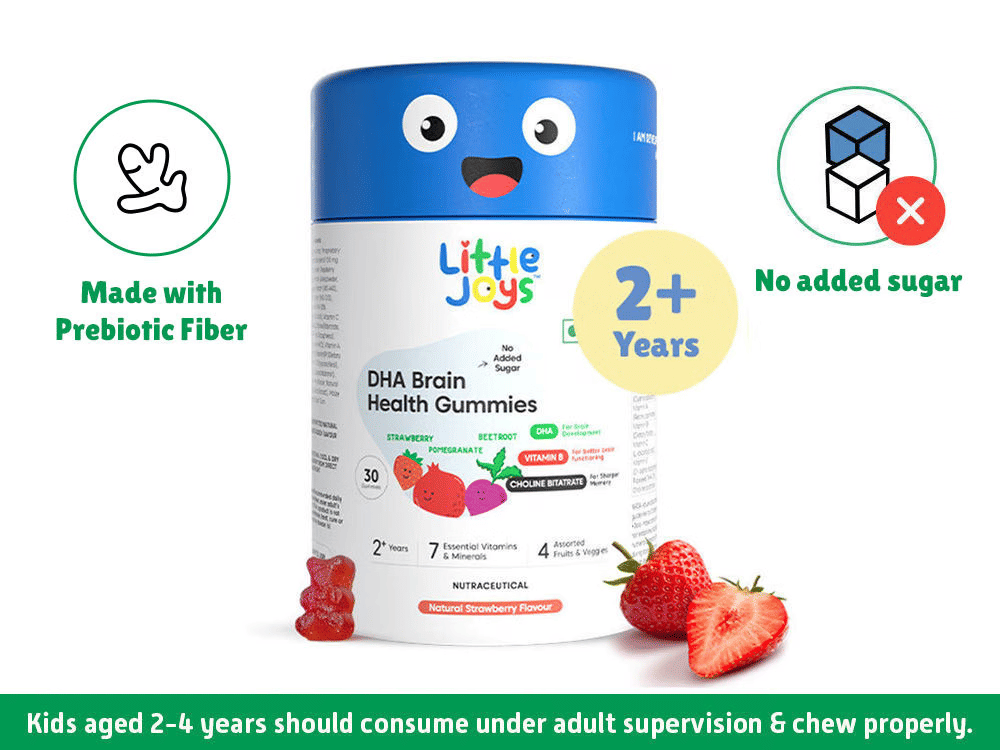
For parents looking for an age-specific chewable DHA option, Little Joys DHA Omega3 Brain Gummies are available in separate variants for 2–6 years and 7–12 years.
Little Joys
The Little Joys DHA Omega3 Brain Gummies 2+ product page mentions DHA + Choline, 8 nutrients, 4 fruits and veggies, zero added sugar, and one gummy a day for kids aged 2 years or older. It also clearly states that for children aged 2–5 years, the product should be given only under medical advice from a physician, certified dietician or nutritionist.
The Little Joys DHA Omega3 Brain Gummies 7+ variant is made for older kids and mentions DHA + Choline, 8 nutrients, 4 fruits and veggies, zero added sugar, and suitability for ages 7+.
Little JoysThis makes the recommendation more practical for parents because the product is not positioned as one common gummy for every child. It is separated by age group, which is important when choosing supplements for kids.
DHA gummies vs multivitamin gummies: what is the difference?
DHA gummies and multivitamin gummies are not the same thing.
| Parent concern | Better fit |
|---|---|
| Child does not eat DHA-rich foods | DHA gummies |
| Child is vegetarian and lacks direct DHA sources | DHA gummies, after guidance |
| Child has general daily vitamin gaps | Multivitamin gummies |
| Child is a picky eater with limited food variety | Multivitamin gummies may help support broader gaps |
| Parent wants brain-health focused support | DHA gummies with DHA + Choline |
| Parent wants immunity, bone, eye and daily vitamin support | Multivitamin gummies |
For broader daily nutrition support, Little Joys Multivitamin Gummies can be considered as a chewable option. The 2+ variant mentions 11+ vitamins and minerals, 6 real fruits and vegetables, Vitamin C, Haldi, Vitamin B12, Zinc, zero added sugar, and no artificial colours, flavours or preservatives. It also states medical advice is required for children aged 2–5.
Little JoysFor older kids, the Little Joys Multivitamin Gummies 7+ page mentions 11+ vitamins and minerals, 6 real fruits and vegetables, zero added sugar, Vitamin C, Haldi, Vitamin B12 and Zinc, along with support areas like immunity, bone health, brain health, eyesight, hair and skin.
So, a simple way to understand it is:
DHA gummies are more specific. Multivitamin gummies are broader.
If the main gap is DHA or omega-3 intake, a DHA gummy may make more sense. If the concern is daily micronutrient support due to picky eating, a multivitamin gummy may be more relevant.
Can kids take DHA gummies and multivitamin gummies together?
Some kids may be able to take both, but parents should not randomly combine supplements.
Before giving more than one supplement, check:
- The child’s age
- Daily dosage
- Nutrient overlap
- Existing diet
- Any medical condition
- Pediatrician or nutritionist guidance
This is especially important for children below 5 years, children with allergies, or children already taking other supplements.
So, do kids really need DHA gummies?
Not every child needs DHA gummies.
A child who regularly eats DHA-rich foods may already be getting enough through diet. But DHA gummies can be useful for children who do not get enough DHA-rich foods, especially picky eaters, vegetarian kids, or children who do not consume fish, eggs or fortified foods regularly.
The best approach is:
- Start with DHA and omega-3-rich foods.
- Check if the child’s diet has regular sources.
- Choose age-appropriate supplements only if needed.
- Prefer clear labels and zero added sugar formats.
- Take medical guidance for younger kids or special health concerns.
For parents looking specifically for a chewable DHA option, Little Joys DHA Omega3 Brain Gummies for 2–6 years and 7–12 years can be considered based on the child’s age and nutritional routine. For broader daily vitamin support, Little Joys Multivitamin Gummies may be a better fit.
FAQs
1. Do kids really need DHA?
Kids need omega-3 fats as part of a balanced diet, and DHA is one important omega-3 linked with brain and eye development. Not every child needs a DHA supplement, but children who do not eat DHA-rich foods regularly may need extra attention to their omega-3 intake.
2. What are the best DHA foods for kids?
Fatty fish, eggs, DHA-fortified foods and algae-based sources are good DHA sources. For vegetarian kids, walnuts, chia seeds and flaxseeds provide ALA, a plant omega-3, but not direct DHA.
3. Are DHA gummies safe for kids?
DHA gummies can be safe when they are age-appropriate, taken as directed, and chosen carefully. Parents should check labels, dosage, allergies and medical guidance, especially for younger children.
4. What age can kids start DHA gummies?
This depends on the product. Little Joys DHA Omega3 Brain Gummies 2+ are for kids aged 2 years or older, but the product page mentions that children aged 2–5 should take it only under medical advice from a physician, certified dietician or nutritionist.
5. Are DHA gummies better than fish oil?
DHA gummies may be easier for kids to consume because they are chewable and taste-friendly. Fish oil may have a stronger taste or smell. The better choice depends on the child’s age, diet, preference, allergies and the DHA source.
6. Is DHA better than a multivitamin for kids?
DHA and multivitamins serve different purposes. DHA is more focused on omega-3 and brain-health support, while multivitamins support broader daily vitamin and mineral gaps. The right choice depends on what is missing in the child’s diet.
7. Can picky eaters take DHA gummies?
Picky eaters who do not eat DHA-rich foods may benefit from a DHA supplement, but parents should first look at the child’s full diet. DHA gummies should support nutrition gaps, not replace meals.
8. Can my child take DHA gummies daily?
Many DHA gummies are designed for daily use, but parents should follow the product label and consult a pediatrician or nutritionist for younger children, medical concerns or multiple supplements.
9. Which Little Joys DHA gummy should I choose?
For younger kids, Little Joys has DHA Omega3 Brain Gummies 2+ for the 2–6 years age group. For older children, Little Joys has DHA Omega3 Brain Gummies 7+ for the 7–12 years age group. Choose based on the child’s age and follow the usage guidance on the pack.
10. What is better for daily nutrition: DHA gummies or multivitamin gummies?
For DHA and omega-3 support, DHA gummies are more relevant. For broader daily vitamin and mineral support, multivitamin gummies are more relevant. Some parents may consider both, but it is better to check with a pediatrician or nutritionist before combining supplements.