
How to Make Kids Drink Milk Everyday (Without the Fight)

Milk refusal is one of the most common daily battles in Indian households with young children. One day they drink it without complaint, the next it becomes a 20-minute standoff. And since milk is a primary calcium and protein source for most Indian children, skipping it regularly has real nutritional consequences.
The good news: there are practical, non-confrontational ways to make milk a non-issue.
 Little Joys
Why Children Refuse Milk
Understanding the reason behind refusal helps you solve it more effectively.
Taste fatigue - Plain warm milk has a particular smell and flavour that many children, especially those aged 3-8, begin to find unappealing after months of the same thing. This is the most common reason.
Temperature sensitivity - Some children who tolerate cold milk refuse warm milk and vice versa. The preference is real and worth testing.
Texture issues - Children with sensory sensitivities may react to the slight film that forms on warm milk. Blending, frothing, or using a straw can resolve this.
Association with being forced - Once a child has been pressured to drink milk repeatedly, the drink itself can trigger resistance independent of taste or texture.
Underlying lactose sensitivity - Bloating, gas, or stomach discomfort after milk causes children to associate it with feeling unwell. If this is the case, the solution is a dietary shift rather than persuasion.
Practical Tips That Actually Work
Change the temperature If your child resists warm milk, try it cold. If they resist cold, try warm with a dash of jaggery. Temperature is often the easiest variable to adjust and the one most parents overlook.
Add flavour with real ingredients A pinch of haldi and a small amount of jaggery in warm milk is one of the most accepted combinations - the sweetness masks the milk taste without adding refined sugar. A small amount of good-quality cocoa powder (unsweetened) achieves the same for older children.
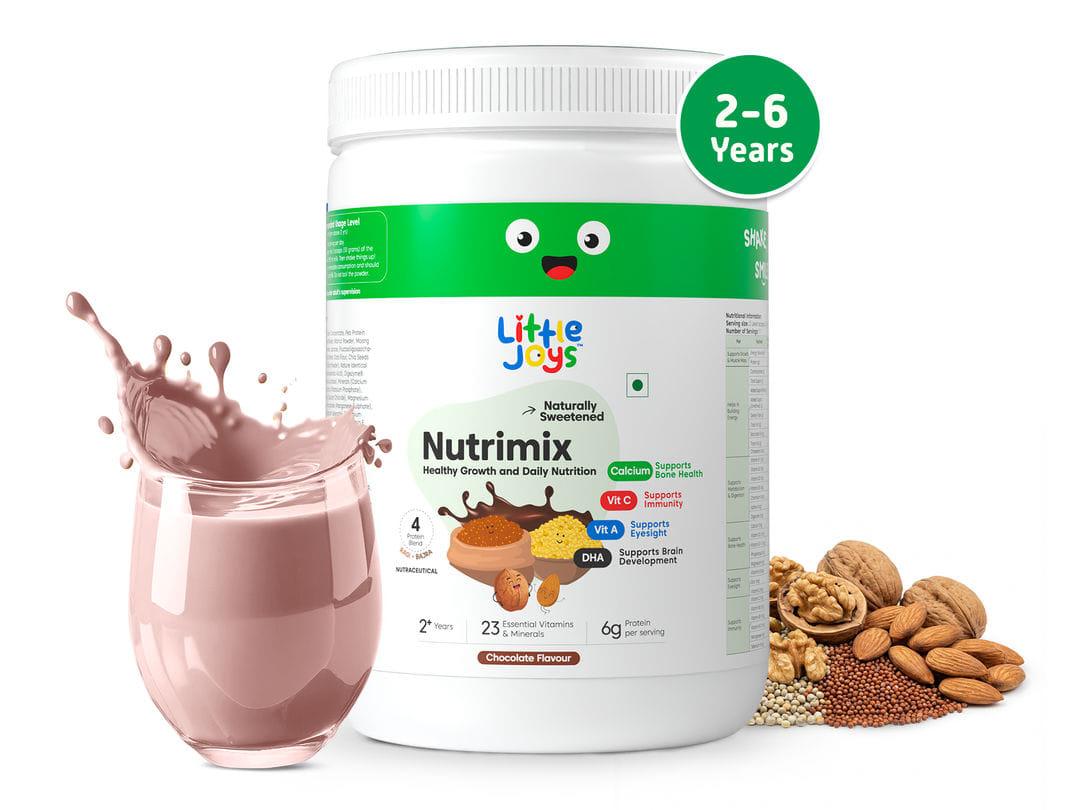
Use a nutrition powder they enjoy A well-formulated nutrition powder mixed into milk serves two purposes: it makes the milk more palatable and delivers additional protein, calcium, and micronutrients in the same glass. The flavour does the persuasion.
When choosing a powder to mix into milk, look for: zero refined sugar, a whole grain base that dissolves well, and a flavour your child genuinely enjoys rather than tolerates.
Make it a ritual, not a demand Children respond better to routines than commands. A consistent time - same cup, same place, same sequence - removes the negotiation from the equation. "After brushing teeth" or "before school bag is packed" works better than "drink your milk now."
Serve it with something they love Pairing milk with a preferred food - a piece of fruit, a small snack - makes the drink feel like part of a positive experience rather than an obligation. The food does not need to be dependent on the milk; just concurrent.
Try alternate dairy forms Curd, paneer, and buttermilk deliver much of the same calcium and protein as milk in forms many children accept more readily. On days when milk is refused, these are nutritionally adequate substitutes rather than failures.
When to Use a Nutrition Powder vs Plain Milk
For children who accept plain milk without resistance, keeping it simple is fine - plain milk with perhaps a small amount of jaggery is nutritionally solid.
For children who consistently resist plain milk, a nutrition powder converts milk from a battleground to a preferred drink. It is a practical tool, not a concession.
What to look for in a nutrition powder used as a milk mix:
- Zero refined sugar - adding sugar to milk is what most commercial mixes already do; the powder should not add more
- A whole grain base that mixes well without clumping
- A flavour range the child can choose from - having some control over flavour reduces resistance significantly
- Vitamin D3 and calcium together - since milk is already the calcium delivery vehicle, a powder that adds D3 ensures that calcium is actually absorbed
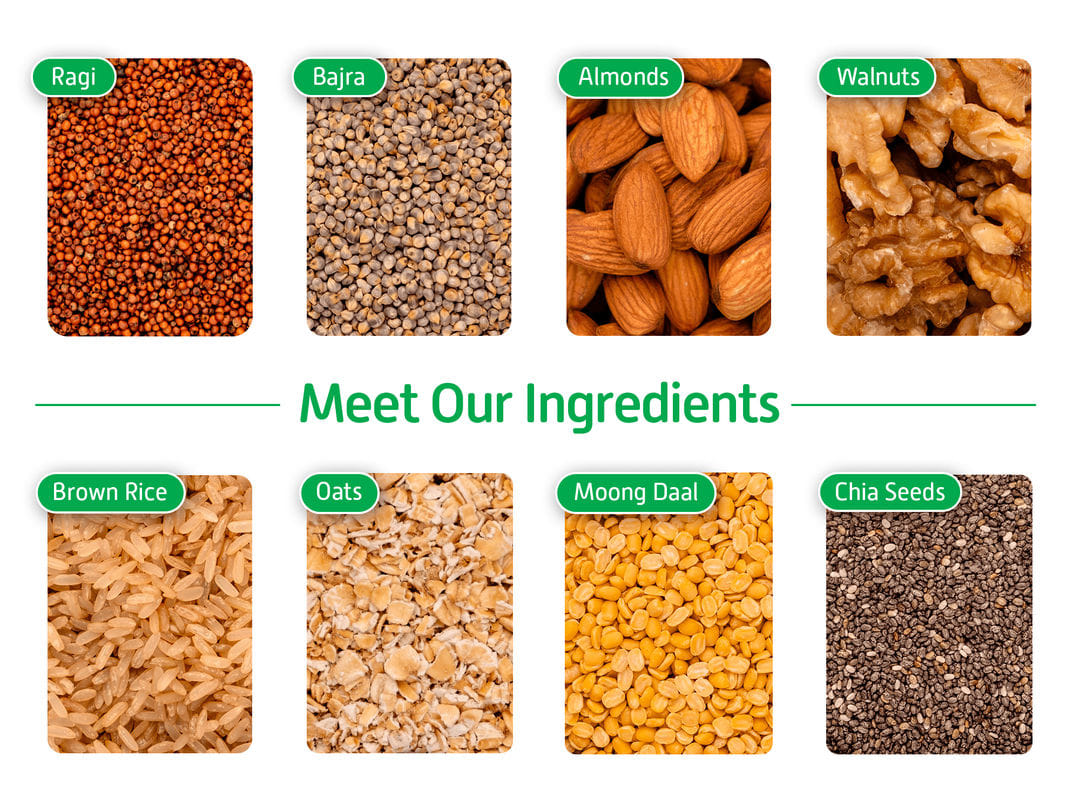
Little Joys NutriMix mixes into warm or cold milk and is available in chocolate, strawberry, and vanilla. It is built on a ragi and bajra base with zero refined sugar, plant protein from moong dal and peas, and 23 vitamins and minerals including D3 and calcium. For children who have turned milk refusal into a daily habit, introducing NutriMix alongside the milk often breaks the pattern within a week.
FAQ
Q: How much milk should a child drink per day?
For children aged 2-6, 300-400ml per day covers a significant portion of daily calcium needs. For children aged 7-12, 400-500ml is a reasonable target. This can be split across meals - milk, curd, and paneer together count toward the total.
Q: What if my child is lactose intolerant?
Lactose-free milk, plant milks fortified with calcium, and dairy alternatives like curd (lower in lactose) are practical substitutes. NutriMix can be mixed into plant-based milks as well.