
Nutrition Tips for Kids During Summer Holidays
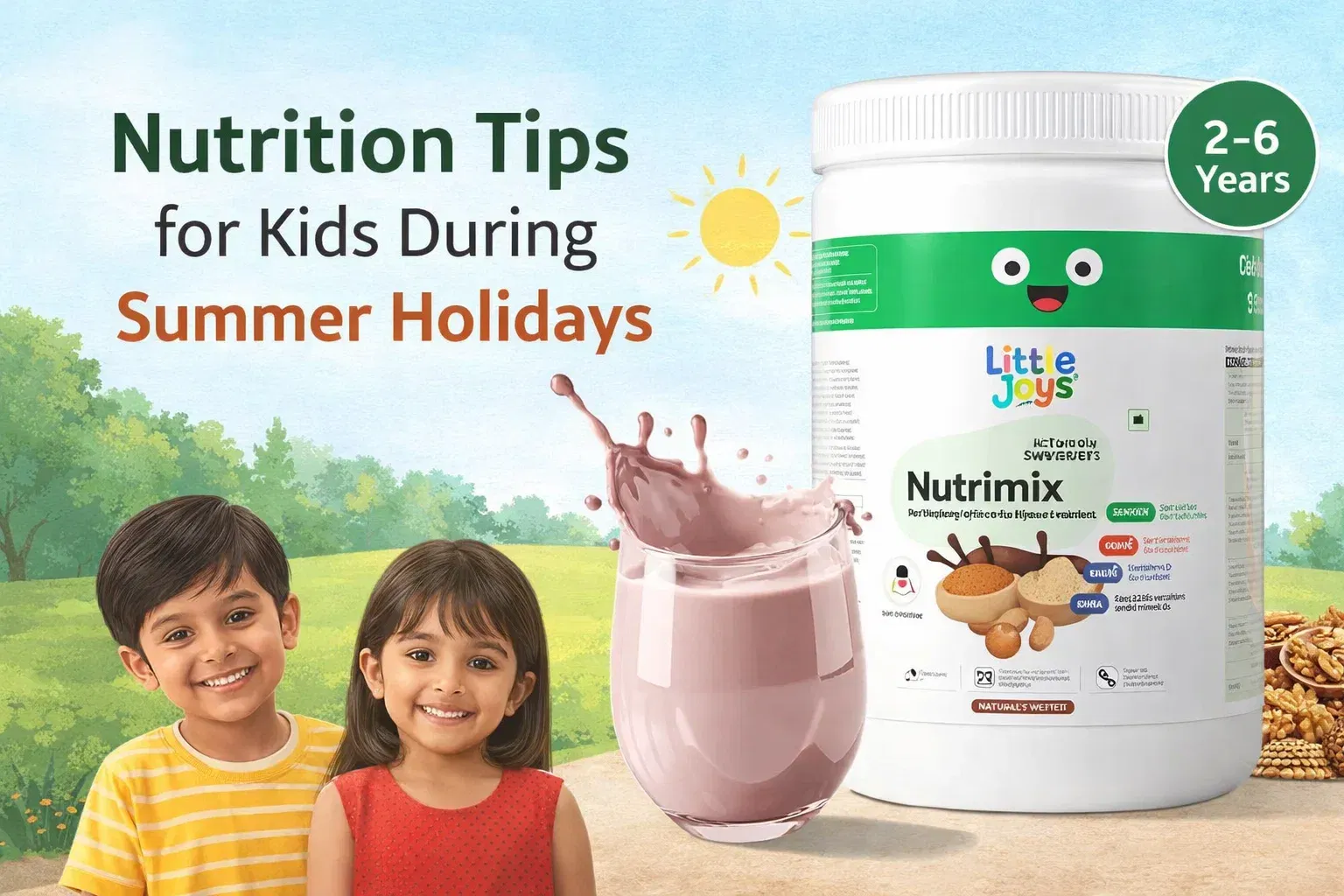
Summer holidays disrupt the three things that keep children's nutrition on track: meal timing, food variety, and hydration. The result is irregular eating, more processed snacks, and a gradual drop in key nutrients - iron, zinc, protein, and calcium - that parents notice only when energy and appetite problems become obvious. Here is how to maintain nutrition through the holiday months without making it a battle.
The Core Summer Nutrition Challenges
Appetite drops in heat
Children naturally eat less when hot. This is physiologically normal but becomes a problem when it lasts for weeks. The instinct to offer cold, sweet, or processed foods to encourage eating backfires nutritionally - these foods are calorie-dense but low in the protein, iron, and zinc that growing children need through summer.
 Little Joys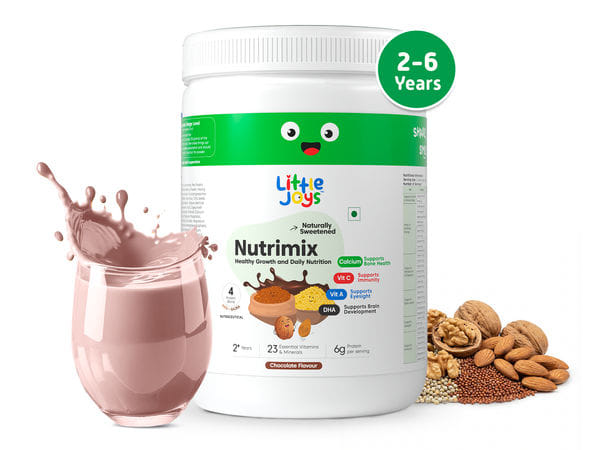
Hydration is consistently underestimated
Most parents offer water reactively (when a child complains of thirst) rather than proactively. By the time thirst signals register, a child is already 1-2% dehydrated - enough to cause fatigue, headache, and reduced concentration. Active children in Indian summer can lose 500ml-1L of fluid per hour during outdoor play.
Routine loss removes nutritional anchors
School days structure when children eat and what categories of food appear. Without that structure, meals become irregular, snacking increases, and protein sources (dal at lunch, eggs at breakfast) are skipped more often.
Practical Nutrition Tips for the Holiday Months
Keep one protein source non-negotiable at every meal
Even if lunch is lighter than usual, include a protein anchor - curd, paneer, dal, or eggs. Protein maintains satiety, supports growth through the summer growth phase, and prevents the muscle loss that can happen when activity increases but eating decreases.
Shift to hydrating foods as much as possible
Cucumber, watermelon, curd, coconut water, and diluted amla juice all provide hydration alongside nutrition. These are more effective than plain water for children who resist drinking enough, because they come with electrolytes, Vitamin C, and natural sugars that improve absorption.
Use cold formats for supplement delivery
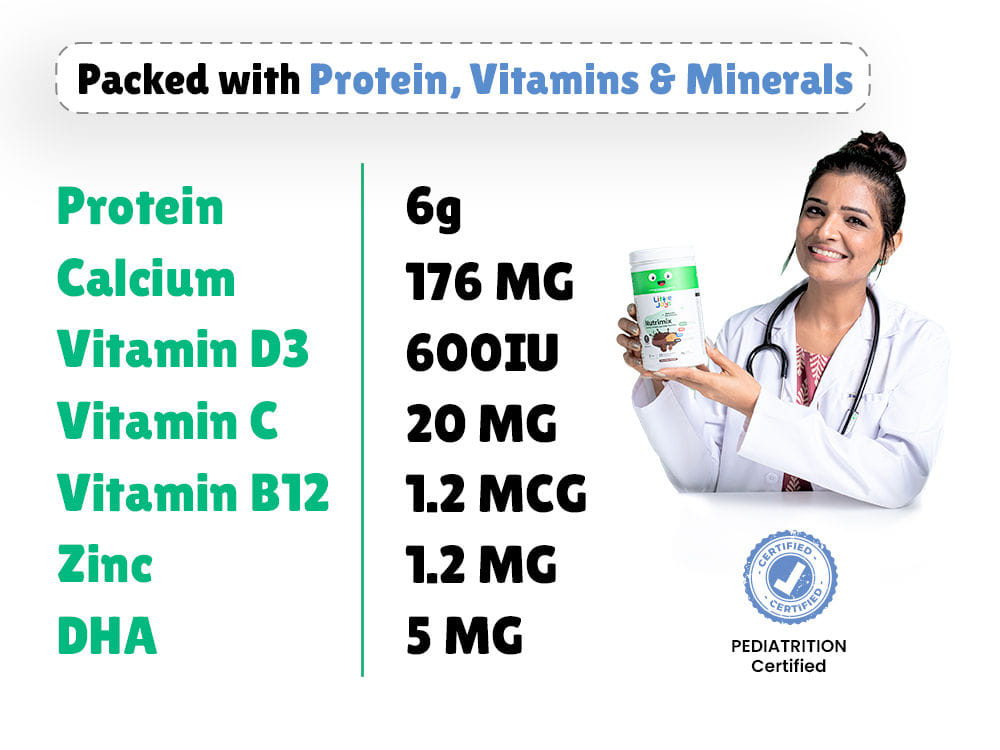
If your child's appetite drops in summer, a cold milk smoothie with NutriMix is more accepted than a warm morning drink. The same nutritional value - protein, calcium, ragi and bajra minerals, 23 vitamins and minerals - in a cold format that children accept even when appetite is low.
Maintain the daily supplement habit regardless of meal irregularity
The multivitamin gummy routine is most valuable on the days when eating is lightest. Summer is precisely the period when the nutritional safety net matters most - so resist the instinct to drop the supplement routine when meals become irregular.
Reduce added sugar in summer drinks
Store-bought fruit drinks, packaged juices, and commercial electrolyte powders marketed for children often contain 15-25g of sugar per serving. This sugar load worsens dehydration and reduces gut health over a sustained summer holiday. Coconut water, diluted amla juice, or plain water with a pinch of rock salt and lime are better electrolyte sources.
Summer Foods Worth Including Daily
Amla - the most concentrated Vitamin C source available in India, heat-stable in powder form. Mixed into a cold smoothie or lassi, it covers daily Vitamin C requirements and provides antioxidant protection against summer oxidative stress.
Ragi in cold formats - ragi malt served cold, ragi cookies, or NutriMix in a cold smoothie provides calcium, iron, and complex carbohydrates without the heat aversion many children develop to warm foods in summer.
Supplements to Keep Consistent Through Summer
Little Joys Multivitamin Gummies - covers zinc, Vitamin C, D3, and B12 in a prebiotic gummy. Summer-specific benefit: the chicory root base supports gut health through a season of higher gut-stress food exposure.
Little JoysLittle Joys NutriMix - protein, calcium, ragi, and 23 vitamins in a cold-friendly drink format. Particularly useful when children resist solid meals in the heat.
FAQ
Q: My child barely eats in summer - should I be worried?
A 10-20% reduction in appetite during peak summer is normal and physiological. Monitor weight and energy levels rather than plate consumption. If energy is reasonable and the child is hydrated and growing, reduced eating in heat is generally not a concern. Focus on nutrient density in the food they do eat rather than volume.