
Why Tomato Sauce Can Be a Healthy Addition to Kids' Meals
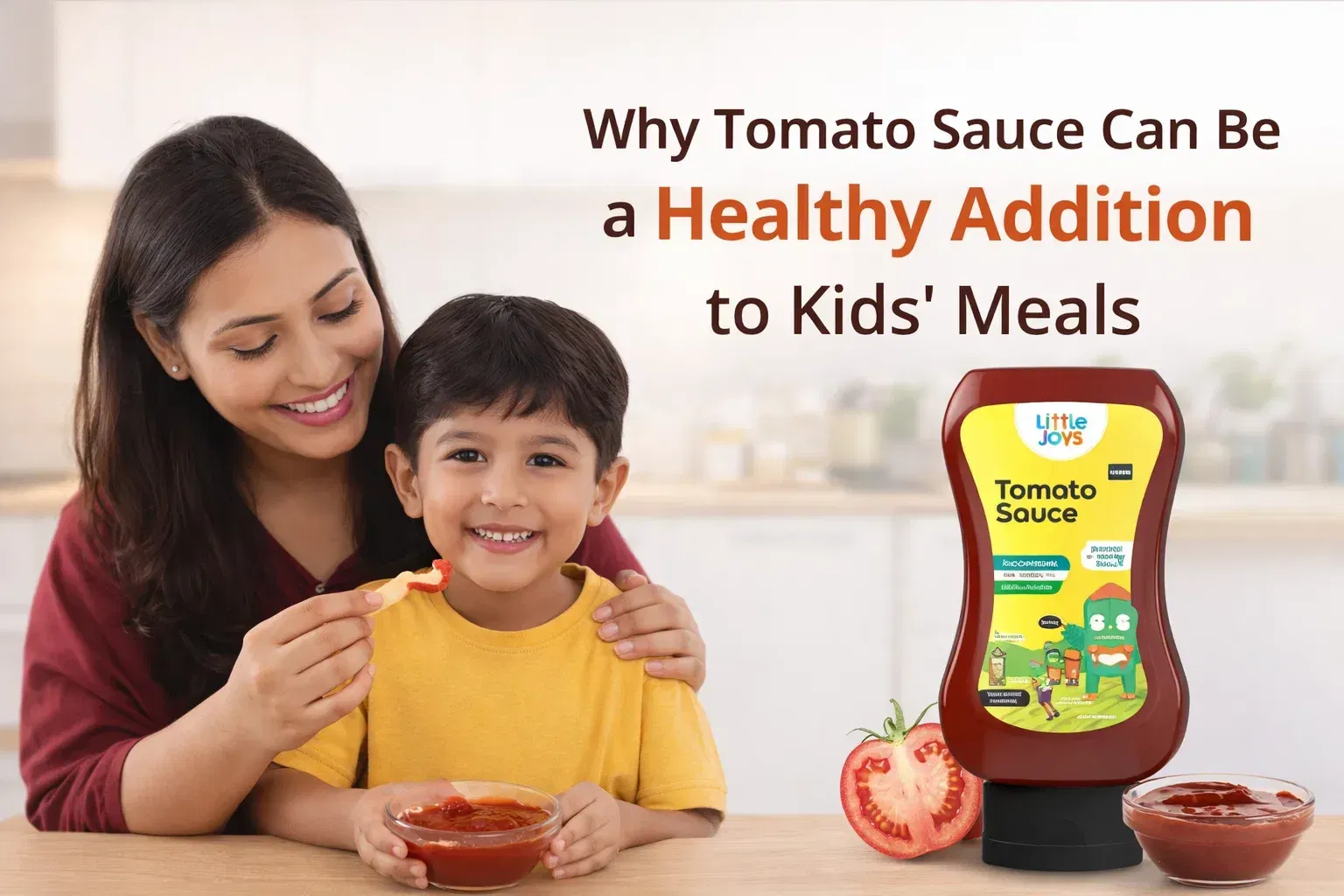
Tomato sauce made from real tomatoes with no added refined sugar is genuinely nutritious - not just a condiment. Cooked tomatoes are one of the richest dietary sources of lycopene, a carotenoid antioxidant that protects cells from oxidative damage, and the cooking process actually increases lycopene bioavailability compared to raw tomatoes. The distinction is between a real tomato sauce and a sugar syrup with tomato flavouring, which is what most commercial ketchups are.
 Little Joys
_21kcg1.jpg?tr=w-600)
What Tomato Sauce Contributes Nutritionally
Lycopene - the most studied antioxidant in tomatoes. Lycopene concentrates in cooked tomato products more than in raw tomatoes because heat breaks down cell walls, releasing bound lycopene. A tablespoon of good tomato sauce provides more bioavailable lycopene than a whole raw tomato. In children, lycopene supports immune cell protection and long-term cardiovascular health.
Vitamin C - tomatoes are a meaningful Vitamin C source at around 20-23 mg per 100g raw. Some Vitamin C is lost during cooking, but high-tomato-content sauces still contribute to daily intake. For context on daily Vitamin C requirements, see the Vitamin C for Kids guide.
Potassium - around 237 mg per 100g of tomatoes, supporting nerve function and fluid balance. Children who sweat during outdoor activity lose potassium alongside sodium, and tomato-based foods contribute to daily replenishment alongside bananas and curd.
Chromium and other trace minerals - tomatoes provide modest amounts of chromium (involved in glucose metabolism) and other trace minerals that contribute to daily micronutrient totals without being a primary source.
Why Most Commercial Ketchup Does Not Count
The nutritional benefits above apply to real tomato sauce - products where tomatoes represent 60-80%+ of the content. Standard commercial ketchup typically contains only 12-25% tomatoes, with the remainder being sugar, vinegar, and starch. At these concentrations, the lycopene and Vitamin C per serving are low, and the sugar contribution is high.
For context on what to check on a tomato sauce label, see Healthy Tomato Sauce for Kids: What to Look For.
How to Use Tomato Sauce as a Gateway Food
Children who resist vegetables often accept tomato sauce as a condiment - with idli, dosa, parathas, millet pancakes, or pasta. This is nutritionally useful: the sauce delivers lycopene and Vitamin C even in small quantities, and the familiarity of the flavour can make new foods more acceptable.
Tomato sauce as a base for pasta, dipping sauce for bajra crackers, or mixed into rice alongside dal provides nutritional value while serving the acceptance function that makes it worth including in a child's diet.
Little Joys Tomato Sauce uses real tomatoes as the primary ingredient with no added refined sugar, in No Onion No Garlic and regular variants. Clean ingredient list, appropriate sodium levels for children.
-> View Little Joys Tomato Sauce
Little JoysFAQ
Q: Is tomato sauce appropriate for children under 2?
Cooked tomato in any form is appropriate from 8-10 months as a puree or sauce. For jarred or packaged sauces, check the sodium content - under 200 mg per 100g is appropriate for toddlers. Avoid high-sodium commercial ketchup for children under 2.
Q: Does cooking tomato sauce destroy the nutrients?
Vitamin C reduces by 30-50% during cooking. However, lycopene bioavailability increases significantly with heat - making cooked tomato sauce a better lycopene source than raw tomatoes. The net nutritional exchange is broadly positive for cooked real tomato sauce.