
How to Ensure Proper Nutrition for Growing Kids
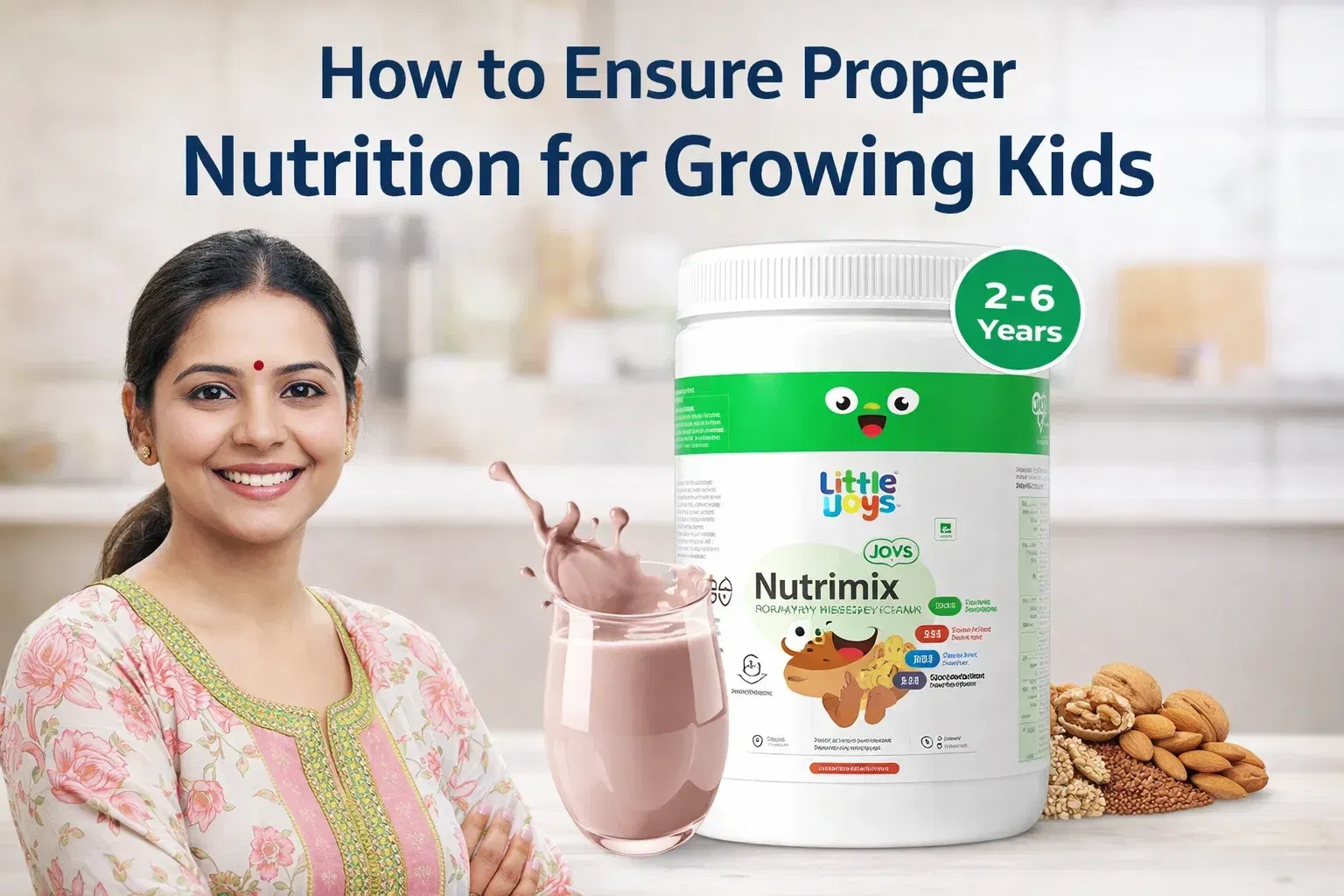
Growing children need more than just calories. They need the right combination of protein, minerals, vitamins, and healthy fats - in the right amounts, at the right stage of development. Getting this right consistently is one of the most valuable things a parent can do.
The challenge is that most children don't eat as varied a diet as the textbooks assume. And most nutrition advice doesn't account for real Indian family meals, picky eaters, or time-pressed mornings.
The Nutritional Foundation: What Kids Actually Need
Protein for growth and repair Protein is the building block of every cell - muscle, organ, skin, and immune tissue all depend on adequate daily protein. Children aged 2-6 need around 13-20g per day, rising to 35-40g for school-age children.
Best sources: Eggs, dal, paneer, curd, moong, rajma, and for non-vegetarians, chicken and fish. A bowl of dal with rice covers a significant portion of daily protein for most Indian toddlers.
Calcium and Vitamin D3 for bone development The first 10 years of life are when the majority of peak bone mass is built. Calcium intake during this window directly determines bone density in adulthood. But calcium cannot be absorbed without adequate Vitamin D3 - urban Indian children are almost universally low on D3 due to limited midday sun exposure.
 Little Joys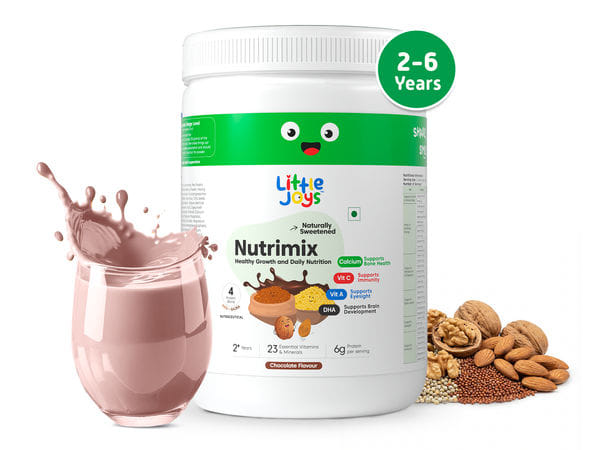
Best food sources: Milk, curd, paneer, ragi (the richest plant-based calcium source available in India), and sesame seeds.
Iron for energy and immunity Iron carries oxygen to every cell. Low iron means persistent fatigue, reduced immunity, and for young children, impaired cognitive development. Iron-rich foods (ragi, leafy greens, rajma, liver) absorb better when eaten alongside a Vitamin C source - amla, tomato, or lime at the same meal.
Healthy fats for brain development The brain is 60% fat by dry weight. Omega-3 fatty acids - particularly DHA - are essential for neural development, attention, and visual processing. Walnuts, flaxseed, and algal DHA supplements are the best plant-based sources. Ghee and coconut oil provide beneficial saturated fats for cooking and energy in young children.
Fibre for gut health A diverse microbiome depends on dietary fibre variety. Dal, whole grains like ragi and bajra, fruits, and vegetables all contribute. A healthy gut directly supports immune function - 70% of immune regulation happens in the gut.
The Most Common Nutrition Gaps in Indian Children
Even in families that cook thoughtfully, these gaps appear consistently:
- Vitamin D3 - sun-dependent, not food-sourced adequately
- Zinc - low in predominantly grain-based diets without regular eggs or legumes
- - essential but found only in animal products; vegetarian children are at risk
- DHA Omega-3 - limited in typical Indian diets unless fish is eaten regularly
- Iron - widespread among toddlers, particularly girls over age 2
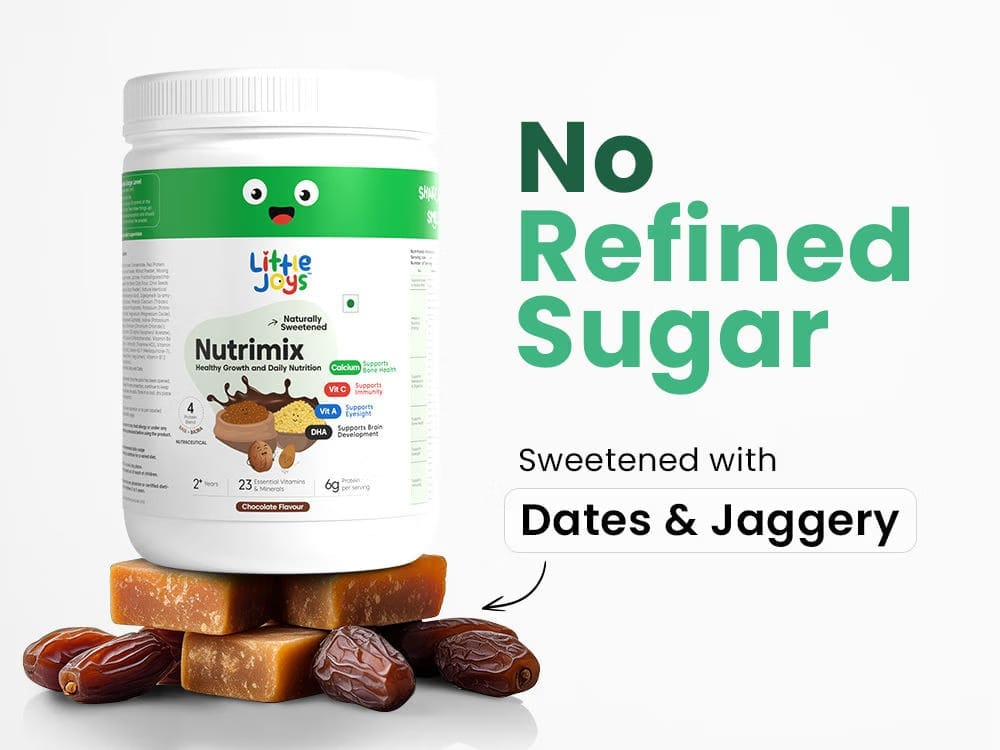
Nutrimix Chocolate Nutrition Powder
No refined sugar or maltodextrin.
Naturally sweetened with dates and jaggery.
5g of protein per serving of Nutrimix for kids aged 2-6 and 7-13 years
Boosts immunity with superfoods like ragi & bajra and 23 vitamins & minerals.
Practical Steps to Cover Nutrition Daily
Build meals around the plate method Half the plate: dal, sabzi, or a protein source. Quarter: whole grain (ragi roti, bajra khichdi, brown rice). Quarter: vegetables or curd. This simple structure covers most nutritional bases without complex meal planning.
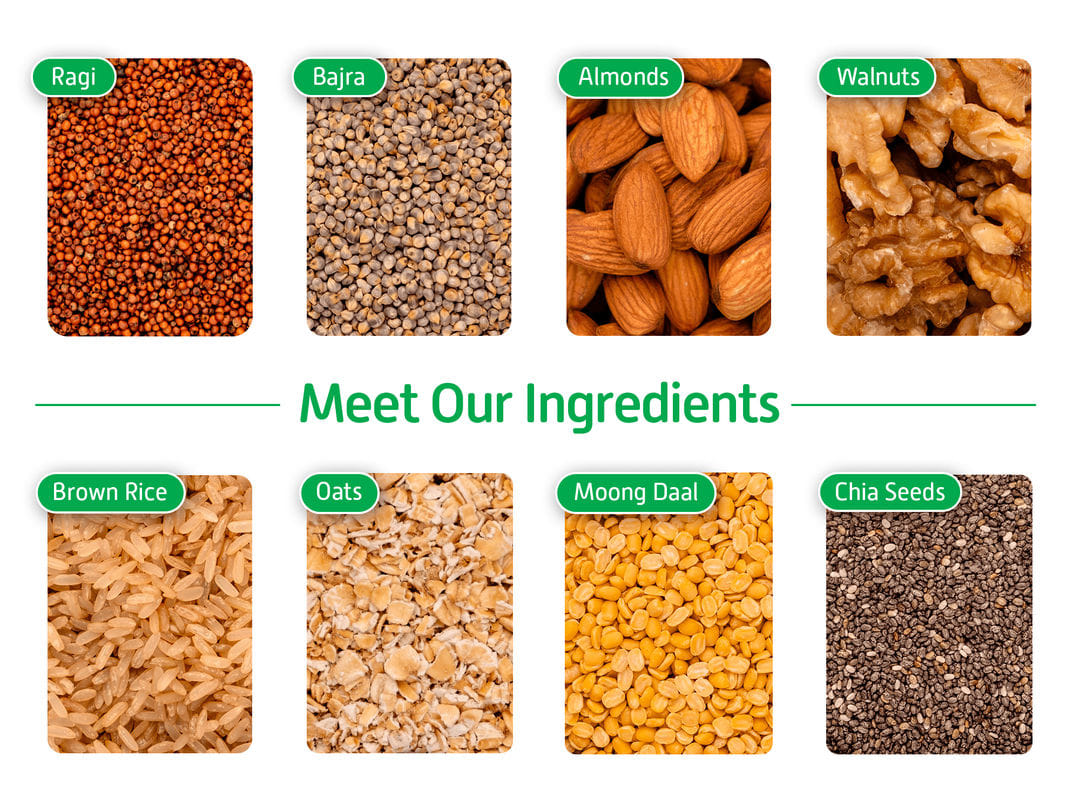
Use traditional superfoods intentionally Ragi for calcium and iron. Bajra for zinc and magnesium. Amla for Vitamin C. Haldi for anti-inflammatory support. These are not expensive imports - they are available in every Indian kitchen and have been used in child nutrition for generations.
Address picky eating with variety, not force Offering 10-15 different foods per week - even in small amounts - builds dietary variety gradually. Repeated exposure matters more than portion size. A child who rejects a food the first 8 times may accept it by the 10th.
Fill verified gaps with a supplement For the nutrients that food alone consistently misses - D3, zinc, B12 - a quality daily multivitamin is not a replacement for good food. It is a reliable safety net.
When comparing supplements, look for: age-specific formulas, zinc citrate over zinc oxide, D3 (cholecalciferol) over D2, zero added sugar in the base, and third-party tested products.
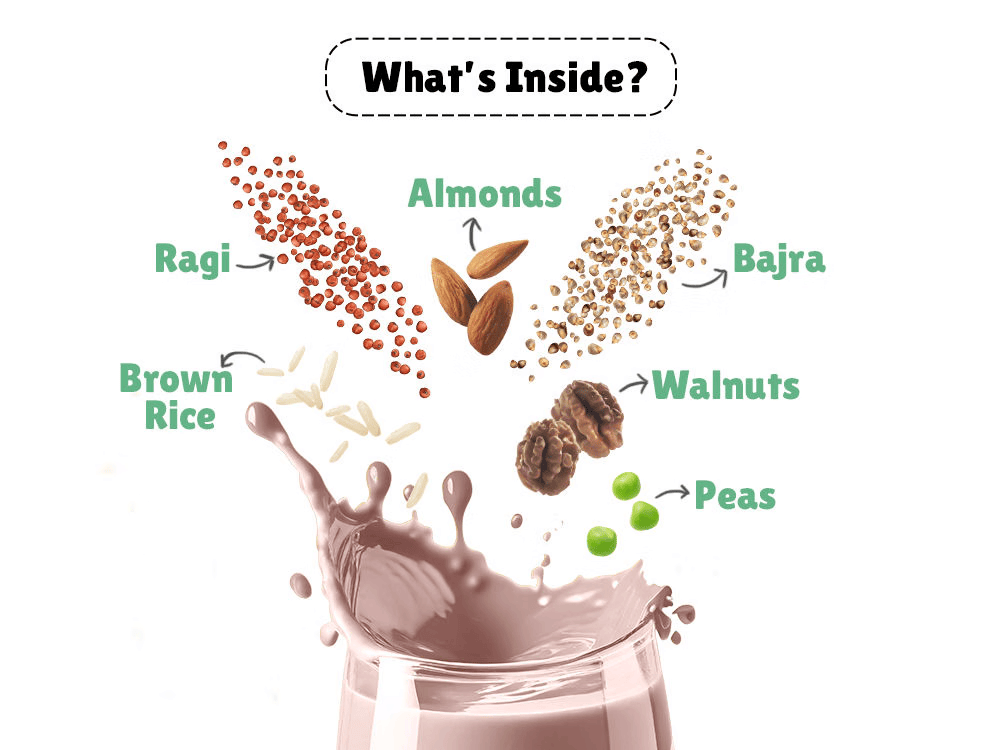
Little Joys NutriMix covers both macronutrient and micronutrient gaps in one daily serving - ragi, bajra, almonds, walnuts, plant protein, calcium, D3, and 23 vitamins and minerals. No refined sugar, sweetened with jaggery and dates. For children aged 2-12 in multiple flavour options.
Little JoysFAQ
Q: How do I know if my child is nutritionally deficient?
Persistent fatigue, frequent illness, slow growth, poor appetite, and difficulty concentrating are common signs of multiple deficiencies. A blood panel for iron, Vitamin D, B12, and zinc gives a clear picture if deficiency is suspected.
Q: Is a multivitamin enough to replace a poor diet?
No. Supplements fill specific gaps but do not provide the full nutritional matrix of whole foods - fibre, phytonutrients, protein, and healthy fats all require food sources. The supplement and the diet work together.
Q: How much milk should my child drink daily?
For children aged 2-6, around 300-400ml per day covers a meaningful portion of calcium needs. Beyond that, other dairy sources (curd, paneer) and non-dairy calcium sources (ragi, sesame) round out the daily requirement.