
25 Fun Earth Day Activities for Kids at Home and Outside
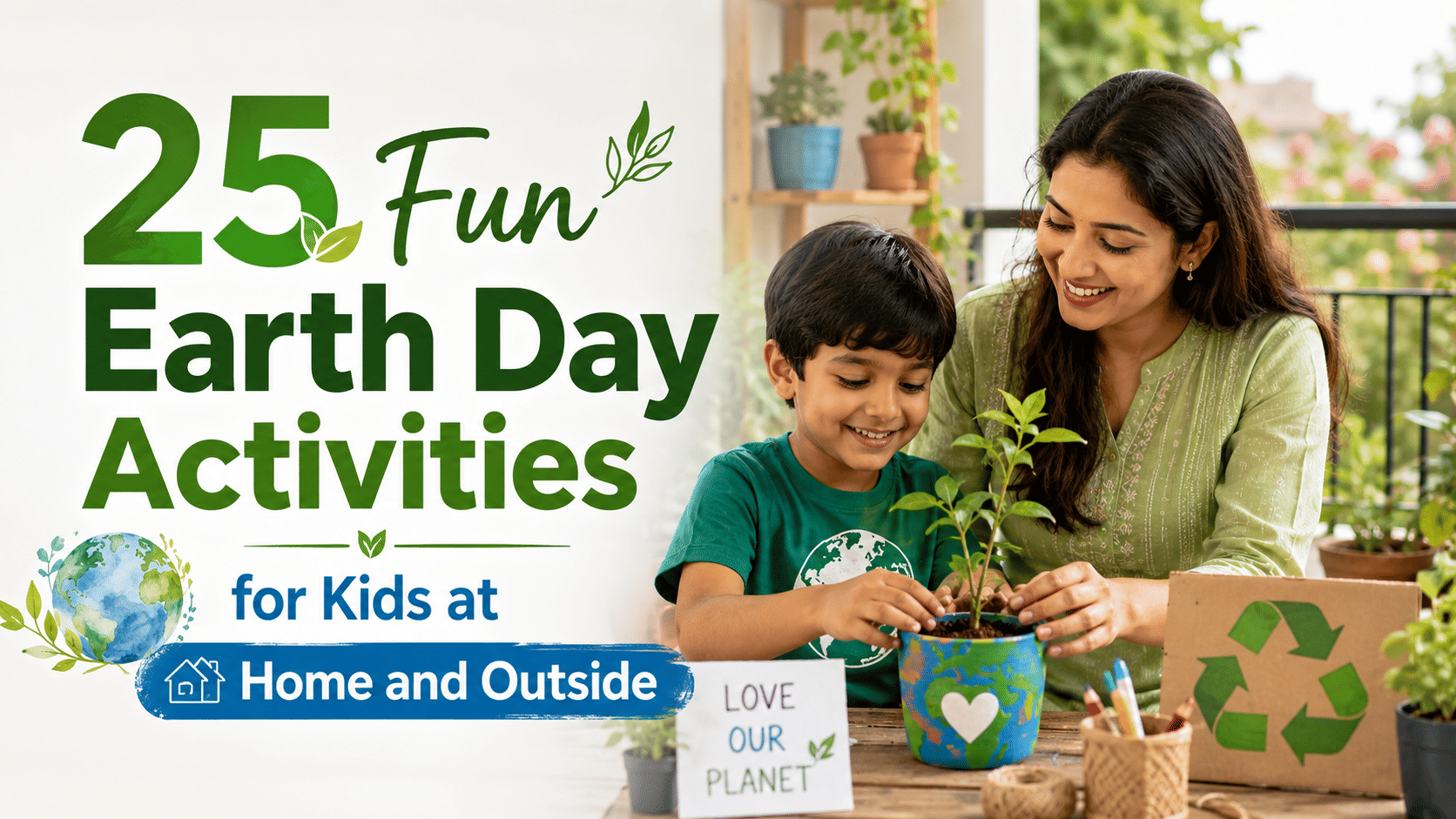
Earth Day activities for kids can help children understand the environment through planting, creating, observing, sorting and spending time outdoors. Instead of only explaining why the planet needs protection, these activities allow children to see how everyday choices involving water, energy, plants and waste can make a difference.
Earth Day is observed on April 22 and began in 1970 as a movement encouraging greater environmental awareness and action. However, the ideas below do not need to be limited to one date. They can also be used as environment day activities, weekend projects or simple family challenges throughout the year.
Outdoor Earth Day Activities for Kids
1. Go on a Nature Scavenger Hunt
Prepare a list of natural things children can observe, such as a rough leaf, a round stone, a bird, a flower and something with an interesting smell.
Ask children to look without damaging plants or disturbing animals. They can tick each item, draw it or take a photograph.
2. Organise a Small Cleanup
Choose a garden, neighbourhood lane, school ground or nearby public area. Children can collect litter with adult supervision while wearing gloves and using tongs.
Sort recyclable and non-recyclable waste only when it is safe to do so. Children should not touch broken glass, sharp metal, medical waste or unknown substances.
3. Create a Nature Journal
Give the child a notebook for recording plants, insects, weather and seasonal changes. They can draw what they see and add the date, location and colours.
Repeating the activity every few weeks helps children notice that nature changes over time.
🎧 🎁 Try a Free Personalised Audio Story - Your Child is the Hero!
4. Make Bark and Leaf Rubbings
Place paper over tree bark or beneath a fallen leaf and gently rub over it with the side of a crayon.
Compare the patterns created by different trees and leaves. Use only fallen leaves rather than pulling fresh ones from plants.
5. Build a Sound Map
Sit quietly outdoors for a few minutes. Children can mark themselves in the centre of a page and draw symbols showing where each sound came from.
They may hear birds, insects, vehicles, footsteps, wind or running water. This activity encourages careful listening and environmental awareness.
6. Start a Small Pollinator Pot
Plant flowering seeds in a pot or window box and let children help with watering and observation. Choose plants suited to the local climate and available space.
Children can record when the first leaves and flowers appear.
7. Observe Birds
Spend ten minutes watching birds from a window, balcony, park or garden. Ask children to notice their size, colour, sound and movement.
They can create a simple tally showing how many different birds they observed.
8. Measure a Tree Without Cutting It
Use a measuring tape or a piece of string to measure the distance around a tree trunk. Compare two or three trees and arrange them from smallest to largest.
This combines outdoor learning with measurement and comparison.
Also Read:
 Dr. Narendra Babu
Earth Day Craft Ideas for Kids
9. Make a Recycled Paper Collage
Collect old newspapers, used gift wrap, damaged magazines and paper packaging. Children can tear or cut them into shapes and create a picture of the Earth, a forest or an ocean.
The activity demonstrates how old materials can be reused before being discarded.
10. Create a Cardboard Tube Planter
Reuse a cardboard tube as a temporary seed starter. Fold the bottom inward, fill it with soil and plant a seed.
Keep it on a tray because the cardboard may soften during watering.
11. Design an Earth Day Poster
Ask children to choose one clear message, such as “Save Water,” “Switch Off the Lights” or “Use Less Plastic.”
Encourage them to combine the message with one large image rather than filling the poster with too much text.
12. Make Cardboard Binoculars
Join two clean cardboard tubes with paper tape or glue and decorate them with leftover paper.
Children can use their pretend binoculars during a birdwatching walk or nature scavenger hunt.
13. Create a Paper Plate Earth
Paint or colour a reused paper plate blue and green to represent oceans and land. Around it, children can add drawings of actions that help the planet.
This is one of the simplest environment day craft ideas for preschool and early-primary children.
14. Turn Packaging into a Model
Use clean cartons, boxes and bottle caps to build a vehicle, house, robot or miniature town.
Ask children which materials were reused and what could happen to the model when they no longer need it.
15. Make a No-Sew Reusable Bag
An old T-shirt can be turned into a simple reusable bag with adult assistance. Cut off the sleeves, widen the neck opening and tie strips cut along the bottom edge.
Adults should handle sharp scissors and help younger children with cutting.
🎧 ✨ Create Your Child's Free Personalised Audio Story Now →
Earth Day Science and Learning Activities
16. Conduct a Recycling Sort
Collect clean examples or pictures of paper, glass, metal, food waste and plastic. Ask children to place each item into the correct category.
Check local waste rules before treating the activity as a real disposal guide because accepted materials differ between locations.
17. Try an Oil-Spill Cleanup Experiment
Add water to a tray and place a small amount of cooking oil on the surface. Give children safe materials such as cotton, a sponge, paper and a spoon.
Ask them to predict which material will remove the oil most effectively. Do not pour the oily water down a sink; absorb and dispose of it responsibly.
18. Make a Simple Water Filter Model
Layer gravel, sand and cotton in a cut bottle with adult help. Pour muddy water through the layers and observe changes in its appearance.
Explain clearly that filtered experiment water is not safe to drink.
19. Observe Seeds in a Clear Jar
Place damp cotton or paper inside a transparent jar and add a few bean seeds near the side. Children can observe the roots and shoots as they appear.
They can measure growth and draw the seed every few days.
20. Create a Mini Compost Observation Bottle
Layer small amounts of soil, dry leaves and fruit or vegetable scraps in a transparent container with air holes.
Use it only as an observation project, keep it covered and allow an adult to manage hygiene and disposal.
21. Test Which Materials Break Down
Place a leaf, a paper piece and a clean plastic wrapper in separate labelled containers with soil. Observe them over several weeks.
Children can predict which item will change first and discuss why some waste remains in the environment longer.
Also read: Fitness activities for kids
Dr. Narendra Babu
Simple Save Earth Activities at Home
22. Become an Energy Detective
Walk through the home and look for lights, fans, chargers or devices that are switched on unnecessarily.
Children can make reminder signs for frequently used switches. Adults should handle plugs and electrical sockets.
23. Take a Water-Saving Challenge
Choose one manageable action, such as turning off the tap while brushing or using leftover drinking water for plants.
Track the habit for seven days rather than attempting too many changes at once.
24. Plan a Low-Waste Snack
Prepare a snack using reusable plates, containers and water bottles. Discuss which parts of the meal created waste and how it could be reduced next time.
This activity can also be adapted into a waste-free lunch challenge for school.
25. Make a Family Earth Pledge
Each family member can choose one realistic habit, such as carrying a reusable bottle, avoiding food waste or walking a short distance when practical.
Write the pledges on a shared chart and review them after a month.
How to Select an Activity on Earth Day for Kids
For preschool children, prioritise short activities involving colours, sorting, planting, observation and sensory exploration. Primary-school children can complete simple experiments, record findings and participate in supervised outdoor projects.
Older children can investigate household waste, calculate energy use, design awareness campaigns or plan a community activity.
A useful Earth Day activity should be:
- Safe and appropriate for the child’s age
- Connected to a clear environmental idea
- Easy to complete with available materials
- Focused on participation rather than a perfect result
- Followed by a short discussion or everyday action
Frequently Asked Questions
What are the best Earth Day activities for kids?
Planting seeds, nature scavenger hunts, recycling games, litter cleanups, reused-material crafts and conservation challenges are practical choices. The right activity depends on the child’s age and available space.
What are some Earth Day activities for kids outside?
Children can complete a nature walk, sound map, bird observation, supervised cleanup, bark rubbing activity, tree measurement challenge or garden project.
How can children celebrate Earth Day at home?
Families can sort recycling, make crafts from packaging, plant seeds, reduce water use, prepare a low-waste snack and create an environmental pledge.
Can these ideas be used for Environment Day?
Yes. Most Earth Day activity ideas for kids can also be adapted for World Environment Day, school sustainability weeks and environmental-awareness projects.
Conclusion
Earth Day becomes more meaningful when children can connect environmental ideas with real actions. Planting one seed, observing a bird, reusing a box or remembering to turn off a tap may appear small, but each activity helps children recognise their relationship with the natural world.
Start with one activity that suits the child’s age and interests. The goal is not to complete the longest list but to help environmentally responsible habits continue after the celebration ends.