
Which Tomato Sauce Is Good to Consume?
A tomato sauce that is good to consume is not decided only by the biggest tomato percentage on the label. Parents should check what form of tomato is used, whether it is tomato paste, puree or juice, what sweetener is used, and whether the sauce contains preservatives like sodium benzoate.
Little Joys Tomato Sauce or Kissan is one option that keeps this clear because it mentions Tomato Paste (28%), uses jaggery instead of refined sugar, has no sodium benzoate, and is made in small batches.
 Little Joys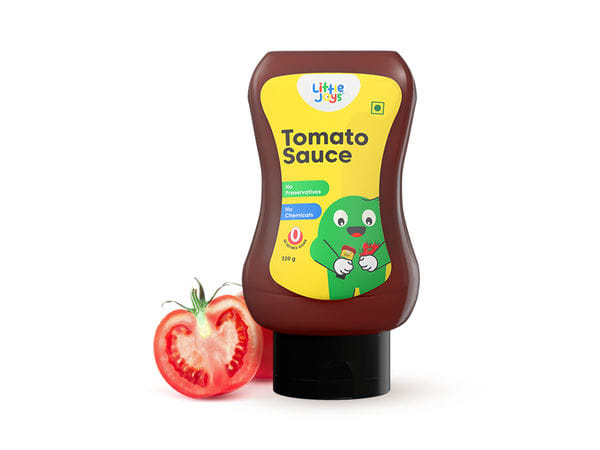
Tomato sauce is one of those foods children love with almost everything.
Sandwiches. Parathas. Cutlets. Fries. Dosas. Rolls. Cheela.
Sometimes even plain roti.
So when a sauce becomes a regular part of a child’s plate, parents naturally start asking: which tomato sauce is better for regular use? or how do you choose a right tomato ketchup?
The answer is simple.
Read beyond the label and read smarter.
Don’t Just Compare Tomato Percentage
A bigger tomato percentage does not always mean a better sauce. Why?
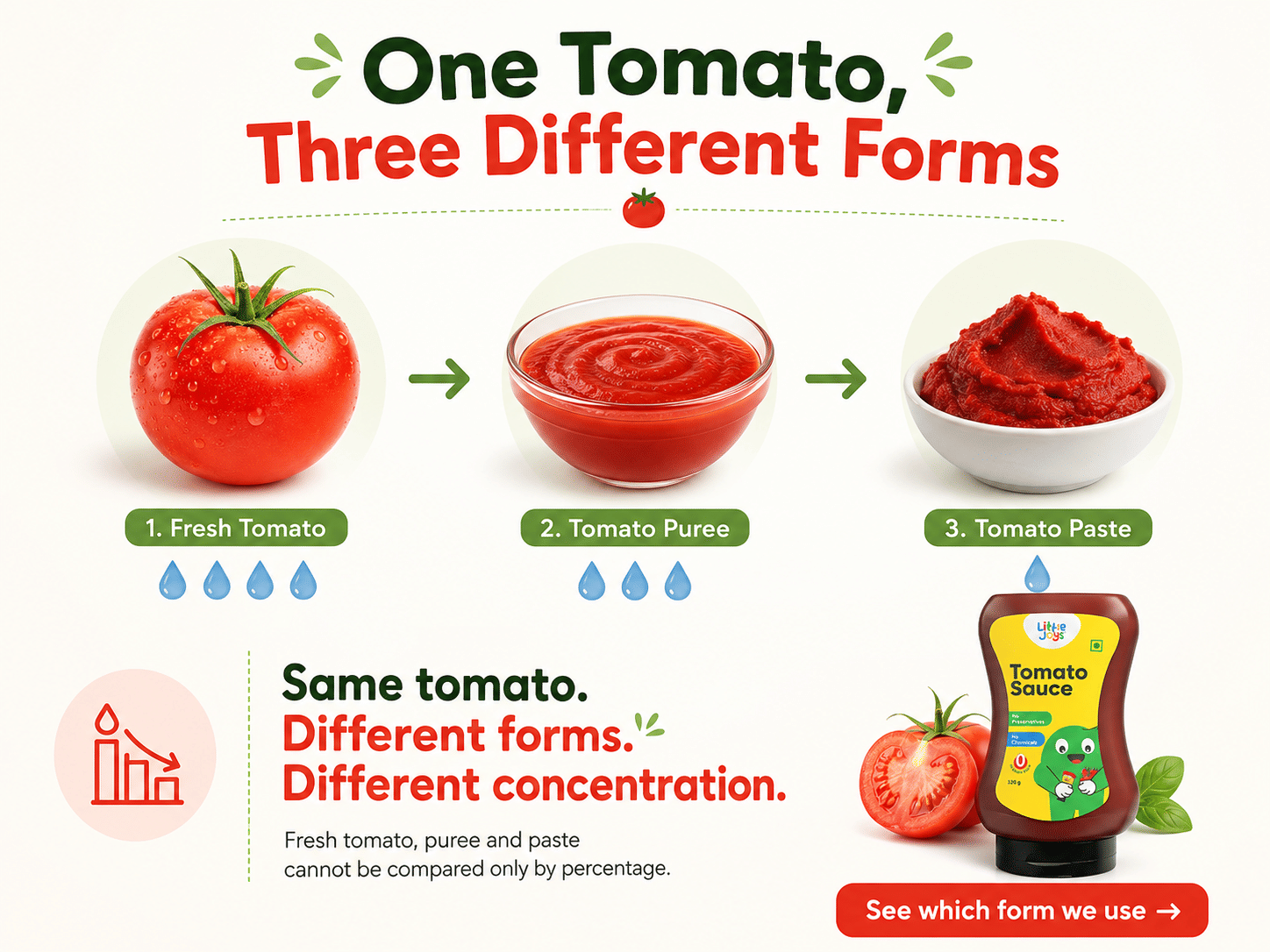
Because tomato, tomato puree and tomato paste are not the same.
| Tomato Form | What It Means |
|---|---|
| Fresh tomato | More water |
| Tomato puree | Some water removed |
| Tomato paste | Much more concentrated |
So 28% tomato paste is not the same as 28% fresh tomato or 28% tomato puree.
That is why comparing only numbers can be misleading. Read the full phrase.
Not just 28%. Read Tomato Paste (28%).
Now let's compare them properly.
54% Tomato = about 540 g of tomatoes in 1 kg of sauce.
But, 28% Tomato Paste and 75% Tomato Puree contain roughly the same amount of tomatoes about 1.17 kg of fresh tomatoes' worth.
The only difference?
Puree is simply water added to Paste
And as per FSSAI standards, tomato in a sauce is recognized as Tomato Juice, Tomato Puree or Tomato Paste. So if a brand is screaming a big 'Tomato %' without telling you which form, it's a marketing gimmick.
Why Tomato Paste Matters
Tomato paste is a concentrated tomato ingredient.
That means it has more tomato solids and less water compared to puree or fresh tomato. So if a sauce uses tomato paste, the percentage may look smaller, but the tomato base can still be strong.
This is why Little Joys clearly mentions Tomato Paste (28%). It tells parents the actual form used instead of leaving them to guess.
Check the Sweetener Too
Tomato is only one part of the label. The next thing to check is sugar.
Many kids eat sauce regularly, so parents should notice what sweetens it. Try avoiding refined sugar. A jaggery based sauce is better than refined sugar.
And we at Little Joys uses jaggery instead of refined sugar.
That makes it a more thoughtful option for everyday family snacks. Not unlimited use. Not a health food.
But a better sauce choice when kids want sauce with their meals.
Preservatives Are Worth Checking
For regular use, many parents prefer sauces without unnecessary preservatives like sodium benzoate.
That makes the ingredient list easier for parents who are choosing sauce for kids’ snacks, lunchboxes or evening meals.
So, Which Tomato Sauce Is Good to Consume?
A better tomato sauce should check these boxes:
- Clearly mentions tomato form
- Uses a paste/puree tomato base
- Avoids refined sugar
- Has no sodium benzoate
- Has a simple ingredient list
- Tastes good enough for kids to accept
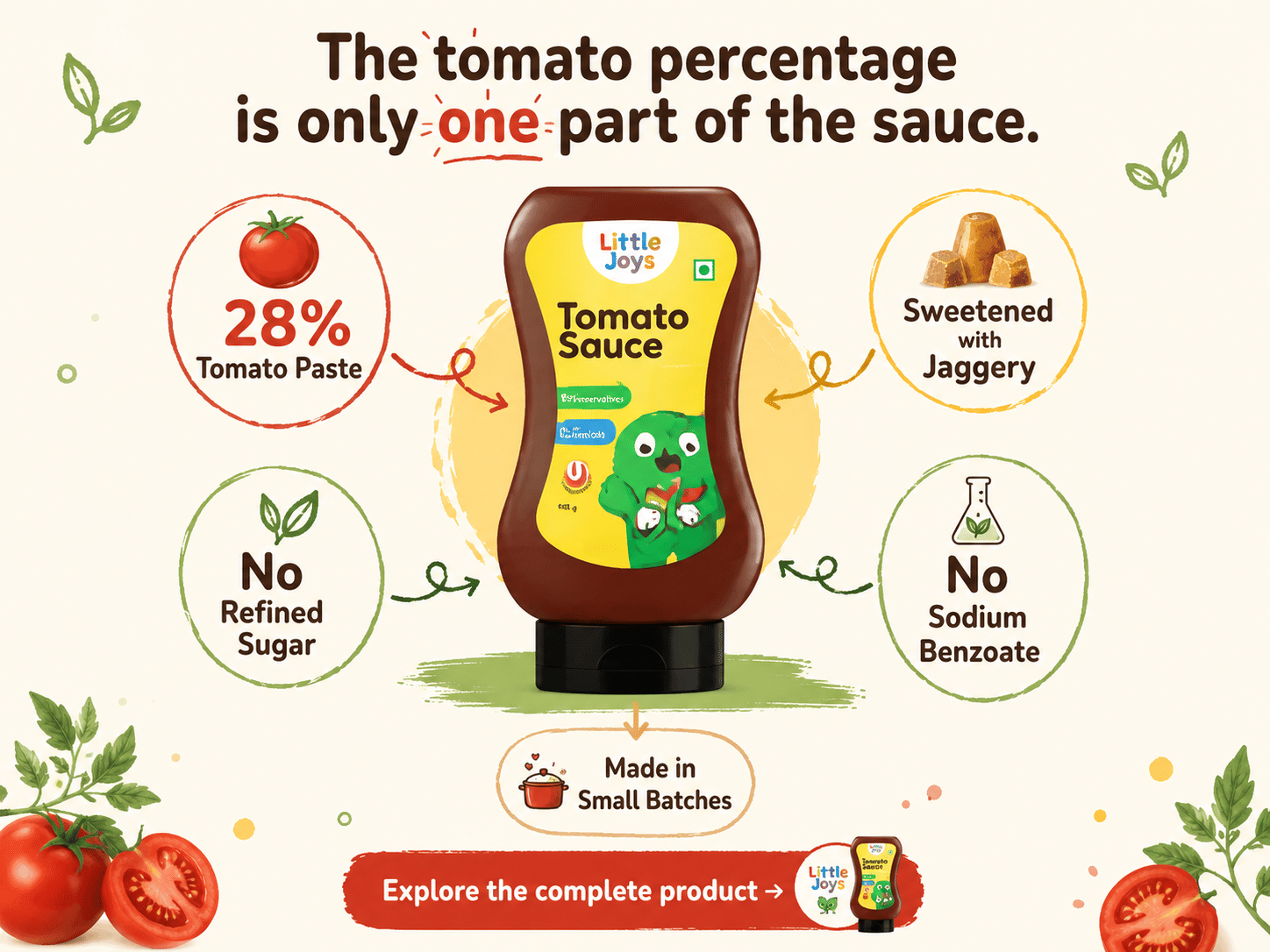
Little Joys Tomato Sauce fits this naturally because it uses 28% concentrated tomato paste, is sweetened with jaggery, has no refined sugar, has no sodium benzoate, and is made in small batches.
Quick Parent Checklist Before Buying Tomato Sauce
| Check This | Better Choice |
|---|---|
| Tomato form | Clearly says paste, puree or juice |
| Tomato base | Concentrated tomato paste is stronger |
| Sweetener | Jaggery instead of refined sugar |
| Preservatives | No sodium benzoate |
| Label clarity | No guessing what the percentage means |
The easiest rule:
Don’t just read the tomato number. Read the word after it.
Final Takeaway
The tomato sauce that is good to consume is not decided only by a bigger percentage.
A label saying Tomato Paste (28%) can mean something very different from a label saying tomato, puree or an unclear tomato form.
For parents, the better way to choose sauce is to check:
tomato form + sweetener + preservatives + label clarity.
Little Joys Tomato Sauce keeps these things simple with concentrated tomato paste, jaggery instead of refined sugar, no sodium benzoate and small-batch preparation.
So next time you compare sauces, don’t stop at the number.
Read what comes after it.
FAQs
Which tomato sauce is good to consume?
A good tomato sauce should clearly mention the tomato form(paste/puree), use a concentrated tomato base, avoid refined sugar, avoid sodium benzoate and have a simple ingredient list.
Is tomato paste better than tomato puree in sauce?
Tomato paste is more concentrated than tomato puree. So a smaller percentage of tomato paste can still mean a stronger tomato base than the same percentage of puree. (24% paste >=75% puree)
Does higher tomato percentage mean better tomato sauce?
Not always. The tomato form matters. Tomato paste, puree and fresh tomato have different water content and concentration levels.
Is Little Joys Tomato Sauce good for kids?
Little Joys Tomato Sauce is a good option for kids when used in normal portions. It uses 28% tomato paste, jaggery instead of refined sugar, no sodium benzoate and small-batch preparation.
What should parents check before buying tomato sauce?
Parents should check tomato form, sugar source, preservatives and label clarity. The label should clearly say whether the tomato base is paste, puree or juice.