
Calcium vs Vitamin D: Which Is More Important for Kids?
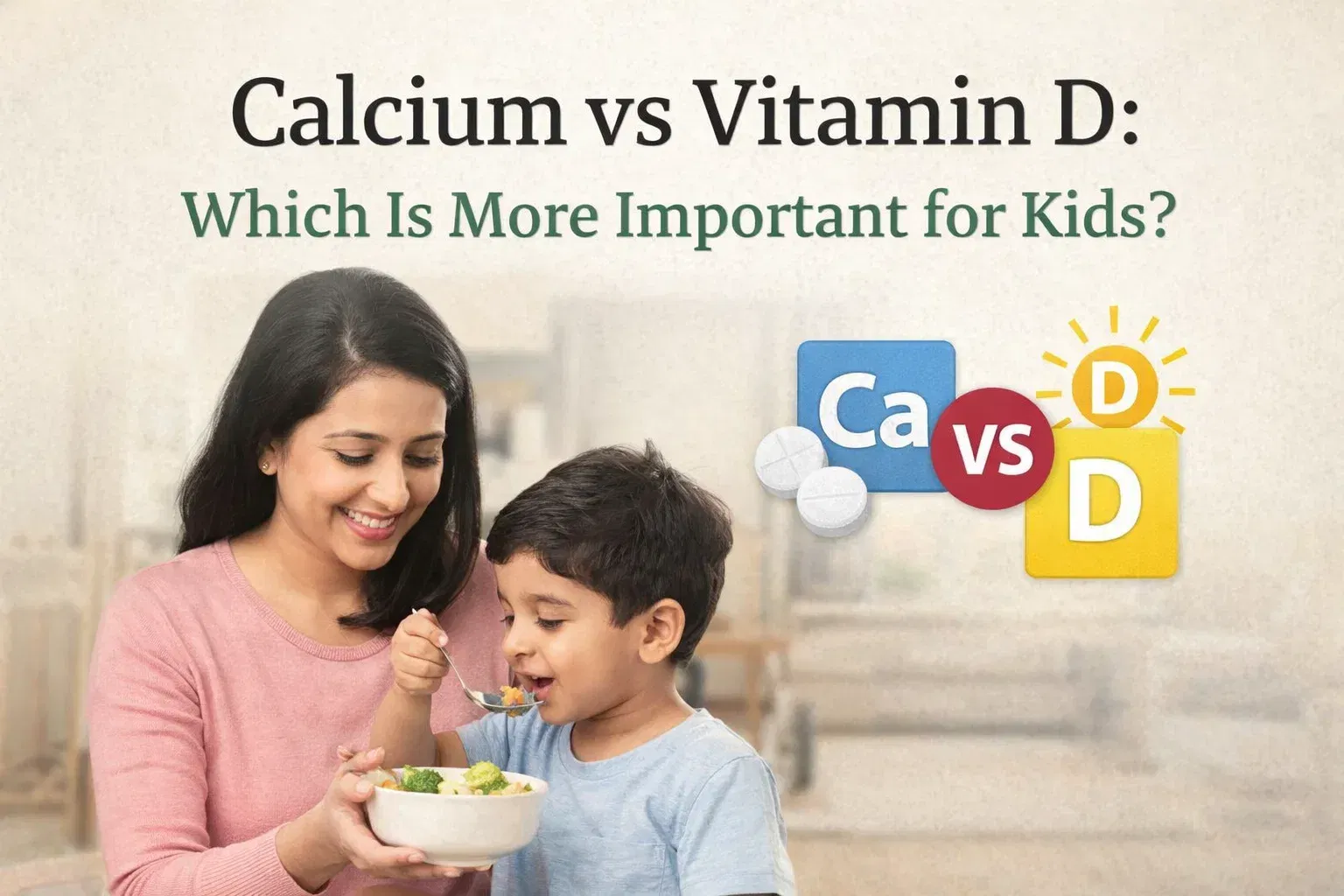
Neither wins this comparison - because neither works without the other. Calcium builds bones. Vitamin D3 is what makes the body absorb calcium from food into the bloodstream. Giving one without the other is like filling a tank with no pipe to the engine.
The practical priority for most Indian children is Vitamin D3 first - because calcium sources are available in the diet, but D3 is not reliably obtained from food or sun exposure for urban school-going children.
-> View Little Joys NutriMix - calcium and Vitamin D3 together
 Little Joys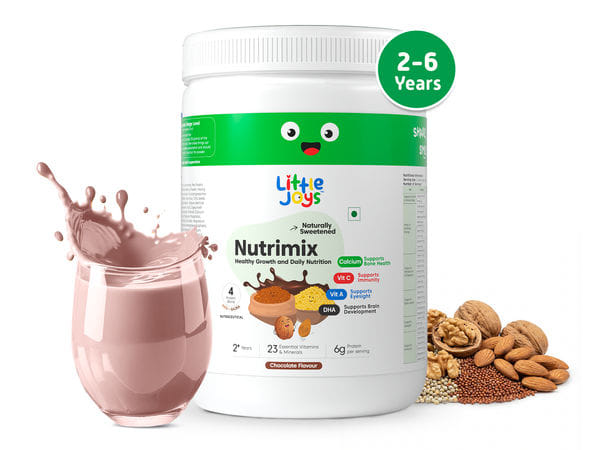
How Calcium and Vitamin D3 Work Together
When a child eats a calcium-rich food - milk, paneer, ragi, sesame - the calcium enters the gut. Without sufficient Vitamin D3, only 10-15% of that calcium is absorbed. With adequate D3, absorption rises to 30-40%.
This means a child drinking two glasses of milk daily but deficient in D3 is absorbing less calcium than a child drinking one glass with healthy D3 levels. More dairy does not compensate for low D3.
Vitamin D3 also directly regulates immune function - a role entirely separate from calcium. Children low in D3 have both weaker bones and weaker immunity. This is why D3 deficiency has such wide-ranging effects.
Why D3 Is the Bigger Gap in Indian Children
Calcium is available in the Indian diet: dairy products, ragi, sesame, leafy greens. Children who consume dairy regularly get meaningful calcium from food alone. The calcium daily requirements guide shows how achievable the daily target is with basic Indian diet staples.
Vitamin D3 has almost no food source. The primary natural source is midday sun synthesis - and most urban Indian school-going children miss this window entirely (indoors during school hours, sunscreen use, air pollution filtering UV-B). Studies consistently show 60-80% of urban Indian children are D3 insufficient.
The conclusion: most Indian children need D3 supplementation more urgently than calcium supplementation. Calcium is achievable through diet; D3 largely is not.
-> View Little Joys Multivitamin Gummies - Vitamin D3 with zinc and immunity nutrients
Little Joys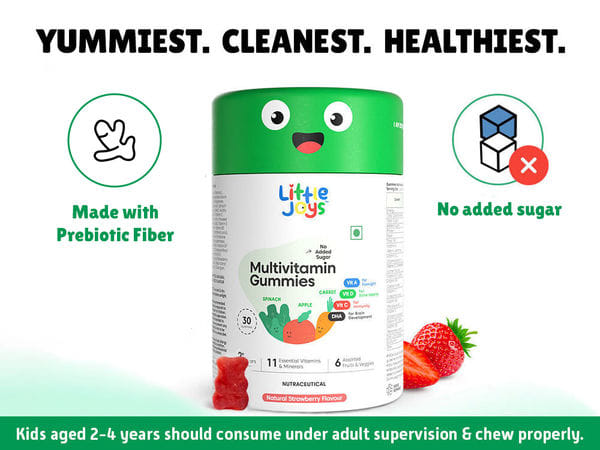
When Both Are Needed Together
Children who avoid dairy, do not eat ragi, and have low sun exposure need both - and need them delivered together. Calcium without D3 is poorly absorbed. D3 without calcium has nothing to work on.
Little Joys NutriMix delivers both in one serving - calcium from the ragi and bajra base alongside Vitamin D3 (cholecalciferol from a vegetarian lichen source). The functional pairing is built into the product.
Daily Requirements: Side by Side
| Age | Calcium (ICMR) | Vitamin D3 (ICMR) |
|---|---|---|
| 1-3 years | 600 mg | 600 IU |
| 4-8 years | 600 mg | 600 IU |
| 7-9 years | 700 mg | 600 IU |
| Teens | 800-1000 mg | 600 IU |
Both requirements are achievable - calcium through diet, D3 primarily through supplementation for most Indian children.
FAQ
Q: If my child drinks milk every day, do they still need a Vitamin D supplement?
Yes, in most cases. Standard full-fat milk contains around 40 IU of Vitamin D per 100ml - a 300ml glass provides only 120 IU against a 600 IU daily requirement. Food sources alone rarely meet D3 needs for urban Indian children. A supplement covering D3 alongside the dietary calcium from milk is the most effective combination.
Q: Can too much Vitamin D3 be harmful?
Yes - D3 is fat-soluble and accumulates. The tolerable upper limit for children is 2500-4000 IU per day depending on age. Standard multivitamins and nutrition powders provide 400-600 IU - well within safe limits. Only very high-dose standalone D3 supplements (5000 IU+) warrant caution in children.
Q: At what age should children start taking Vitamin D3?
Most paediatric guidelines recommend Vitamin D supplementation from birth for exclusively breastfed infants. For older children, from age 1 onwards, a daily supplement providing 400-600 IU of D3 is appropriate and widely recommended.