
7 Warning Signs of Dengue Fever in a Child Parents Should Not Ignore
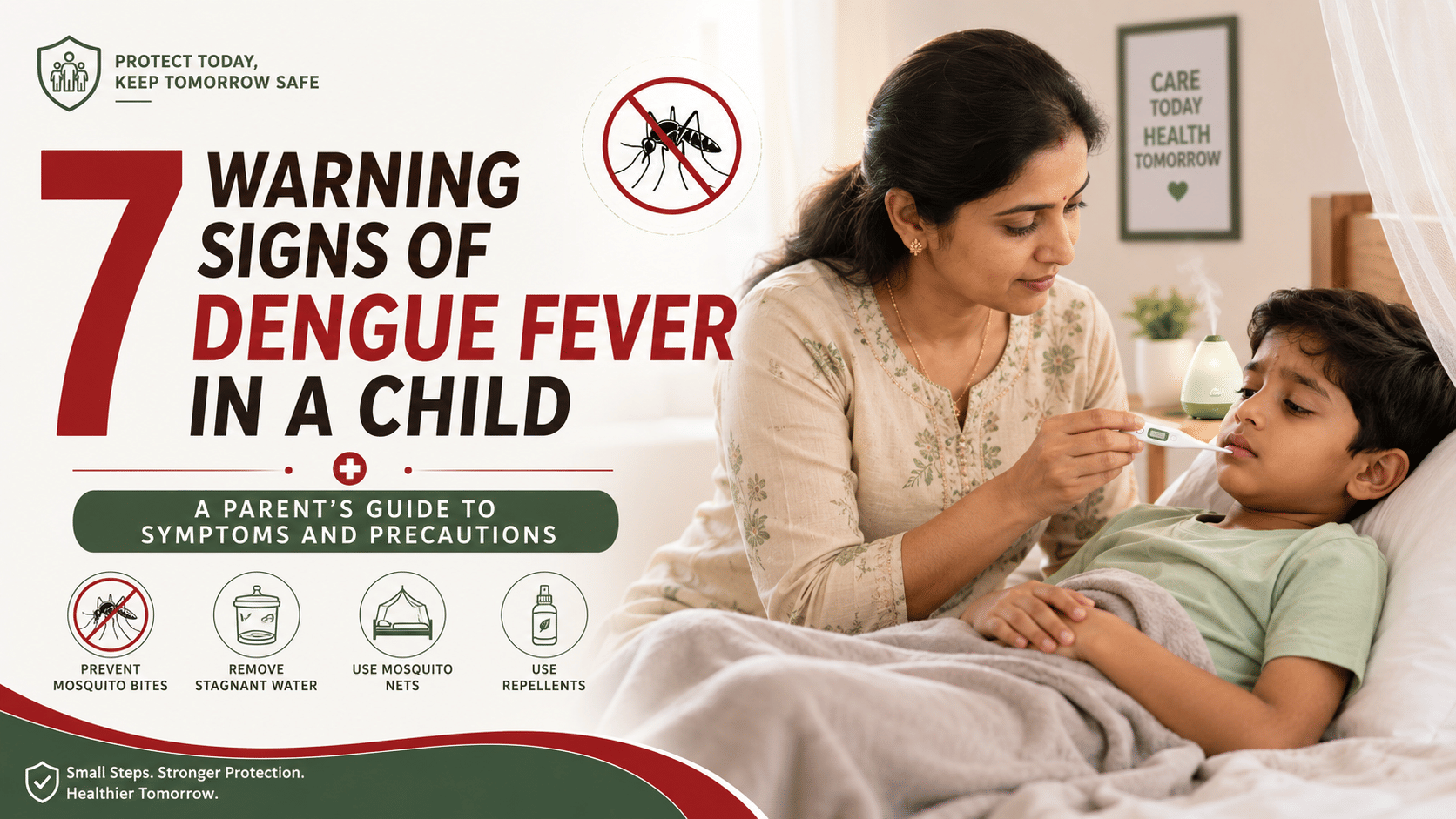
The seven warning signs of dengue fever in a child include severe abdominal pain, repeated vomiting, unusual bleeding, blood in vomit or stools, extreme drowsiness or restlessness, difficulty breathing and cold or clammy skin with increasing weakness. These symptoms require urgent medical assessment, particularly when they appear as the child’s fever begins to fall.
This article is intended for awareness and cannot replace an examination by a paediatrician. Take your child to the nearest hospital immediately when any severe warning sign appears.
The 7 Warning Signs at a Glance
- Severe abdominal pain or tenderness
- Persistent vomiting or inability to retain fluids
- Bleeding from the nose, gums or skin
- Blood in vomit, stools or urine
- Extreme tiredness, drowsiness, irritability or restlessness
- Rapid, laboured or difficult breathing
- Pale, cold or clammy skin, faintness or reduced urination
These signs may indicate that dengue is progressing to a critical stage. Indian clinical guidelines advise hospital admission for children with warning signs such as abdominal pain, persistent vomiting, fluid accumulation, mucosal bleeding, lethargy or restlessness, liver enlargement or concerning changes in blood results.
Common Dengue Symptoms vs Warning Signs
Dengue often begins with symptoms that resemble another viral fever. A child may have:
- Sudden high fever
- Headache
- Pain behind the eyes
- Muscle, bone or joint pain
- Nausea or vomiting
- Reduced appetite
- Tiredness
- Skin rash
These symptoms do not confirm dengue by themselves because several infections can cause a similar illness. A medical assessment and appropriate testing are needed.
Warning signs refer to evidence that the illness may be becoming more serious. They often begin during the 24 to 48 hours after the fever goes away, so a lower temperature should not automatically be treated as proof that the child has recovered.
 Little Joys
1. Severe Abdominal Pain or Tenderness
A child who develops strong, continuous stomach pain or becomes uncomfortable when the abdomen is touched needs immediate assessment.
This is different from mild, short-lived discomfort caused by reduced eating. Severe abdominal pain can occur as dengue enters its critical phase and may be associated with fluid leakage or organ involvement.
2. Persistent Vomiting
Occasional nausea or vomiting can occur during the early phase. It becomes a warning sign when the child vomits repeatedly, cannot retain liquids or refuses all oral intake.
Repeated vomiting can quickly interfere with hydration. Do not force large amounts of liquid at once. Seek medical advice so the child’s hydration and circulation can be assessed properly.
3. Bleeding From the Nose, Gums or Skin
Bleeding from the gums or nose, unusual bruising, fresh red spots on the skin or bleeding that is difficult to stop should be reported immediately.
Parents should not wait for heavy bleeding. Even apparently mild bleeding can require evaluation when it occurs with suspected or confirmed dengue.
4. Blood in Vomit, Stools or Urine
Blood in vomit may appear red or dark. Blood in stools may be visible or make the stools look black and tar-like. Red or unusually dark urine may also require urgent attention.
These symptoms can indicate internal bleeding and should be treated as a medical emergency.
5. Extreme Drowsiness, Irritability or Restlessness
Children with fever naturally sleep more, but difficulty waking the child, confusion, unusual irritability, sudden behavioural changes or marked restlessness are concerning.
In babies and toddlers, excessive crying, poor feeding and reduced interaction may be easier to notice than complaints of pain. Indian clinical guidance includes lethargy, restlessness, irritability and altered behaviour among signs that require reassessment.
-> Consult a Pediatrician Online
6. Rapid or Difficult Breathing
Rapid, laboured or shallow breathing can occur when dengue becomes severe. A child may appear breathless while resting, struggle to speak normally, use extra chest or neck muscles to breathe or complain of chest discomfort.
Do not monitor breathing difficulty at home while waiting for it to improve. Seek emergency care.
7. Pale, Cold or Clammy Skin and Increasing Weakness
Cold hands and feet, pale or clammy skin, fainting, severe weakness or a sudden drop in body temperature can be signs of poor circulation.
Passing much less urine, refusing fluids or not urinating for several hours is also concerning. The Indian national guidelines advise immediate hospital review for reduced urine output, cold clammy skin, poor oral intake and sudden deterioration.
What Causes Dengue in Children?
Dengue is caused by any of four related dengue viruses: DENV-1, DENV-2, DENV-3 and DENV-4. It is mainly transmitted through the bite of an infected female Aedes mosquito. These mosquitoes commonly bite during the day.
Living in or visiting an area with dengue transmission, exposure to mosquitoes and the presence of water-holding containers around homes can increase the likelihood of infection.
Little Joys
Is Dengue Contagious?
Dengue does not normally spread directly through touching, hugging, coughing, sharing food or caring for an infected child.
A mosquito can bite a person with dengue, become infected and later transmit the virus to another person. Rare transmission routes, including transmission during pregnancy or through blood products, have been reported, but mosquito bites remain the main route.
What Causes Dengue in Children?
Dengue is caused by any of four related dengue viruses: DENV-1, DENV-2, DENV-3 and DENV-4. It is mainly transmitted through the bite of an infected female Aedes mosquito. These mosquitoes commonly bite during the day.
Living in or visiting an area with dengue transmission, exposure to mosquitoes and the presence of water-holding containers around homes can increase the likelihood of infection.
Is Dengue Contagious?
Dengue does not normally spread directly through touching, hugging, coughing, sharing food or caring for an infected child.
A mosquito can bite a person with dengue, become infected and later transmit the virus to another person. Rare transmission routes, including transmission during pregnancy or through blood products, have been reported, but mosquito bites remain the main route.
How Is Dengue Diagnosed?
Doctors consider the child’s symptoms, examination findings, exposure history and day of illness. Blood tests may be used to detect the virus, its antigen or antibodies and to monitor blood counts and haematocrit.
The type and timing of the test matter. Indian guidelines note that test selection may differ during the early and later days of fever.
A falling platelet count should be interpreted with the complete clinical picture. Platelet numbers alone do not determine whether a child is bleeding or requires a transfusion.
Supporting Nutrition During Recovery
During the acute illness, follow the paediatrician’s fluid and food advice. As vomiting settles and appetite returns, offer small portions of familiar foods rather than pressuring the child to finish large meals.
Once the child has returned to regular eating, parents can gradually resume the usual daily nutrition routine. Familiar options such as Nutrimix by Little Joys may be included again according to the child’s age, normal tolerance and label directions. Multivitamin Gummies from Little Joys can similarly remain part of the child’s regular routine once normal eating and chewing have resumed.
Little JoysFatigue may continue for several weeks after dengue, so allow adequate rest and a gradual return to school, sports and strenuous activity.
Little JoysFrequently Asked Questions
Can a child become serious after the fever goes down?
Yes. Warning signs often emerge after the fever begins to settle. Monitor the child closely during the following 24 to 48 hours.
Does every child with low platelets have severe dengue?
No. Doctors assess symptoms, circulation, haematocrit, bleeding and the trend in blood results rather than relying on a single platelet count.
How long does dengue last in children?
Common symptoms often last two to seven days. Recovery may begin after the critical period, although tiredness can last longer.
When should a child be tested?
Consult a doctor when dengue is suspected. The appropriate test depends on the day of illness and the child’s symptoms.
Conclusion
The most important step is to distinguish ordinary dengue symptoms from signs of possible severe dengue. Severe stomach pain, persistent vomiting, bleeding, unusual drowsiness, breathing difficulty and cold clammy skin should never be watched at home without medical assessment.
Continue monitoring even when the fever falls, because this can be the point at which warning signs first become visible.