
Vitamin D3 for Kids: Why It's Essential for Immunity and Bones
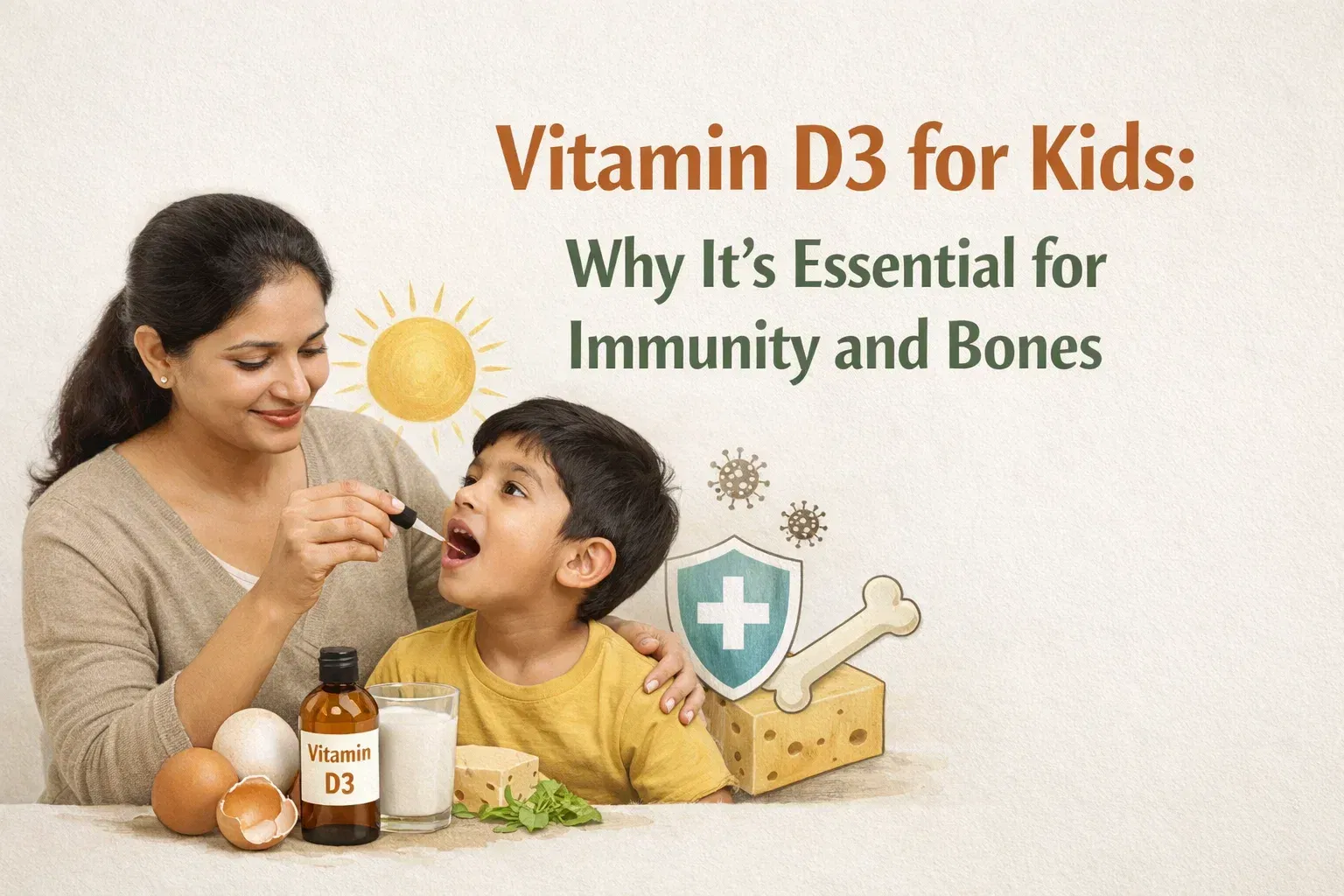
Here's a paradox most Indian parents face: despite living in one of the sunniest countries in the world, Vitamin D deficiency is widespread among Indian children.
It's not a lack of sunshine. It's the way modern life is structured - and it has real consequences for how well your child grows, fights infection, and builds strong bones.
What Vitamin D3 Actually Does
Vitamin D3 (cholecalciferol) is technically a hormone, not just a vitamin. It works across the body in ways that most parents don't expect:
Calcium absorption: This is the most well-known role. Without adequate Vitamin D3, the body cannot absorb calcium from food efficiently - even if calcium intake is high. Children drinking a lot of milk but short on Vitamin D3 are not absorbing that calcium fully.
Immune regulation: Vitamin D3 receptors exist on nearly every immune cell. It regulates the intensity of immune responses - helping the body mount strong defences against infection while preventing excessive inflammation.
 Little Joys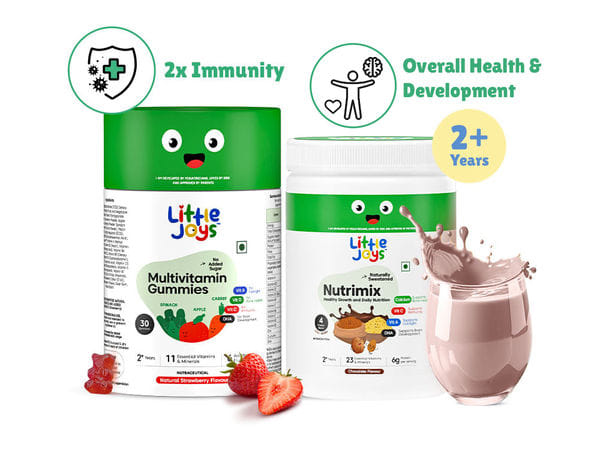
Bone density and growth: Vitamin D3 works with calcium and phosphorus to mineralise bone tissue. Severe deficiency leads to rickets; moderate deficiency over years leads to lower peak bone mass - a problem that emerges in adulthood.
Why So Many Indian Children Are Deficient
The assumption is that India's sun exposure should keep everyone's Vitamin D levels adequate. In practice, several factors work against this:
- Timing: Vitamin D synthesis requires UV-B rays, which are strongest between 10 AM–2 PM. Most children are indoors at school during this window.
- Sunscreen: Protective use blocks UV-B, preventing D3 synthesis.
- Skin pigmentation: Darker skin tones require longer sun exposure to produce equivalent Vitamin D amounts compared to lighter skin.
- Clothing coverage: Most of the body needs to be exposed - incidental hand and face exposure is not enough.
- Urban air quality: Pollution filters UV-B radiation, reducing effective synthesis even when outdoors.
The result: child nutrition researchers consistently find Vitamin D insufficiency across Indian cities regardless of geography or season.
How Much Does Your Child Need Per Day?
| Age | Daily Requirement (ICMR) |
|---|---|
| 1–18 years | 600 IU (15 mcg) |
Most children eating a standard Indian diet get very little Vitamin D3 from food alone - few natural food sources contain significant amounts. Supplementation is often the most reliable route.
Best Sources of Vitamin D3 for Kids
Outdoor sun exposure (before 10 AM or after 4 PM is insufficient)
15-20 minutes of direct midday sun on arms and legs - without sunscreen - is the most natural source. Practically difficult to achieve consistently for most Indian school-going children.
Fatty fish
Salmon, sardines, and mackerel are among the richest dietary sources. Not part of most Indian children's regular diet.
Egg yolks
A modest but meaningful dietary source. One egg yolk provides around 40 IU - useful as a daily contribution alongside other sources.
Fortified foods
Some milk brands and cereals are fortified, but the amounts are typically too small to meaningfully address deficiency on their own.
Supplements
For most children - especially urban, school-going, and picky eaters - a supplement providing 600 IU of Vitamin D3 daily is the most practical and consistent approach.
What to Look for in a Supplement
- D3 (cholecalciferol), not D2 - verify the form on the label
- 600 IU per serving for children aged 1-18 - aligned with ICMR recommendations
- No added sugar in the delivery format
- Third-party tested for actual potency
Little Joys NutriMix Nutrition Powder provides 100% RDA of Vitamin D3 (cholecalciferol from a vegetarian lichen source) alongside calcium - ensuring both are present for effective bone mineralisation. It also contains 23 vitamins and minerals in a whole-food base of ragi, bajra, almonds, and plant proteins, with no refined sugar.
For children who also need targeted immunity support, pairing NutriMix with the Multivitamin Gummies covers Vitamin D3 alongside zinc, curcumin, and Vitamin C together.
→ Explore Little Joys NutriMix
Little Joys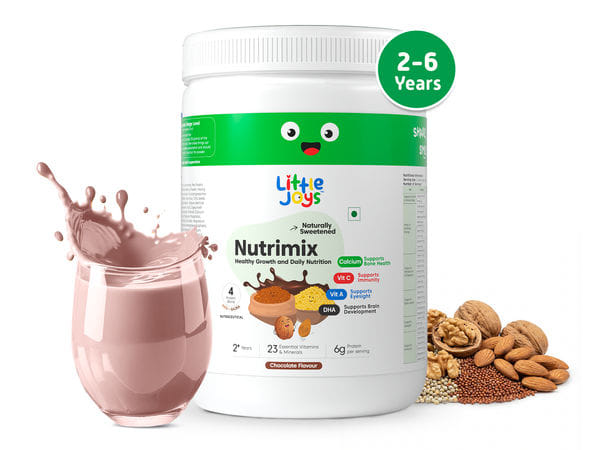
→ View the Immunity Boosting Kit
Little JoysFAQ
Can a child get enough Vitamin D3 from food alone?
Very rarely - few common Indian foods contain significant amounts. Outdoor sun and supplementation are the most reliable routes for most children.
Is Vitamin D3 the same as Vitamin D?
Vitamin D is the umbrella term. D3 (cholecalciferol) is the most effective form for raising blood levels and is what the body produces from sunlight. D2 is a plant-derived alternative but less effective.
Can you overdose on Vitamin D3 in children?
Yes - Vitamin D is fat-soluble and can accumulate. The upper tolerable limit for children is around 2,500–4,000 IU per day depending on age. Standard multivitamins providing 400–600 IU are well within safe limits.
Does Vitamin D3 help with frequent colds in children?
Yes - there's strong evidence that Vitamin D3 deficiency increases susceptibility to respiratory infections. Correcting the deficiency reduces both frequency and severity in many children.