
Top Foods for Kids' Brain Development at Every Age
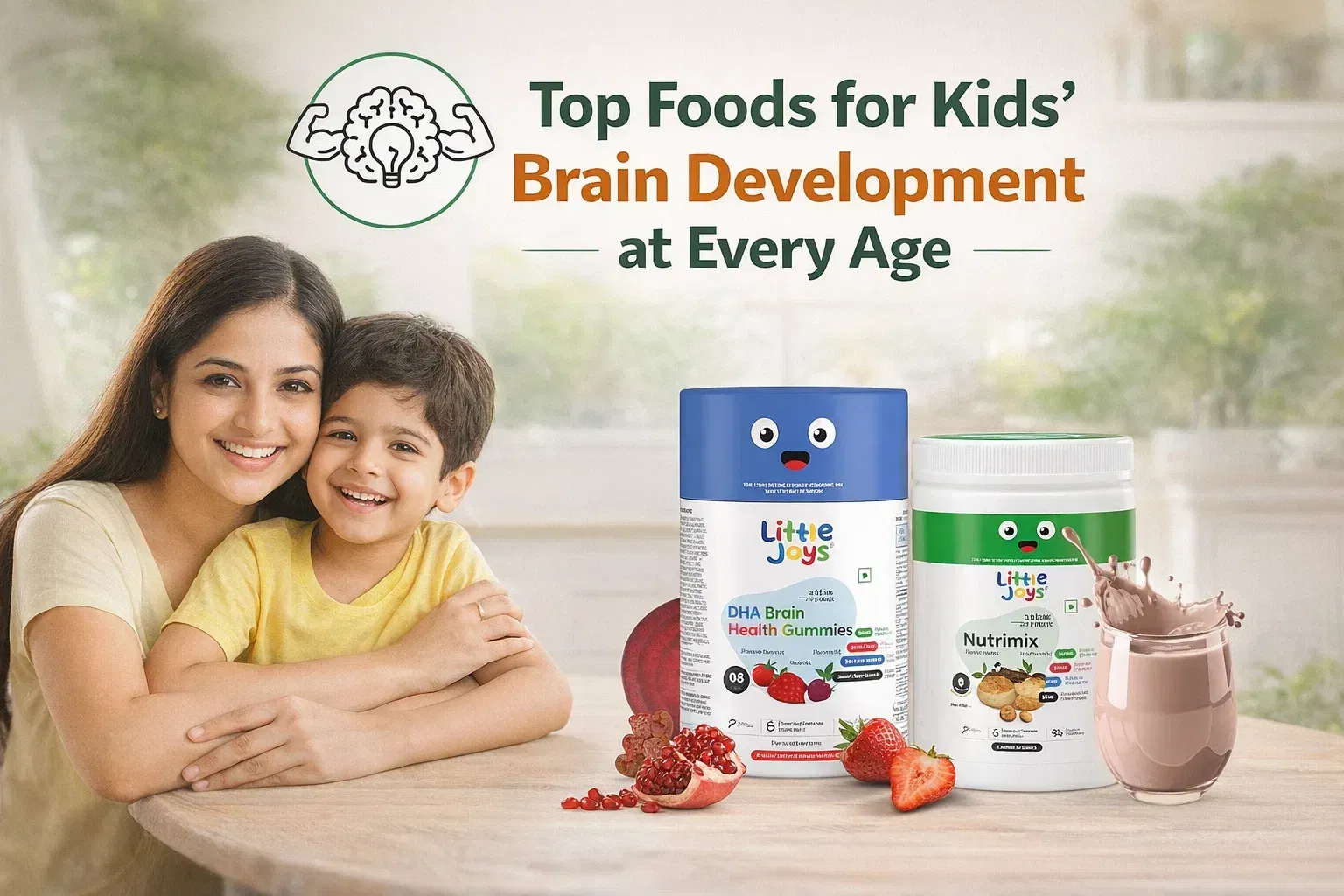
The brain is the most nutritionally demanding organ in the body, consuming around 20% of total calorie intake even at rest. The specific nutrients it needs for development - DHA, choline, iron, zinc, and B vitamins - are not distributed evenly across the food supply, and the foods richest in them are often the ones children resist most.
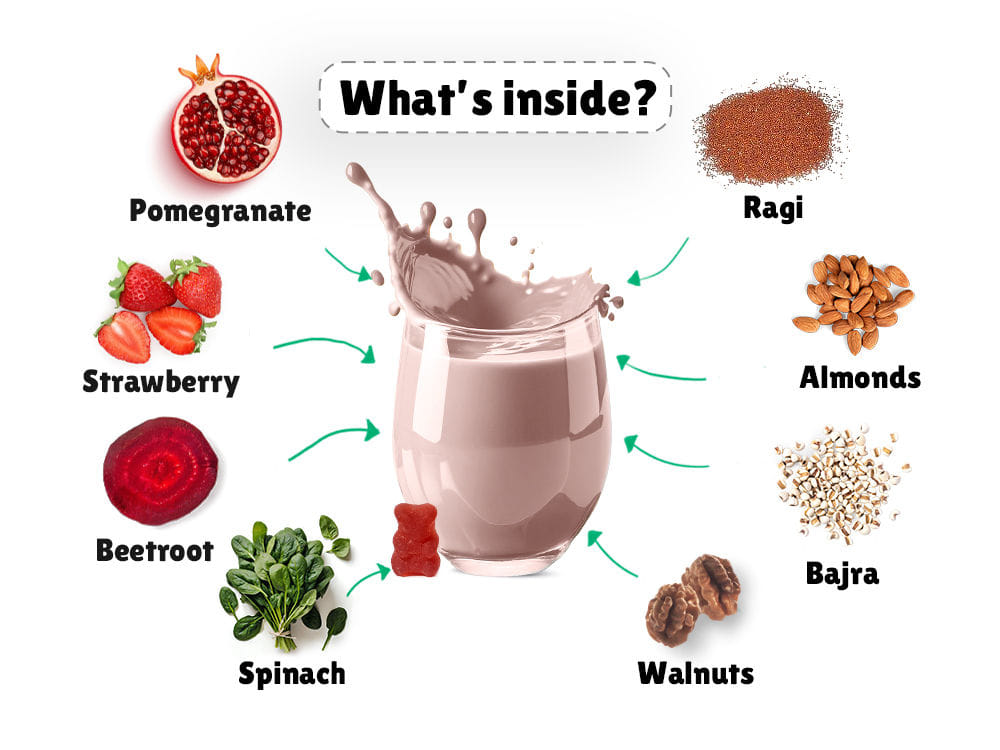
Little Joys NutriMix is built specifically around the top brain-development nutrients - almonds, walnuts, MCT oil, ragi, and plant protein - in a daily drink that children accept.
-> View Little Joys Brain Development Kit - NutriMix + Brain Gummies
Top Brain Foods by Nutrient Category
DHA Omega-3 Sources
Algal DHA supplement - the most reliable plant-based direct DHA source for vegetarian children. Identical bioavailability to fish-derived DHA. Essential for neural membrane formation throughout childhood.
Eggs - one of the few food sources combining DHA (in the yolk), choline, and iron in a single serving. One egg daily is one of the most efficient brain food choices available.
Fatty fish - salmon, sardines, and mackerel for non-vegetarian families. The highest dietary DHA sources available. 2-3 servings per week covers DHA requirements for most age groups.
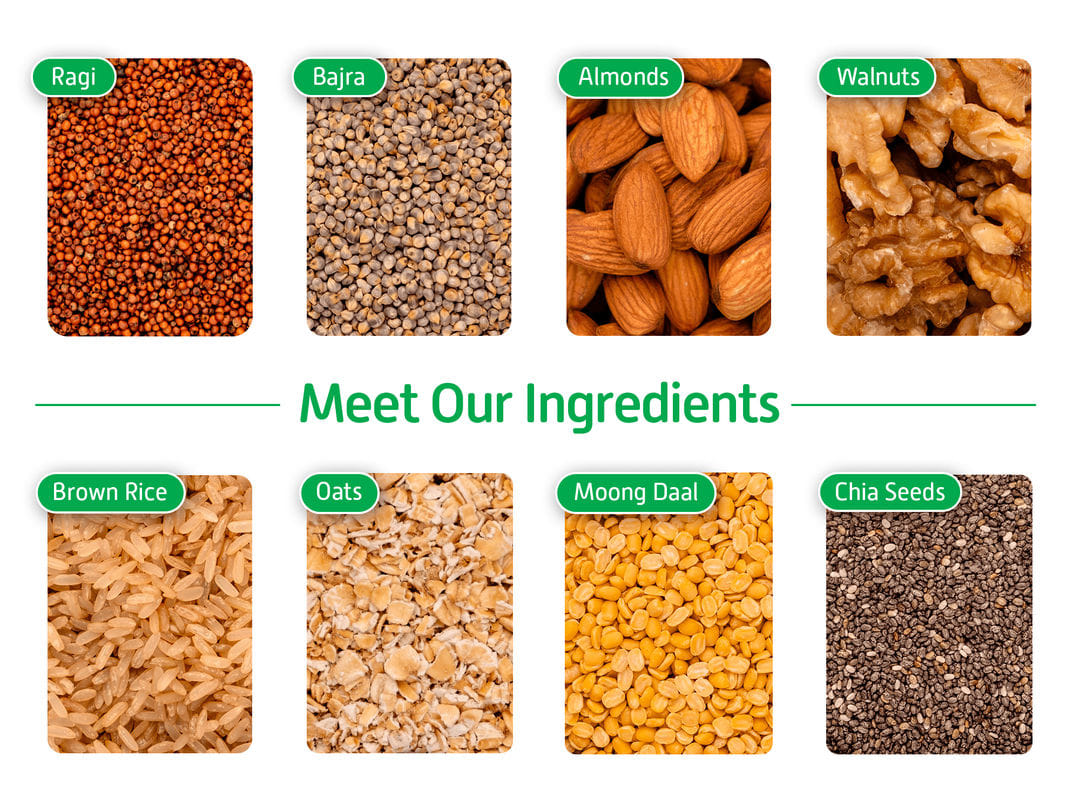
Walnuts - the richest plant source of ALA Omega-3, plus polyphenols that directly support working memory and cognitive function. 3-5 walnut halves daily.
Choline Sources
Eggs (yolk) - 147 mg per egg, covering 60-70% of a young child's daily requirement. The single most choline-dense food in the typical diet.
Moong dal - 30-50 mg per cooked bowl alongside folate, iron, and plant protein. A consistent daily contribution for vegetarian children.
Almonds - around 52 mg per 100g alongside Vitamin E and healthy fats that protect brain cell membranes.
Iron and B12 for Brain Oxygenation
Ragi - 3.9 mg of iron per 100g alongside the highest plant-based calcium available in India. Iron deficiency has the most documented long-term cognitive impact of any nutritional deficiency.
Bajra - 8 mg of iron per 100g - the highest of any common Indian grain. Also provides zinc and magnesium for neurotransmitter function.
Amla - pairing any iron-rich food with amla (the richest natural Vitamin C source) dramatically improves non-haem iron absorption.
Brain Foods by Age Group
Ages 1-3 (Rapid synaptic formation)
Priority: DHA, choline, iron, Vitamin B12
Practical daily foods: eggs, ragi porridge with ghee, moong dal khichdi, curd, almonds crushed into food, algal DHA supplement.
Ages 4-8 (Language, reading, early learning circuits)
Priority: DHA, choline, zinc, iron, B vitamins
Practical daily foods: everything above plus walnuts as snacks, bajra rotis, banana (potassium for neural function).
Ages 9-12 (Higher-order thinking, exam preparation)
Priority: DHA, choline, iron, magnesium (for focus), B12
Practical daily foods: consistent egg intake, fatty fish 2-3 times per week or algal DHA supplement, ragi and bajra as primary grains, daily walnuts.
FAQ
Q: Is there one single best brain food for children?
Eggs come closest - they combine DHA, choline, iron, and B12 in one affordable, widely available food. For vegetarian children who avoid eggs, the combination of an algal DHA supplement, daily moong dal, and ragi or bajra as the grain base covers the same ground across multiple foods.
Q: Do brain foods need to be given at a specific time of day?
Fat-soluble nutrients (DHA, Vitamin E, Vitamin A) absorb better with meals containing dietary fat. Giving walnut or almond snacks alongside breakfast or lunch - where ghee, dairy, or egg yolk is also present - improves absorption. Timing relative to learning sessions does not appear to significantly affect efficacy.