
DHA for Brain Development: What Every Parent Should Know

DHA (docosahexaenoic acid) is the primary structural fat in the human brain, making up 15-20% of total brain fatty acids. It is essential for the neural connections that underpin learning, memory, and attention - and most Indian vegetarian children are not getting enough of it.
The fastest way to address a DHA gap is a daily algal DHA supplement - the same direct source fish get their DHA from, without the allergen.
Why DHA Is the Most Important Brain Nutrient in Early Childhood
The brain builds the majority of its neural architecture between birth and age 10. DHA is incorporated into cell membranes throughout this process - it is not a performance enhancer but a literal building material.
Children with consistently low DHA show:
- Reduced sustained attention and increased distractibility
- Slower reading development
- Greater difficulty with working memory tasks
How Much DHA Does a Child Need?
| Age | Recommended Daily DHA |
|---|---|
| 1-3 years | 70-100 mg |
| 4-8 years | 90-120 mg |
| 9-13 years | 120-200 mg |
| Teens | 200-250 mg |
For a full breakdown of sources and the plant vs fish debate, see the DHA Omega-3 for Kids ultimate guide.

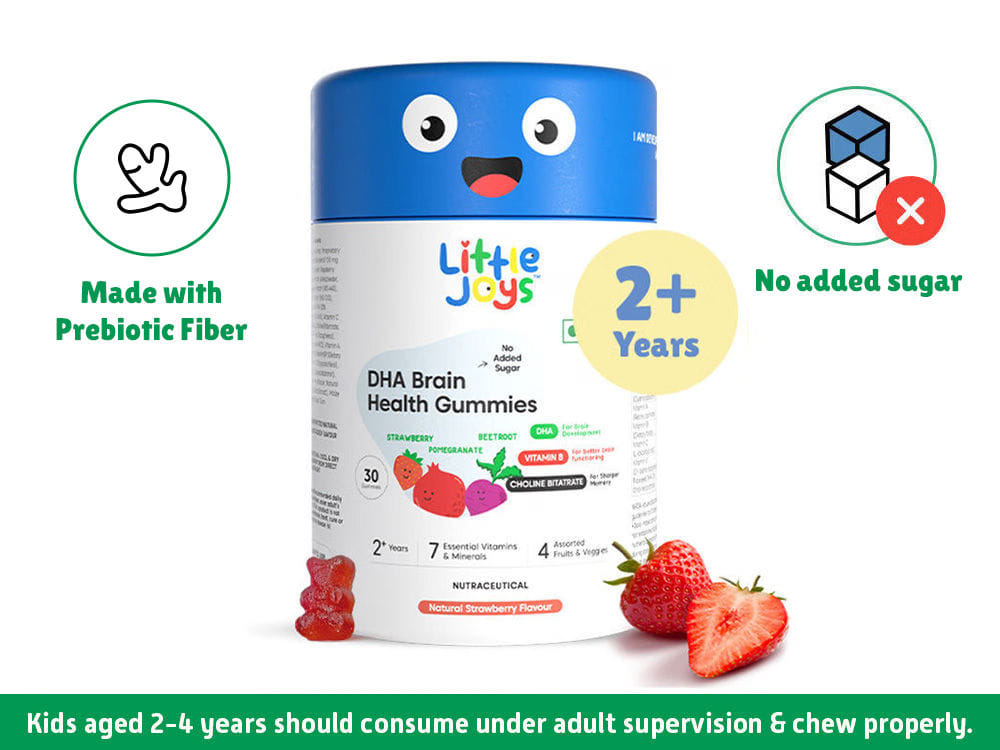
DHA Omega3 Brain Gummies for Kids
Little Joys DHA Brain Gummies boost memory, concentration and long term brain development in Kids
Powered by DHA & Choline + with 8 nutrients and 4 delicious fruits and veggies.
Better gut health | Better immunity | No Added Sugar
Why Most Indian Children Are Low on DHA
DHA is concentrated in fatty fish (salmon, sardines, mackerel) - not a regular part of most Indian family diets. The body can convert ALA from walnuts and flaxseed to DHA, but this conversion is only 5-15% efficient. Vegetarian and predominantly plant-based diets cannot reliably meet DHA requirements through ALA conversion alone.
Algal DHA is the solution. Algae produce DHA directly - fish accumulate it by eating algae. Algal oil provides pre-formed DHA at the same bioavailability as fish-derived DHA, without the allergen, heavy metal, or sustainability concerns of fish oil.
What to Look for in a DHA Supplement for Children
- Algal DHA - not fish oil or flaxseed ALA
- Age-appropriate dose matching the table above
- Zero added sugar - a daily brain supplement should not contribute to sugar load
- Combined with Omega-6 - the balance between Omega-3 and Omega-6 affects inflammatory regulation as much as absolute DHA levels
- Third-party tested for actual DHA content - potency degrades with heat and poor storage
- GMP certified manufacturing
Food Sources That Support DHA (Alongside Supplements)
Walnuts and almonds provide ALA and healthy fats that support brain cell membrane health broadly - even if the ALA-to-DHA conversion is limited. Little Joys NutriMix includes both in its whole-food base alongside MCT oil for rapid brain energy - a strong complement to a daily DHA supplement.
For children who need both the direct DHA and the broader brain nutrition support, the Little Joys Brain Development Kit combines Brain Gummies with NutriMix in a single daily routine.
-> View Little Joys Brain Development Kit
 Little Joys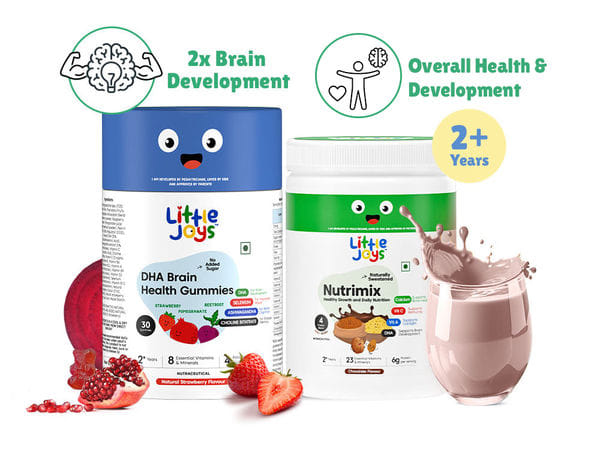
FAQ
Q: Is algal DHA as effective as fish oil DHA?
Yes - the DHA in algal oil is chemically identical to the DHA in fish oil. Fish accumulate DHA from algae. Algal oil is the original source. Multiple studies confirm equivalent bioavailability. For vegetarian families and children with fish allergies, algal DHA is the superior choice.
Q: Can I give both Brain Gummies and Multivitamin Gummies together?
Yes. Little Joys Brain Gummies provide algal DHA and Omega-6. Little Joys Multivitamin Gummies provide B12, Choline, Zinc, and D3. The two formulas are designed to complement each other - giving both covers DHA-based brain structure and micronutrient-based brain function together.
Q: How long before DHA supplementation shows cognitive results?
DHA accumulates in brain tissue gradually. Most studies show measurable improvements in attention and reading after 8-12 weeks of consistent daily supplementation. Starting early and maintaining consistently produces the most significant long-term benefit.