
How Little Joys Gummies Are Sweetened
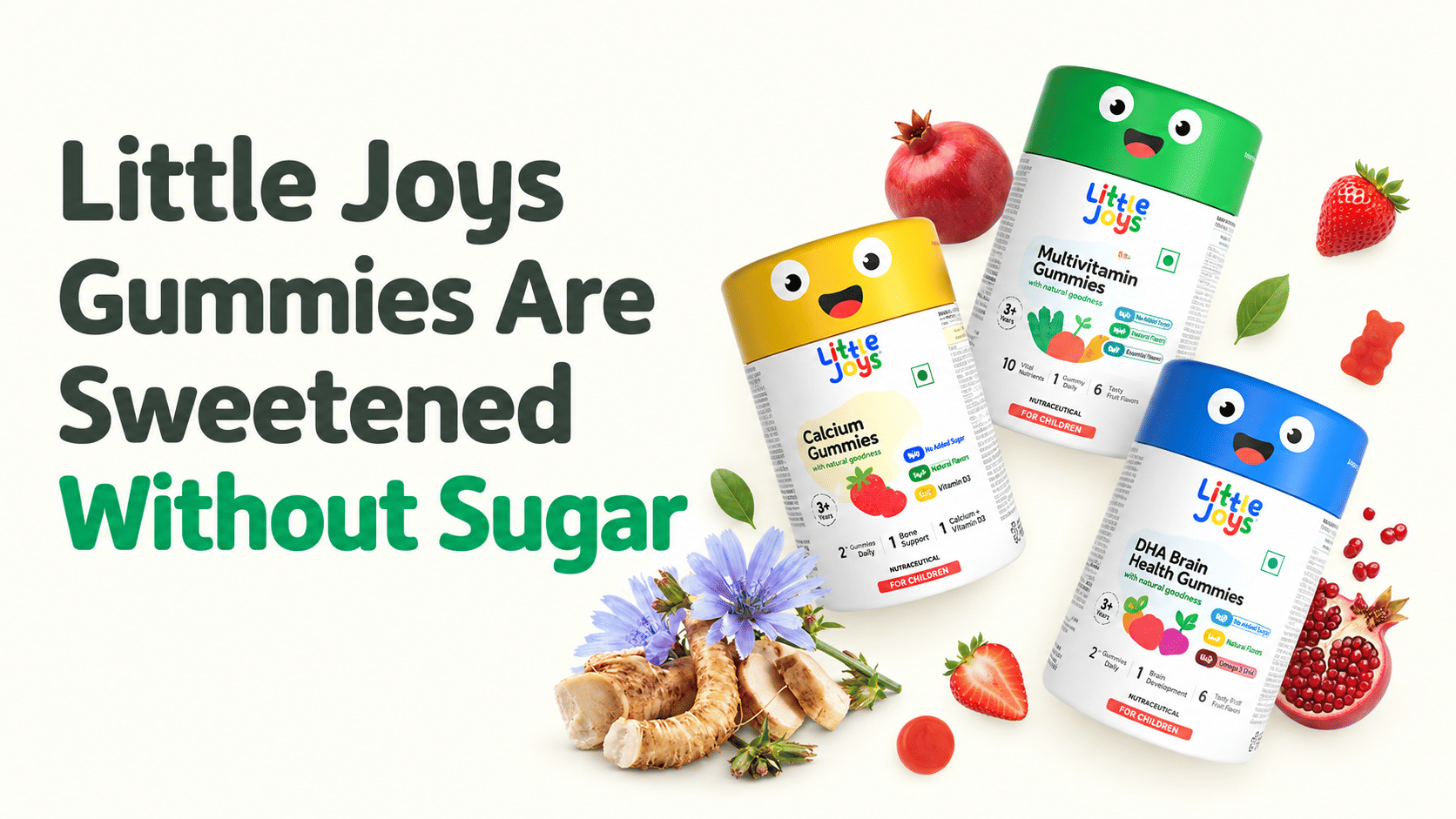
If you've ever turned a gummy pack over in the aisle and gone straight to the ingredients list, you know the moment we're talking about. A gummy is meant to be a treat a child looks forward to. But somewhere near the top of most labels sits the word you were hoping not to see: sugar. And just like that, a small everyday yes turns into one more thing to weigh up.
At Little Joys, we thought about that moment a lot. The honest truth is that a gummy has to be sweet - a child won't reach for it otherwise, and a nutrient a child won't eat helps no one. So the question was never whether it should taste good. It was how to get there in a way a mother could read, understand, and feel settled about. Here's exactly how our gummies are sweetened, and why we made the choice we did.
The answer is chicory root
The sweetness in Little Joys gummies comes from chicory root - in the form of its prebiotic fibre. And it isn't a minor supporting ingredient. Chicory root fibre makes up about 88% of each gummy. It's essentially what the gummy is.
Chicory is a plant, and the fibre from its root does three quiet jobs at once. It gives the gummy its soft, chewy base - the texture children actually enjoy. It's a prebiotic fibre, which means it helps nourish the good bacteria in the gut. And it carries a gentle, natural sweetness of its own. One ingredient, doing the work usually split between a filler, a sweetener, and a binder. The result is a formula with zero added sugar. Not "less sugar than before" - no added sugar, full stop.
 Team MosaicWellness
Why we left refined and added sugar out
We could have reached for refined sugar. It's cheap, easy, and makes almost anything taste good on the first bite. Plenty of gummies are built that way.
We chose not to, for a simple reason. Refined sugar is precisely the ingredient you scan a label to avoid. If the sweetness in a "healthy" gummy comes from the same white sugar you're already trying to reduce, the product hasn't solved anything - it's just moved the problem into a nicer wrapper. Building the gummy around chicory root fibre instead meant the thing that makes it sweet is also the thing that makes it fibre-rich. What makes it enjoyable and what makes it worth giving are, for once, the same ingredient.
The gummy and the vitamins, thought of together
There's a reason we didn't sweeten first and add the good stuff later. From the start, the gummy and the nutrition inside it were one decision, not two.
A multivitamin only helps if a child actually takes it, day after day, without a standoff. So the format had to be something a child reaches for on their own - and a gummy does that. But a gummy loaded with sugar quietly cancels out the reason you picked it up. You'd be handing over the very thing you were trying to cut, just so the vitamins could ride along. Chicory root fibre is what let us avoid that. Because the base is doing the sweetening, the vitamins don't need sugar to be palatable - they simply sit inside a soft, chewy, fibre-rich gummy a child already likes.
Why this matters to you
You already know refined sugar when you see it. What's been missing is a gummy that meets that standard without compromising on taste - because a child who spits it out has settled nothing. Chicory root fibre lets both be true: a base a child finds nice to chew, and an ingredient list you can read in ten seconds and simply put back down.
A child who enjoys it. A mother who approves of it. On the sweetness question, that's the standard we held ourselves to - and chicory root fibre is how we met it.