
9 Signs of Dehydration in Children Parents Should Know
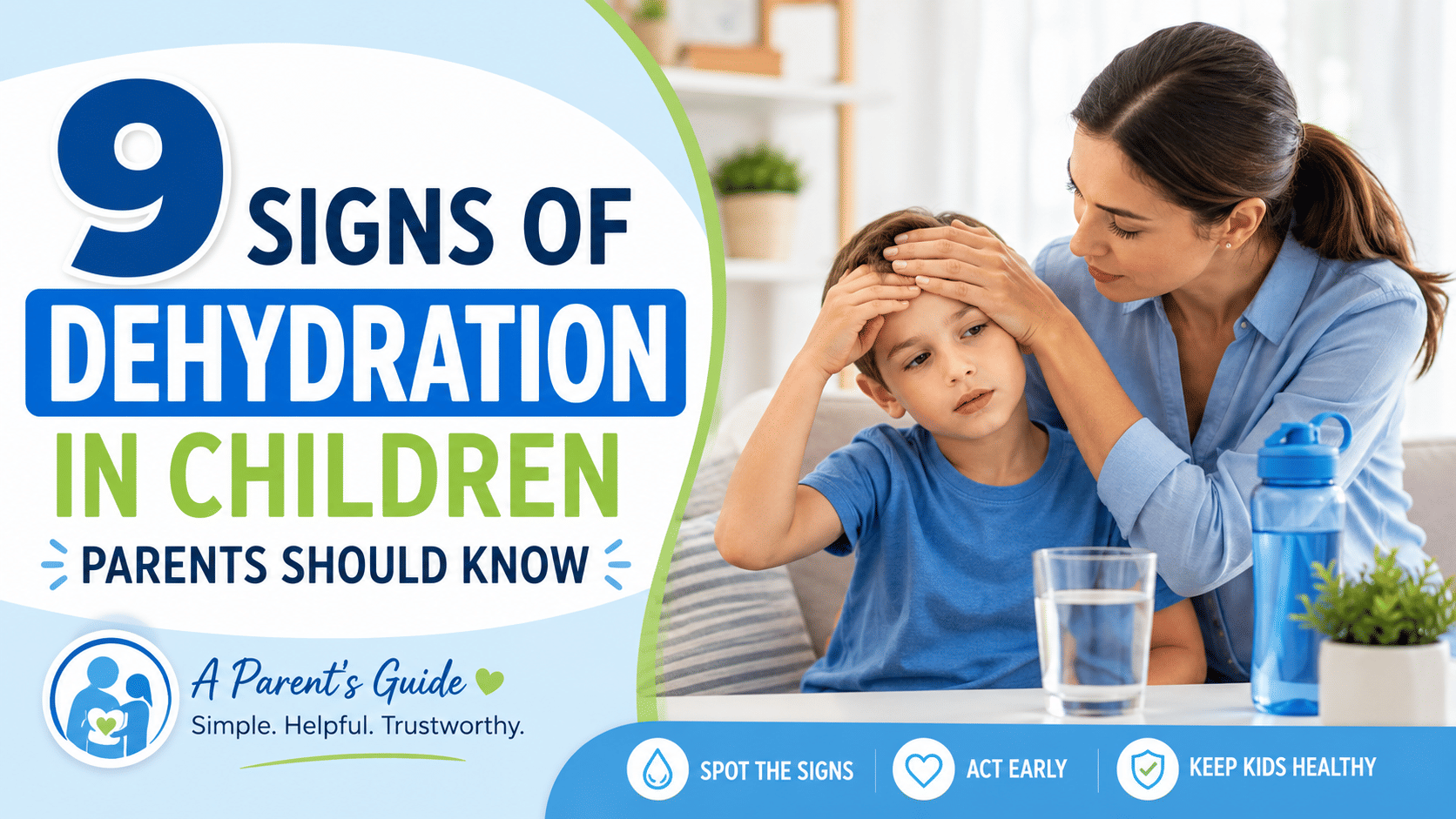
Dehydration occurs when a child loses more water and electrolytes than they take in. Vomiting and diarrhoea are among the most common causes, but fever, heavy sweating, hot weather, poor feeding and painful illnesses that discourage drinking can also contribute.
Babies and young children can become dehydrated faster than adults because they have smaller fluid reserves, relatively high fluid needs and may be unable to communicate thirst or obtain a drink without help.
Some early symptoms can be managed by increasing fluids and obtaining medical advice. Severe dehydration can affect circulation, breathing, brain function and the kidneys.
Seek urgent medical care if a child is difficult to wake, confused, unable to drink, fainting, breathing rapidly, producing almost no urine or developing cold, pale, blue or mottled skin.
This article provides general education and cannot assess an individual child’s hydration status.
 Dr. Prateek Phaldesai
Signs of Dehydration at a Glance
A single symptom does not always reveal the severity. Clinicians assess the child’s appearance, alertness, drinking, urine output, tears, mouth, eyes, breathing, circulation and recent weight together.
1. Reduced Urination or Fewer Wet Diapers
Changes in urine output are among the most useful observations parents can make.
Signs include:
- Fewer wet diapers than normal
- Much longer gaps between urination
- Only a small amount of urine
- Dark yellow or strong-smelling urine
- An older child urinating only once or twice during a day
Experts says no wet diaper for around three hours among possible dehydration signs in an infant or young child. Other medical guidance uses longer time thresholds for urgent care, depending on the child’s age, condition and accompanying symptoms. Parents should therefore compare urine output with the child’s usual pattern rather than waiting for one exact number of hours.
Little or no urine accompanied by extreme tiredness, vomiting, inability to drink or cold skin needs urgent medical assessment.
2. Dry Mouth, Lips or Tongue
A dehydrated child’s mouth may look or feel:
- Dry
- Sticky
- Coated
- Cracked around the lips
- Less moist than usual
The tongue may appear dry, and saliva can become thick or stringy.
Dryness is more meaningful when it occurs with reduced urination, absent tears or lower energy. Mild or moderate dehydration commonly causes dry lips and mouth, increased thirst and less frequent urination.
3. Few or No Tears When Crying
Children normally produce visible tears during sustained crying. Dehydration can reduce tear production.
A lack of tears should be interpreted alongside other observations because a short cry may not always produce visible tears.
It is more concerning when the child also has:
- A dry mouth
- Sunken eyes
- Reduced urine
- Poor feeding
- Unusual irritability
- Increasing drowsiness
4. Increased Thirst or Eager Drinking
Older children may repeatedly ask for water or say that they cannot satisfy their thirst.
Babies and toddlers may:
- Reach eagerly for a bottle or cup
- Feed more urgently
- Become upset when a drink is removed
- Attempt to drink quickly
Strong thirst can indicate fluid loss, but parents should not depend on thirst alone. A baby may be unable to communicate it, while a severely dehydrated child may become too weak or drowsy to drink.
In WHO’s diarrhoea-assessment framework, drinking eagerly or appearing very thirsty contributes to a classification of “some dehydration” when combined with at least one other specified sign.
Little Joys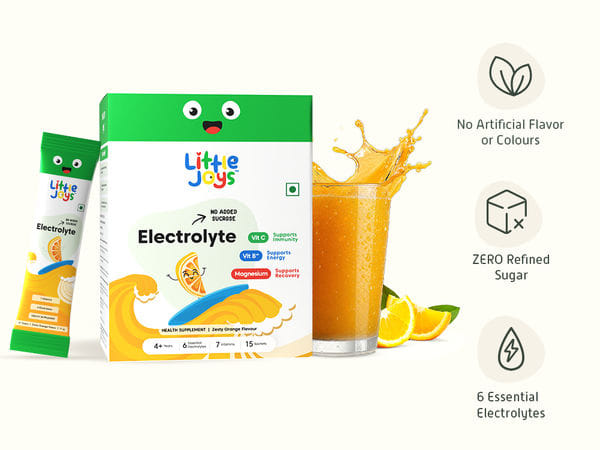
5. Tiredness, Irritability or Reduced Play
An early behaviour change may appear before more dramatic physical signs.
A child may be:
- More tired than usual
- Cranky or difficult to settle
- Less interested in playing
- Unusually quiet
- Clingy
- Unable to concentrate
- Reluctant to stand or move
As dehydration worsens, the child can become very sleepy, listless, confused or difficult to wake. Reduced alertness is a serious warning sign rather than ordinary tiredness from being ill.
6. Sunken Eyes
The eyes may appear deeper in their sockets or have more pronounced shadows around them.
Parents should compare the appearance with what is normal for their child. Some children naturally have deep-set eyes, and illness or poor sleep can also affect their appearance.
Sunken eyes combined with thirst, irritability, reduced urine or delayed skin recoil provide stronger evidence than sunken eyes alone. Both WHO and major paediatric references include sunken eyes in dehydration assessment.
7. A Sunken Fontanelle in a Baby
The fontanelle is the soft area on the top of a young baby’s head.
A noticeably sunken fontanelle may indicate dehydration, especially when the baby also has:
- Fewer wet diapers
- Poor feeding
- A dry mouth
- Few or no tears
- Sunken eyes
- Unusual sleepiness
NHS and MSD guidance recommend medical attention when a dehydrated infant has a sunken fontanelle or other significant symptoms.
The appearance can change slightly depending on the baby’s position and whether they are crying, so it should not be used as the only test.
8. Skin That Returns Slowly After a Pinch
The skin-pinch or skin-turgor test examines how quickly lifted skin returns to its usual position.
In children, clinicians commonly assess skin on the abdomen. Normal skin returns promptly. Skin that remains tented or returns slowly can indicate fluid loss. Reduced skin turgor is generally a later sign and is more associated with moderate or severe dehydration than with the earliest stage.
Can parents use the skin-pinch test?
Parents may notice that a child’s skin appears less elastic, but the test should not be used to decide that a child is safe.
Its accuracy may be affected by:
- Body composition
- Malnutrition
- Swelling
- Skin conditions
- The area tested
- How the skin is lifted
- The child’s age
Clinicians combine skin recoil with alertness, eyes, mouth, tears, urine, pulse, breathing and circulation because no single physical sign measures dehydration precisely.
A normal skin pinch does not rule out dehydration.
9. Rapid Breathing, Fast Pulse or Poor Circulation
Severe fluid loss can reduce circulating blood volume and affect the delivery of oxygen and nutrients to the body.
Urgent signs include:
- Rapid or shallow breathing
- A fast heartbeat while resting
- Cold hands and feet
- Pale, blue, grey or blotchy skin
- Dizziness or fainting
- Confusion
- Weakness
- Difficulty standing
- Very little or no urine
Hypotension and shock are late signs. A child with poor circulation, altered alertness or breathing changes needs emergency care rather than more observation at home.
On darker skin, changes may be easier to recognise on the lips, tongue, palms, soles or inside the eyelids.
Signs of Dehydration in Children Mnemonic: DRY KID
The following DRY KID mnemonic is a memory aid created for this article. It is not a validated medical scoring system.
- D - Decreased urine
- R - Reduced tears
- Y - Young baby with sunken eyes or fontanelle
- K - Kid is unusually tired, irritable or less playful
- I - Increased breathing or heart rate
- D - Dry mouth and delayed skin recoil
The mnemonic may help parents remember several areas to observe, but one serious symptom-such as confusion or inability to drink-is enough to seek urgent care.
What Are the Signs of Some Dehydration in Children?
WHO uses some dehydration as a clinical classification for a child with diarrhoea.
A child is classified as having some dehydration when at least two of these signs are present:
- Restless or irritable
- Sunken eyes
- Drinks eagerly or appears very thirsty
- Skin pinch returns slowly
Severe dehydration is considered when at least two more serious signs are present, such as lethargy or unconsciousness, sunken eyes, inability to drink or drinking poorly, and skin that returns very slowly after a pinch.
This classification was designed for trained health workers evaluating children with diarrhoea. It is not a universal home test for every cause of dehydration.
Parents should seek medical advice sooner when:
- The child is a young infant
- Vomiting is persistent
- Fluids cannot be retained
- Diarrhoea is frequent or bloody
- The child has an underlying medical condition
- Alertness or breathing changes
- The parent feels the child is deteriorating
Signs by Age
Babies
Look for:
- Fewer wet diapers
- Poor or weak feeding
- Dry mouth
- Few or no tears
- Sunken eyes
- Sunken fontanelle
- Irritability
- Unusual sleepiness or floppiness
A dehydrated infant should be discussed promptly with a paediatrician because young babies can deteriorate quickly.
Toddlers
Possible signs include:
- Dark urine
- Little or no urine for many hours
- Dry or cracked lips
- No tears
- Low energy
- Extreme fussiness
- Sunken eyes
- Faster breathing or heart rate
Toddlers may be unable to describe dizziness, nausea or intense thirst. Behavioural changes can therefore be especially important.
School-aged children
Older children may report:
 Little Joys
- Thirst
- Headache
- Dizziness
- Weakness
- Nausea
- Muscle cramps
- Difficulty concentrating
Observe whether they are still urinating normally and can drink comfortably.
Common Causes of Dehydration
Vomiting and diarrhoea
These are the most common causes in children. They remove water and electrolytes while making it difficult to replace losses.
Fever
Fever can increase fluid loss through faster breathing and sweating. Children may also drink less because they feel unwell.
Hot weather and physical activity
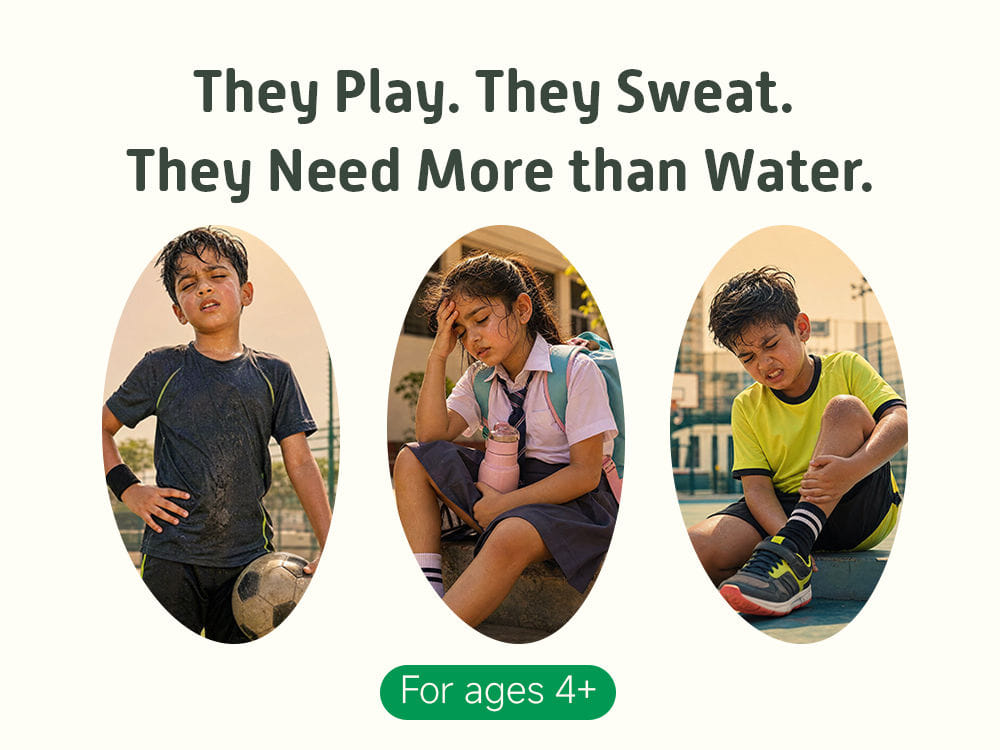
Children may lose significant water and electrolytes through sweat, particularly during prolonged outdoor play or sport.
Sore throat or mouth pain
Children with throat infections, mouth ulcers or hand-foot-and-mouth disease may avoid drinking because swallowing hurts.
Feeding difficulty
A baby may receive too little fluid because of poor milk transfer, nasal congestion, vomiting or another feeding problem.
Medical conditions
Diabetes, kidney disorders, severe burns and conditions that increase urine production can also cause dehydration. Recurrent dehydration without an obvious stomach illness or heat exposure requires medical assessment.
Can Dehydration Cause Fever?
Dehydration does not usually explain an infection-related fever.
The more common sequence is:
infection causes fever, vomiting or diarrhoea → fluid loss increases → dehydration develops
A dangerously high body temperature can also occur with heat illness, which may involve dehydration but requires urgent cooling and medical assessment.
Do not assume that a measured fever is simply caused by insufficient water. The underlying infection or illness may require separate evaluation. Fever is listed as a common contributor to paediatric dehydration in hospital and clinical guidance.
What to Give a Child Who May Be Dehydrated
The correct fluid depends on the cause, age and severity.
Continue breastfeeding
Breastfed babies should generally continue feeding frequently unless their clinician gives different instructions.
Offer small, frequent amounts
A child who is vomiting may tolerate small sips better than a full cup.
AAP guidance commonly recommends offering oral rehydration fluid by spoon or syringe in small amounts, such as 5–10 mL every five minutes, and increasing gradually when vomiting settles. Follow the child’s clinician and the product instructions.
Use medical ORS for vomiting or diarrhoea
A paediatric oral rehydration solution contains water, glucose and electrolytes in a controlled balance designed to improve absorption.
WHO identifies ORS as the standard oral treatment for dehydration caused by diarrhoea.
Do not make the solution stronger or weaker than instructed. Incorrect mixing can cause dangerous electrolyte abnormalities.
Avoid relying on juice, soda or ordinary sports drinks
Undiluted juice, soda and many sports drinks contain too much sugar and inappropriate electrolyte concentrations for treating dehydration from gastroenteritis. They may worsen diarrhoea or fail to replace losses correctly.
Everyday Hydration Versus Medical Rehydration
During an ordinary day, water and milk are the preferred routine drinks for most children. The American Academy of Pediatrics describes plain water and milk as the best everyday beverage choices.
For active children aged four and above, families may consider Little Joys Electrolyte after prolonged sport, travel or hot-weather activity. It is an orange and coconut-water-based electrolyte drink and that is for ages four and above and is not for medicinal use.
Little JoysIt can therefore be positioned as an optional everyday hydration supplement for an eligible child-not as “complete” medical hydration and not as a treatment for dehydration caused by vomiting, diarrhoea or illness.
It should not replace:
- Water as the main daily drink
- Breast milk or formula for infants
- Properly formulated ORS
- Paediatric medical advice
- Emergency treatment
When to Contact a Doctor
Seek prompt medical advice when:
- A baby has significantly fewer wet diapers.
- An older child is urinating much less than usual.
- The child cannot keep fluids down.
- Vomiting or diarrhoea is persistent.
- The mouth is very dry.
- The eyes or fontanelle appear sunken.
- The child has few or no tears.
- The child is becoming increasingly tired or irritable.
- Home rehydration does not appear to be working.
- The parent is worried about the child’s condition.
When Dehydration Is an Emergency
Seek emergency care when the child:
- Is confused
- Is difficult to wake
- Cannot drink or swallow safely
- Has fainted
- Has little or no urine
- Has rapid or difficult breathing
- Has a very fast or weak pulse
- Has cold, pale, blue, grey or mottled skin
- Is floppy, unresponsive or having a seizure
Severe dehydration can cause electrolyte abnormalities, kidney injury, shock, seizures, coma and death.
How to Help Children Stay Hydrated
- Offer water regularly rather than waiting for intense thirst.
- Send a refillable bottle to school.
- Schedule drink breaks during outdoor play.
- Encourage fluids before, during and after sport.
- Offer water with meals and snacks.
- Increase access during hot or humid weather.
- Include water-rich fruit, vegetables, soups and yoghurt.
- Monitor urine and energy during illness.
- Keep an age-appropriate medical ORS product available when advised.
- Teach older children that dark urine and dizziness can signal the need to stop, rest and drink.

An everyday electrolyte product may be useful after extended sweating for some children, but it should be selected according to age, ingredients, allergies and paediatric advice. Little Joys’ current product label states ages four and above and specifies that it is not a medicinal product.
Frequently Asked Questions
What are the first signs of dehydration in children?
Early signs commonly include a dry or sticky mouth, darker urine, less frequent urination, fewer tears, thirst, irritability and lower energy.
What is the most reliable sign parents can monitor?
Urine output is particularly useful because parents can compare it with the child’s usual pattern. However, dehydration should be assessed using several signs rather than urine alone.
What is the skin-pinch sign?
The skin-pinch sign refers to skin that remains raised or returns slowly after being gently lifted. It suggests reduced skin turgor, but it is generally a later sign and cannot determine the child’s hydration status by itself.
What are signs of some dehydration in children?
Under WHO’s diarrhoea framework, some dehydration means at least two of the following: restlessness or irritability, sunken eyes, eager drinking or thirst, and skin that returns slowly after a pinch.
What is a mnemonic for dehydration signs?
The non-clinical DRY KID memory aid stands for decreased urine, reduced tears, young infant with sunken eyes or fontanelle, kid less active, increased breathing or heartbeat, and dry mouth or delayed skin recoil.
It is not a replacement for medical assessment.
Does dark urine always mean dehydration?
No. Vitamins, medicines, foods and medical conditions can change urine colour. Dark urine combined with reduced urination, thirst or a dry mouth is more suggestive of dehydration.
Can dehydration cause fever?
Dehydration is more often a consequence of fever than its cause. A true fever may indicate infection or heat-related illness and should not automatically be attributed to low fluid intake.
Is plain water enough?
Water is suitable for normal daily hydration and minor thirst. A child losing significant fluid through vomiting or diarrhoea may need a properly formulated paediatric ORS.
Can Little Joys Electrolyte replace ORS?
No. Little Joys Electrolyte is not for medicinal use. It is for everyday hydration after sweating in children aged four and above, but it should not replace medical ORS or clinical care during illness.
How quickly can a child become dehydrated?
The timing depends on age, body size, heat exposure, fluid intake and the amount of vomiting or diarrhoea. Babies and young children can deteriorate within hours when losses are continuing and they cannot drink adequately.
Final Takeaway
The most useful early signs of dehydration in children are reduced urine, a dry mouth, fewer tears, thirst, irritability and declining energy.
Sunken eyes, a sunken fontanelle, delayed skin recoil and significantly reduced urination suggest increasing dehydration. Confusion, inability to drink, difficulty waking, fainting, rapid breathing or cold and mottled skin require emergency assessment.
For everyday hydration, make water readily available before, during and after activity. When illness causes vomiting or diarrhoea, use a properly formulated paediatric oral rehydration solution when advised rather than substituting an ordinary sports or wellness drink.