
Nutrition Tips for Kids Who Don't Eat Vegetables
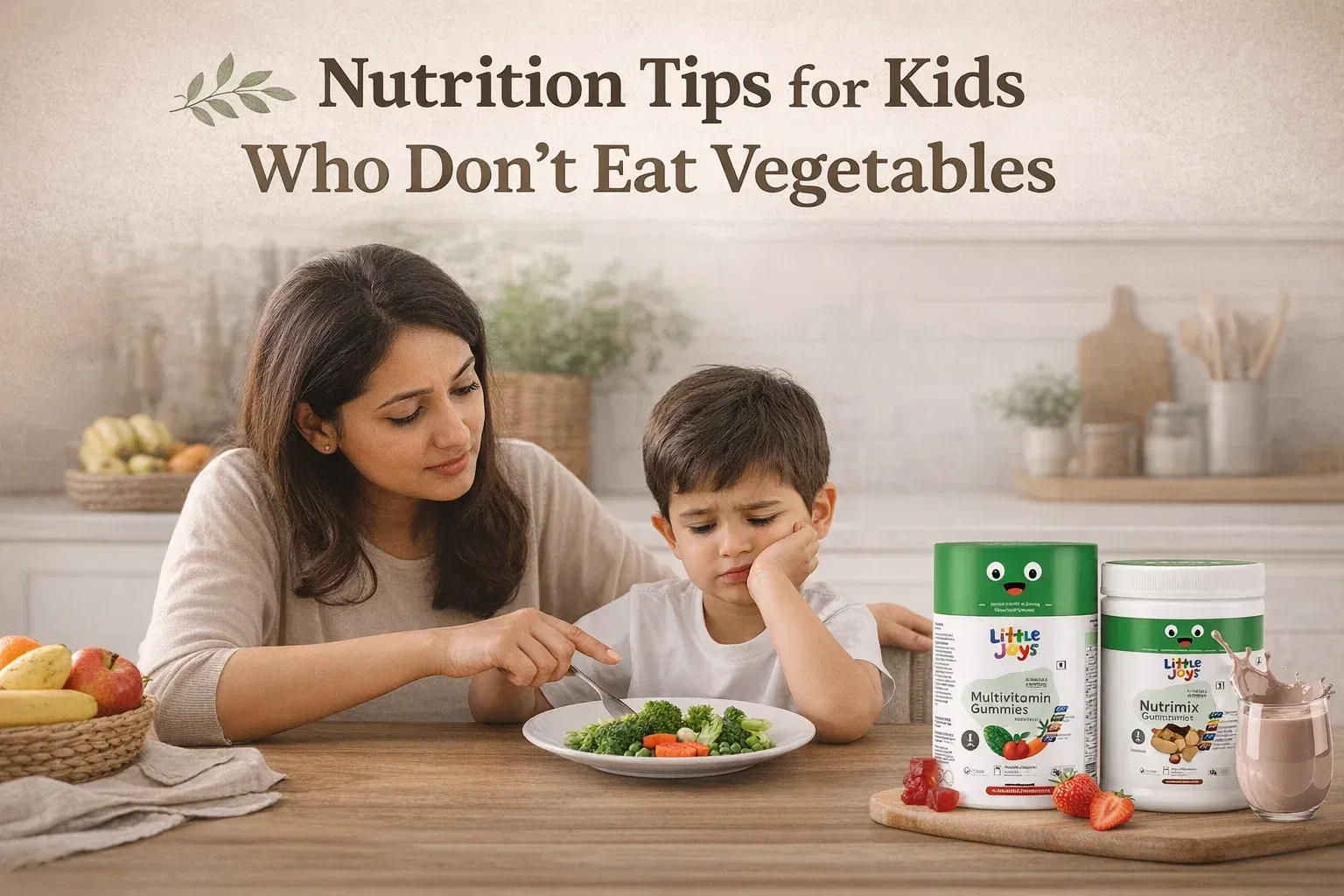
Most parents know vegetables matter. Getting children to actually eat them is a different problem entirely. If your child regularly refuses greens, coloured vegetables, or anything that looks remotely like a plant, you are not alone - and you are not failing.
The practical goal is not perfect vegetable acceptance. It is covering the nutritional gaps that vegetable refusal creates.
Why Vegetable Refusal Is So Common
Children have more taste buds than adults and a natural sensitivity to bitter compounds - the same compounds found in many vegetables. This is an evolutionary protective instinct, not stubbornness or a parenting failure. Most children outgrow peak food neophobia between ages 2 and 8, but the window is long and the nutritional cost of waiting is real.
The nutrients most at risk when vegetables are consistently refused are Vitamin A, Vitamin C, folate, iron, fibre, and a range of antioxidants that whole grains and legumes cannot fully replicate.
Practical Strategies That Actually Work
Blend vegetables into accepted foods
Pureed spinach in a chocolate smoothie. Grated carrot in roti dough. Cauliflower blended into dal until it disappears. The colour and texture change, but the micronutrients remain. Most children aged 2-6 cannot detect vegetables in strongly flavoured bases.
Repeated exposure without pressure
Research consistently shows that children need to be exposed to a new food 10-15 times before accepting it. Offering a small portion of a refused vegetable alongside accepted foods - without comment or pressure - is more effective than negotiating. The no-pressure part is critical: pressure creates negative associations that extend the refusal period.
Serve raw over cooked when possible
Many children who reject cooked vegetables accept raw versions. Raw carrot sticks, cucumber slices, and cherry tomatoes are often accepted as snacks where the cooked equivalents are not. The crunch and lower bitterness of raw vegetables works in your favour.
Use strong flavours as cover
A small amount of good-quality peanut butter, cheese, or curd alongside raw vegetables gives children a flavour anchor they trust. The vegetable becomes secondary to the dip, and repeated exposure still happens.
Covering the Nutritional Gaps
Even with smart cooking strategies, consistent vegetable refusal creates real nutritional gaps. The most efficient ways to address them without requiring vegetable acceptance:
Vitamin A: Sweet potato, eggs, and dairy provide Vitamin A from non-vegetable sources. A daily multivitamin containing retinyl palmitate covers any remaining gap.
Vitamin C: Amla mixed into curd or a smoothie is the most concentrated plant source available. One small amount daily covers full requirements without needing bell peppers or leafy greens.
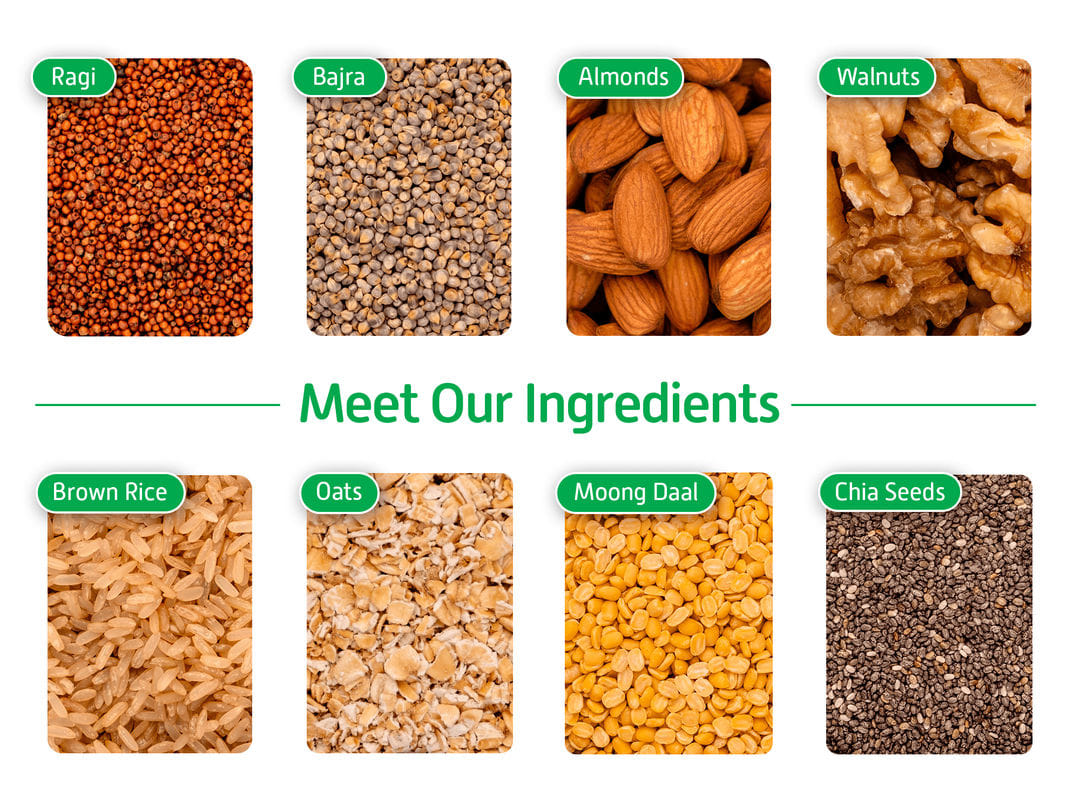
Folate: Moong dal is one of the richest dietary folate sources and is accepted by most picky eaters in khichdi or blended into rice.
Fibre: Ragi and bajra rotis and porridges provide meaningful fibre alongside minerals - covering the gut health function that vegetables would otherwise provide.
Broad micronutrient gaps: A quality daily multivitamin gummy covers Vitamin C, Zinc, D3, B12, and Vitamin A together - a reliable daily safety net for children with genuinely limited diets.
For children who also refuse most grains, legumes, and fruits, a nutrition powder that covers protein, calcium, and 23 vitamins and minerals in a drink they accept is the most practical single intervention available.
Little Joys NutriMix provides ragi, bajra, plant protein, and 23 vitamins and minerals in a daily drink - zero refined sugar, available in chocolate, strawberry, and vanilla. Paired with Little Joys Multivitamin Gummies, it closes the micronutrient gaps that a vegetable-free diet creates.

Multivitamin Gummies for Kids
100% Safe | Paediatrician Recommended
✅ 11+ vitamins & minerals for your little one's daily nutritional needs.
🍎 Contains 6 real fruits & vegetables! Fulfills any nutrition gaps in diet due to fussy or picky eating.
🛡️ Contains Vitamin C, Turmeric (Haldi), Vitamin B12 & Zinc which are known to boost immunity.
🚫 ZERO ADDED SUGAR - Uses a prebiotic fibre chicory root as its base. Along with gut health and immunity benefits it provides natural sweetness to the gummy.
🚫 No artificial colours, flavours or preservatives. Only the YUMMIEST, CLEANEST, HEALTHIEST gummy!
FAQ
Q: Should I keep trying to get my child to eat vegetables even if they always refuse?
Yes - but on a low-pressure schedule. Continue offering small portions of refused vegetables alongside accepted foods once or twice a week. Do not comment on whether they eat it. Over months, acceptance rates improve significantly with repeated neutral exposure.
Q: Are there vegetables most picky eaters will accept?
Corn, peas, and cherry tomatoes are accepted by most picky eaters. Raw carrot and cucumber sticks work for many. Potatoes in almost any form are broadly accepted. These are not nutritionally complete, but they are a starting point for building variety.