
Nutrition Powder for Babies and Toddlers: What to Know
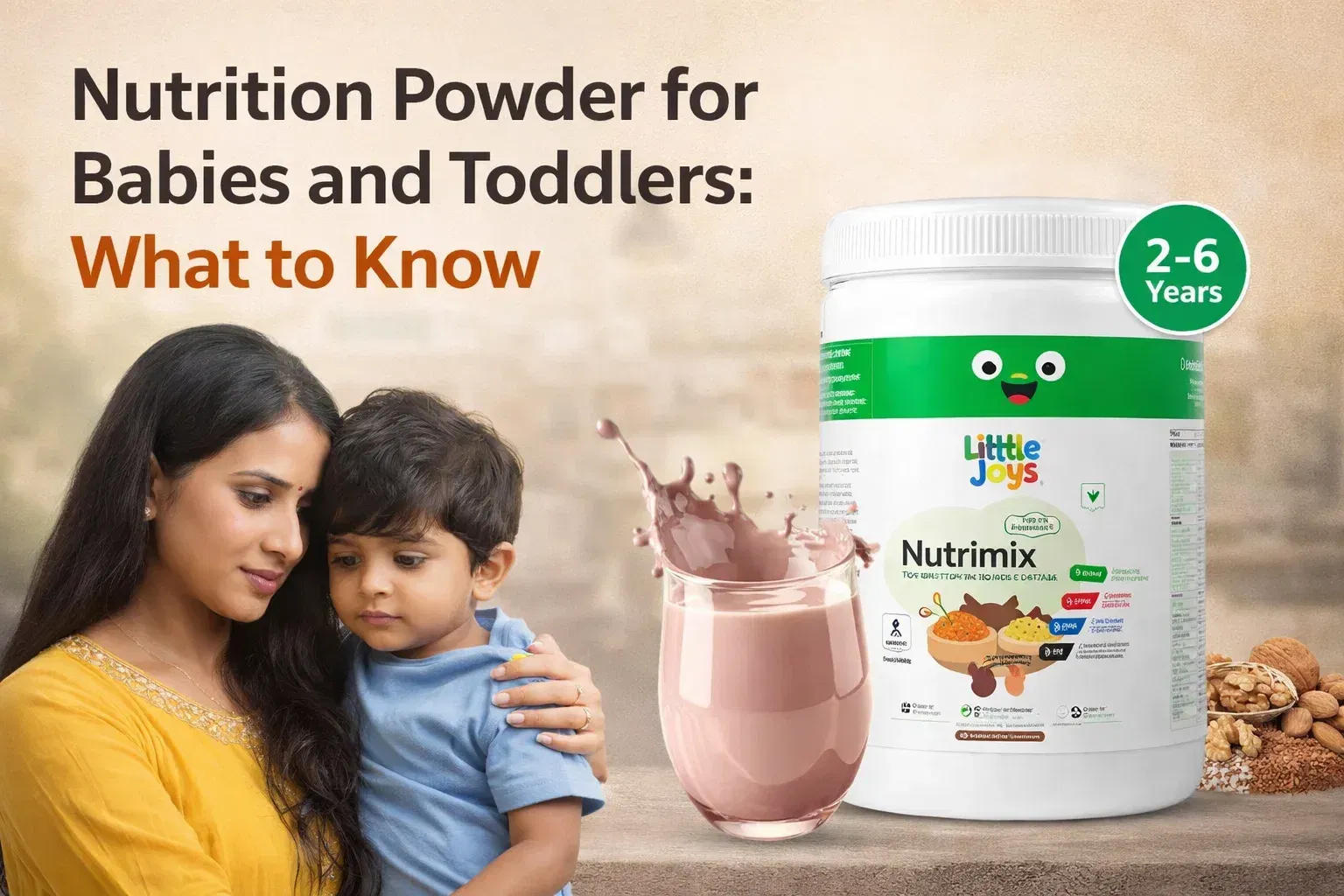
Parents searching for a nutrition powder for their very young child often find the category confusing - products marketed broadly as "for children" cover a wide age range, and what is appropriate for a 4-year-old is not necessarily right for an 18-month-old.
Here is a clear guide on what is safe, what to look for, and what to avoid for babies and toddlers specifically.
Age Thresholds: The Non-Negotiables
Under 6 months: No nutrition powder of any kind. Breast milk or formula covers all nutritional needs at this stage. Introducing powders before 6 months is not appropriate.
6-24 months: Single-ingredient grain porridges (ragi, rice, oats) are appropriate from 6 months as first foods. Multi-ingredient commercial powders with added vitamins and flavourings are not designed for this window and should not be used.
2 years and above: Age-specific nutrition powders designed for 2-6 year olds are appropriate from this point, provided the product meets quality criteria.
What to Look for in a Toddler Nutrition Powder
Whole grain base
The first ingredient should be a recognisable whole grain - ragi or bajra are ideal for Indian toddlers. Both provide natural calcium, iron, and fibre from the grain itself - not as synthetic additions to a refined base.
Zero refined sugar
Toddler taste preferences are still forming at age 2-3. A daily powder that uses refined sugar as its sweetener sets the taste baseline too high and contributes unnecessary sugar load. Look for products sweetened only with jaggery or dates.
Age-appropriate vitamin dosing
Vitamins A and D are fat-soluble and can accumulate in the body. Products designed for older children or adults contain higher doses that are not appropriate for toddlers. Always check that the product explicitly states suitability for the child's age group.
Plant-based protein at appropriate levels
Protein from whole food sources like moong dal, peas, and nuts is appropriate for toddlers. Avoid powders using large amounts of isolated soy or whey protein as the primary protein source - these are not calibrated for young children.
No artificial colours, flavours, or preservatives
For a product given daily from age 2, artificial additives are avoidable and worth avoiding. Natural flavouring from real ingredients only.
What to Avoid
Maltodextrin as a base ingredient: A refined starch with minimal nutritional value that raises blood sugar rapidly. Common in budget nutrition powders marketed for children.
High added sugar content: Any product where sugar, glucose syrup, or corn syrup appears in the first three ingredients. This includes some established brands with health positioning.
Vitamin megadoses: A toddler's daily multivitamin contribution from food is already meaningful. A powder adding very high levels of fat-soluble vitamins on top of that creates accumulation risk. Balanced, age-appropriate amounts are the goal.
Unverified manufacturing: Look for GMP certification and third-party lab testing. These confirm that the product is manufactured to quality standards and that nutrient levels actually match the label.
The Right Starting Point for Toddlers from Age 2
Little Joys NutriMix (2-6 years variant) is formulated specifically for this age group - with ragi and bajra as the grain base, plant protein from moong dal, peas, almonds, and walnuts, zero refined sugar sweetened with jaggery and dates, and 23 vitamins and minerals at age-appropriate amounts. GMP certified and third-party tested.
For the complete ingredient breakdown and how it works, see the NutriMix guide.
FAQ
Q: Can I mix a nutrition powder into a baby's bottle or food before age 2?
For children under 2, plain single-ingredient porridges (ragi, rice) made from pure grain flour are appropriate from 6 months. Multi-ingredient commercial nutrition powders are not designed for this age. From age 2, age-specific formulations are appropriate.
Q: My 18-month-old is underweight - should I use a nutrition powder?
An underweight toddler under 2 needs guidance from a child nutrition expert or doctor rather than a commercial nutrition powder. The appropriate intervention depends on the cause of low weight and requires age-specific professional assessment.