
Kids' Food & Nutrition Journal: An Easy 7-Day Tracker for Parents
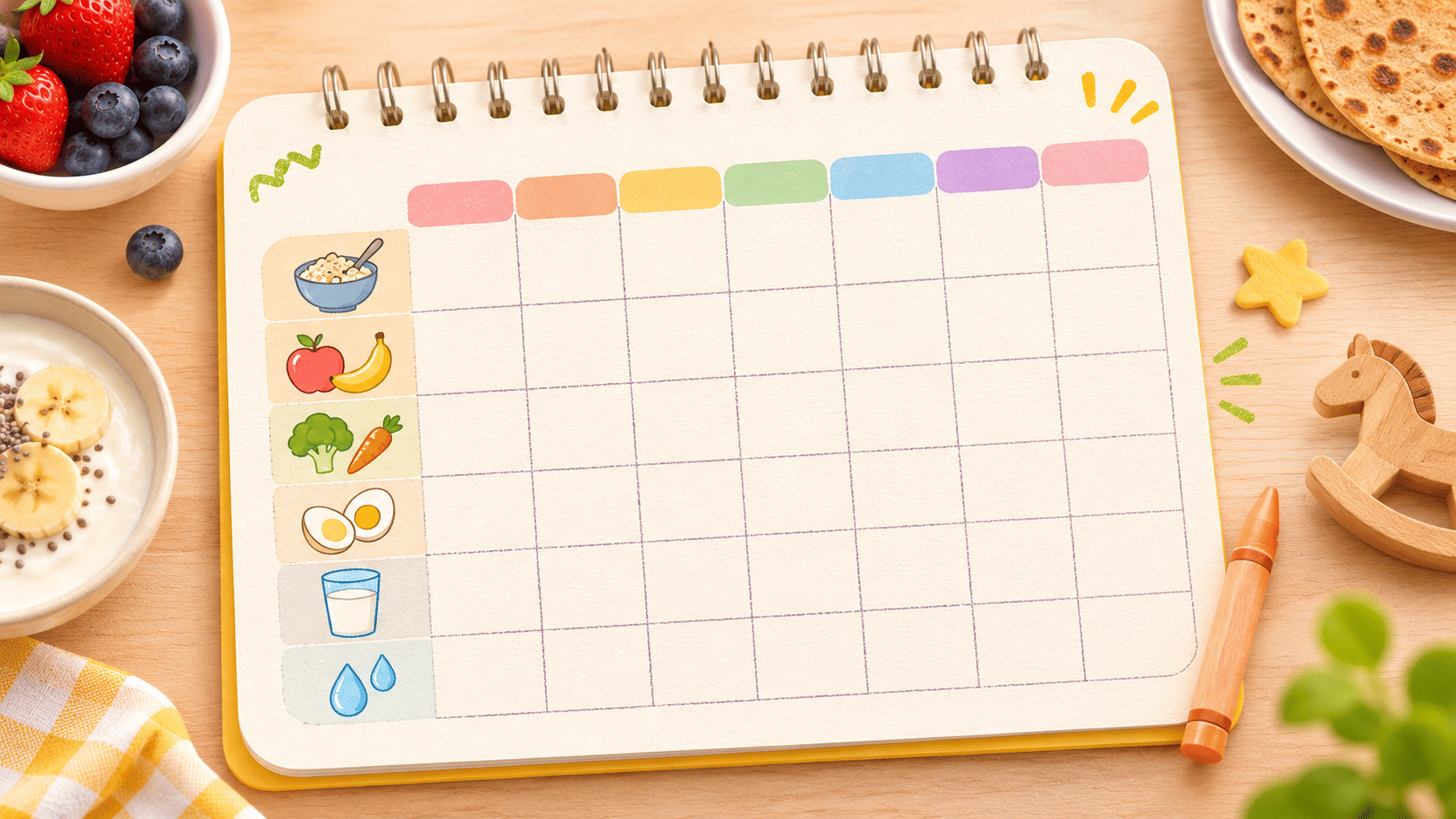
A kids nutrition journal helps you track what your child eats, identify missing food groups and understand their eating habits over a week. This simple 7-day food tracker for kids records meals, snacks, water intake and food preferences without counting every calorie.
Children don't eat the same way every day. Some days they finish their lunch, while on others they return with an untouched tiffin. They may enjoy vegetables one week and refuse them the next. Keeping a food diary for kids helps you notice these patterns instead of judging their nutrition based on one meal.
In this guide, you'll find a practical kids food journal, a seven-day meal tracker, a simple child nutrition chart and tips for building healthy eating habits for kids.
Kids Nutrition Journal: Why Should Parents Track Their Child's Meals?
A kids nutrition journal gives you a clearer picture of your child's eating habits. It helps you understand which foods they enjoy, how often they eat different food groups and whether their meals offer enough variety.
The goal isn't to make children finish every meal or follow a strict eating schedule. It's to identify patterns that can help you plan better meals.
Here are five reasons to maintain a food tracker for kids:
1. Identify Missing Food Groups
Children need different food groups to get essential nutrients. A food diary for kids helps you see whether their meals regularly include fruits, vegetables, whole grains, pulses, dairy and protein-rich foods.
For example, if your child eats rice and roti regularly but rarely eats pulses, eggs, paneer or other protein sources, you can plan meals that include them more often.
2. Understand Picky Eating Patterns
A kids food journal can help identify foods your child repeatedly refuses. You may notice that they avoid certain textures, dislike cooked vegetables or prefer familiar meals.
These observations can help you introduce new foods in different forms without turning mealtimes into a struggle. See our blog on 15 proven ways to help children eat vegetables for some practical ideas.
3. Plan More Balanced Meals
Reviewing a week's meals makes it easier to spot similar choices. If your child eats the same breakfast every day or rarely if he/she gets fruit with snacks, you can introduce more variety.
A kids meal planner also helps you prepare grocery lists and plan meals around ingredients already available at home.
4. Notice Changes in Eating Habits
Appetite can change with activity, sleep, illness and growth. Recording meals over seven days helps you notice whether your child consistently skips breakfast, eats very little at lunch or asks for snacks shortly before dinner.
One unusual day does not indicate a nutritional problem. Look for patterns over time.
5. Make Mealtimes More Predictable
A food tracker for kids can help parents plan regular meals and snacks. It also makes it easier to prepare school tiffins, organise groceries and avoid last-minute packaged snack choices.
For more ideas, explore our guide on daily nutrition for kids.
How to Use a 7-Day Food Diary for Kids
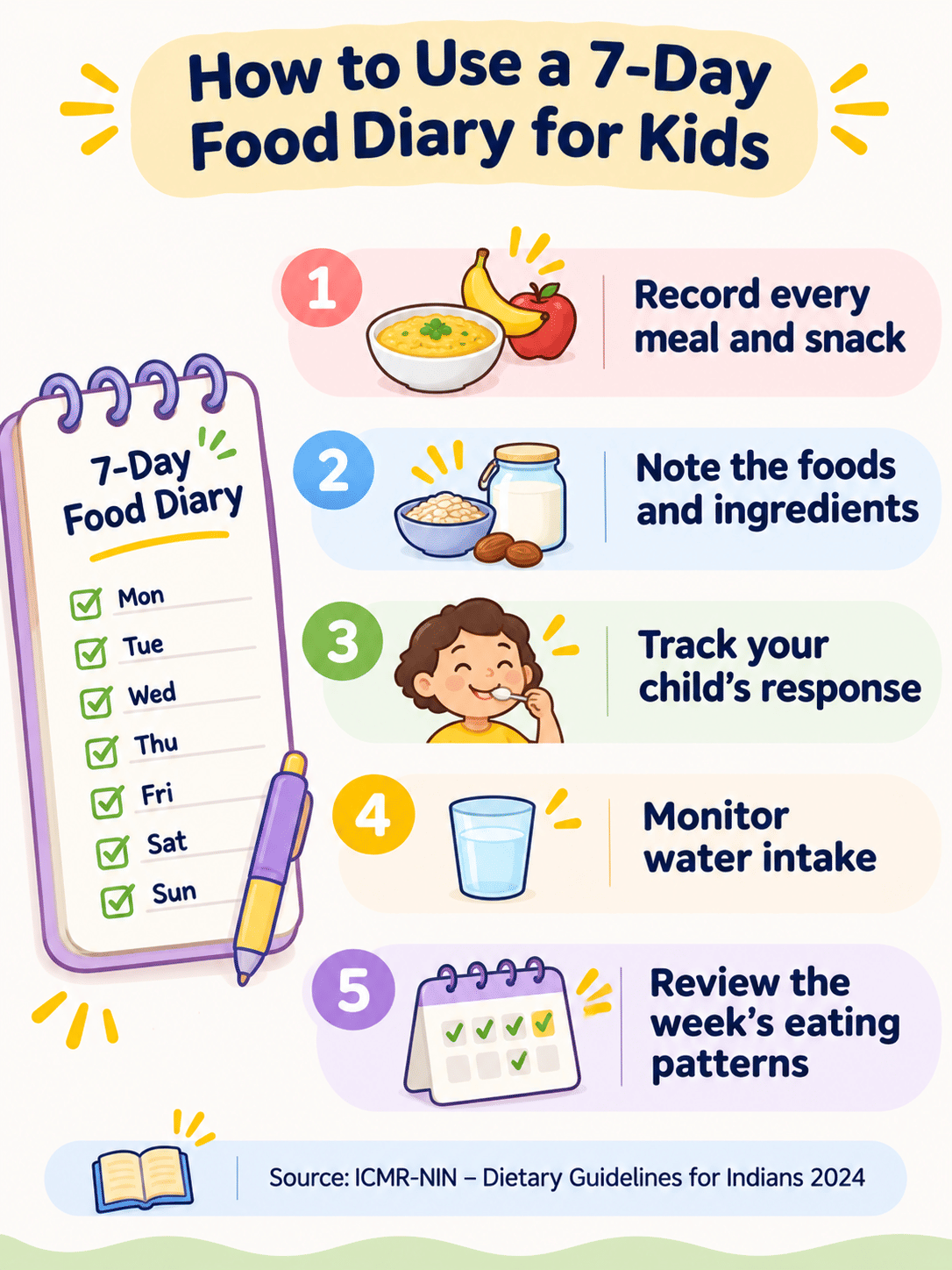
A food diary for kids works best when you record meals as they happen rather than trying to remember everything at the end of the week. Note what your child eats, how much they finish and whether they enjoy the food.
Use these five steps to maintain your kids food journal:
- Record every meal and snack. Include breakfast, school tiffin, lunch, evening snacks and dinner. Don't leave out drinks or small bites between meals.
- Write down the foods and ingredients. Instead of writing "sandwich", mention whether it contained paneer, vegetables, cheese or another filling.
- Note your child's response. Record whether they enjoyed the food, tried something new or refused a particular ingredient.
- Track water intake. Note whether your child drinks water regularly throughout the day, particularly after playing or physical activity.
- Review the week. Look for repeated meals, missing food groups and foods your child enjoys. Use these observations to plan the following week.
You don't need to measure every bite or calculate calories. A simple food tracker for kids should help you understand eating patterns, not make meals stressful.
7-Day Kids Food Journal: A Printable Meal Tracker
Use this kids food chart to record your child's meals for seven days. Fill in the spaces with the foods they eat at home, school and during snack breaks.
Add these details below each day's entry:
- Water: Did your child drink water regularly?
- New food tried: Did they taste anything unfamiliar?
- Food preferences: Which meals or ingredients did they enjoy?
- Appetite: Did they eat less or more than usual?
- Observations: Any changes in appetite, digestion or eating behaviour?
Example of a Completed Food Diary for Kids
Here's how you can fill in one day of the kids food journal:
This entry tells you more than simply recording that your child ate four meals. You can see which foods they accepted, what they left behind and which ingredients you may want to offer again.
Balanced Diet for Kids: What Should Their Food Chart Include?
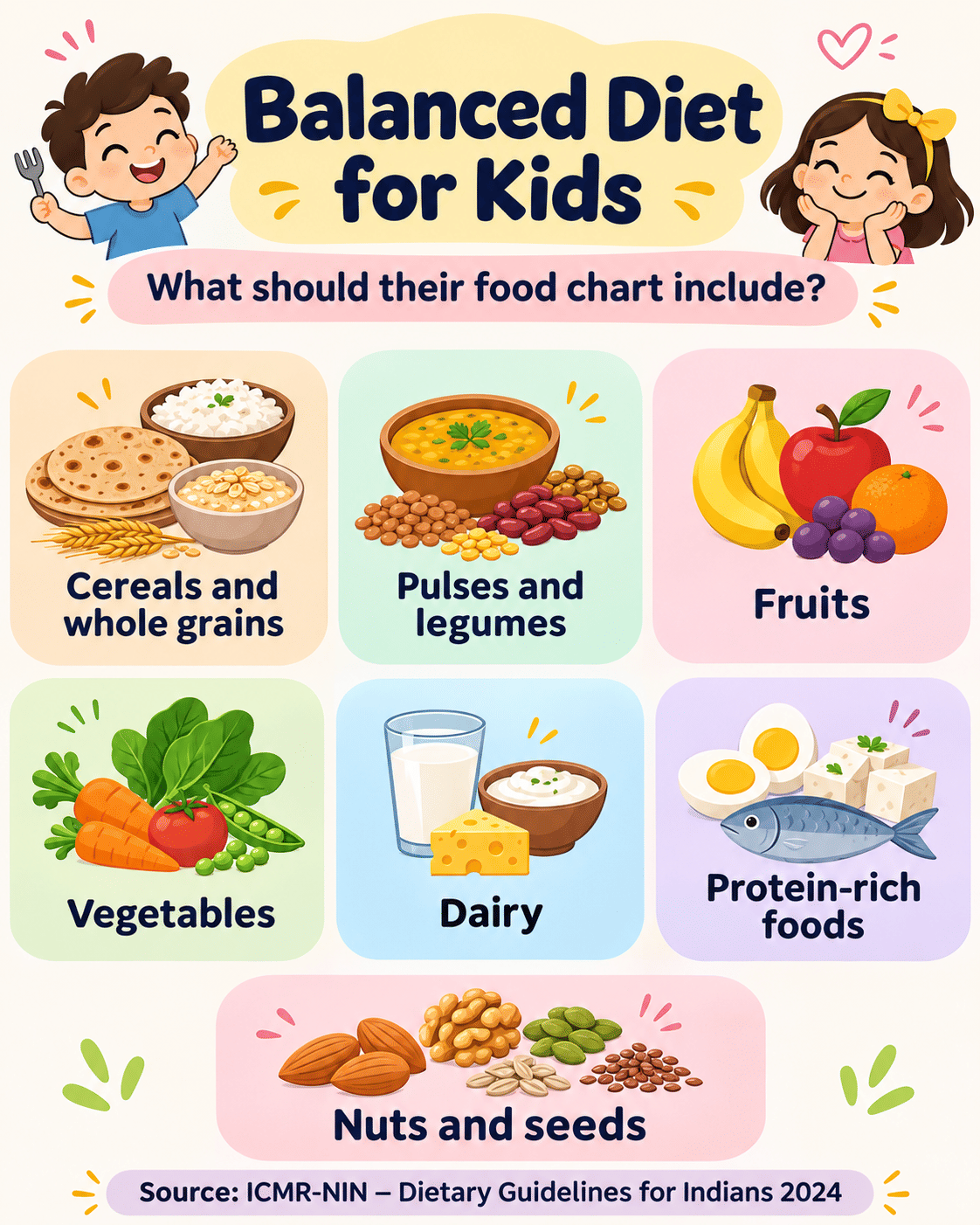
A balanced diet for kids contains different food groups that provide carbohydrates, protein, healthy fats, vitamins, minerals and fibre. No single food supplies everything children need, so variety matters. Use this child nutrition chart as a reference when reviewing your weekly food tracker.
How to Check Whether Your Child's Diet Is Balanced
When reviewing a healthy diet chart for kids, look for variety across the week rather than expecting every meal to contain every food group.
- Check grain variety. Include rice, wheat, oats and millets instead of relying on one staple.
- Look at protein sources. Rotate dal, beans, paneer, eggs, fish or chicken, depending on your child's diet.
- Count fruit and vegetable variety. Notice whether your child eats different colours and types throughout the week.
- Include dairy or suitable alternatives. Milk, curd and paneer can contribute protein and calcium.
- Make room for nuts and seeds. Use age-appropriate forms, such as nut powders or smooth pastes for younger children.
For more meal ideas, explore our guides on healthy foods for kids and easy vegetable snacks for kids.
Healthy Eating Habits for Kids: What to Look for During the Week
A kids food journal can help you notice more than what your child eats. It can also show how they approach meals, respond to new foods and follow everyday eating routines.
Look for these five habits when reviewing your food tracker for kids:
- Regular meal timings. Check whether your child eats breakfast, lunch and dinner at reasonably consistent times.
- Variety across meals. Notice whether they eat different fruits, vegetables, grains and protein sources throughout the week.
- Healthy snacking. Check how often they choose fruits, yoghurt, nuts or homemade snacks instead of packaged foods. Our guide on managing junk food for kids shares practical ways to improve snack choices.
- Willingness to try new foods. Record whether your child tastes unfamiliar ingredients, even if they don't finish them. Try hidden vegetable recipes for kids to introduce more variety.
- Positive mealtime behaviour. Notice whether your child eats comfortably without distractions, pressure or arguments.
Try not labelling foods as good or bad or use the journal to criticise your child's choices. The aim is to build healthy eating habits for kids through regular, positive experiences with food.
You can also explore healthy weight habits for children to understand how food variety, physical activity and everyday routines work together.
How Little Joys Supports Everyday Kids Nutrition
Little Joys offers nutrition products for children, including Nutrimix, Proteinmix and multivitamin gummies. Parents can check these options when observing their child's food habits and nutritional needs.
If your kids food journal shows that certain food groups rarely appear in meals, start by looking at ways to introduce those foods. For example:
- Add ragi, bajra and oats to breakfast through familiar recipes.
- Include protein sources such as dal, paneer, eggs or other foods your child accepts.
- Introduce vegetables through parathas, dosa, cheela and homemade snacks.
Little Joys also offers Proteinmix, which can be explored as an additional nutrition option for children whose diets need more variety.
You can explore the Little Joys Nutrimix range to compare nutrition powders by age group, flavour and product type.
Nutrition products should complement regular meals, not replace them. If your child has persistent food restrictions, poor growth or suspected nutritional deficiencies, discuss their food diary with a paediatrician or registered dietitian.
FAQs
How many days should I maintain a food diary for kids?
Seven days is a great starting point because it has weekdays and weekend meals. It helps parents figure out differences between school-day eating habits and meals at home.
Should I record everything my child eats in a food journal?
Yes. Include main meals, snacks, drinks, small bites and school tiffin. You don't need exact calorie counts or gram measurements unless a healthcare professional asks you to record them.
Can a kids meal planner help with picky eating?
Yes. A kids meal planner helps parents organise familiar foods alongside small portions of new ingredients. Repeated, pressure-free exposure can help children become more comfortable with unfamiliar foods.
What should I do if my child skips meals regularly?
Record when your child skips meals and note their appetite, snack timings and daily routine. Avoid forcing food or offering constant snacks instead. You can also seek a paediatrician if meal skipping persists or affects growth.
Is a healthy diet chart for kids the same for every age?
No. Children's nutritional needs change with age, growth and activity levels. A healthy diet chart for kids should reflect these differences rather than follow one fixed portion plan for everyone.