
Hazelnut Spread vs Chocolate Spread: Is There a Difference?
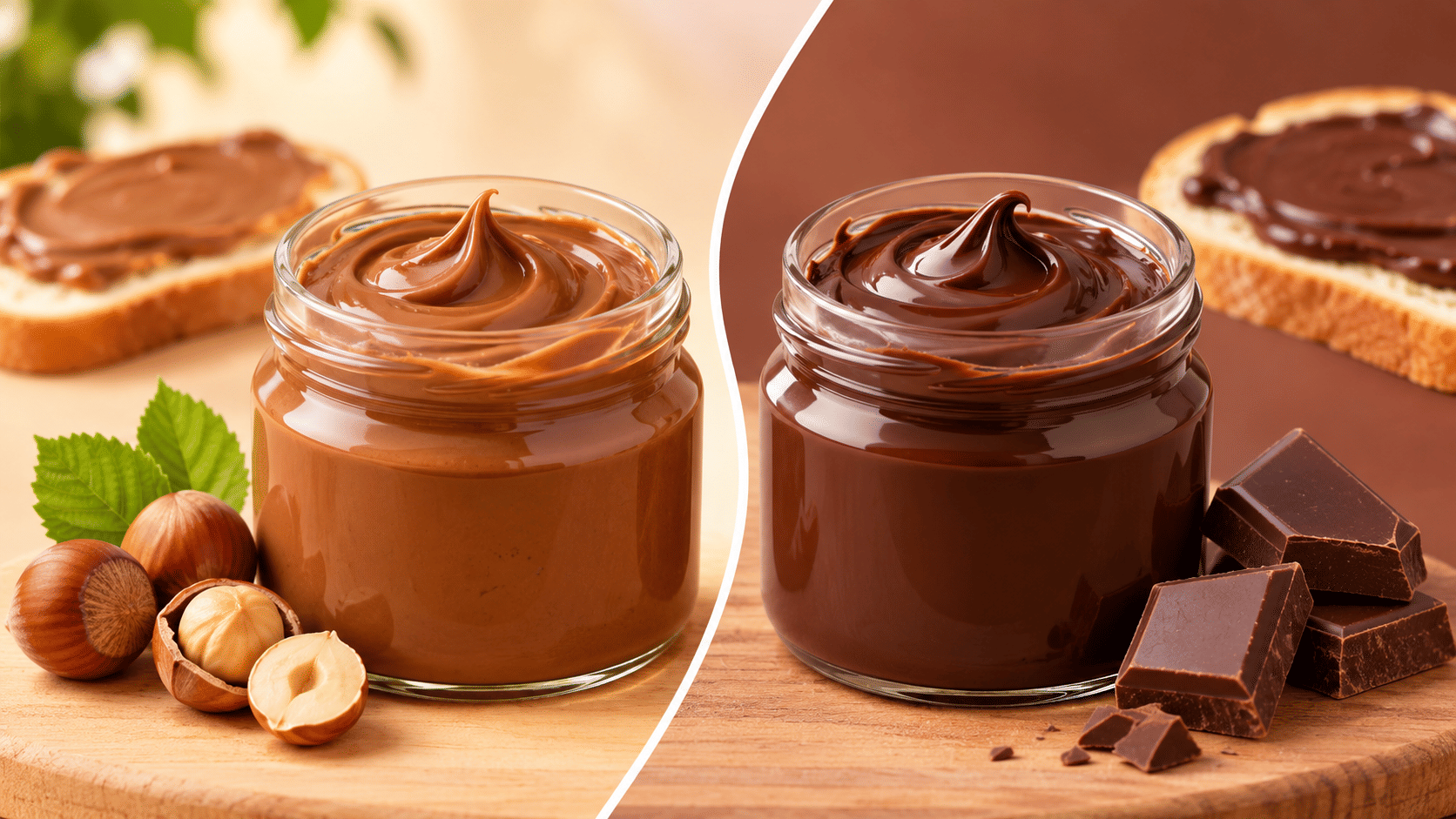
Stand in front of the spreads shelf and every jar looks the same: brown, glossy and promising a happy tiffin. Some say hazelnut spread, some say chocolate spread, and a few shout chocolate hazelnut spread in letters bigger than anything else. So is there a real difference, or is it just clever naming?
Well, they overlap, but not completely, and the front of the jar will not tell you which is which. Below, we sort out hazelnut spread vs chocolate spread, look at what a healthy chocolate spread can realistically be, and show you how to read a label in about a minute. We will also open up our own Little Joys Chocolate Hazelnut Spread, including the part that is not flattering.
In Short Answer
It’s a catch, a hazelnut spread is a type of chocolate spread. Think of “chocolate spread” as the big family and “hazelnut chocolate spread” as one member of it. The real difference is what the jar is mostly made of, i.e., the base. In a hazelnut-led spread, ground hazelnuts are a real part of the recipe, and you can taste them: toasty, a little butter.
In a basic chocolate spread, the body usually comes from sweetener, oil and milk solids, with cocoa for colour and flavour. Nuts may be missing or barely there.
So the name tells you very little. The ingredient list tells you everything.
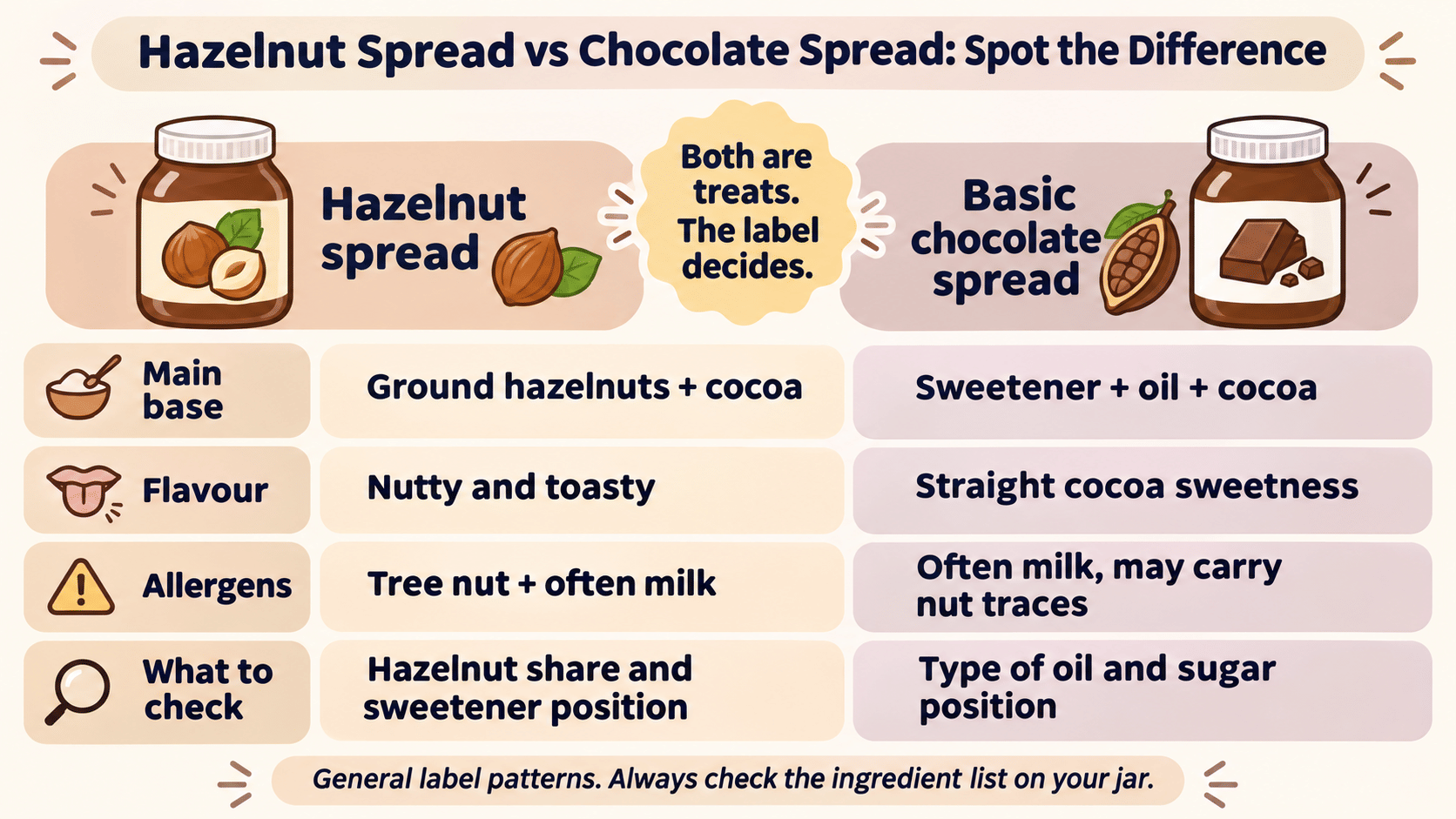
Hazelnut Spread vs Chocolate Spread: Side by Side
Here is how the two usually compare. These are general patterns, and individual jars vary, so the label always has the last word.
Hazelnut Chocolate Spread or Chocolate Hazelnut Spread: Does Word Order Matter?
You will see both phrases on shelves, and parents often wonder whether the order means something. In general, the order of words in a product name is a marketing choice, not a measure of how much hazelnut is inside. So do not buy on word order. Turn the jar around.
Here is the rule that helps. In India, under FSSAI's labelling regulations, ingredients must be listed in descending order of their composition by weight or volume. The first ingredient is the biggest one in the jar. If sweetener leads the list, the spread is mostly sweet. If hazelnut leads, the nut is doing the heavy lifting. And if a spread says “hazelnut” on the front but the nut sits near the end of the list, you have your answer.
What Makes a Healthy Chocolate Spread?
Let us be honest first. No chocolate spread is a health food, and “healthy chocolate spread” really means a better-made treat.
Sugar is the reason. According to the ICMR-NIN Dietary Guidelines for Indians 2024, added sugar must be totally avoided for children below two years, and they cap added sugar at under 5 per cent of daily energy for adults. Children need less energy than adults, so a sweet spread can use up their share quickly. Our guide on how much sugar is too much for kids explains this in simple terms.
Jaggery and dates are where people get confused. They feel wholesome, and they make a nicer story than refined sugar. But they are still sweeteners, so when you plan portions, count them as sugar.
The 60-Second Label Check
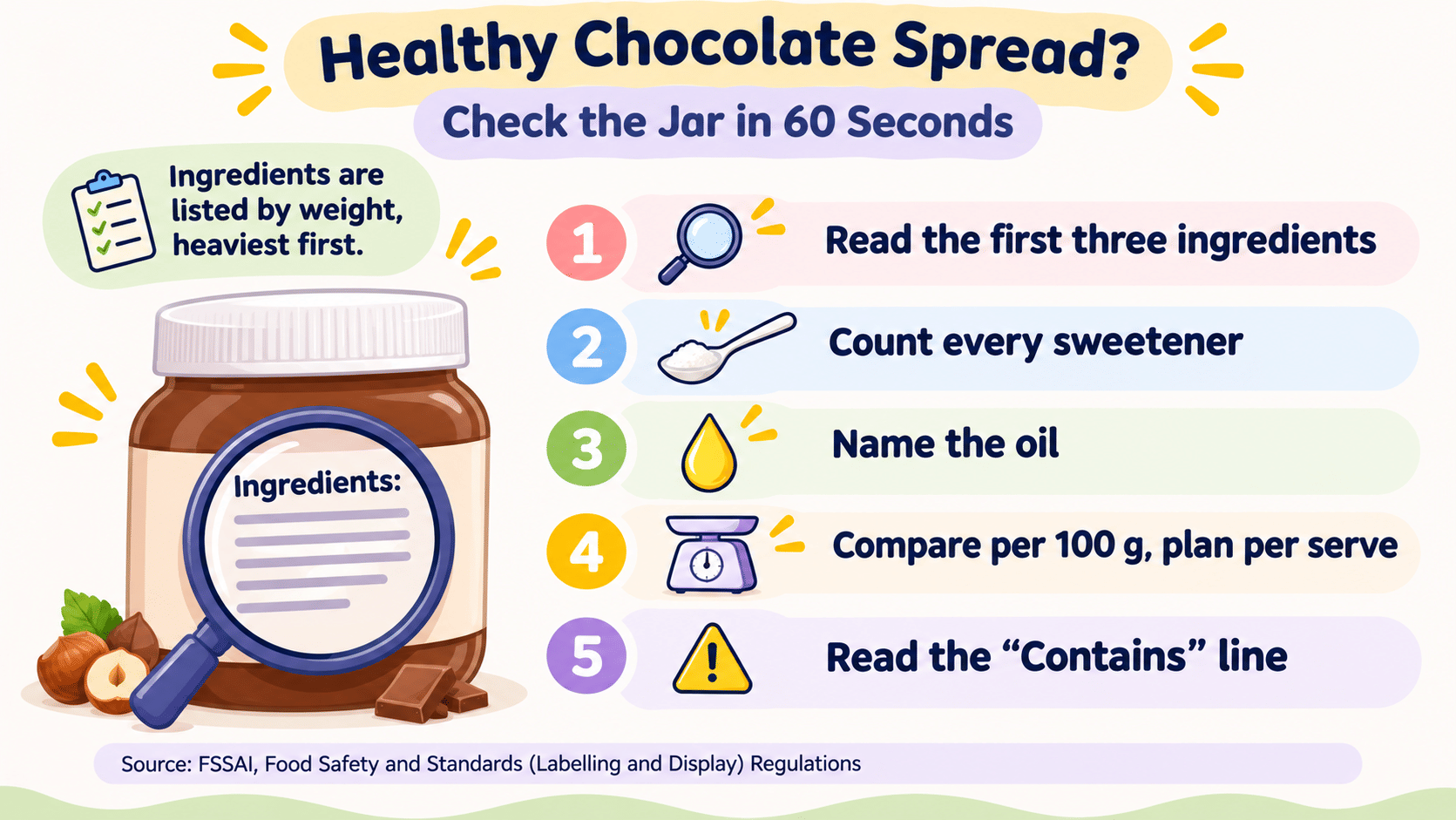
Next time you are at the shelf, run through these five things. It really does take about a minute.
- Start with the first three ingredients. They make up most of the jar. You want hazelnut and cocoa near the top, not sweetener alone.
- Add up the sweeteners. Sugar, glucose syrup, jaggery, dates powder, honey. They can be listed separately, but they all add sweetness.
- Look for the oil. A clear named oil, like groundnut oil, tells you more than “vegetable fat”. Some brands use palm oil, so check for that too.
- Compare per 100 g, then think per serve. FSSAI labels carry carbohydrates, total sugars and added sugars. Per 100 g lets you compare two jars fairly. The serve size tells you what your child will actually eat.
- Read the “Contains” line. Milk and tree nuts must be declared, and hazelnut is a tree nut. New to this? Our guide to reading food labels for kids walks you through it.
What Do Hazelnuts Actually Add?
Plenty of flavour for a start, richness, and a few good nutrients too. According to the NIH Office of Dietary Supplements, a 1-ounce serving of dry roasted hazelnuts gives 4.3 mg of vitamin E, which is 29 per cent of the Daily Value.
There is a catch, though: a spread is not a handful of nuts. You spread a thin layer, not 28 g of hazelnuts, so the nut share in every spoonful is much smaller than that figure suggests. Enjoy the nutty taste, but do not count the jar as your child's nut intake. Keep whole nuts (powdered or finely crushed for little ones), fruit, milk and curd in the daily plate. If you are curious about the wider picture, read are chocolate spreads safe for kids.
Little Joys Chocolate Hazelnut Spread: What Is Inside the Jar
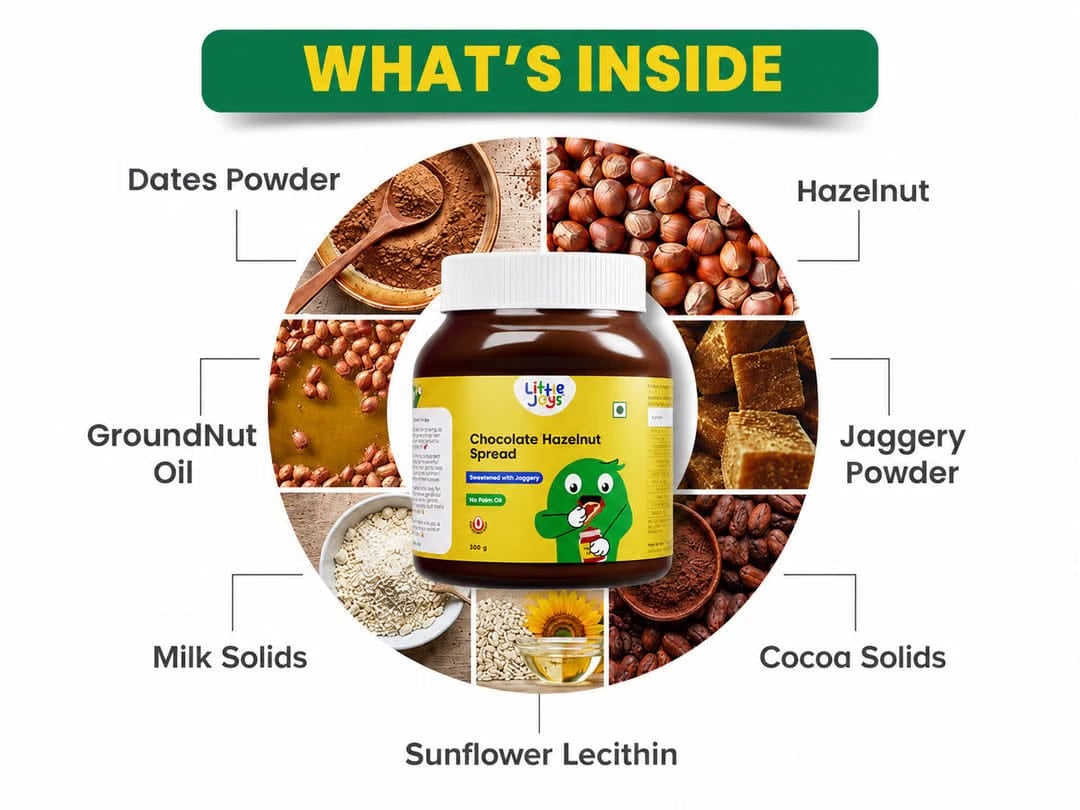
We made our Chocolate Hazelnut Spread for parents who want a treat they can actually read and understand. The ingredients are jaggery, milk solids, groundnut oil, hazelnut, cocoa solids, dates powder and sunflower lecithin, an emulsifier that keeps the oil and solids blended. There is no added palm oil, no artificial colours or flavours, and no preservatives.
We will be upfront about one thing. Jaggery comes first on the list, which means it is the largest ingredient by weight. That is exactly why we call this a treat and not a health food, and why we suggest a thin layer, not a spoonful.
Price and pack details checked on 11 November 2026 and may change. Please read the pack for age guidance, and speak to your paediatrician before offering any spread to a child under three.
Smart Ways to Serve It
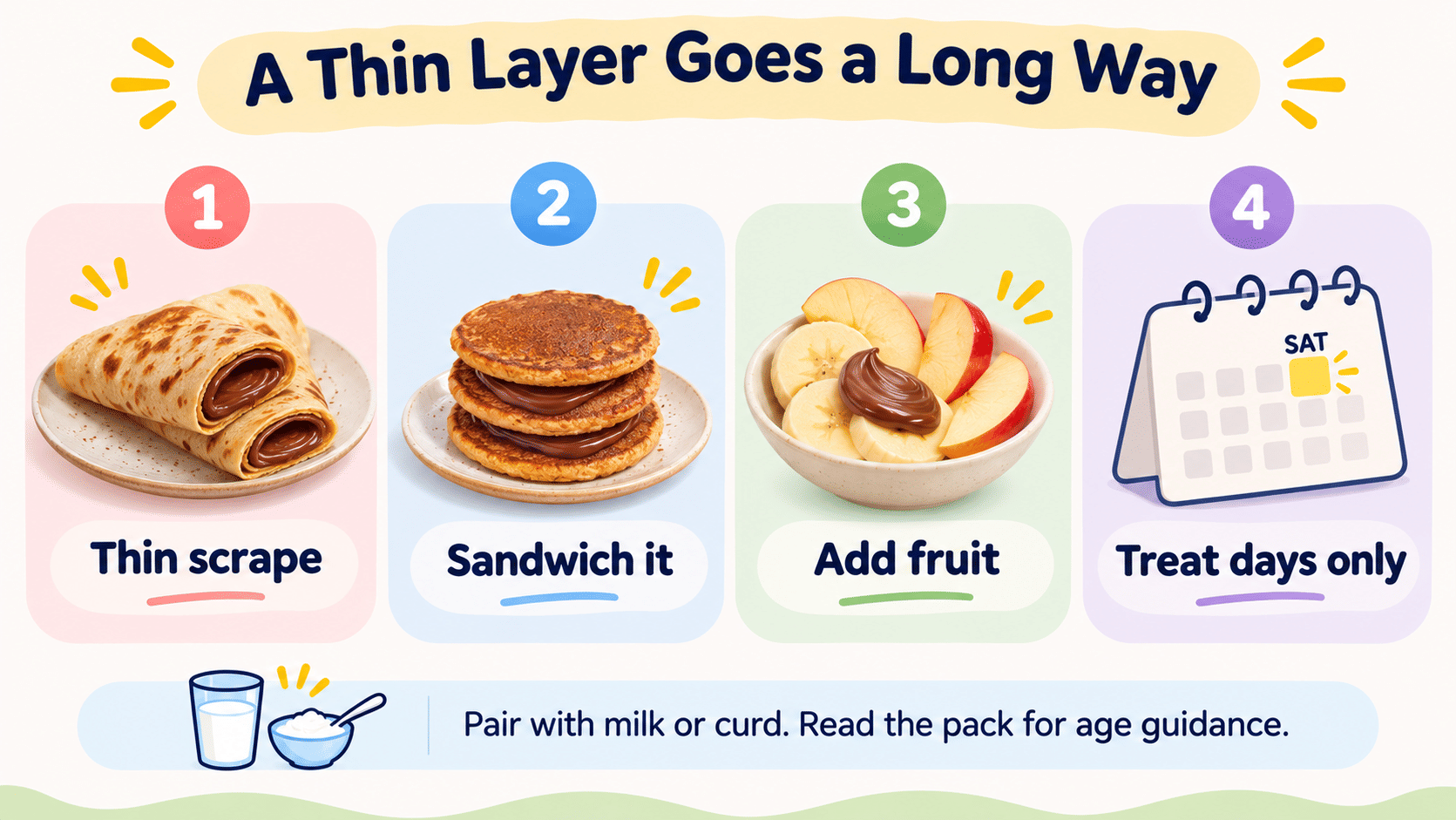
Small portions go further than you think and a good spread deserves a good plate. These ideas keep the meal balanced:
- Thin scrape on a warm roti or dosa. Roll it up for an easy tiffin.
- Between two small ragi or millet pancakes. Cut into small pieces for younger children.
- With banana slices or apple wedges. Fruit adds fibre and keeps the spread light.
- With a glass of milk or a bowl of curd. Protein helps the snack keep your child full for longer.
- On treat days, not every day. Weekend breakfast ritual works better than a daily jar habit.
The Bottom Line
Hazelnut spread and chocolate spread are cousins, not strangers. What separates them is the ingredient list, so let the label, not the name, decide.
Want a spread that tells you what inside? Shop the Little Joys Chocolate Hazelnut Spread, jaggery-sweetened, with no added palm oil, colours or preservatives, and made for your family's mornings.
Frequently Asked Questions
Is hazelnut spread healthier than chocolate spread?
Not automatically. A hazelnut-led spread can give you more from the nut itself, but both are sweet treats. Look at where the sweetener sits on the list, which oil is used and how much your child eats, instead of trusting the front of the jar.
Is chocolate hazelnut spread safe for kids?
For most children, in small amounts and once they meet the age guidance on the pack. Hazelnut is a tree nut allergen, so introduce it gently and watch for any reaction. If nut allergies run in your family, ask your paediatrician first. Under two years, ICMR-NIN advises no added sugar at all.
How much hazelnut chocolate spread can a child have?
Think of a thin layer, roughly a teaspoon to a tablespoon, now and then rather than every day. Your paediatrician can fine-tune this for your child's age, appetite and overall diet.
Is a jaggery-sweetened chocolate spread sugar-free?
No. Jaggery and dates are natural sweeteners, but they are still sweeteners. Ours is jaggery-sweetened, not sugar-free, which is why we keep the portion small.
Can I make a healthy chocolate spread at home?
Yes. Dry roast hazelnuts or peanuts, grind until silky, then blend in cocoa, a few soft dates and a pinch of salt. Make a small batch, keep it in the fridge and finish it within a week or so. Older kids enjoy helping, though it is still a sweet treat.