
How to Read a Kids' Supplement Label (And What to Avoid)
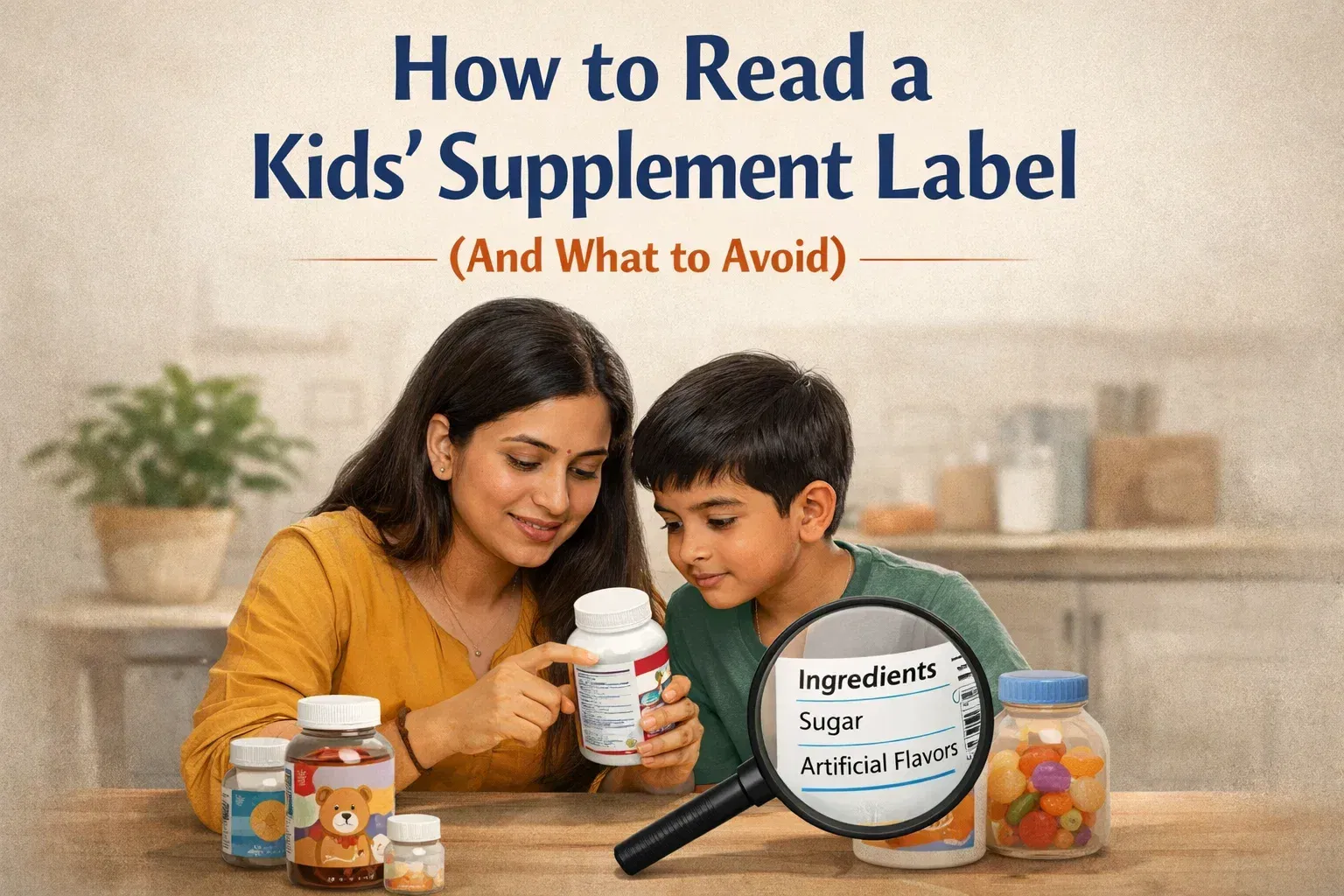
If you are standing in the store or on a product page right now, here are the three things to check immediately before buying any kids' supplement:
- First ingredient - if it is refined sugar, glucose syrup, or maltodextrin, put it back
- Zinc form - look for zinc citrate or gluconate, not zinc oxide
- Vitamin D form - must say D3 or cholecalciferol, not just "Vitamin D"
Everything else is explained below.
-> View Little Joys Multivitamin Gummies - clean label, third-party tested
Section 1: The Ingredient List
The ingredient list is ordered from highest to lowest quantity. The first three ingredients make up the bulk of the product.
 Little Joys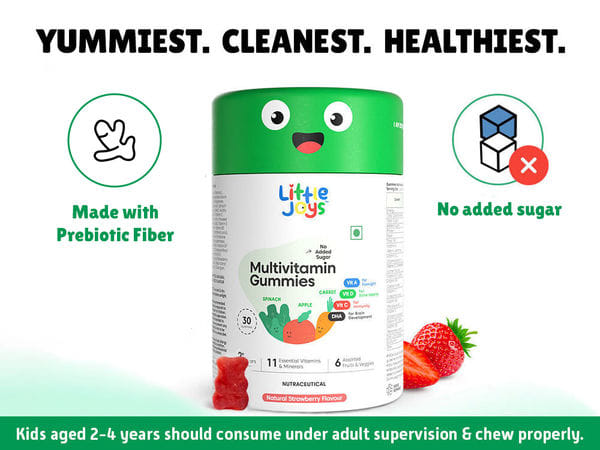
What you want to see at the top:
- A whole grain (ragi, bajra, oats) for nutrition powders
- A prebiotic fibre like chicory root inulin for gummies
- A recognisable protein source (moong dal, almonds, peas)
Red flags in position 1-3:
- Refined sugar, sucrose, glucose syrup, corn syrup - the product is sugar-based
- Maltodextrin - a refined starch that spikes blood sugar with zero nutritional return
- Artificial colours listed by name (Sunset Yellow, Tartrazine, Allura Red)
Section 2: The Nutrition Facts Panel
Added Sugars line
This is separate from Total Sugars. Added Sugars shows how much sugar was deliberately put into the product. For a daily children's supplement, zero is the target. Any amount above 1g per serving is worth questioning.
Vitamin D form
The panel may just say "Vitamin D" without specifying the form. Cross-reference with the ingredient list - look for cholecalciferol (D3) or ergocalciferol (D2). D3 is meaningfully more effective.
% Daily Value
These percentages are calculated against adult reference values in most Indian products. For young children (ages 2-6), the actual % of their daily requirement covered may be higher than stated. Age-specific formulas list child-appropriate amounts directly on the label.
Section 3: Certifications and Testing Claims
GMP Certified
Good Manufacturing Practice certification confirms the product is made to consistent quality and hygiene standards. This is a manufacturing process standard - it does not verify what is actually in the product.
Third-Party Tested
This goes further than GMP. An independent lab verifies that the nutrients on the label are actually present in the stated amounts. When a brand says "third-party tested," the lab reports should be accessible - not just claimed on packaging.
FSSAI Registered
Mandatory for all food products sold in India. Its presence confirms the product is legally registered but does not indicate quality tier.
Little JoysSection 4: What "Natural" and "No Artificial" Actually Mean
"Natural flavours" - derived from natural sources but may be highly processed extracts. Generally acceptable.
"No artificial colours" - means synthetic dyes were not used. Better than artificial, but check for natural colour additives like annatto that cause reactions in some children.
"No added sugar" - means no sugar was added during manufacturing. However, fruit juice concentrates can still contribute significant natural sugars. Always check the Added Sugars line regardless of front-of-pack claims.
"Clinically proven" or "expert-recommended" - these phrases are marketing language, not certifications. They require no external validation to appear on a label.
FAQ
Q: How do I verify a supplement is genuinely third-party tested?
Look for the lab name and report accessibility, not just the claim. Reputable brands publish batch-specific lab reports on their website. If reports are not publicly available, the claim cannot be independently verified.
Q: What is the difference between "chelated" minerals and standard ones?
Chelated minerals are bound to an organic compound (like citrate or gluconate) that improves absorption. Zinc citrate and ferrous fumarate are examples. Non-chelated forms like zinc oxide and ferrous sulphate are cheaper and less bioavailable. Always check which form is listed.
Q: Should I avoid a supplement that has a long ingredient list?
Not necessarily. A longer list that includes whole food ingredients, natural flavours, and verified vitamins is better than a short list dominated by sugar and maltodextrin. The quality of each ingredient matters more than the count.