
How Often Should Kids Fall Sick? A Expert Guide

Every parent wonders at some point whether their child is falling sick too often. The answer is more nuanced than most expect - and knowing the difference between normal and concerning illness frequency is genuinely useful.
What Is Considered Normal
Child nutrition experts consider the following typical for otherwise healthy children:
- Under 3, in daycare or group settings: Up to 8-10 colds or respiratory infections per year
- Ages 3-6, in school: 6-8 per year
- Ages 6-12: 4-6 per year, declining gradually
These numbers reflect the reality that each new virus a child encounters is the first time their immune system has seen it. Every infection that resolves adds to the immune memory library. This is not a failure of immunity - it is immunity building itself.
Children in group settings are exposed to more viruses, so higher numbers at younger ages are broadly expected.
When Frequency Becomes a Red Flag
The number alone does not tell the full story. These patterns are worth close attention regardless of how many illnesses per year your child has had:
Duration that extends beyond the norm A standard cold resolves in 7-10 days. If your child consistently takes 12-14+ days to recover from a simple cold, the immune system is struggling to clear infections efficiently.
Bacterial infections, not just viral ones Colds and most respiratory illnesses are viral - they run their course. When your child repeatedly gets bacterial ear infections, strep throat, or chest infections, this signals a deeper immune gap that points to a specific weakness.
Back-to-back illness with no clear recovery window If your child has been unwell more often than well across a 2-3 month stretch - with no healthy stretch of 3+ weeks in between - this is a pattern worth acting on nutritionally.
Consistently low energy even when not sick A child who is perpetually tired, pale, and low on appetite during supposedly healthy periods may have nutritional deficiencies suppressing immune and energy function below the threshold of obvious illness.
 Little Joys
The Most Common Nutritional Causes of Excess Illness
When illness frequency goes beyond what is typical, these nutritional gaps are most consistently found:
Zinc deficiency - involved in producing every type of immune cell. Low zinc means slower immune activation and slower clearance. A child eating little meat, eggs, or dal is at high risk.
Vitamin D3 insufficiency - most urban Indian children are low, due to limited midday sun exposure. D3 directly regulates immune cell activation. Without enough, the immune system is perpetually underperforming.
Gut microbiome disruption - repeated antibiotic courses, high sugar intake, or low dietary variety each disrupt the gut bacteria that regulate 70% of immune function.
Iron deficiency - impairs immune cell oxygen supply and overall energy. Iron absorption improves significantly when paired with a Vitamin C source at the same meal.

Multivitamin Gummies for Kids
100% Safe | Paediatrician Recommended
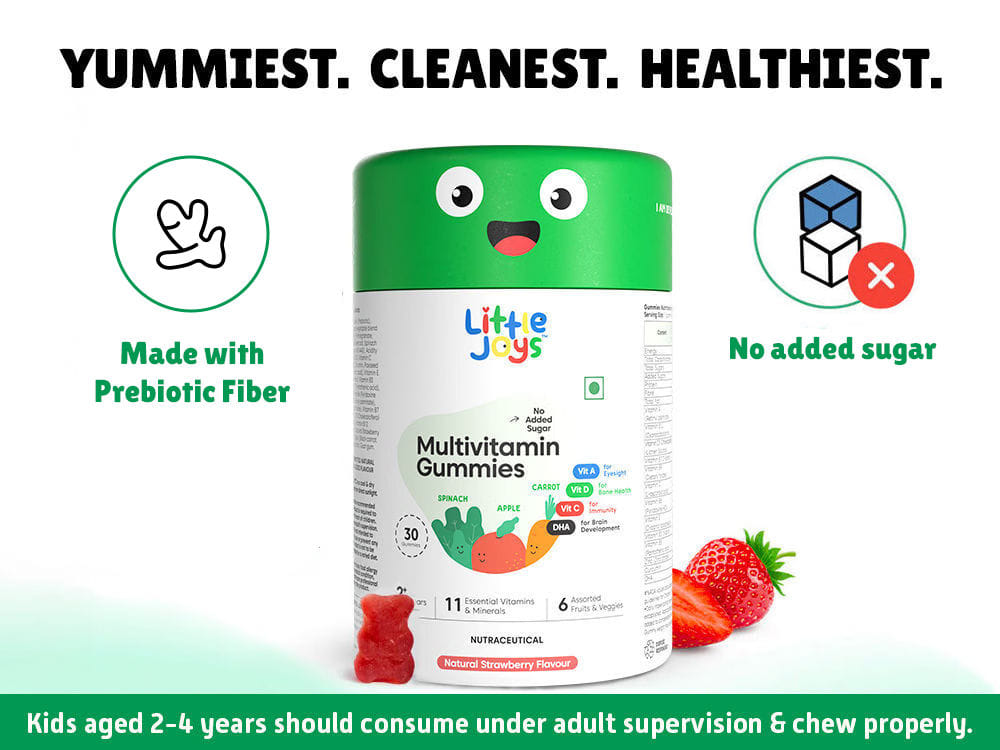
✅ 11+ vitamins & minerals for your little one's daily nutritional needs.
🍎 Contains 6 real fruits & vegetables! Fulfills any nutrition gaps in diet due to fussy or picky eating.
🛡️ Contains Vitamin C, Turmeric (Haldi), Vitamin B12 & Zinc which are known to boost immunity.
🚫 ZERO ADDED SUGAR - Uses a prebiotic fibre chicory root as its base. Along with gut health and immunity benefits it provides natural sweetness to the gummy.
🚫 No artificial colours, flavours or preservatives. Only the YUMMIEST, CLEANEST, HEALTHIEST gummy!
What to Do If Your Child Is Sick Too Often
Step 1 - Cut added sugar from daily food and supplements Including sugar-based vitamin gummies. This is the single fastest dietary change for immune support.
Step 2 - Start a daily multivitamin covering Zinc, D3, Vitamin C, and B12 These four together address the most common immune gaps in Indian children. Look for zinc citrate over zinc oxide, and D3 over D2.
Step 3 - Add curd and dal daily Together they cover gut health and zinc needs that underpin long-term immune resilience.
Step 4 - Commit to 3 months before evaluating Immunity builds slowly. Tracking sick episodes over 3 months before and after making changes gives the clearest picture of improvement.
What to Look for in a Daily Immunity Supplement
- Zinc citrate - not zinc oxide
- Vitamin D3 (cholecalciferol) - not D2
- Vitamin C alongside zinc - more effective together than either alone
- Prebiotic fibre base (chicory root) - not sugar
- No artificial colours or preservatives
- Third-party tested
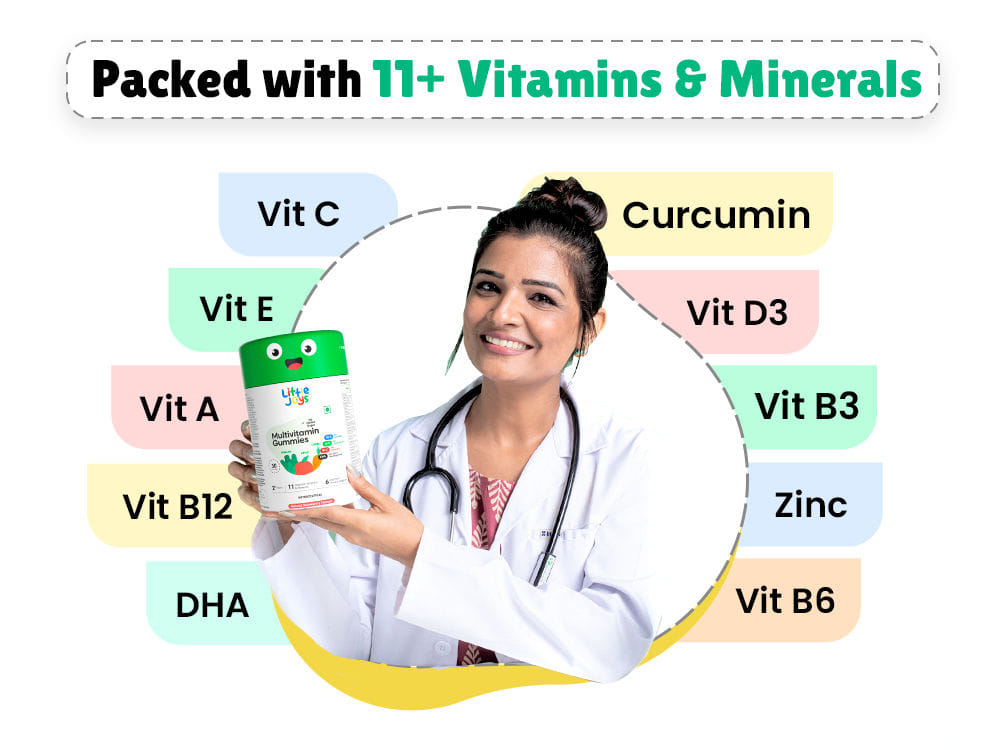
Little Joys Multivitamin Gummies cover all four core immunity nutrients - Zinc (zinc citrate), Vitamin C, D3, and B12 - in an 88% chicory root fibre base. Zero added sugar, no artificial colours, third-party tested. Available from age 2 in age-specific formulas.
Q: My child has had 9 colds this year - should I be worried?
For a child under 3 in daycare, 9 colds is within the normal range. If recovery is fast (under 10 days each time) and there are no bacterial infections, it is likely normal immune development. If recovery is slow or infections are bacterial, the nutritional steps above are worth starting.
Q: Does a child outgrow getting sick so often?
Yes. Illness frequency naturally declines as the immune system's virus library grows. Most children see a clear reduction after age 6-7.
Q: Can stress make my child sick more often?
Yes. Academic pressure, social anxiety, and disrupted routines suppress immune function in children the same way they do in adults. Sleep consistency and a low-stress environment are part of immune health.