
Choline for Kids: The Brain Nutrient Most Parents Miss
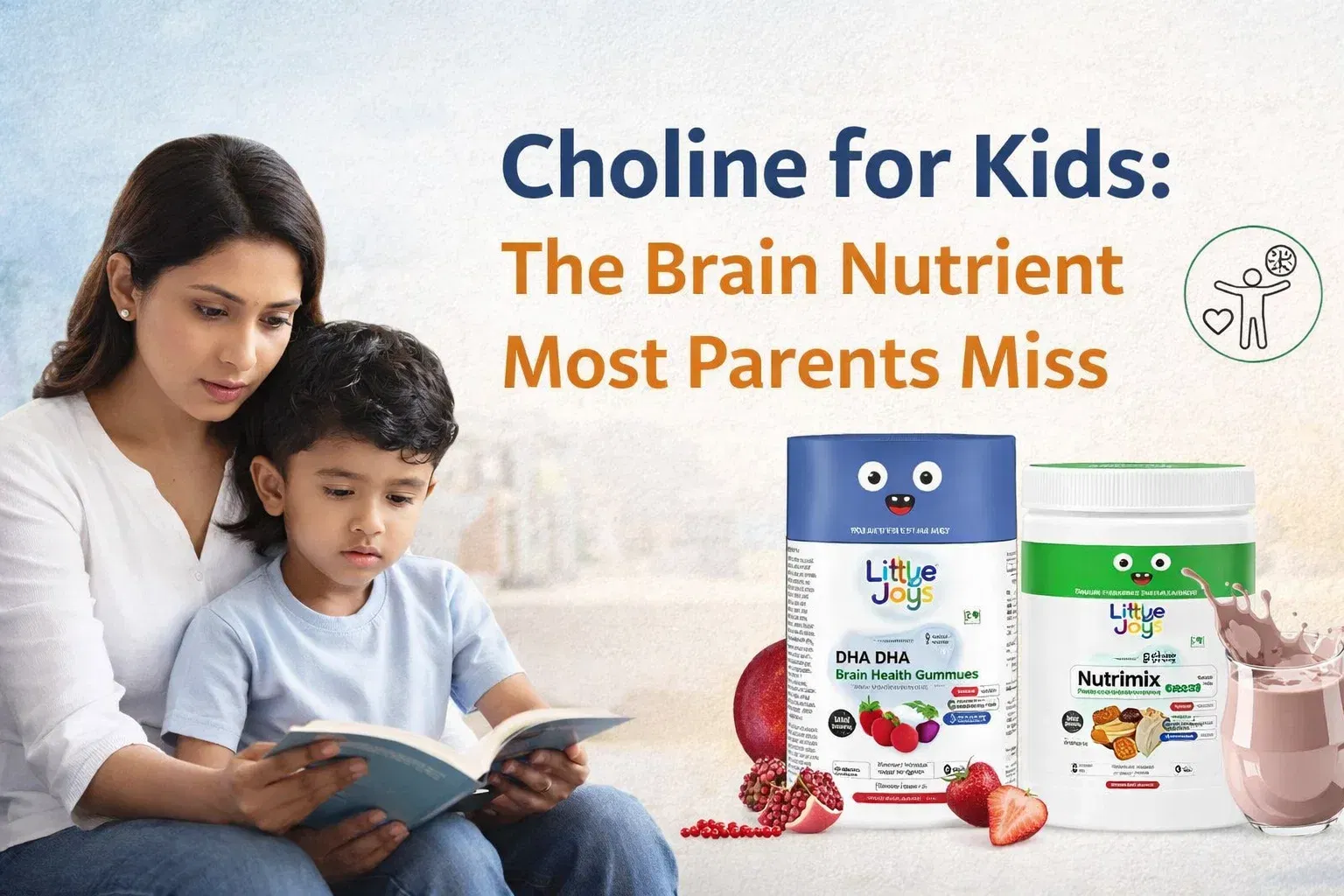
Choline is required to produce acetylcholine - the neurotransmitter most directly involved in memory, learning, and attention in children. It is also essential for building the cell membranes throughout the developing brain. Despite its importance, choline rarely appears on the list of nutrients parents track - and most Indian children fall short of daily requirements.
Children need 200-550 mg of choline per day depending on age. The primary food source is egg yolks. For children who eat eggs regularly, dietary intake is often adequate. For those who do not, the gap is significant.
| Age | Daily Choline Requirement |
|---|---|
| 1-3 years | 200 mg |
| 4-8 years | 250 mg |
| 9-13 years | 375 mg |
| Teens | 400-550 mg |
Why Choline Matters So Much in Early Childhood
Acetylcholine production
Acetylcholine is the primary neurotransmitter of the parasympathetic nervous system and the central driver of memory encoding. Every time a child forms a new memory, acetylcholine is involved in the synaptic transmission that makes the connection. Without adequate choline as a precursor, acetylcholine synthesis slows.
Cell membrane integrity throughout the brain
Choline is a component of phosphatidylcholine - the main phospholipid in cell membranes. During rapid brain development, the brain needs consistent choline to build and maintain the membranes of billions of new neurons and their connections.
Working with DHA
Choline and DHA are the two most important nutrients for the brain's structural development and they work synergistically. DHA is incorporated into cell membranes alongside phosphatidylcholine. Supplementing DHA without addressing choline misses half the picture for children with genuine cognitive development goals.
Best Food Sources of Choline for Children
Eggs (egg yolk specifically) - by far the richest and most practical source. One whole egg provides approximately 147 mg of choline. A child eating one egg daily covers around 60-70% of their requirement at ages 1-8. This is why eggs are one of the most important foods for brain development in children.
Moong dal and lentils - provide meaningful choline alongside protein and folate. A bowl of dal at lunch contributes 30-50 mg - less than eggs but a consistent daily contribution for vegetarian children.
Milk and curd - modest but reliable daily contributors at around 40 mg per 200ml or 100g.
Almonds - around 52 mg per 100g. A small daily handful adds to the total alongside their Omega-3 and Vitamin E contribution.
Who Is Most at Risk of Low Choline
Children who avoid eggs and eat little dairy are at the highest risk. This includes strictly vegan children and those with egg allergies. Picky eaters who limit their diet to mainly grains and fruits - without reliable legume or dairy intake - are also at risk even in non-vegan households.
When a Supplement Covers the Gap
For children not getting adequate choline through food, a daily supplement is the practical solution. Look for choline bitartrate or alpha-GPC as the supplemental form - both are well-absorbed. The amounts in children's multivitamins are calibrated for daily use within safe limits.
Little Joys Multivitamin Gummies include choline alongside Vitamin B12, Vitamin C, Zinc, and D3 - covering both the choline need and the broader micronutrient gaps that often accompany low choline diets. Zero added sugar, chicory root prebiotic base, third-party tested.
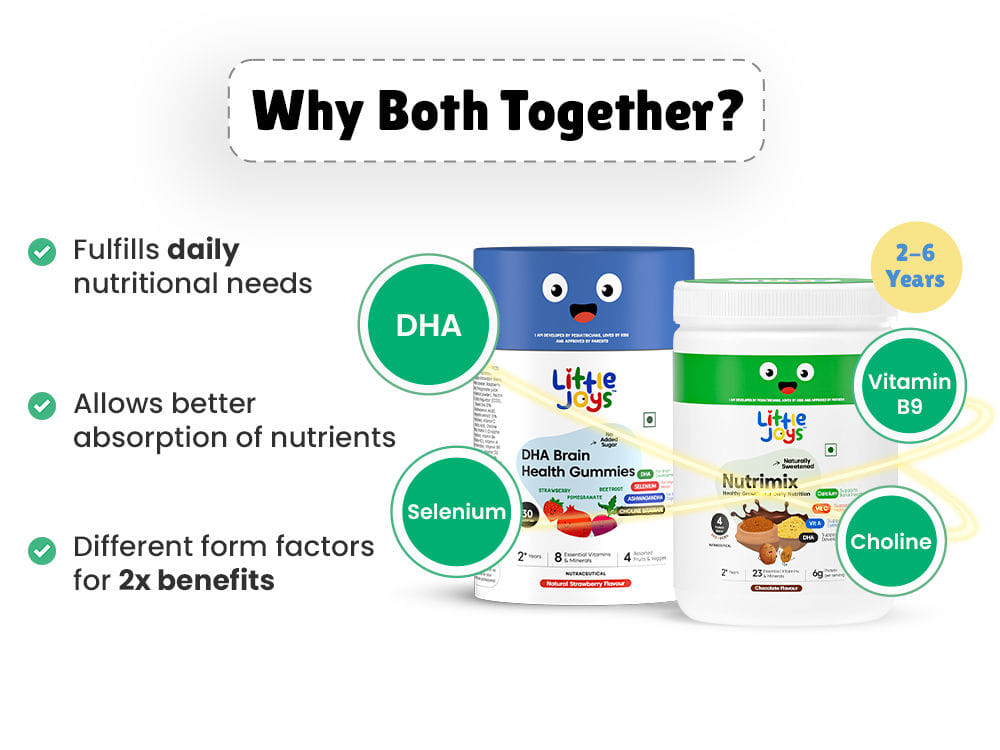
For the full DHA-choline brain nutrition stack, the Brain Development Kit pairs Brain Gummies (algal DHA) with NutriMix (protein, MCT, whole food fats) to cover both structural brain nutrients together.
-> View Little Joys Multivitamin Gummies
-> View Little Joys Brain Development Kit
FAQ
Q: Is choline deficiency common in vegetarian Indian children?
Yes - vegetarian diets that exclude eggs are naturally lower in choline. Legumes, dairy, and nuts contribute meaningfully but rarely reach the daily requirement without eggs. For strictly vegetarian or vegan children, supplementation is advisable from early childhood.
Backlinks Inserted in Blog Body
| Anchor Text | Target Blog Title | URL Used |
|---|---|---|
| DHA | DHA Omega-3 for Kids: The Ultimate Guide for Parents | /blog/dha-omega-3-for-kids-the-ultimate-guide-for-parents/ |
| Moong dal | Moong Dal for Kids: Protein, Digestion and How to Use It | /blog/moong-dal-for-kids-protein-digestion-and-how-to-use-it/ |
| Almonds | Almonds for Kids: How Many Per Day and What Are the Benefits? | /blog/almonds-for-kids-how-many-per-day-and-what-are-the-benefits/ |
| Vitamin B12 | Vitamin B12 for Kids: Immunity, Energy and Brain Health | /blog/vitamin-b12-for-kids-immunity-energy-and-brain-health/ |
| Vitamin C | Vitamin C for Kids: Benefits, Sources and Dosage Guide | /blog/vitamin-c-for-kids-benefits-dosage-guide/ |