
Best Foods for Strong Bones in Kids

The best bone-building foods for children are not just about calcium - they are about the combination of calcium, Vitamin D3, magnesium, and Vitamin K2 that together determine how much calcium is actually deposited into bone. Milk alone does not cover all of these. Here is what does.
Little Joys NutriMix combines the two most calcium-rich Indian grains - ragi and bajra - with Vitamin D3 and calcium in one daily drink. The most practical bone-nutrition stack for children who need more than just dairy.
 Little Joys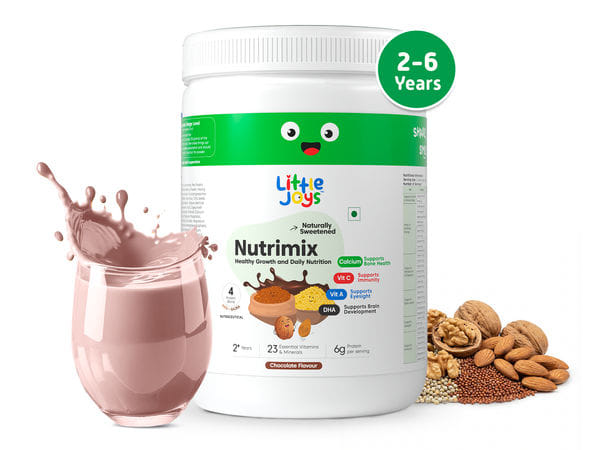
-> View Little Joys Calcium Gummies
Little Joys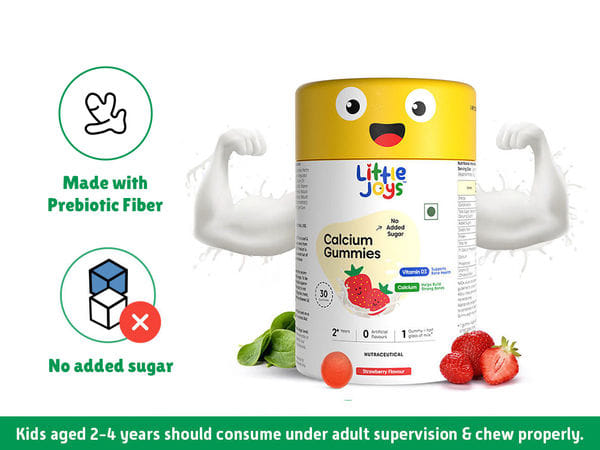
The Bone-Building Nutrient Hierarchy
Strong bones in children require four nutrients working together:
Calcium - the primary mineral in bone tissue. Children need 600-800 mg daily.
Vitamin D3 - essential for calcium absorption from the gut. Without D3, most dietary calcium is excreted unused. This is the most commonly deficient bone nutrient in urban Indian children.
Magnesium - involved in converting Vitamin D to its active form and in direct bone mineralisation. Around 40% of the body's magnesium is stored in bone.
Vitamin K2 - directs calcium into bones rather than soft tissue. Found in fermented foods, eggs, and dairy fat.
Top Bone-Building Foods for Indian Children
Ragi (Finger Millet)
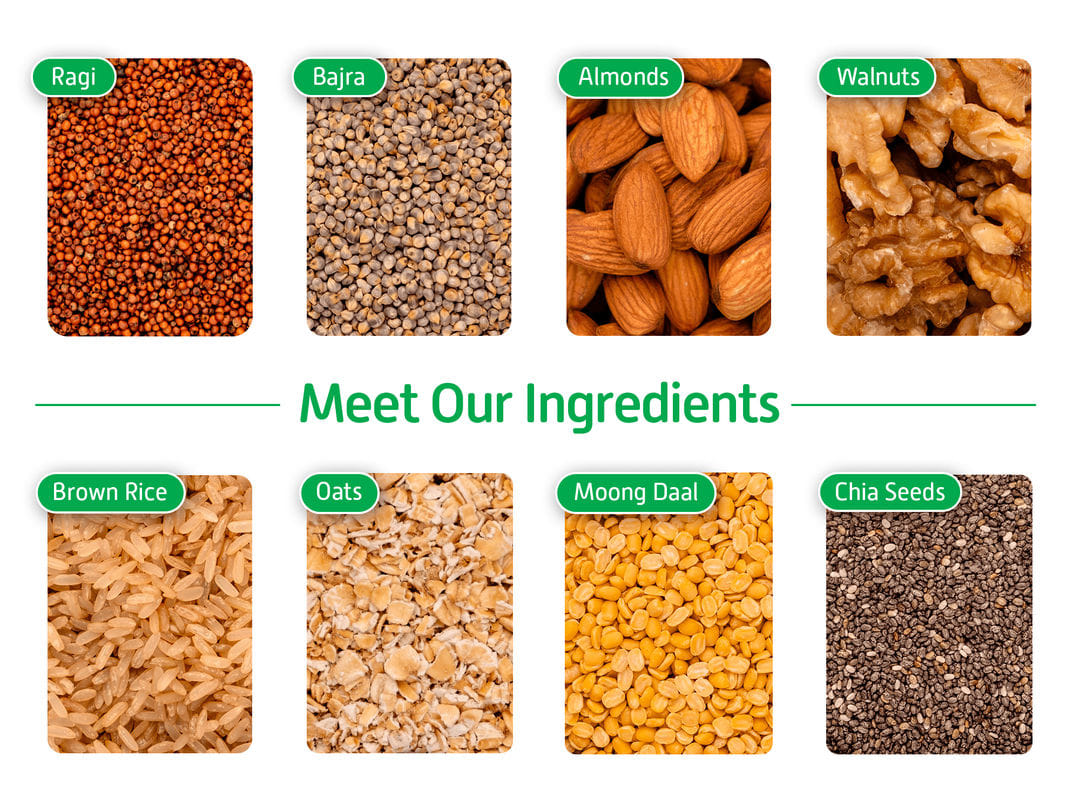
344 mg of calcium per 100g - the highest plant-based calcium source available in India, higher per gram than milk. Also provides magnesium, iron, and fibre. A ragi roti or ragi porridge daily contributes significantly to bone mineral density over time. Ragi is one of the oldest and most trusted complementary foods for Indian children from 6 months onwards.
Milk, Curd, and Paneer
The most efficient and accessible calcium sources. Full-fat milk: 120 mg per 100ml. Paneer: 208 mg per 100g. Curd: 120-150 mg per 100g alongside probiotic benefit that improves gut calcium absorption.
The fat in full-fat dairy also supports fat-soluble vitamin (D3, K2) absorption - a reason to choose full-fat over low-fat dairy for growing children.
Sesame Seeds (Til)
Around 975 mg of calcium per 100g - the most calcium-dense common food available. Even 1-2 tablespoons as til chutney, sprinkled on rice, or in til ladoos provides 100-200 mg of calcium. An underused and highly practical bone-building food in Indian kitchens.
Bajra (Pearl Millet)
Provides calcium alongside the highest iron content of any common Indian grain (8 mg per 100g) and meaningful magnesium. Bajra rotis as a daily staple replace refined wheat with a significantly better bone and blood mineral profile.
Almonds
76 mg calcium per 100g alongside Vitamin E, magnesium, and healthy fats. A small daily handful provides bone-supporting minerals alongside brain and immunity benefits.
Eggs
The primary dietary source of Vitamin D (40-50 IU per egg) alongside Vitamin K2 in the yolk. Eggs provide the fat-soluble vitamins that direct calcium into bone rather than arteries. One egg daily supports bone health indirectly through the D and K2 it provides.
The Problem with Relying Only on Milk
Milk provides excellent calcium but minimal Vitamin D3 (around 40 IU per 100ml against a 600 IU daily requirement) and no Vitamin K2. A child drinking three glasses of milk daily may still have low D3 - meaning the calcium from that milk is poorly absorbed. Bone strength requires the full nutrient partnership, not just calcium volume.
The most effective daily bone-nutrition routine combines dairy with ragi or sesame, a Vitamin D3 supplement, and eggs for K2. For children who cannot consistently achieve this through food, a calcium supplement paired with D3 fills the gap.
FAQ
Q: Is soy milk a good calcium source for dairy-free children?
Fortified soy milk can provide calcium comparable to dairy (120-150 mg per 100ml) if calcium-fortified. However, the calcium in soy milk is less bioavailable than dairy calcium due to phytate binding. Ragi is a better plant-based calcium source for dairy-free Indian children.
Q: How much physical activity do children need for strong bones?
Weight-bearing activity (running, jumping, skipping, gymnastics) stimulates bone density development alongside nutrition. 60 minutes of moderate physical activity daily, including some weight-bearing exercise, is recommended for school-age children. Bone-building nutrition without adequate physical activity produces lower bone density than the combination.