
Are Chocolate Spreads Safe for Kids? What to Check

Most commercially available chocolate spreads are safe in the sense that they are not acutely harmful - but many are not appropriate for daily use in children because they are primarily refined sugar with cocoa flavouring, not real chocolate products. The answer to whether a specific spread is safe depends on what is in it. Here is exactly what to check.
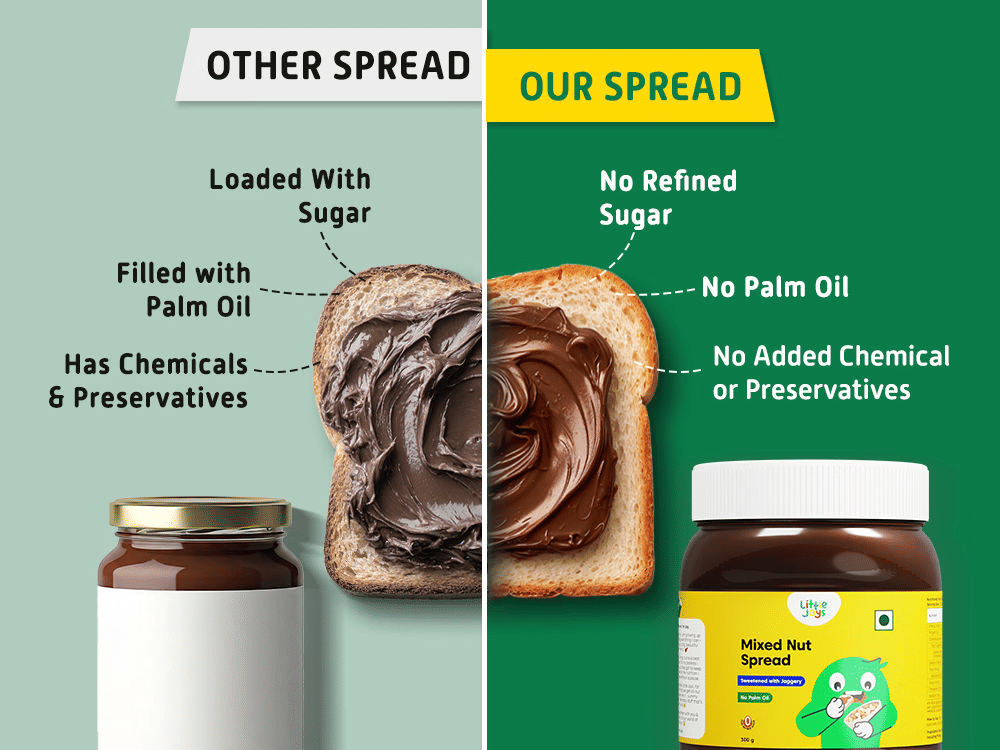
The Three Things to Check on the Label
1. Sugar content and position in the ingredient list
The ingredient list is ordered from highest to lowest quantity. If sugar is the first or second ingredient, the spread is primarily a sugar product. Standard commercial chocolate hazelnut spreads contain 55-60g of sugar per 100g - more than half their weight is sugar.
 Little Joys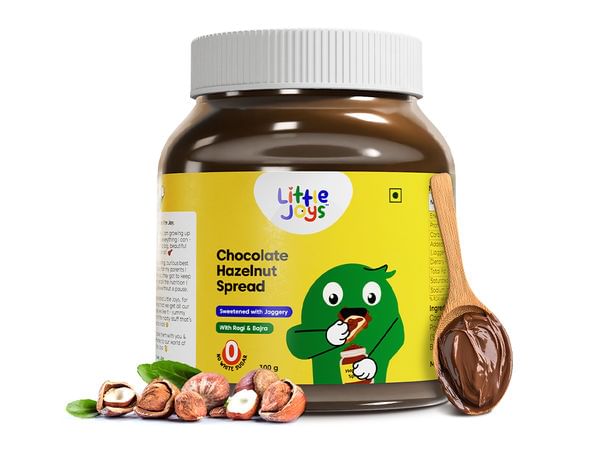
This level of sugar is not appropriate for a daily condiment in children's diets. It adds to the sugar already present in bread, breakfast cereal, flavoured milk, and other daily foods, pushing total free sugar intake well above recommended limits.
A clean chocolate spread lists nuts, cocoa, or a nut butter as the first ingredients - with natural sweetener (honey, jaggery, or dates) in a smaller secondary position.
Little Joys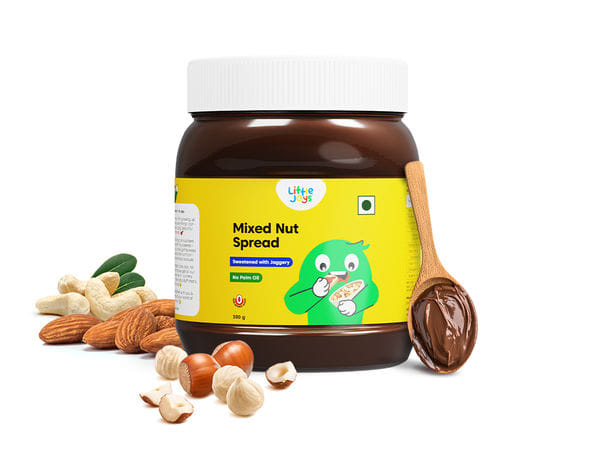
2. Palm oil
Palm oil is listed in many commercial chocolate spreads as the second ingredient. It creates a smooth, shelf-stable texture but replaces the natural healthy fat profile of the nuts themselves with saturated fat. It is not acutely harmful, but displacing the healthy unsaturated fats from hazelnuts or almonds with palm oil reduces the nutritional return of the product significantly.
A clean chocolate spread uses the natural oil from its nut base for spreadability - no added palm oil needed when the nut content is high enough.
3. Allergen content
Hazelnuts and almonds are tree nuts and potential allergens. Before giving any nut-based spread to a child who has not eaten tree nuts before, introduce in a small amount at home first. Cocoa itself is not a common allergen but does contain caffeine in small amounts - relevant for young children where caffeine sensitivity is higher.
Clean vs Standard: The Practical Difference
| Feature | Standard Chocolate Spread | Clean Chocolate Spread |
|---|---|---|
| First ingredient | Sugar | Hazelnuts or almonds |
| Sugar content | 55-60g/100g | Natural sweetener only |
| Palm oil | Yes | No |
| Protein | 5-6g/100g | 12-15g/100g |
Little Joys Chocolate Hazelnut Spread and Little Joys Chocolate Mixed Nut Spread use nuts as the primary ingredient with natural cocoa and no added refined sugar - no palm oil, no artificial flavouring. For children who eat chocolate spread regularly, this is the appropriate daily-use format.
Little Joys-> View Little Joys Chocolate Hazelnut Spread
Little Joys-> View Little Joys Chocolate Mixed Nut Spread
FAQ
Q: How often can children have chocolate spread?
A clean chocolate spread (nut-forward, no refined sugar, no palm oil) as part of a balanced snack can be used daily. A standard sugar-first commercial spread is best limited to occasional use rather than a daily condiment.
Q: Can children with nut allergies eat chocolate spread?
Not any spread containing tree nuts or peanuts. Always check the specific nut used in the spread against the child's known allergies. Sunflower seed-based chocolate spreads are available as nut-free alternatives for children with tree nut allergies.