
Zinc for Kids: Why It Matters for Immunity & Growth

Iron and Vitamin C get most of the attention - but zinc quietly does some of the most important work in a child's body.
It's involved in immune cell development, physical growth, wound healing, and even attention span. And it's one of the most commonly deficient minerals in Indian children.
What Zinc Does for Children
Immunity: Zinc is involved in the development and activation of T-cells - the immune cells that identify and destroy pathogens. Without adequate zinc, the immune system is slower to respond to infection and slower to recover.
Height and physical growth: Zinc deficiency is directly linked to stunted growth and lower height-for-age in children. It plays a role in growth hormone signalling and protein synthesis - both essential for healthy physical development.
Motor development and attention: Zinc supports neurotransmitter function, which affects attention, learning, and motor coordination. Children with low zinc levels are more likely to have difficulty focusing.
Wound healing: Zinc is needed for cell division and tissue repair. Slow-healing cuts and sores in children are a common early sign of deficiency.
Taste and appetite: Zinc deficiency can reduce taste sensitivity - which may partly explain why some picky eaters are so resistant to new foods. Addressing the deficiency can gradually improve appetite.
How Much Zinc Does Your Child Need Per Day?
| Age | Daily Requirement |
|---|---|
| 1–3 years | 3 mg |
| 4–8 years | 5 mg |
| 9–13 years | 8 mg |
| Teens (boys) | 11 mg |
| Teens (girls) | 9 mg |
These amounts are achievable through diet - but only if the diet includes animal proteins or well-combined plant sources regularly. Children on primarily grain-based diets often fall short.
Signs Your Child May Be Low on Zinc
- Frequent colds or slow recovery from illness
- Reduced appetite and fussy eating
- Slow wound healing
- White spots on fingernails (sometimes linked to zinc deficiency)
- Below-average height for their age group
- Difficulty concentrating or seeming easily distracted
None of these alone confirm deficiency - but multiple signs together are worth looking at.
Best Sources of Zinc for Kids
1. Little Joys Multivitamin Gummies
For children who are picky eaters or don't reliably eat zinc-rich animal proteins, this is the most consistent daily source. Contains zinc citrate — one of the most bioavailable forms of zinc — alongside Vitamin C and B12 which support its absorption and use. Zero added sugar, chicory root fibre base, no artificial colours. Third-party tested. Suitable from age 2.
View Little Joys Multivitamin Gummies
 Little Joys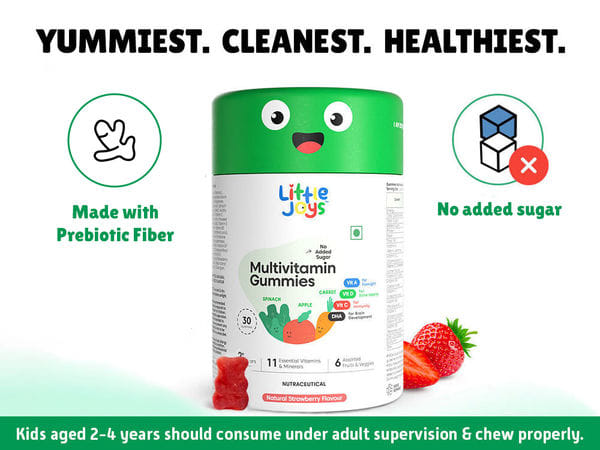
2. Eggs
A complete, convenient source of zinc, protein, and B12. One egg provides roughly 0.5-0.6 mg of zinc - a meaningful daily contribution for younger children.
3. Lentils and Legumes (Dal)
Moong dal, chana, and rajma are good plant-based zinc sources. Absorption improves when soaked or sprouted first, and when eaten alongside Vitamin C-rich foods like tomatoes.
4. Pumpkin Seeds (Kaddu ke Beej)
One of the richest plant-based zinc sources. A small handful - roasted and mixed into curd or a snack mix - gives meaningful zinc content in a form most children accept.
5. Dairy (Paneer, Curd, Milk)
Dairy provides moderate zinc alongside calcium and protein. Regular inclusion across meals contributes to meeting daily needs over time.
6. Bajra (Pearl Millet)
Higher in zinc than wheat or rice. Bajra rotis or khichdi twice a week adds plant-based zinc alongside iron and magnesium.
What to Look for in a Zinc Supplement for Kids
- Zinc citrate or zinc gluconate - not zinc oxide
- Paired with Vitamin C - enhances zinc utilisation for immune function
- Dosage within age-appropriate range - 3-8 mg per serving for most children; high-dose zinc over time can interfere with copper absorption
- No added sugar - important for daily long-term use
- Third-party tested for actual zinc content
FAQ
Q: Can a child take too much zinc?
Yes - excess zinc over time (above 40 mg/day) can interfere with copper absorption. Standard multivitamins for children stay well within safe limits. Avoid high-dose standalone zinc supplements unless directed by a nutrition expert.
Q: Does zinc help picky eaters eat more?
There's a genuine connection. Zinc deficiency dulls taste perception, which worsens food refusal. Correcting the deficiency over 6-8 weeks can improve appetite and acceptance of new foods.
Q: How long does it take for zinc supplementation to show results?
Immune improvements are typically visible after 6–8 weeks. Growth-related changes take longer - 3–6 months of consistent supplementation.
Q: Is zinc in food enough, or do kids need a supplement?
For children eating a varied diet that includes eggs, lentils, and dairy daily - food is usually sufficient. For picky eaters or children on restrictive diets, a multivitamin with zinc citrate fills the gap reliably, usually a multivitamin gummy format for convenience.
Q: Which form of zinc is best for children?
Zinc citrate is the most bioavailable form at low doses and is gentle on the digestive system - making it the best choice for daily children's supplements.