
What Actually Makes a Chocolate Spread a Better Everyday Choice for Kids
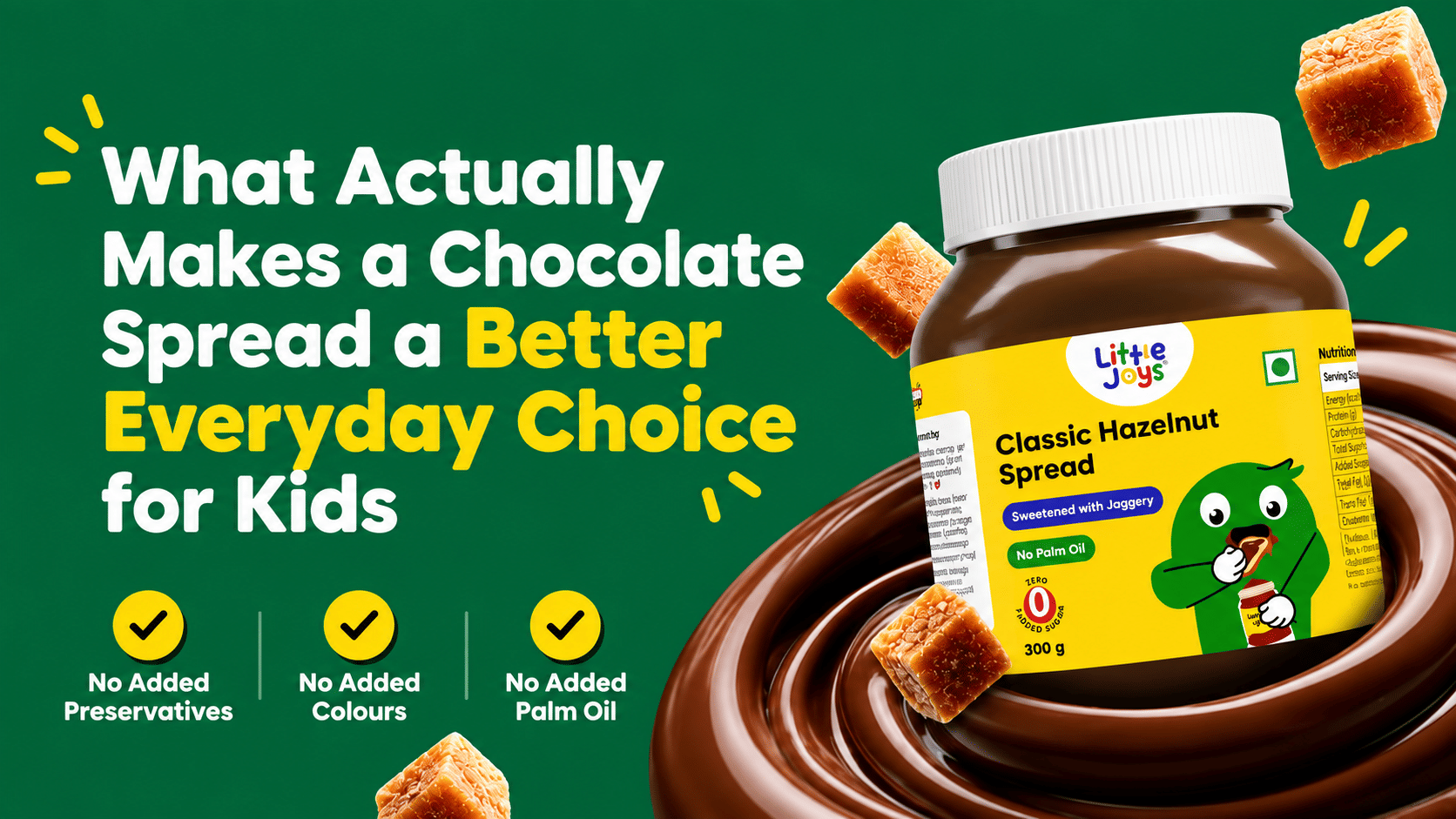
Let's clear one thing up first, because it will save you money and disappointment: a chocolate spread your child actually enjoys is not going to be a health food, and it is not going to be sugar-free. Any spread that is genuinely sweet is sweet because of sugar of some kind. So if you are searching for a "no added sugar chocolate spread for kids," the honest answer is that the truly sugar-free ones taste like it, and the tasty ones have sugar. Chasing that exact label is the wrong test.
Here is a better one. A chocolate spread is a treat - so the useful question isn't "is this healthy," it's "of the treats my kid will happily eat, which is the more sensible everyday one?" That question actually has good answers, and three things separate a better spread from a worse one.
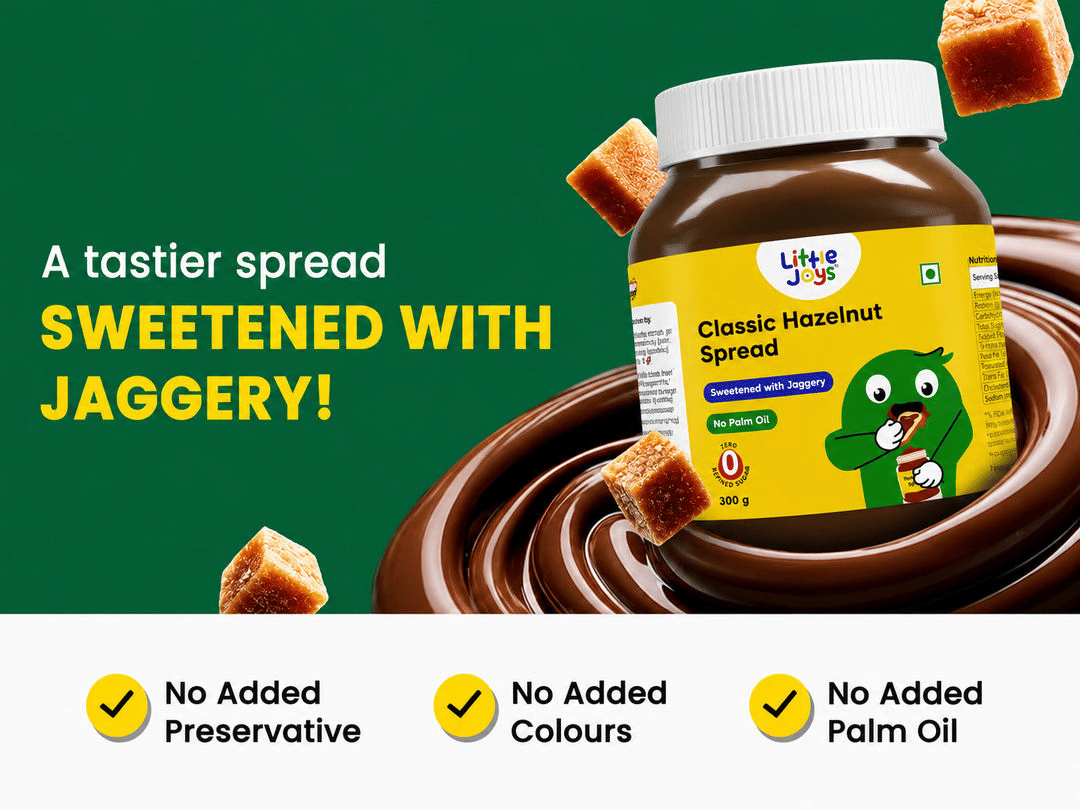
The first is what it is sweetened with. Most mainstream chocolate spreads lean on refined sugar. Some Indian brands now sweeten with jaggery and dates instead, which are still sugar as far as your child's body is concerned, but come with a little more character and a less processed profile. This is not a loophole that makes the spread "healthy" - it is a modest, honest difference between two treats, and worth knowing.
The second, and the one most parents miss, is palm oil. A large share of popular chocolate spreads use palm oil for that glossy, scoopable texture. If avoiding it matters to you - for taste, for ingredient reasons, or just on principle - it is one of the clearer things to check on a label, and plenty of spreads don't need it.
The third is the quiet list at the bottom: preservatives, artificial colours, artificial flavours. A spread that skips these is not automatically better for your child, but it is a shorter, more recognisable ingredient list, and for a lot of parents that recognisability is the whole point of feeling okay about saying yes.
Put those together and you get a genuinely useful shopping rule that has nothing to do with the sugar-free myth: read the sweetener, check for palm oil, and glance at the additives. A spread that uses jaggery or dates rather than refined sugar, skips palm oil, and leaves out artificial colours and flavours is a more sensible everyday pick than one that does the opposite - even though both are still treats to use in moderation.
 Little Joys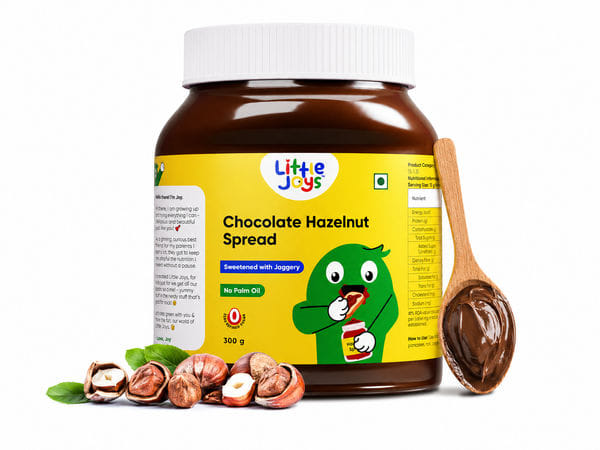
Little Joys makes its Chocolate Hazelnut Spread along exactly those lines: sweetened with jaggery and dates rather than refined sugar, with no added palm oil and no added preservatives, artificial colours or flavours. It is roasted hazelnut and cocoa, meant for a spread on a roti, dosa, toast or pancake - a tablespoon at a time, as the treat it is, not a spoon-from-the-jar habit. It contains hazelnut and milk, so it is one to keep in mind if there are nut or dairy allergies at home.
That is the honest pitch. Not guilt-free, not sugar-free - just a better-made version of a thing your child was going to ask for anyway.
Frequently asked questions
Is there a truly no-added-sugar chocolate spread for kids?
There are low-sugar and sugar-substitute versions, but a spread sweet enough that a child enjoys it almost always contains sugar in some form. A more realistic goal is a spread sweetened with jaggery or dates rather than refined sugar, used in moderation.
Is jaggery-sweetened spread healthy?
It is still sugar, so no spread should be treated as a health food. Jaggery and dates are a less-processed way to sweeten than refined sugar, which makes for a more sensible treat - not a free pass to eat more of it.
Why does palm oil matter in a chocolate spread?
Palm oil is common in chocolate spreads for texture. Some parents prefer to avoid it for taste or ingredient reasons; a spread made without added palm oil is easy enough to find if that is a priority for you.
How much chocolate spread is okay for a child?
Treat it as a treat: a tablespoon on a roti or toast, not a daily unlimited spread. Portion and frequency matter more than the brand.