
Vitamin B12 for Kids: Immunity, Energy and Brain Health
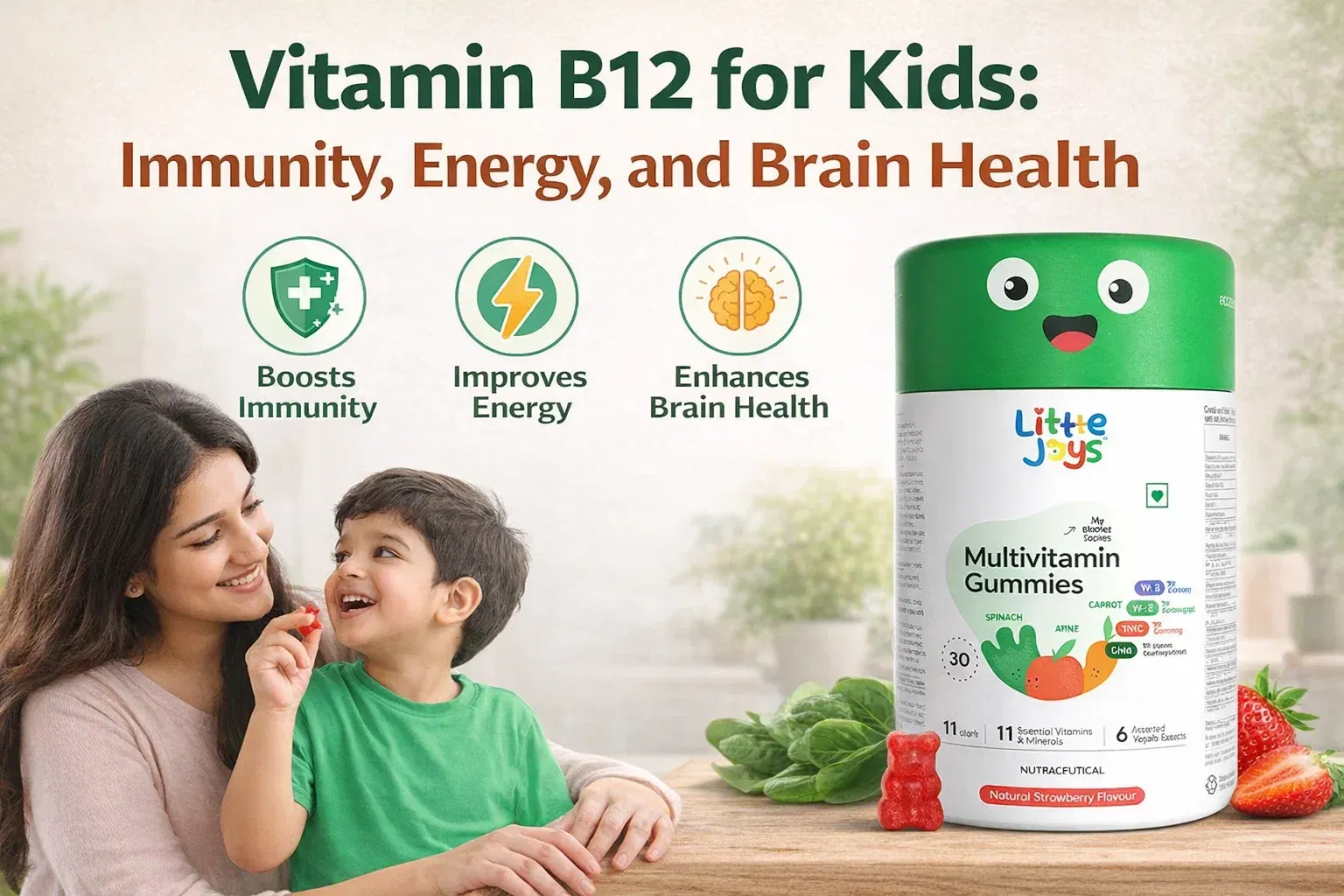
Vitamin B12 is one of the most under-discussed nutrients in Indian children's health - yet deficiency is remarkably common, particularly in vegetarian families.
It affects energy, immunity, and brain function simultaneously. And because it builds up slowly in the body, deficiency can go unnoticed for months before symptoms become obvious.
What Vitamin B12 Does in Children
Immune cell production B12 is essential for the production and maturation of white blood cells - the immune cells that identify and fight pathogens. A child low in B12 produces fewer functional immune cells, leading to a slower and weaker immune response.
Energy metabolism B12 is required to convert food - carbohydrates, proteins, and fats - into usable cellular energy. Children deficient in B12 often show persistent fatigue and low stamina even when they are eating adequately. This fatigue is frequently misattributed to poor sleep or under-eating.
Nervous system and brain function B12 maintains the myelin sheath - the protective coating around nerve fibres. Deficiency disrupts nerve signal transmission, affecting concentration, memory, and mood. In young children, B12 deficiency during critical development periods can have lasting effects on cognitive function.
Red blood cell formation B12 works alongside folate to produce healthy red blood cells. Without enough B12, red blood cells become abnormally large and fail to carry oxygen efficiently - a condition called megaloblastic anaemia.
Who Is at Risk of B12 Deficiency
Vegetarian and vegan children are at the highest risk. Vitamin B12 is found almost exclusively in animal products - meat, eggs, fish, and dairy. Children who eat eggs and dairy regularly have a reasonable dietary intake. Those on fully plant-based diets have virtually no food-based B12 source and require supplementation.
Breastfed infants of B12-deficient mothers are also at risk, as breast milk B12 content depends on the mother's status.
Children with frequent digestive illness - B12 absorption requires a protein called intrinsic factor produced in the stomach. Repeated gastrointestinal illness or certain gut conditions can impair this absorption.

Multivitamin Gummies for Kids
100% Safe | Paediatrician Recommended
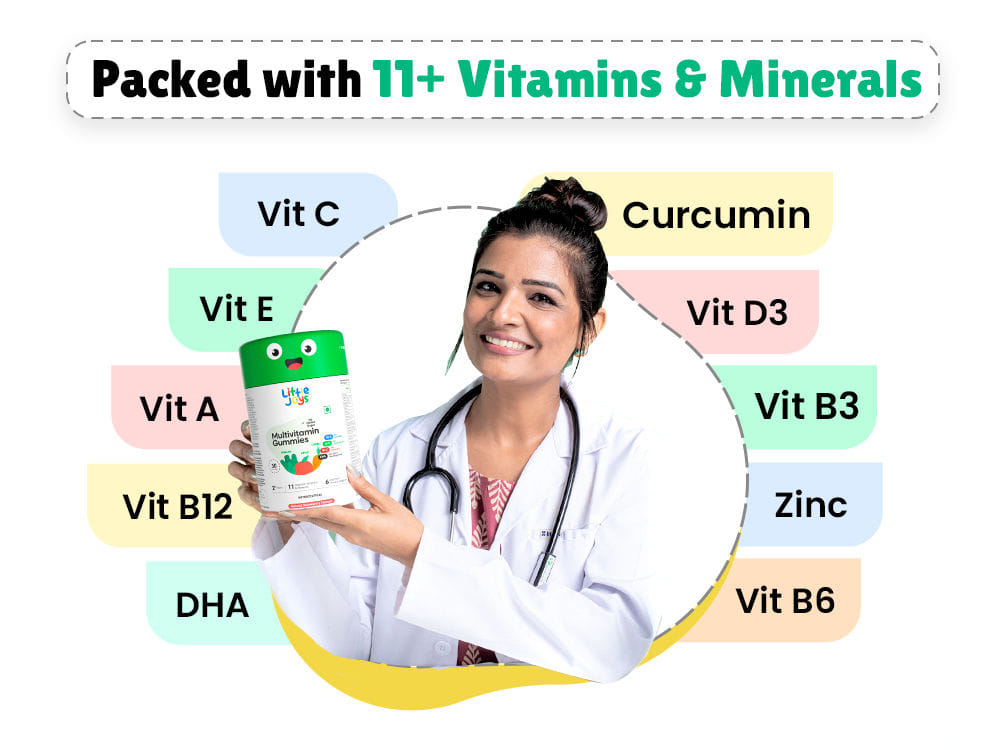
✅ 11+ vitamins & minerals for your little one's daily nutritional needs.
🍎 Contains 6 real fruits & vegetables! Fulfills any nutrition gaps in diet due to fussy or picky eating.
🛡️ Contains Vitamin C, Turmeric (Haldi), Vitamin B12 & Zinc which are known to boost immunity.
🚫 ZERO ADDED SUGAR - Uses a prebiotic fibre chicory root as its base. Along with gut health and immunity benefits it provides natural sweetness to the gummy.
🚫 No artificial colours, flavours or preservatives. Only the YUMMIEST, CLEANEST, HEALTHIEST gummy!
Signs of B12 Deficiency in Children
- Persistent tiredness and low energy despite adequate sleep
- Pale or slightly yellowish skin
- Reduced appetite
- Delayed growth or weight gain
- Difficulty concentrating at school
- Tingling or numbness (in more advanced deficiency)
Many of these signs overlap with other nutritional deficiencies. A blood test is the only way to confirm B12 status.
How Much B12 Does Your Child Need Per Day?
| Age | Daily Requirement |
|---|---|
| 1-3 years | 0.9 mcg |
| 4-8 years | 1.2 mcg |
| 9-13 years | 1.8 mcg |
| Teens | 2.4 mcg |
These amounts are achievable through diet for children who eat eggs and dairy regularly. For vegetarian children eating no eggs, supplementation is typically necessary from early childhood.
Best Food Sources of B12
- Eggs - one of the most accessible everyday sources for Indian children; one egg provides around 0.6 mcg
- Paneer and curd - moderate B12 alongside calcium and protein
- Milk - a useful contributor when consumed daily
- Fortified foods - some breakfast cereals and plant milks are B12-fortified; check the label
Purely plant-based foods like fruits, vegetables, and grains contain no meaningful B12.
When a Supplement Is Necessary
For vegetarian children who eat no eggs, a supplement is not optional - it is a nutritional necessity. Even for egg-eating vegetarian children, daily requirements may not always be met consistently.
When comparing B12 supplements:
- Look for cyanocobalamin or methylcobalamin as the listed form - both are well absorbed
- B12 is best delivered alongside other B-vitamins - they work together in energy and immune pathways
- Zero added sugar in the delivery format matters for daily long-term use
- Age-appropriate dosing - adult B12 supplements often contain very high doses unnecessary for children
Little Joys Multivitamin Gummies include Vitamin B12 alongside Vitamin C, Zinc, D3, Folate, and Curcumin - covering both the immunity and energy pathways in a single daily gummy. Built on an 88% chicory root fibre base, zero added sugar, no artificial colours, third-party tested. Available in age-specific formulas from age 2.
FAQ
Q: Can B12 deficiency be reversed with supplements?
Yes - B12 levels respond well to supplementation. Mild to moderate deficiency typically corrects within 2-3 months of consistent daily intake. Severe deficiency may take longer and should be managed with expert guidance.
Q: Is there any risk of too much B12 in children?
B12 is water-soluble - excess is excreted rather than stored. Toxicity from B12 supplements is not a documented concern at the amounts used in children's multivitamins.
Q: My child eats curd every day - is that enough B12?
Curd provides some B12, but typically not enough to meet daily requirements on its own. If eggs are also excluded from the diet, a supplement is strongly advisable.