
Vitamin A for Kids: Role in Eye Health and Immunity
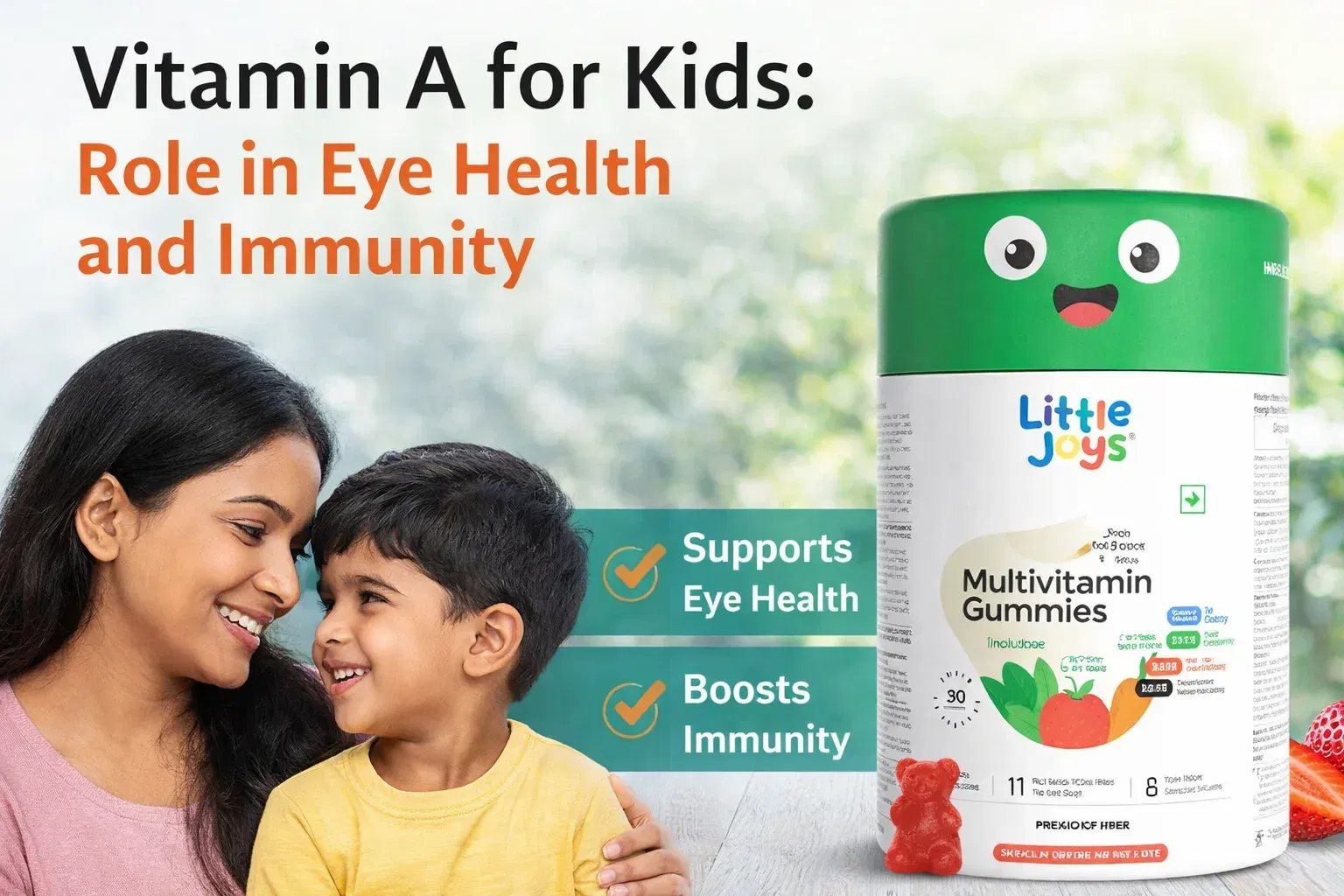
Vitamin A does two critical jobs in children: it maintains the mucous membranes that line the nose, throat, and lungs - the body's first physical barrier against pathogens - and it is essential for the light-sensitive cells in the eyes that enable vision in low light. Deficiency is the leading preventable cause of childhood blindness globally, and even mild deficiency measurably increases susceptibility to respiratory and gut infections.
Children need 300-600 mcg of Vitamin A per day depending on age. Here is how to make sure they get it.
| Age | Daily Vitamin A Requirement |
|---|---|
| 1-3 years | 300 mcg RAE |
| 4-8 years | 400 mcg RAE |
| 9-13 years | 600 mcg RAE |
| Teens | 700-900 mcg RAE |
What Vitamin A Does in Children
Eye health and night vision
Vitamin A is converted into retinal, a molecule that combines with a protein in rod cells to enable low-light vision. Children deficient in Vitamin A develop night blindness first - difficulty seeing in dim light or adjusting from bright to dark environments. This is one of the earliest and most reversible signs of deficiency.
Immunity through mucous membrane integrity
The mucous membranes lining the respiratory tract, gut, and eyes are Vitamin A-dependent. These membranes are the first physical line of defence against viruses and bacteria. When Vitamin A is low, these barriers thin and become permeable, making infections easier to establish and harder to clear.
Best Food Sources of Vitamin A for Children
Animal sources (preformed Vitamin A - retinol)
These are the most bioavailable form. The body uses retinol directly without any conversion.
- Eggs - one whole egg provides around 75 mcg RAE
- Whole milk and curd - around 40-50 mcg per 100ml or 100g
- Liver (for non-vegetarian families) - extremely rich source
 Little Joys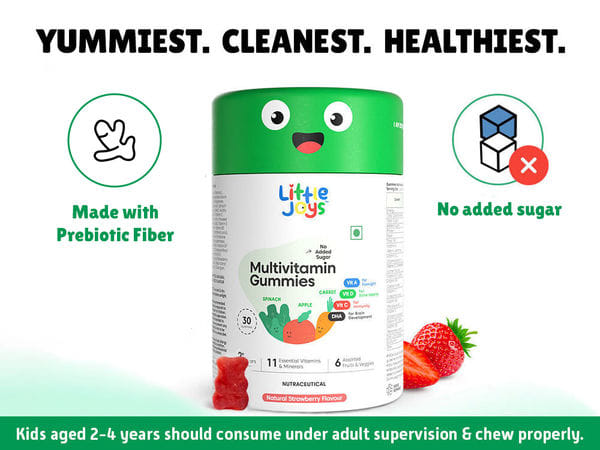
Plant sources (beta-carotene, converted to Vitamin A)
The body converts beta-carotene to Vitamin A, but at a much lower efficiency than retinol. Eating fat alongside plant sources significantly improves conversion.
- Sweet potato - one of the richest sources, around 960 mcg RAE per 100g cooked
- Carrots - 835 mcg RAE per 100g raw
- Spinach and amaranth - meaningful amounts but lower bioavailability
- Mango and papaya - good seasonal sources for children who accept fruit readily
Pairing Tips to Improve Absorption
Beta-carotene from plants is fat-soluble. Adding a small amount of ghee, oil, or whole dairy to carrot or sweet potato dishes significantly improves Vitamin A conversion. A carrot sabzi cooked in ghee absorbs meaningfully better than raw carrot sticks eaten alone.
When a Supplement Is Needed
Picky eaters who consistently avoid eggs, dairy, orange and yellow vegetables, and leafy greens are at real risk of Vitamin A deficiency. A daily multivitamin providing retinyl palmitate (the supplement form of preformed Vitamin A) fills this gap reliably.
Little Joys Multivitamin Gummies provide Vitamin A as retinyl palmitate alongside Vitamin C, Zinc, Vitamin D3, and B12 - covering both the immunity and eye health functions in a single daily gummy. Zero added sugar, no artificial colours, third-party tested. Suitable from age 2.
-> View Little Joys Multivitamin Gummies
Little JoysFAQ
Q: Can children get too much Vitamin A?
Yes - Vitamin A is fat-soluble and accumulates in the body. Retinol (preformed Vitamin A from animal sources and supplements) can reach toxic levels at very high intakes over time. Beta-carotene from plants does not cause toxicity. Age-appropriate multivitamins are dosed within safe limits - always avoid giving adult Vitamin A supplements to children.
Q: How do I know if my child is low on Vitamin A?
Early signs include difficulty seeing in dim light, frequent respiratory infections, and dry skin that does not improve with moisturising. A blood test can confirm serum retinol levels if deficiency is suspected.
Q: Is sweet potato the best Vitamin A food for Indian children?
Sweet potato is one of the richest and most practical sources. It is widely accepted by young children, cooks quickly, and works in both savoury (boiled and mashed) and sweet (with jaggery and ghee) preparations. It is one of the most efficient single-food interventions for Vitamin A in Indian child diets.