
Moong Dal for Kids: Protein, Digestion and How to Use It
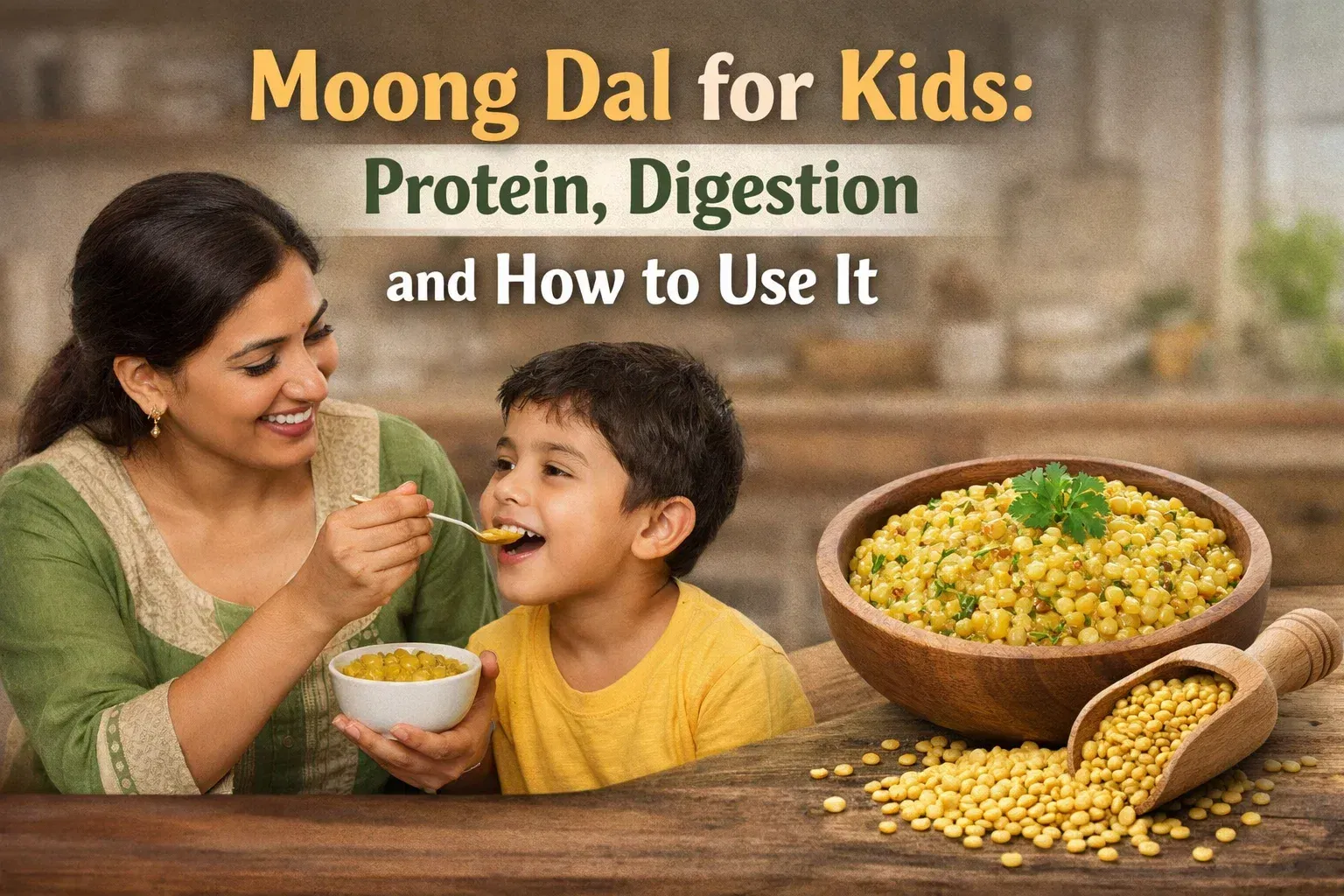
Of all the dals in the Indian kitchen, moong is the one most consistently recommended for children - and for good reason. It is high in protein, easy to digest, low in fibre that could cause gas, and accepted by children from weaning age through to teens without resistance.
Here is a proper breakdown of why moong dal belongs in your child's daily diet, and the most effective ways to include it.
The Nutritional Profile of Moong Dal
| Nutrient | Per 100g (cooked) |
|---|---|
| Protein | 7-8 g |
| Iron | 1.4 mg |
| Zinc | 0.8 mg |
| Folate | 159 mcg |
| Potassium | 270 mg |
| Dietary fibre | 7.6 g |
These numbers make moong one of the most nutritionally dense everyday foods available to Indian children - not as a superfood supplement, but as a staple.
Why Moong Dal Is Especially Good for Children
Easy digestion Moong is the most easily digestible legume available. Unlike rajma, chana, or toor dal, it produces minimal gas and bloating even in very young children. This makes it suitable from 6 months as a first food and appropriate for children with sensitive digestion or during and after illness.
Protein for growth At 7-8g of protein per 100g cooked, moong provides meaningful plant protein in every serving. Paired with rice or roti, it creates a complementary amino acid profile - the combination covers all essential amino acids that either food alone misses. This is why dal-chawal has been a functional complete meal for Indian families for centuries.
Folate for cell development Moong is one of the richest plant-based sources of folate (Vitamin B9). Folate is essential for cell division and DNA synthesis - critical during the rapid growth periods of early childhood and adolescence. Children with low folate show impaired growth and reduced immune cell production.
Iron for energy and immunity Moong's iron content contributes to daily requirements, particularly for vegetarian children who do not have access to haem iron from meat. Pairing moong with a Vitamin C source (tomato, amla, lime) at the same meal significantly improves iron absorption.
Zinc for immune function Zinc from moong contributes to the daily requirement alongside other legumes, eggs, and grains. Children eating moong regularly as part of a varied diet are less likely to develop the zinc deficiency that impairs immune activation.
Gut health support Moong's dietary fibre - both soluble and insoluble - feeds beneficial gut bacteria and supports regular bowel movements. The soluble fibre fraction acts as a mild prebiotic, making moong a useful gut-health food alongside curd and chicory root-based supplements.
Best Ways to Include Moong Dal Daily
Moong dal khichdi Rice and moong cooked together with ghee and mild spices - one of the most complete, easily digestible meals for children of all ages. A one-pot meal covering protein, carbohydrates, iron, and folate. Suitable from 7-8 months as a soft weaning food.
Plain moong dal (pani waali dal) Thin, lightly seasoned moong dal is one of the most universally accepted foods for Indian children from 8 months onwards. Serve with rice for a complete protein. Add a squeeze of lime for Vitamin C - this meaningfully improves iron absorption from the dal.
Moong dal cheela (savoury pancake) Ground moong dal soaked overnight and blended into a batter - made into thin pancakes on a tawa with a small amount of ghee. Quick to make, accepted by most school-age children as a breakfast or snack.
Sprouted moong Sprouting moong for 24-48 hours increases Vitamin C content, reduces phytates (improving mineral absorption), and makes it easier to digest. Sprouted moong in salads or lightly cooked in a sabzi is a nutritionally superior form for older children.
Moong Dal in Little Joys NutriMix
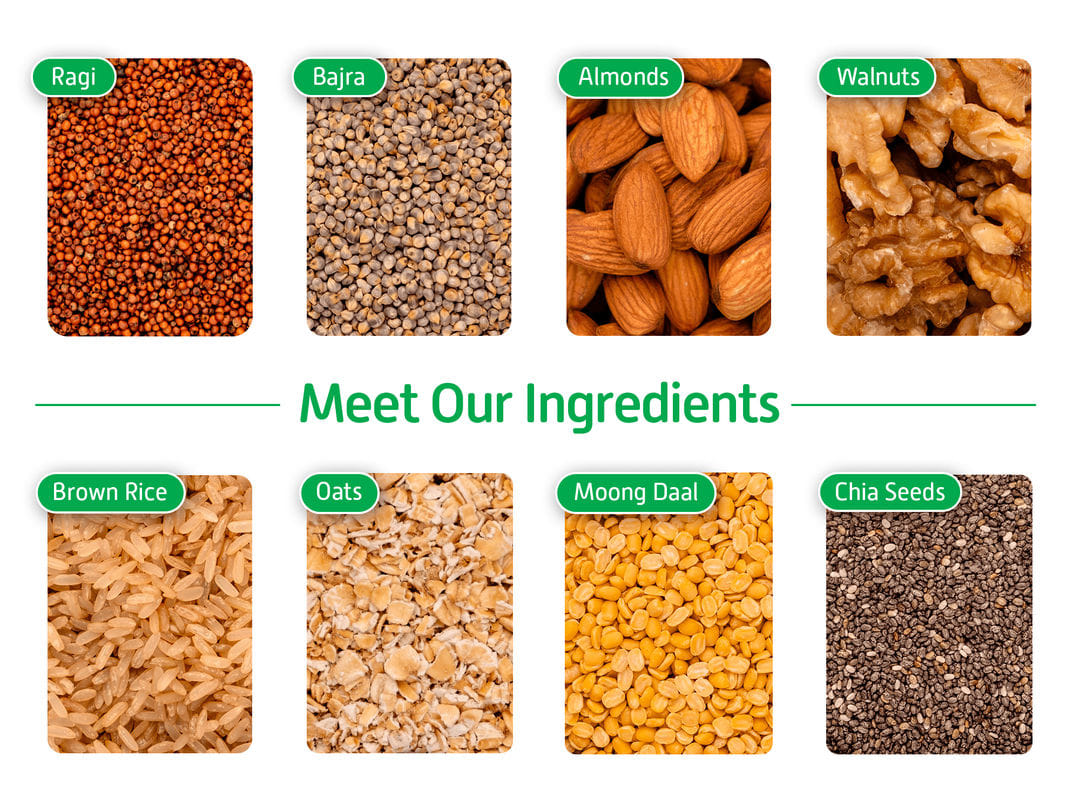
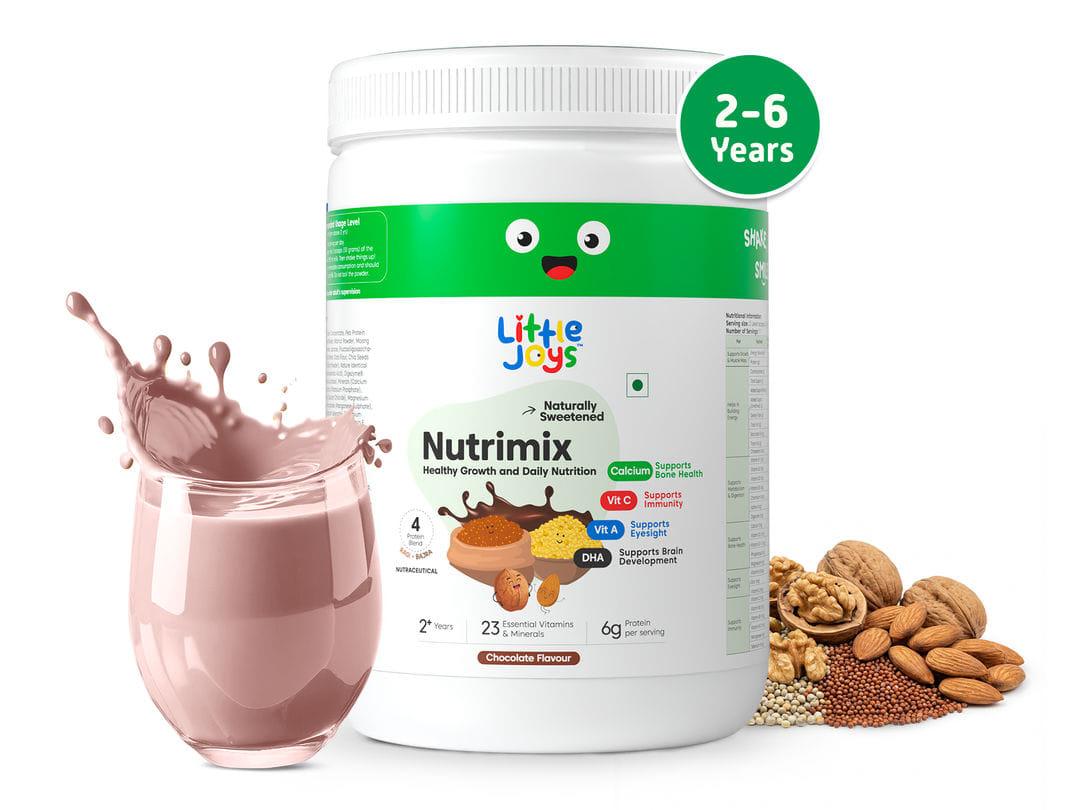
Little Joys NutriMix uses moong dal as one of its primary protein sources alongside peas, brown rice protein, almonds, and walnuts. This multi-source approach ensures a more complete amino acid profile than a single-legume base. Combined with ragi and bajra as the grain base, each serving covers protein, iron, zinc, and calcium in a single drink.
For picky eaters who refuse dal - NutriMix delivers moong protein daily without the battle.
Frequently Asked Questions
Q: From what age can babies eat moong dal?
Moong dal can be introduced from 6 months as part of complementary feeding - as a thin, smooth dal or blended into khichdi. It is one of the recommended first foods in Indian weaning guidelines due to its digestibility and protein content.
Q: Does moong dal cause gas in children?
Moong is the legume least likely to cause gas, which is why it is recommended specifically for children and for recovery after illness. If gas does occur, soaking the dal for 4-6 hours before cooking reduces oligosaccharide content significantly.