
Millet Snacks for Kids: Why Millets Are a Superfood
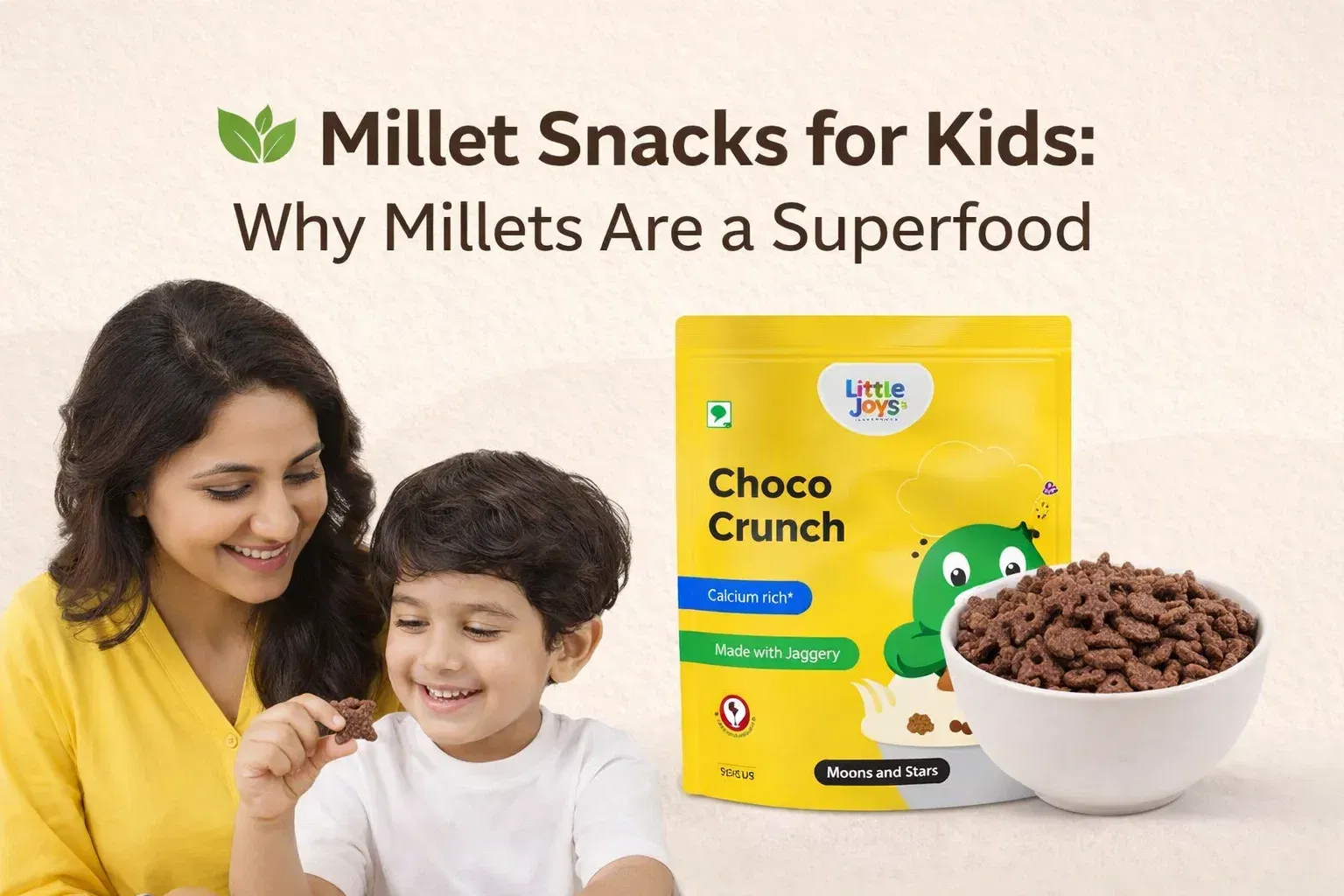
Millets beat refined wheat on every nutritional measure that matters for children: more fibre, more iron, more zinc, more calcium, and a lower glycaemic index that delivers sustained energy rather than a blood sugar spike. They were India's primary grain for centuries before refined wheat displaced them. Reintroducing them as snack ingredients is one of the most practical nutritional upgrades available for Indian children.
 Little Joys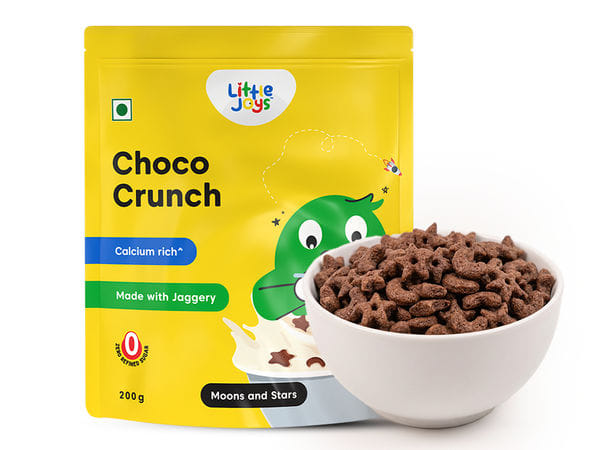
What Makes Millets Nutritionally Different
Refined wheat flour (maida) has its bran and germ removed - where nearly all fibre, minerals, and B vitamins are concentrated. What remains is primarily starch. Millets are eaten as whole grains, so nothing is stripped away.
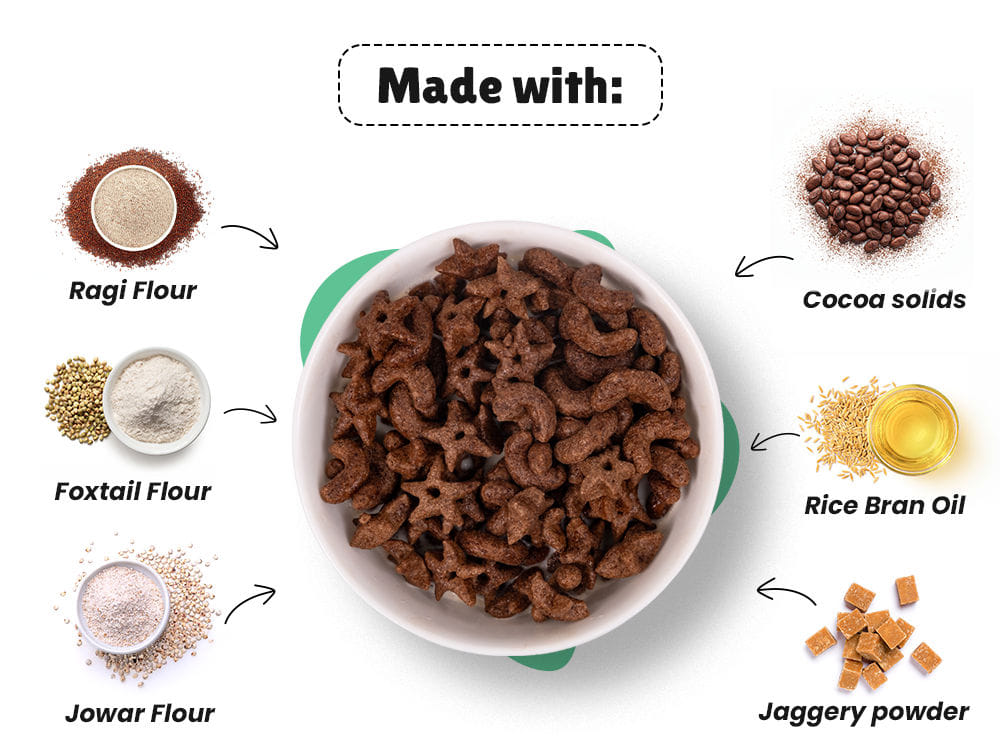
Ragi provides around 344 mg of calcium per 100g - more per gram than milk - alongside 3.9 mg of iron and 3.6g of fibre. One of the most important complementary foods in Indian child nutrition for centuries, now supported by modern nutritional research.
Bajra leads on iron at approximately 8 mg per 100g - the highest of any common Indian grain - alongside 3.1 mg of zinc per 100g.
Jowar provides 10g of protein per 100g alongside fibre and B vitamins. A practical base for savoury snack formats.
Why the Snack Format Matters
Children eat 2-3 snacks daily. If those snacks come from refined wheat, the cumulative nutritional displacement is significant. Switching even one daily snack to a millet base consistently delivers iron, calcium, and zinc that Indian children are commonly short on.
The challenge is acceptance. Millet snacks that use familiar formats - crunchy, chocolate-adjacent, fun shapes - are accepted with far less resistance than traditional preparations introduced as new foods.
Best Millet Snack Formats for Children
Ragi pancakes - the most accepted format for younger children. Mixed with banana and natural sweetener, the familiar round shape and sweet flavour works well from age 1+.
Millet choco crunch - star and moon shapes in a chocolate millet base. Iron and zinc from bajra and ragi in a cereal-like format children enjoy.
Ragi ladoos - traditional and widely accepted. Ragi flour, jaggery, and ghee shaped into balls. No baking, shelf-stable up to a week.
Bajra crackers - thin and crispy, these work well as a base for nut butter or curd for children from age 3+.
Introducing Millets to Children Who Resist Them
Children used to refined wheat may initially resist millet snacks. The most effective approach is format familiarity: replace wheat pancakes with millet pancakes using the same toppings, or serve millet crunch snacks alongside an accepted dip. Repeated exposure in familiar formats - without pressure - builds acceptance within 2-3 weeks for most children.
-> View Little Joys Millet Choco Crunch
-> View Little Joys Millet Pancake Mix
Little Joys_iocolq.jpg?tr=w-600)
FAQ
Q: At what age can children start eating millet snacks?
Ragi has been used as a weaning food in India from 6 months. In pancake or porridge format, millet snacks are appropriate from 8-10 months. Crunchy formats are suitable from age 2-3 when children have adequate chewing ability.
Q: Do millet snacks taste very different from wheat snacks?
In chocolate or banana pancake formats, most children do not notice a significant difference. The earthiness of ragi blends effectively into sweet bases. Savoury millet crackers have a more distinct flavour that takes a few exposures to accept.