
What Should a Kids' Nutrition Powder Actually Contain? A Parent's Ingredient Guide
The most effective kids' nutrition powders for ages 2-6 combine plant-based protein from legumes and grains (moong dal, peas, brown rice), immunity-supporting millets (ragi, bajra), brain-development fats (DHA, omega-3), gut-friendly fibre (oats), and a full vitamin-mineral profile - including Vitamin D alongside calcium, which most milk alone cannot provide. Natural sweeteners like jaggery and dates are strongly preferable to refined sugar. Third-party lab testing is the one non-negotiable marker of a trustworthy brand.
Introduction: Why Ingredients Are the Only Thing That Matters
The kids' nutrition powder category is one of the most heavily marketed in Indian FMCG. Tins and pouches make bold promises about intelligence, immunity, and height - but the ingredient list tells a different story.
Most products lead with refined sugar. Many use milk solids as the primary protein source and pad the rest with maltodextrin, artificial flavours, and a sprinkle of vitamins that look impressive on a label but are present in amounts too small to matter.
This guide is not about brands. It is about ingredients - what each one does, at what quantity it becomes meaningful, and what a well-formulated kids' powder should look like from the inside out.
 Little Joys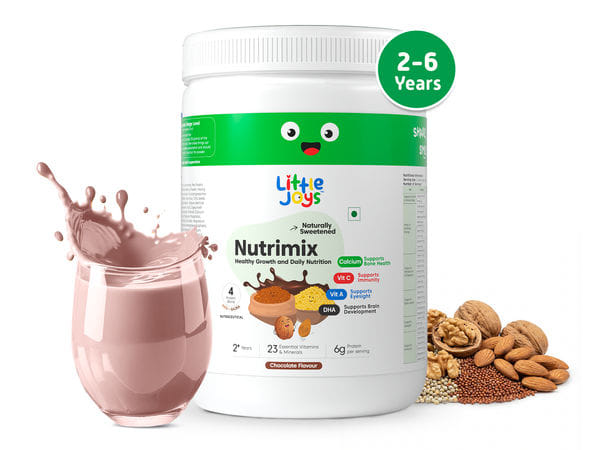
The Six Ingredient Categories That Actually Matter
1. Plant-Based Protein: Moong Dal, Peas, Brown Rice
Protein is the building block of every tissue in a growing child's body - muscle, organ development, enzyme production, and immune cell synthesis all depend on adequate protein intake.
Why plant-based matters for kids. Whey protein (derived from milk) is effective but can cause digestive discomfort in some children, particularly those with lactose sensitivity. Plant proteins from moong dal, green peas, and brown rice are gentler on the gut and, when combined, provide a complete amino acid profile comparable to animal protein.
Moong dal is one of the most bioavailable plant protein sources available in Indian nutrition. It is also rich in iron and folate, two nutrients frequently deficient in children who eat limited meat.
Brown rice protein provides a hypoallergenic protein source and contributes complex carbohydrates that sustain energy levels across a school morning.
What to look for on the label. A meaningful serving should provide at least 5–6g of protein. If protein is listed far down the ingredient list, the quantity is likely too small to be effective.
2. Millets: Ragi and Bajra
India's traditional grains are having a well-deserved scientific moment, and for good reason.
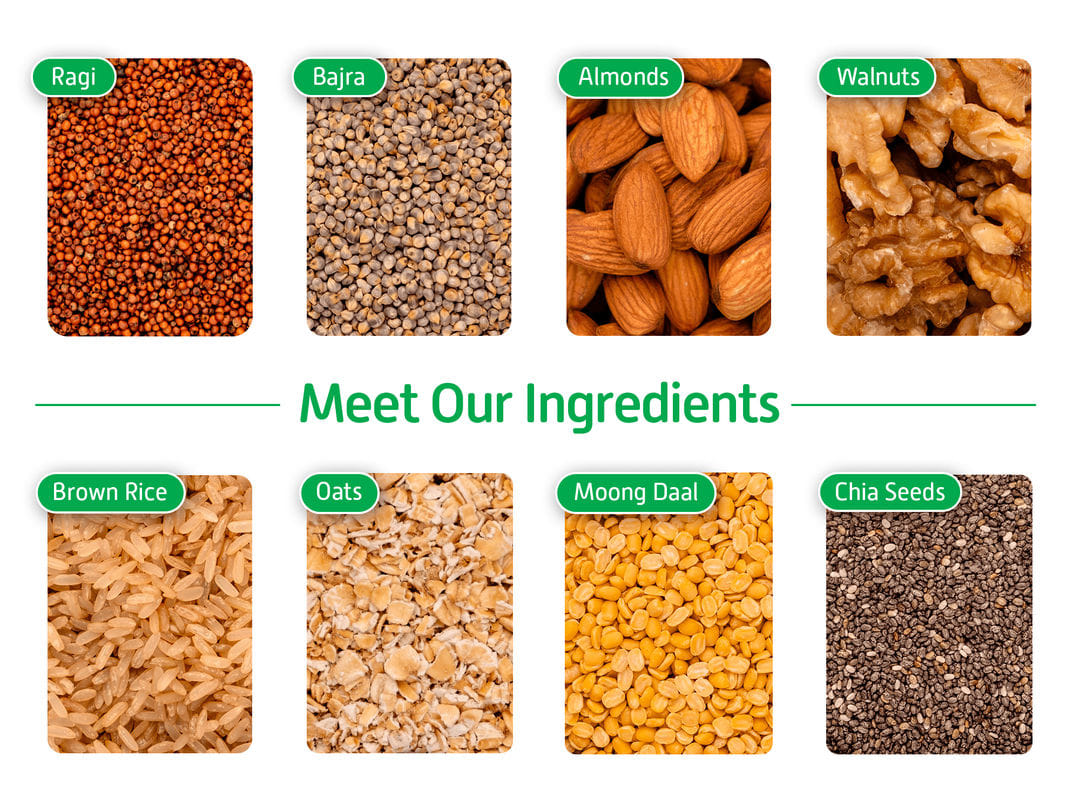
Ragi (finger millet) contains more calcium than milk per 100g - approximately 344mg versus milk's 125mg. It is also one of the few plant foods with a meaningful complete amino acid profile. For children who consume limited dairy or are vegetarian, ragi is a critical calcium source. It also contains Vitamin C, which aids iron absorption - a combination rarely found in a single ingredient.
Bajra (pearl millet) is rich in iron, zinc, and B vitamins. Zinc in particular plays a direct role in immune function - it is required for the development and activation of T-lymphocytes, the cells that identify and destroy pathogens. Children with low zinc levels have measurably higher rates of respiratory infections.
Both millets are also high in dietary fibre, which supports gut microbiome diversity - increasingly recognised as a foundational component of children's immunity.
What to look for on the label. Ragi and bajra should appear in the first five to seven ingredients. If they are listed after a long series of sugar variants or milk powders, they are present in token amounts.
3. Nuts: Almond and Walnut Powder
Almonds and walnuts are two of the most nutrient-dense foods available, and their powdered forms are equally effective in a nutrition drink.
Almond powder provides Vitamin E, magnesium, and healthy monounsaturated fats. Vitamin E is a fat-soluble antioxidant that protects cell membranes and supports immune response. Magnesium is involved in over 300 enzymatic reactions in the body, including those governing energy production and protein synthesis.
Walnut powder is particularly notable for brain health. Walnuts are one of the richest plant sources of alpha-linolenic acid (ALA), an omega-3 fatty acid that the body partially converts to DHA. They also contain polyphenols associated with reduced neuroinflammation in animal studies.
A study published in Nutrients (2020) found that regular walnut consumption in children was associated with improved attention and memory compared to control groups.
4. DHA and MCT Oil: The Brain Development Pair
DHA (docosahexaenoic acid) deserves its own section because it is uniquely important and uniquely underrepresented in Indian children's diets.
DHA makes up approximately 30-40% of the polyunsaturated fatty acids in the brain's grey matter. The period of most rapid brain development runs from birth through approximately age 7 - making early childhood the window in which DHA supply matters most.
The primary dietary sources of DHA are oily fish and algae-derived supplements. For children in vegetarian households - which includes a significant proportion of India - fish is not an option. Algae-derived DHA (the same source fish themselves use) is the appropriate alternative, and it should appear explicitly on a nutrition powder's ingredient list, not just implied by omega-3 content.
MCT oil (medium-chain triglycerides) provides a rapidly available energy source for the brain. Unlike long-chain fats, MCTs are absorbed directly into the portal blood and converted to ketone bodies, which the brain can use as an alternative to glucose. This supports sustained concentration - particularly relevant for school-age children.
What to look for. DHA should be listed explicitly, not just as "omega-3 fatty acids." A meaningful dose for children is in the range of 100-200mg per day.
Little Joys5. Oat Fibre: The Overlooked Gut Ingredient
Childhood constipation is significantly underreported and underaddressed. Studies suggest prevalence rates as high as 29.6% in children aged 2-12, with most cases being functional - meaning diet-related rather than disease-related.
Oat fibre (beta-glucan) is among the most evidence-backed dietary interventions for childhood constipation. It adds bulk to stool, feeds beneficial gut bacteria (particularly Lactobacillus and Bifidobacterium strains), and slows gastric emptying - which increases satiety and can improve appetite regulation in children who eat poorly due to digestive discomfort.
Beyond constipation, gut microbiome health is now understood to be a central regulator of immune function. Approximately 70% of immune cells reside in the gut-associated lymphoid tissue (GALT). A fibre-rich diet is one of the most reliable ways to support the diversity of gut bacteria that keeps this system functioning well.
6. Natural Sweeteners: Jaggery and Dates Over White Sugar
This is not a minor preference - it is a formulation philosophy that reveals how a brand thinks about children's health.
White sugar (refined sucrose) provides calories with no nutritional value. In children, regular consumption is associated with dental caries, disrupted appetite regulation, and blood sugar volatility that affects mood and concentration.
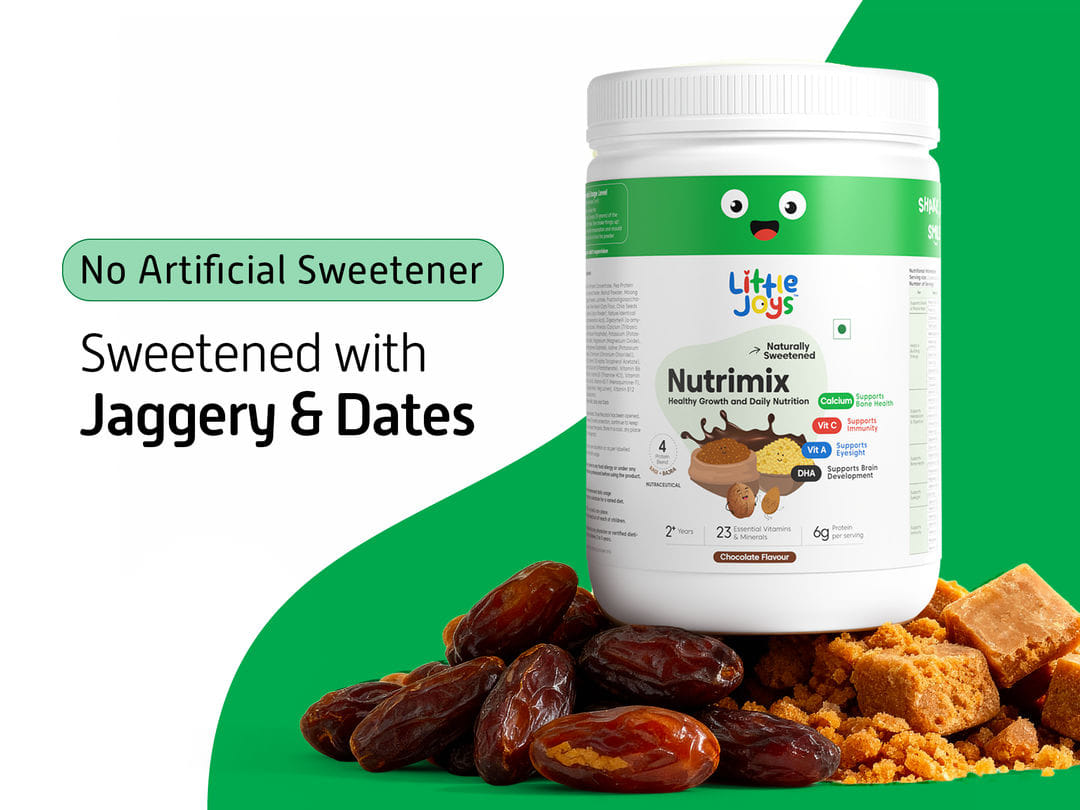
Jaggery (unrefined cane sugar) retains iron, potassium, magnesium, and calcium that are stripped out during the refining process. It also contains small amounts of antioxidants. It has a modestly lower glycaemic index than white sugar, producing a less sharp blood glucose spike.
Dates are a whole fruit sweetener containing fibre, potassium, and B vitamins alongside their natural sugars. The fibre in dates slows sugar absorption, further moderating glycaemic impact.
A product sweetened with jaggery and dates is not just "less bad" than a sugar-sweetened product - it is actively contributing micronutrients alongside sweetness.
The Vitamin-Mineral Profile: What 23 Vitamins and Minerals Means in Practice
A label claiming "23 vitamins and minerals" sounds impressive. What matters is whether the key ones are present at clinically meaningful doses.
Vitamin D (100% RDA). This is the most critical pairing with calcium. Without sufficient Vitamin D, calcium is poorly absorbed regardless of intake. The RDA for children is 600 IU/day. Most Indian children are deficient - sun exposure is lower than assumed, and dietary sources are scarce. A powder providing 100% RDA of Vitamin D is covering a gap that milk simply does not.
Iron. Anaemia affects approximately 40% of children under 5 in India. Iron is essential not just for blood production but for cognitive function - iron deficiency in early childhood is associated with measurable reductions in attention and learning capacity even after the deficiency is corrected.
Zinc. As noted above, zinc is central to immune cell development. Most plant-based diets are lower in bioavailable zinc than meat-based diets, making supplementation through a well-formulated powder meaningful.
B vitamins (B6, B12, folate). These support neurological development, red blood cell formation, and energy metabolism. B12 in particular is found almost exclusively in animal products, making it a critical inclusion in any powder used in vegetarian households.
The One Question to Ask Any Brand: Do You Third-Party Test?
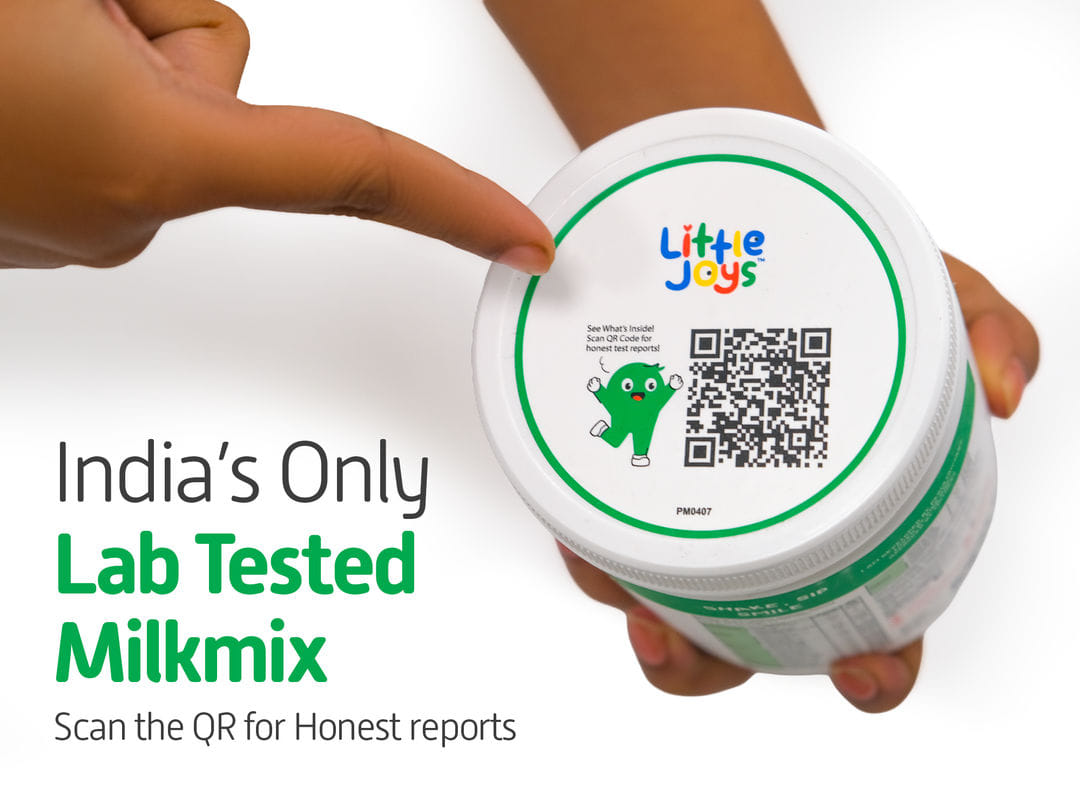
Everything above can be claimed on a label without being true. The only independent verification is a third-party lab test that confirms:
- The nutrients listed are present at the stated amounts
- Heavy metals (lead, arsenic, mercury) are below safe limits
- The product is free from undisclosed additives or contaminants
Most kids' nutrition brands in India do not publish third-party lab certificates. This is a problem. When you are adding a powder to your child's milk every day, you have a right to know exactly what is in it.
Ask the brand directly. Request the certificate. If they cannot provide one, that tells you something important.
How to Read a Kids' Nutrition Powder Label
- Look at the first five ingredients. These are present in the highest quantities. If sugar appears here, the product is built around sweetness, not nutrition.
- Check protein source and quantity. At least 5g per serving. Identify the source - plant-based or whey.
- Find Vitamin D on the label. If calcium is listed but Vitamin D is absent, the calcium claim is largely hollow.
- Look for DHA explicitly. "Contains omega-3" is not the same as "contains DHA."
- Verify the sweetener. Jaggery, dates, stevia - acceptable. Sugar, sucrose, corn syrup - avoid.
- Ask for the lab test. Not the internal one. The independent one.
Conclusion
The difference between a well-formulated and a poorly-formulated kids' nutrition powder is not visible from the tin. It is in the ingredient list, the quantities, the sourcing decisions, and the willingness to have the product independently verified.
The ingredients outlined in this guide - plant protein from moong dal, peas and brown rice; ragi and bajra for immunity; DHA and MCT for brain health; oat fibre for digestion; almonds and walnuts for healthy fats; jaggery and dates for natural sweetness; and a full vitamin-mineral profile with 100% RDA Vitamin D - represent what a genuinely effective nutrition powder for a 2-6 year old should contain.
Little JoysProducts that include all of these, sourced cleanly, without refined sugar or preservatives, and backed by third-party testing, are rare. But they exist - and they are worth the slightly higher price per serving compared to brands that are built on marketing rather than formulation.