
How Much Sugar Is Too Much for Kids?
The honest number is smaller than most parents expect, and smaller than most kids are getting. The American Heart Association recommends that children aged 2 to 18 keep added sugar under about 25 grams, or roughly 6 teaspoons, a day, and that children under 2 have no added sugar at all. The World Health Organization frames it a little differently - keep free sugars under 10% of daily energy, and ideally under 5% - but it lands in the same place. Six teaspoons is the figure worth carrying in your head.
 Little Joys
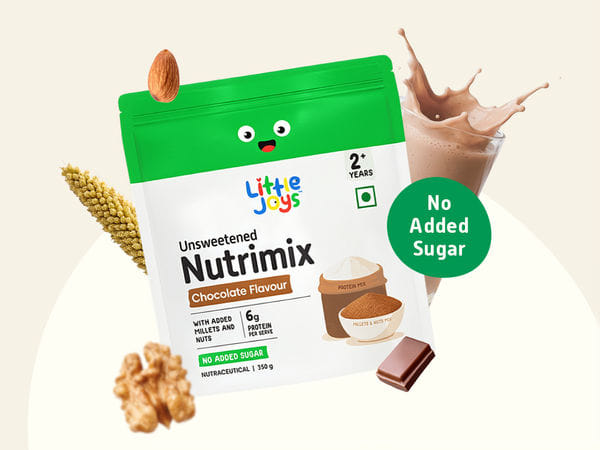
Here is the catch that makes that number feel almost impossible: added sugar is not the sugar in whole fruit or plain milk, which you do not need to worry about. It is the sugar added to food and drinks. And once you start reading labels, it turns up in places that were never obviously "sweets". A quick tool helps - four grams of sugar is one teaspoon - so a snack listing 16 grams of added sugar is already four of the day's six teaspoons, before anything else.
Which is why most kids sail past the limit without a single obvious dessert. On average, children are eating roughly three times the recommended amount, and the biggest single reason is drinks. A small juice box can carry close to a day's entire sugar budget in one go, and a flavoured milk or a sports drink is often no better. This is genuinely good news disguised as bad, because it means you do not have to police every bite - you have to fix a few big sources, and drinks are the first and largest.
So the practical version, which matters more than the number itself. Start with what your child drinks: water, plain milk and buttermilk as the defaults, and sugary drinks as an occasional thing rather than a daily one. The AHA's own line on this is strict - no more than one small sugar-sweetened drink a week - and even moving partway toward that does more than cutting any food. Then glance at the everyday packaged foods: breakfast cereals, biscuits, flavoured yoghurts and some sauces are where hidden sugar quietly accumulates. You are not aiming for zero. You are aiming to stop the few high-sugar items from eating the whole budget, so there is room left for the occasional real treat without guilt.
A word on jaggery, honey and "natural" sugars, because they cause confusion. To your child's body, these are still added sugar and still count toward the six teaspoons. Jaggery is a less processed choice than refined sugar and brings a little more with it, which is a fair reason to prefer it - but "sweetened with jaggery" is not "sugar-free", and a product leaning on that line is still a treat. Treat it as the better of two sugars, not as a free pass.
None of this needs to turn into anxious gram-counting at every meal, and it should not. Sort the drinks, keep an eye on the handful of packaged items that hide the most, and let the rest be ordinary childhood. That is the realistic target, and it is a reachable one.
Frequently asked questions
How much sugar can a child have per day?
The American Heart Association recommends under 25 grams - about 6 teaspoons - of added sugar a day for children aged 2 to 18, and none for children under 2. This is added sugar, not the natural sugar in whole fruit or plain milk.
Does the sugar in fruit count?
No. The guidelines are about added sugar - sugar put into foods and drinks during processing or cooking. Whole fruit and plain milk are not the concern; juices, flavoured milks and sweetened packaged foods are.
What's the biggest source of sugar in kids' diets?
Drinks - juices, flavoured milks and sports drinks - are usually the single largest source, and a small juice box can carry close to a whole day's limit. Fixing drinks does more than cutting any single food.
Is jaggery better than sugar for kids?
It is a less processed choice, but it is still added sugar and still counts toward the daily limit. Prefer it over refined sugar if you like, but don't treat "jaggery-sweetened" as sugar-free - it is the better of two sugars, used in moderation.