
Folate for Kids: Why Vitamin B9 Matters More Than You Think
Folate (Vitamin B9) is essential for cell division, brain development, red blood cell formation, and immune function in children. Children need 150-400 mcg per day depending on age - and the primary food source is dal, which many picky eaters consistently refuse. Here is what folate does, how much your child needs, and how to ensure they get it.
| Age | Daily Folate Requirement |
|---|---|
| 1-3 years | 150 mcg |
| 4-8 years | 200 mcg |
| 9-13 years | 300 mcg |
| Teens | 400 mcg |
What Folate Does in Children
Cell division and growth
Every time a cell divides - which happens billions of times during childhood - folate is required to synthesise the DNA strands being copied. Without adequate folate, cell division slows and errors increase. This matters most in rapidly dividing tissues: bone marrow, the gut lining, and the developing brain.
Red blood cell formation
Folate works alongside Vitamin B12 to produce healthy red blood cells. Deficiency in either causes megaloblastic anaemia - red blood cells grow abnormally large and cannot carry oxygen efficiently, producing fatigue, pale skin, and poor concentration that mirrors iron deficiency.
Brain and neurotransmitter function
Folate is essential for synthesising serotonin and dopamine. Children with low folate show impacts on mood regulation, focus, and cognitive performance - effects that are easy to attribute to behaviour rather than nutrition.
Immune cell production
The rapid proliferation of white blood cells during an immune response requires folate. Low folate means a slower immune response and longer recovery from illness.
Best Food Sources of Folate
Moong dal is one of the richest dietary folate sources in India, providing around 159 mcg per 100g cooked. A bowl at lunch covers more than 75% of a toddler's daily requirement in one serving.
Rajma, chana, and masoor dal are also excellent - 100-180 mcg per 100g cooked. Rotating between different legumes maximises both folate intake and amino acid variety.
Leafy greens - spinach, methi, amaranth - contribute folate but also contain compounds that reduce bioavailability. Cooking and pairing with Vitamin C improves absorption.
Ragi provides modest folate alongside its calcium and iron - another reason to include it regularly.
When a Supplement Is Needed
Children who do not eat dal regularly are at genuine risk. A daily multivitamin providing folate fills the gap reliably.
When comparing supplements, methylfolate is the active form the body uses directly. Folic acid requires conversion - effective in healthy children, but methylfolate is the better choice for children with known methylation issues.
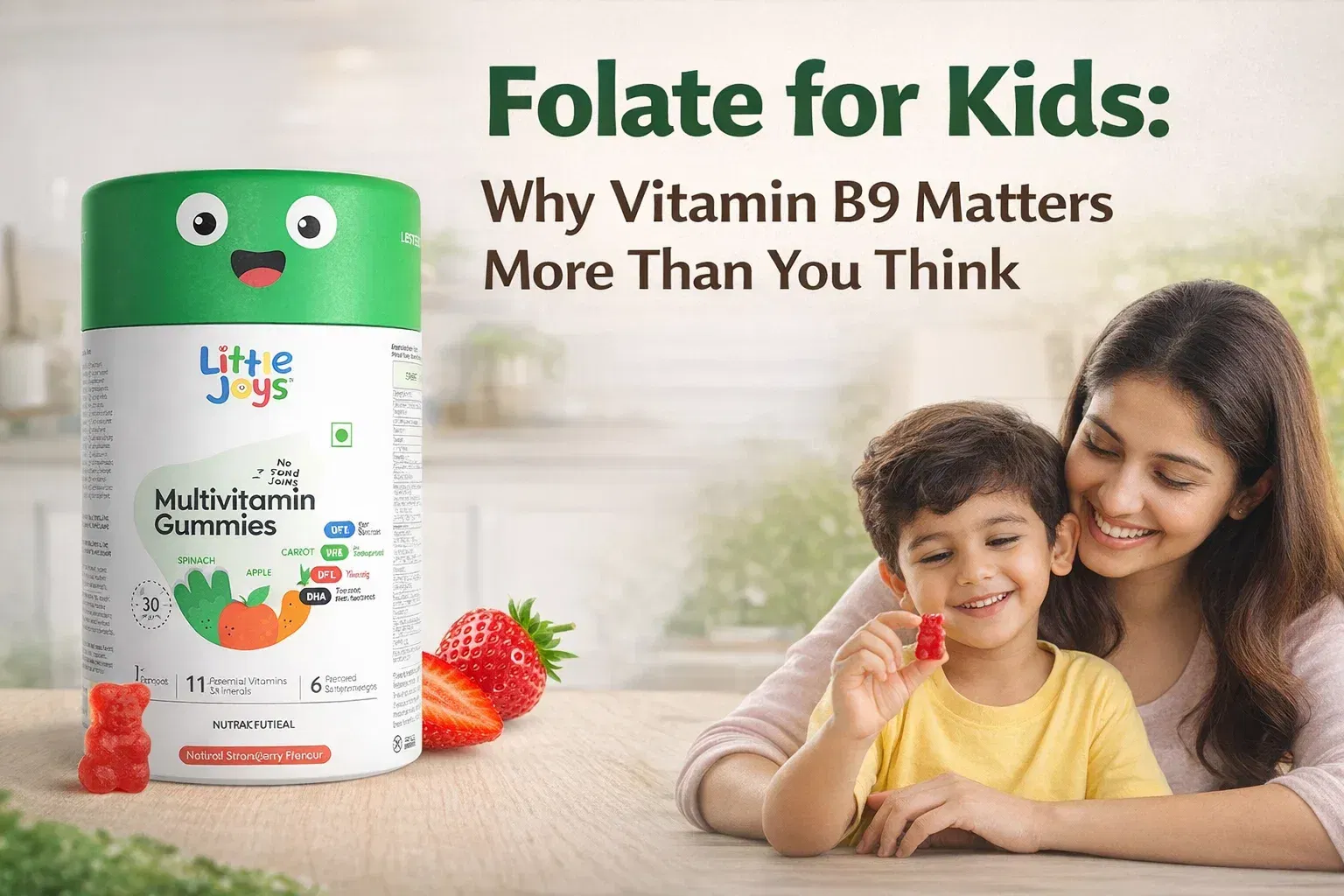
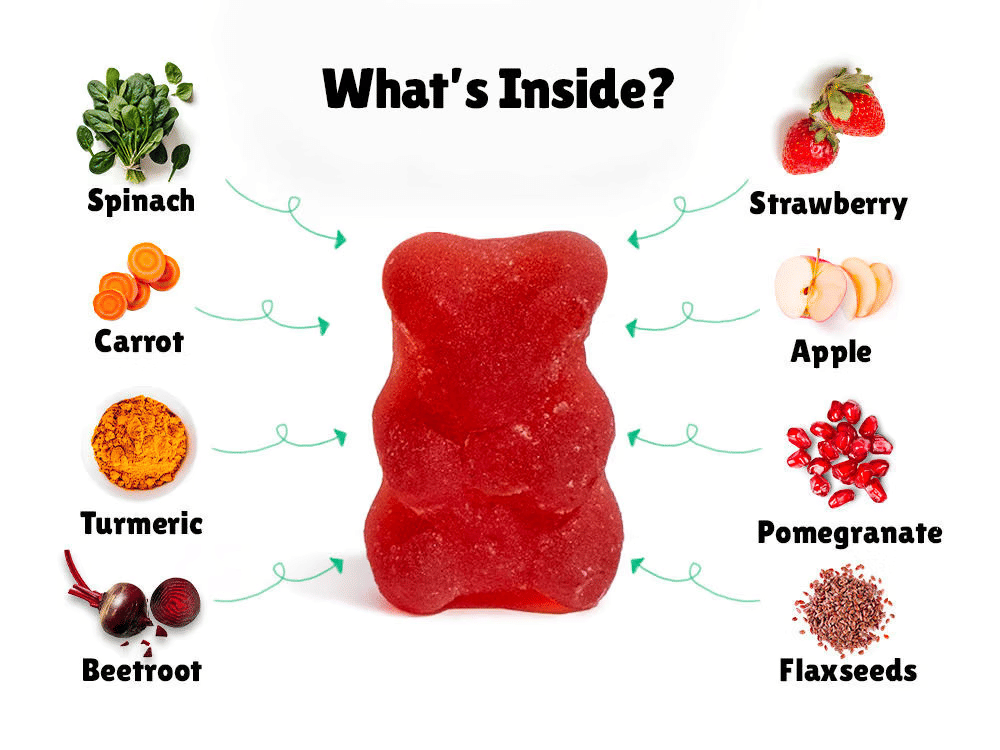
Little Joys Multivitamin Gummies include folate alongside Vitamin B12, Vitamin C, Zinc, and D3 - covering immune and cell function together in a single daily gummy. Zero added sugar, chicory root fibre base, no artificial colours, third-party tested. Suitable from age 2.
FAQ
Q: Is folate the same as folic acid?
Folate is the natural form found in food. Folic acid is the synthetic form used in supplements and fortified foods. Both convert to active folate in the body - in most children this is efficient. Methylfolate is the already-active form that requires no conversion.
Q: Can my child get enough folate from dal alone?
Yes - if dal is eaten daily. A bowl of moong, masoor, or rajma at one meal per day covers the folate requirement for most age groups without any supplement. The challenge is children who consistently refuse legumes.
Q: Does cooking reduce folate in dal?
Folate is heat-sensitive. Pressure cooking retains more than extended boiling. Using the cooking liquid (as in dal) recovers much of what leaches out during cooking - so eating the full dal with its liquid is more effective than discarding the water.