
Everyday Immunity-Supporting Foods for Kids
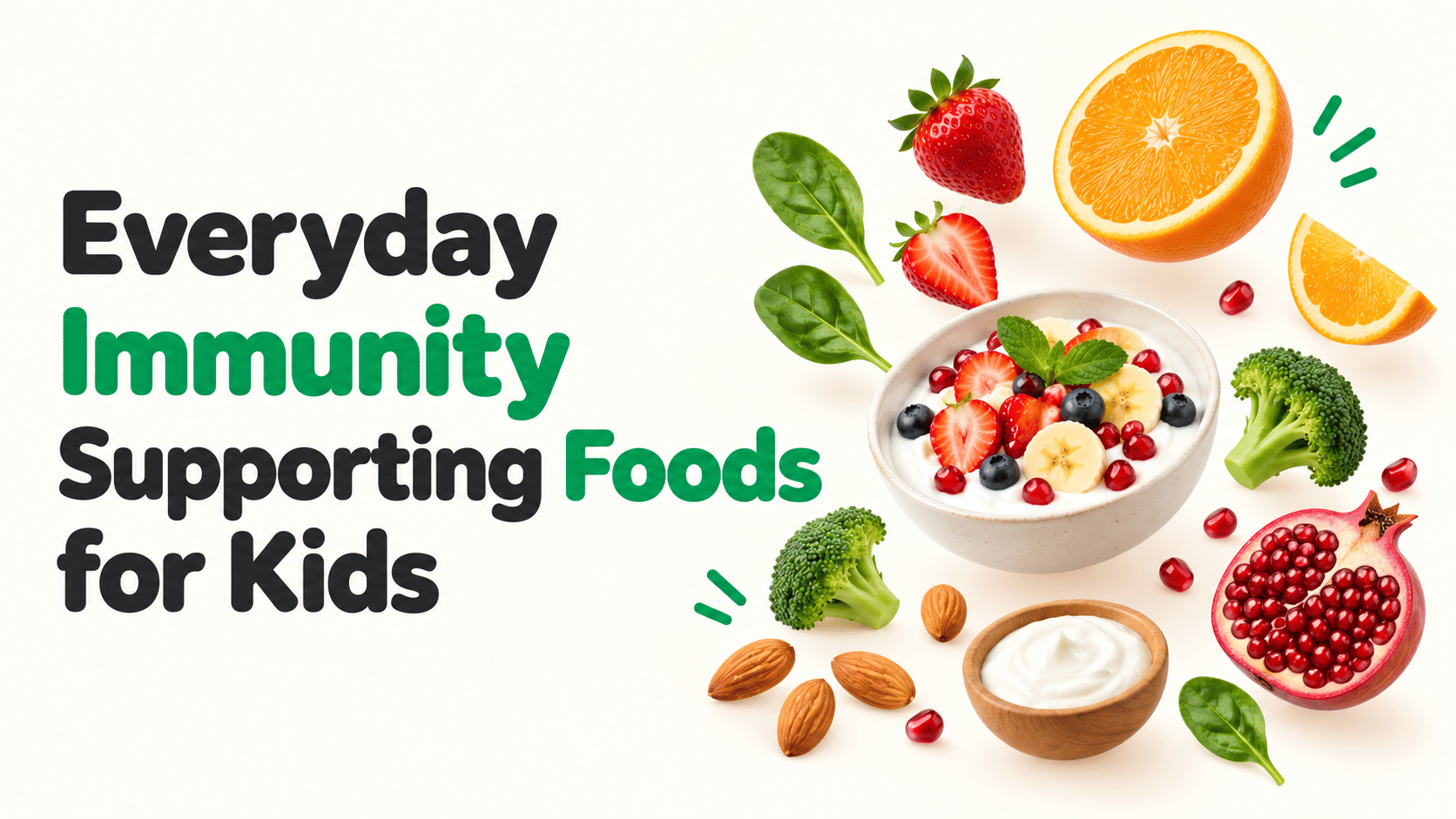
No single food will stop your child catching the thing going around their class. If you came here hoping for one, that is the honest first thing worth saying, because most of the internet will tell you otherwise and then sell you a powder. What actually helps a child's immune system is far less exciting than a superfood list: the ordinary plate, repeated most days, plus enough sleep and a few nutrients Indian kids commonly run a little short on.
That is good news, really. It means you are not one missing ingredient away from failing. You are already doing most of it.
Immunity isn't a switch you flip with breakfast. It is the slow result of a child eating a reasonable range of food over weeks, so their body has the raw material - protein, a spread of vitamins and minerals, some fibre for a gut that does a surprising amount of immune work. When people say a food "builds immunity," what they usually mean is that it supplies one of those materials. Oranges have vitamin C. Dahi has live cultures. Neither is magic on its own, and both are useful as part of the everyday mix.
So here is what to actually keep in rotation, and why.
Curd, and other everyday probiotics.
A bowl of dahi, a glass of buttermilk, the odd fermented food - these bring live cultures that support gut health, and a good share of the immune system lives in the gut. It is one of the easiest wins because most kids already accept curd in some form.
Seasonal fruit with vitamin C.
Oranges, guava, amla, lemon in warm water. Guava in particular is quietly one of the highest vitamin-C fruits available cheaply through the Indian winter. You don't need supplements to hit a sensible amount if fruit is a normal part of the day.
Dals, eggs, paneer - the protein base.
Protein is the material your child's body uses to make the cells and antibodies that fight infection. A child who skips protein at most meals is missing a foundation, not a garnish. Spread it across the day rather than loading one meal.
Colour on the plate.
Spinach, carrot, sweet potato, pumpkin, beetroot. The point of "eat a rainbow" isn't aesthetic - different colours carry different vitamins and antioxidants, and variety is what covers the gaps. A child who eats three vegetables reliably is better set than one chasing a single "immunity vegetable."
Nuts, seeds and whole grains for zinc.
Zinc is one of the nutrients most tied to immune function, and it turns up in things like pumpkin seeds, cashews, chana and bajra. Bajra also happens to be rich in magnesium, which matters for rest - and rest is genuinely part of immunity, even if it never makes the food lists.
You will notice none of this is a secret. That is the argument of this whole piece: the boring plate, kept up most days, does more than any single hero food. The gaps that remain are usually the specific ones - a fussy eater who refuses most vegetables, a stretch of back-to-back infections through seasonal change - and those are worth a calm conversation with your paediatrician rather than a panic-buy.
If your child is one of those who eats a narrow list and you want a little everyday support alongside real food, Little Joys makes an Immunity Support Kit designed to sit within a routine like this rather than replace it. It is a support to the plate, not a substitute for it, and it is worth reading what it actually contains before deciding it is right for your child.
 Little Joys
_hegu42.png?tr=w-600)
Frequently asked questions
Can food really boost my child's immunity?
"Boost" is the wrong word for how immunity works - there is no quick lift. Food supports the immune system by supplying the nutrients it runs on, and that support shows up through consistency over weeks, not one meal.
Which single food is best for immunity?
There isn't one, and any source claiming a single miracle food is overselling it. Variety is the actual answer: protein, seasonal fruit and vegetables, curd, nuts and whole grains together.
My child falls sick every month - is that normal?
Young children, especially once they start school or daycare, catch a lot of minor infections as their immune system meets new bugs. Frequent mild illness is common. If you are worried about the pattern, the frequency, or your child's energy and weight, speak to your paediatrician - that is a medical question, not a food one.
Do kids need immunity supplements?
Most kids eating a reasonably varied diet do not. Supplements can help fill a specific gap, particularly for selective eaters, but they work alongside food and are best chosen with your doctor's input.