
Calcium for Kids: How Much Do They Actually Need?
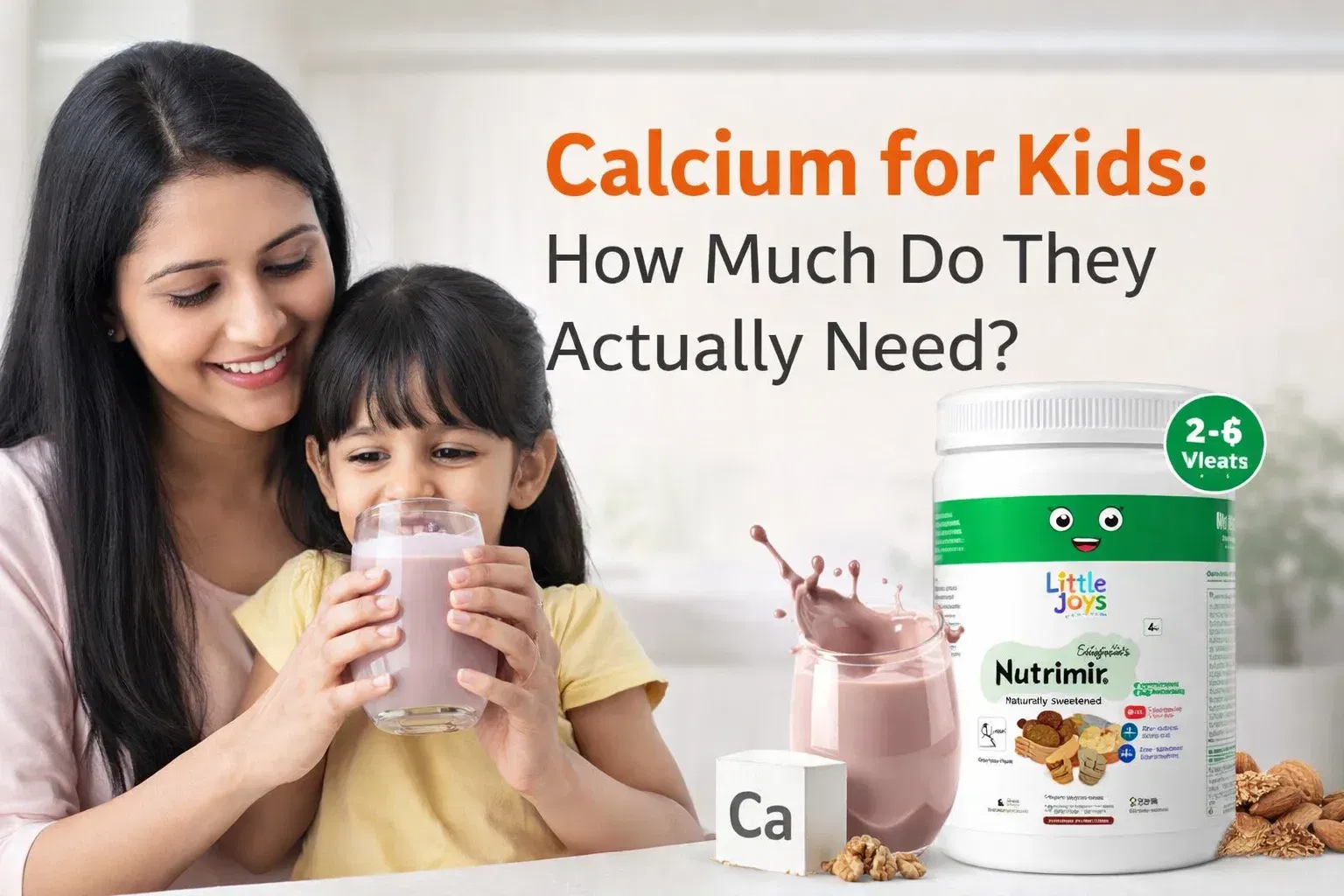
Children need 600-1000 mg of calcium per day depending on age - and most Indian children are not getting it consistently. Here is the complete breakdown by age and the most effective ways to close the gap.
| Age | Daily Calcium Requirement |
|---|---|
| 1-3 years | 600 mg |
| 4-6 years | 600 mg |
| 7-9 years | 700 mg |
| 10-12 years | 800 mg |
| Teens | 800-1000 mg |
These amounts are achievable through diet - but only if dairy or calcium-rich plant foods are eaten consistently, and crucially, if Vitamin D3 is adequate for absorption.
The Vitamin D3 Problem Most Parents Miss
Calcium requires Vitamin D3 to be absorbed from the gut into the bloodstream. Without adequate D3, even a high-calcium diet delivers limited actual bone-building benefit.
Most urban Indian children are significantly low on Vitamin D3 due to limited midday sun exposure, indoor schooling hours, and sunscreen use. This means the calcium they eat is not being absorbed at its full potential.
Ensuring both calcium and D3 together is the only effective approach. A supplement providing calcium without D3, or D3 without calcium, is missing the functional pairing.
Best Calcium Sources for Children
Dairy - milk, curd, paneer
The most efficient and widely consumed source. Full-fat milk provides around 120 mg per 100ml - a 300ml glass covers 50% of a toddler's daily requirement. Paneer provides approximately 208 mg per 100g. Curd provides 120-150 mg per 100g alongside probiotic benefit.
Ragi - the richest plant-based source in India
Approximately 344 mg of calcium per 100g - significantly more than milk per gram. A ragi roti or serving of ragi porridge daily makes a meaningful contribution. Particularly valuable for lactose-sensitive children or families where dairy intake is low.
Sesame seeds (til)
Around 975 mg per 100g - the highest of any common food. Used as til chutney, sprinkled on rice, or in til ladoos. Even 10-15g provides over 90 mg of calcium.
Bajra and leafy greens
Bajra provides moderate calcium alongside iron and zinc. Leafy greens like amaranth and methi contribute calcium but also contain oxalates that reduce absorption - cooking and pairing with a Vitamin C source improves uptake.
What Reduces Calcium Absorption
Low Vitamin D3 is the primary limiter for most Indian children. High sodium diets increase calcium excretion through urine. Carbonated drinks contain phosphoric acid that accelerates calcium loss from bones - worth limiting significantly in school-age children.
When a Supplement Helps
Children who consistently avoid dairy and do not eat ragi or sesame regularly are at genuine calcium risk. When comparing calcium supplements:
- Look for calcium paired with Vitamin D3 in the same product
- Calcium citrate or gluconate absorbs better than calcium carbonate
- Smaller amounts across the day absorb more efficiently than one large dose
- Third-party tested for actual content
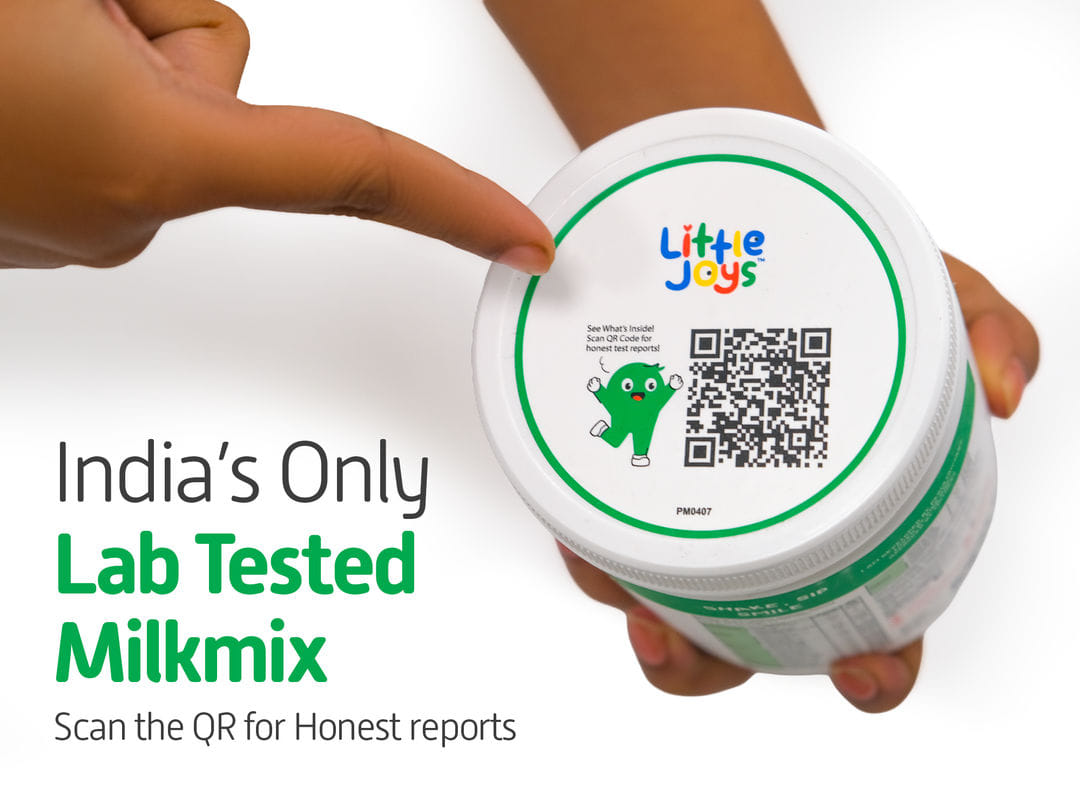
Little Joys NutriMix provides calcium and Vitamin D3 together in a whole-food base that includes ragi, which itself contributes plant-based calcium alongside the added mineral. One daily serving in milk delivers meaningful calcium alongside protein and 23 vitamins and minerals. Zero refined sugar, GMP certified.
 Little Joys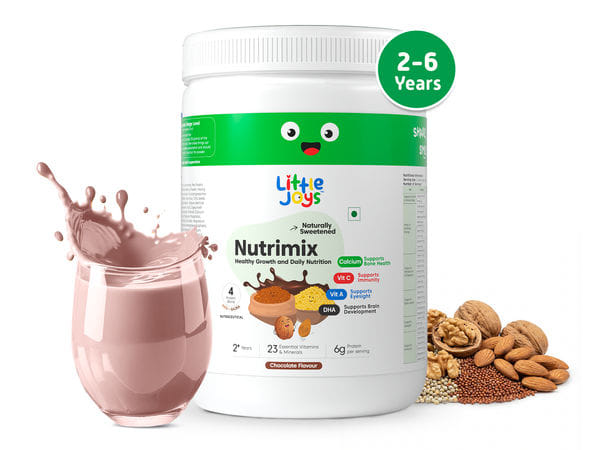
FAQ
Q: Is milk the only way for children to get enough calcium?
No. Ragi, sesame seeds, paneer, curd, and calcium-fortified foods all contribute meaningfully. For children who avoid dairy, a combination of ragi-based foods and a supplement covering calcium and D3 together is a fully effective alternative.
Q: Why do the first 10 years matter so much for calcium?
The majority of peak bone mass - the total bone density a person carries into adulthood - is built during the first 10-12 years of life. Calcium intake during this window directly determines that outcome. Deficiency during childhood shows up as lower bone density in the 30s and 40s.