
Almonds for Kids: How Many Per Day and What Are the Benefits?

Almonds have been a fixture in Indian child nutrition for centuries - soaked overnight, peeled, and given first thing in the morning. The practice is older than nutritional science, but modern research confirms what generations of Indian families understood intuitively: almonds are one of the most nutrient-dense foods a child can eat.
Here is what almonds actually deliver, how much is appropriate by age, and the most practical ways to include them.
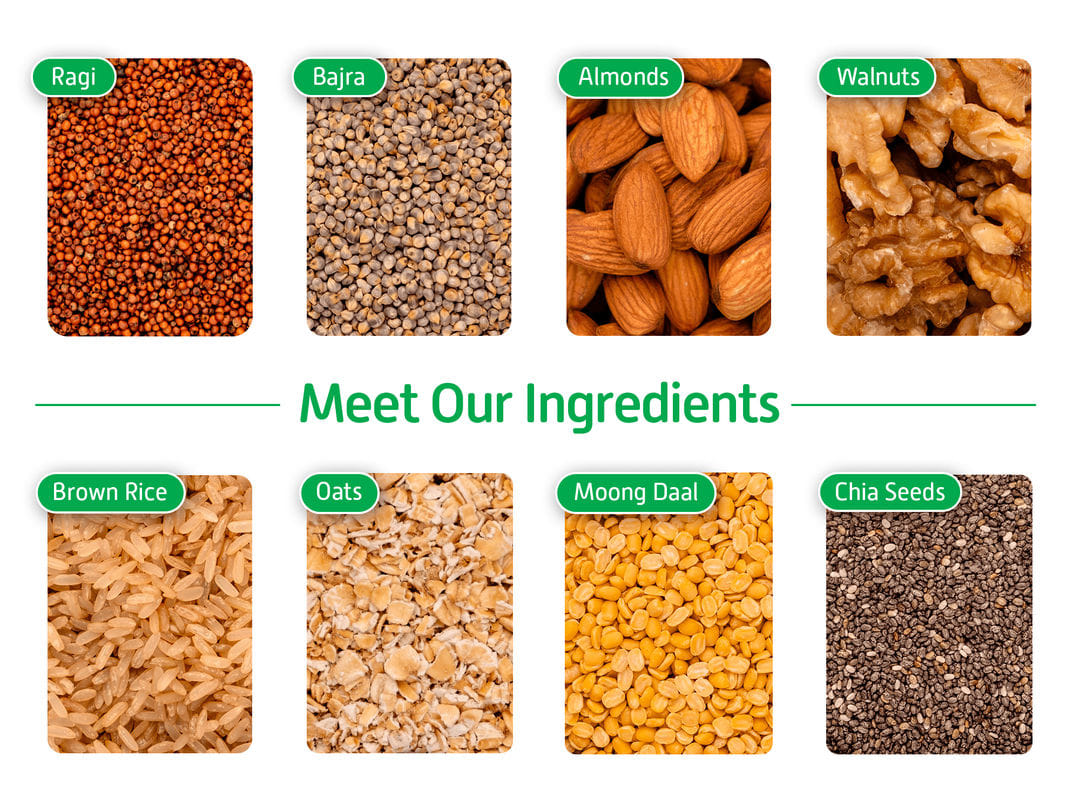
What Almonds Provide Nutritionally
Healthy fats - including Omega-3 precursors Almonds are rich in monounsaturated fats and provide alpha-linolenic acid (ALA), an Omega-3 precursor. The body converts ALA to EPA and DHA - the fatty acids essential for brain development and immune function - though this conversion rate is modest. Almonds are best viewed as part of a broader healthy fat strategy alongside walnuts and DHA-direct sources.
Vitamin E - a critical antioxidant for children Almonds are one of the richest natural sources of Vitamin E available in India. Vitamin E protects immune cells from oxidative damage and is particularly valuable during periods of infection when free radical production spikes. A small daily portion of almonds covers a significant portion of a child's Vitamin E requirement.
Protein Around 21g per 100g - meaningful plant protein with a useful amino acid contribution. A handful of almonds (15-20g) provides approximately 3-4g of protein, which adds up when combined with dal, curd, and eggs across the day.
Calcium and magnesium Around 264 mg of calcium and 270 mg of magnesium per 100g. Both contribute to bone development and muscle function. Almonds are one of the few plant foods that provide both minerals in meaningful amounts in the same serving.
Riboflavin (Vitamin B2) Almonds are an excellent source of B2, which supports energy metabolism and healthy skin, hair, and nail development. B2 deficiency - rare but present in children with low dairy intake - shows as cracked lips and poor energy.
How Many Almonds Should a Child Eat Per Day?
| Age | Daily Recommendation |
|---|---|
| 1-3 years | 4-5 almonds (crushed or as paste) |
| 4-8 years | 6-8 almonds |
| 9-12 years | 8-10 almonds |
| Teens | 10-15 almonds |
These are daily targets, not limits. Almonds are calorie-dense - a 15g serving provides approximately 90 calories - so portion awareness matters for children with low appetite, as almonds can suppress hunger before other nutrient-dense foods are eaten.
Soaked vs Raw vs Roasted: Does It Matter?
Soaked and peeled The traditional Indian method has nutritional merit. Soaking reduces phytic acid - a compound that inhibits mineral absorption - and the peel contains tannins that can also reduce nutrient uptake. Soaked, peeled almonds have improved calcium and magnesium bioavailability.
Raw with skin Still nutritious. The reduction in absorption from phytic acid is modest, and the skin contains beneficial antioxidants. A practical choice when soaking is not convenient.
Roasted Acceptable, though dry roasting at high temperatures reduces Vitamin E content and damages some of the healthy fats. Lightly roasted is better than heavily roasted. Avoid oil-roasted versions with added salt for children.
Best Ways to Give Almonds to Children
Crushed into porridge or curd The most accepted form for children under 4. Crush 4-5 soaked, peeled almonds and mix directly into ragi porridge, curd, or khichdi. The flavour is mild and blends in without resistance.
Almond paste in roti dough or smoothies A small amount of almond paste mixed into roti dough or a morning smoothie is invisible to children who resist eating whole nuts and delivers the same nutrition.
As a snack from age 4+ Whole or halved almonds work as a standalone snack for children who can chew them safely. Pair with a piece of fruit for a balanced after-school snack covering protein, healthy fat, and Vitamin C together.
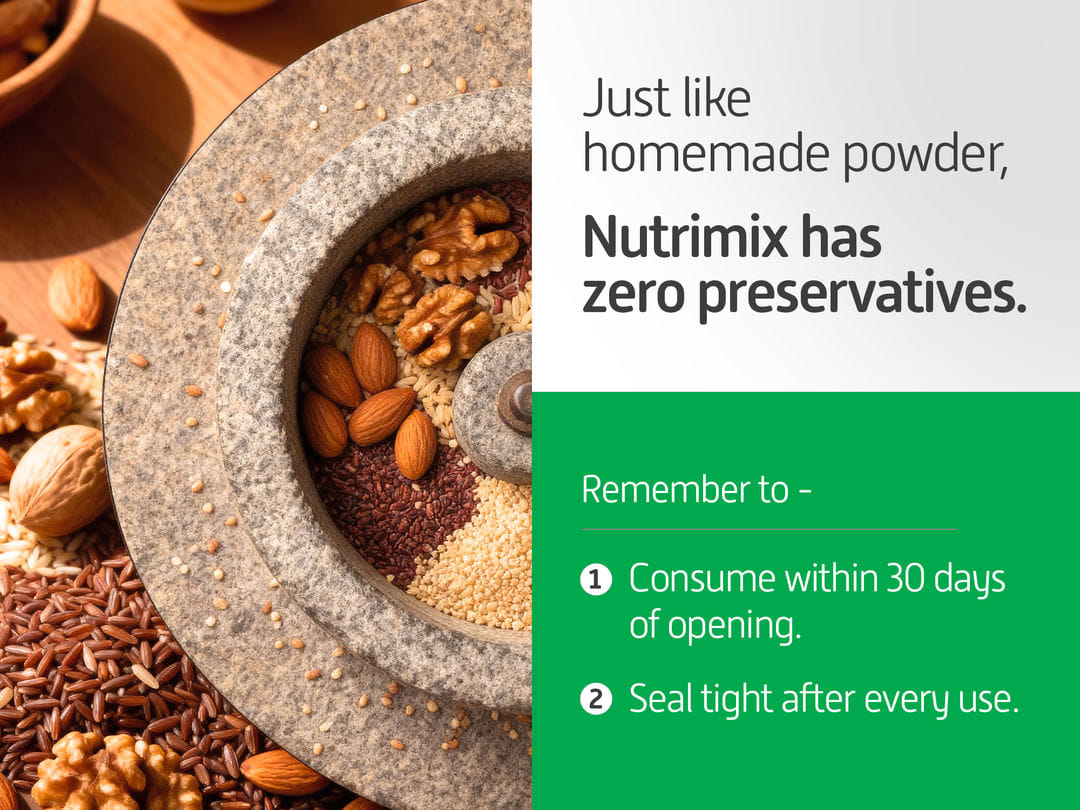
In a nutrition powder Almonds are used in quality children's nutrition powders as a source of healthy fats, Vitamin E, and plant protein - particularly useful for children who consistently refuse to eat whole nuts.
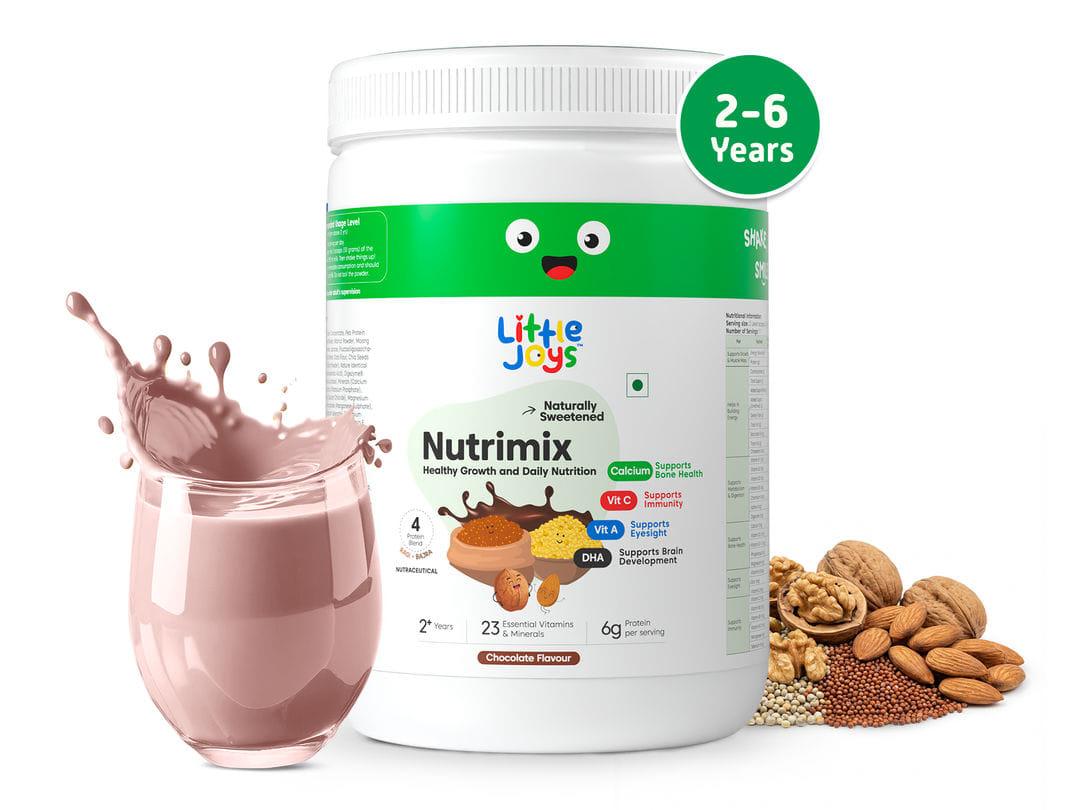
Little Joys NutriMix includes almonds alongside walnuts in its whole food base, providing Vitamin E, healthy fats, and plant protein in every daily serving - without requiring a child to eat nuts directly.
FAQ
Q: Are almonds safe for toddlers under 2?
Whole almonds are a choking hazard for children under 4. For toddlers, soaked and peeled almonds should be finely crushed or made into a smooth paste before serving. Almond butter (unsweetened) is another safe option from 12 months.
Q: Can too many almonds cause constipation in children?
In very large amounts, almonds' fibre and fat content can slow digestion in some children. The daily amounts recommended above are unlikely to cause this. Ensure adequate water intake alongside regular nut consumption.