
50 Best Activities for Toddlers That Actually Work
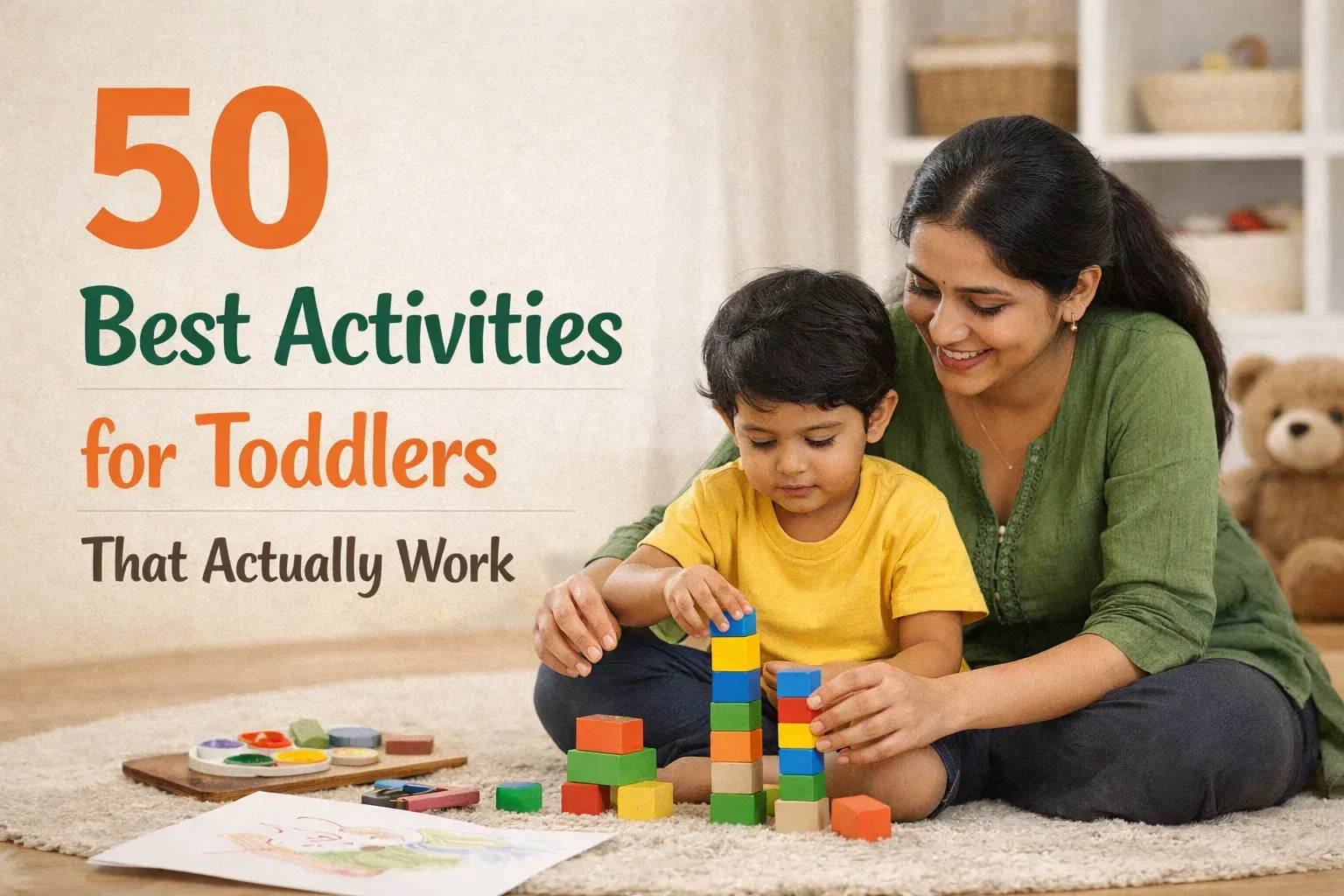
Sorted by age, skill, and prep time - so you can find the right idea in under 60 seconds, not 60 minutes of scrolling.
You searched "activities for toddlers" at 7 PM with a restless 2-year-old tugging your sleeve. You don't need a Pinterest board. You need one great idea, right now - with stuff you already have at home. That's exactly what this guide gives you: 50 proven toddler activities, organized so you can find what fits your child's age, your available time, and your mess threshold.
Sensory Play Activities
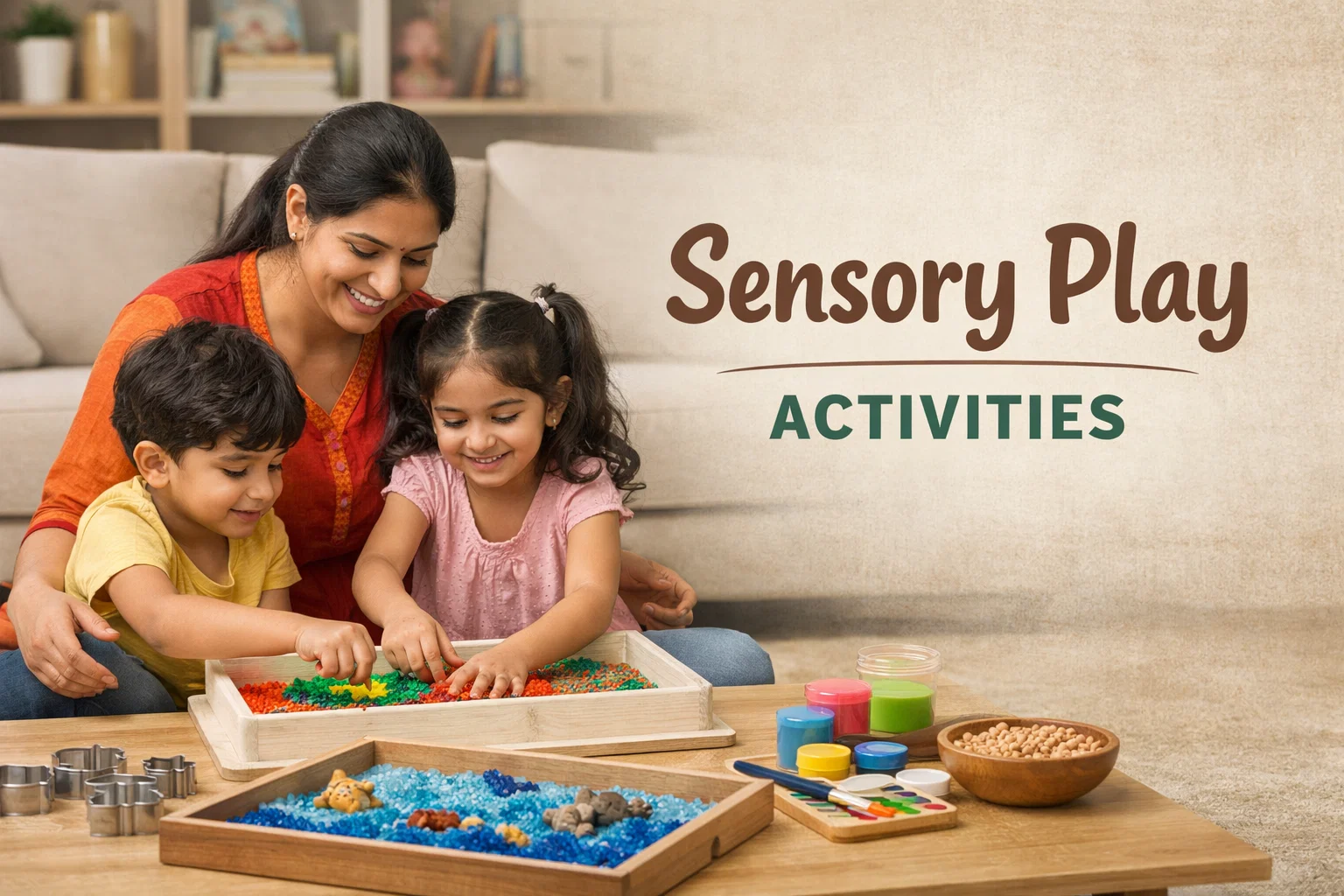
- Ages 1–3
- Low to No Prep
- Develops Touch, Focus & Exploration
Sensory play is the single highest-ROI activity category for toddlers. It builds neural pathways, extends attention spans, and requires almost zero skill from parents. The secret? You don't need a sensory bin kit. Your kitchen has everything.
Activity 1: Water Pouring Station
A plastic bin, two cups, and water. Let them scoop and pour. Add a few drops of food coloring to make it magical. This one buys you 20–30 uninterrupted minutes.
Activity 02: Flour Sensory Tray
Spread flour in a rimmed baking tray. Give them a fork, toy car, or finger. They'll draw roads, make patterns, and flatten it to start again - on repeat.
Activity 03: Baking Soda + Vinegar Drips
Spread baking soda on a tray. Fill a dropper or spoon with colored vinegar. Let them drip and watch it fizz. Science, color recognition, and fine motor - all at once.
Activity 04: Dry Pasta Sensory Bin
Dump a box of uncooked pasta into a bin with measuring cups and spoons. Add toy cars or animals. Different pasta shapes add tactile interest. Clean-up is easier than you'd think.
Activity 05: Ice Cube Exploration
Freeze small toys inside ice cubes, or just give plain ice in a bowl of water. Toddlers are fascinated by cold, slippery, and melting. Add a little salt to make it melt faster.
Activity 06: Moon Sand (2-Ingredient)
Mix 8 cups flour with 1 cup vegetable oil. Crumbles like sand, holds shapes like dough. No mess on carpet if you use a plastic tablecloth. Reusable for days.
Sensory Play Pro Tips
- Lay a plastic tablecloth on the floor to make cleanup take 30 seconds instead of 10 minutes
- Rotate your sensory bin fillings weekly - the same bin with new materials feels brand new
- Give your toddler a "task" to start (e.g., "find the hidden coins") - it keeps them focused longer
- Sensory play is excellent for calming an overstimulated or cranky toddler before meals or nap
Art & Craft Activities
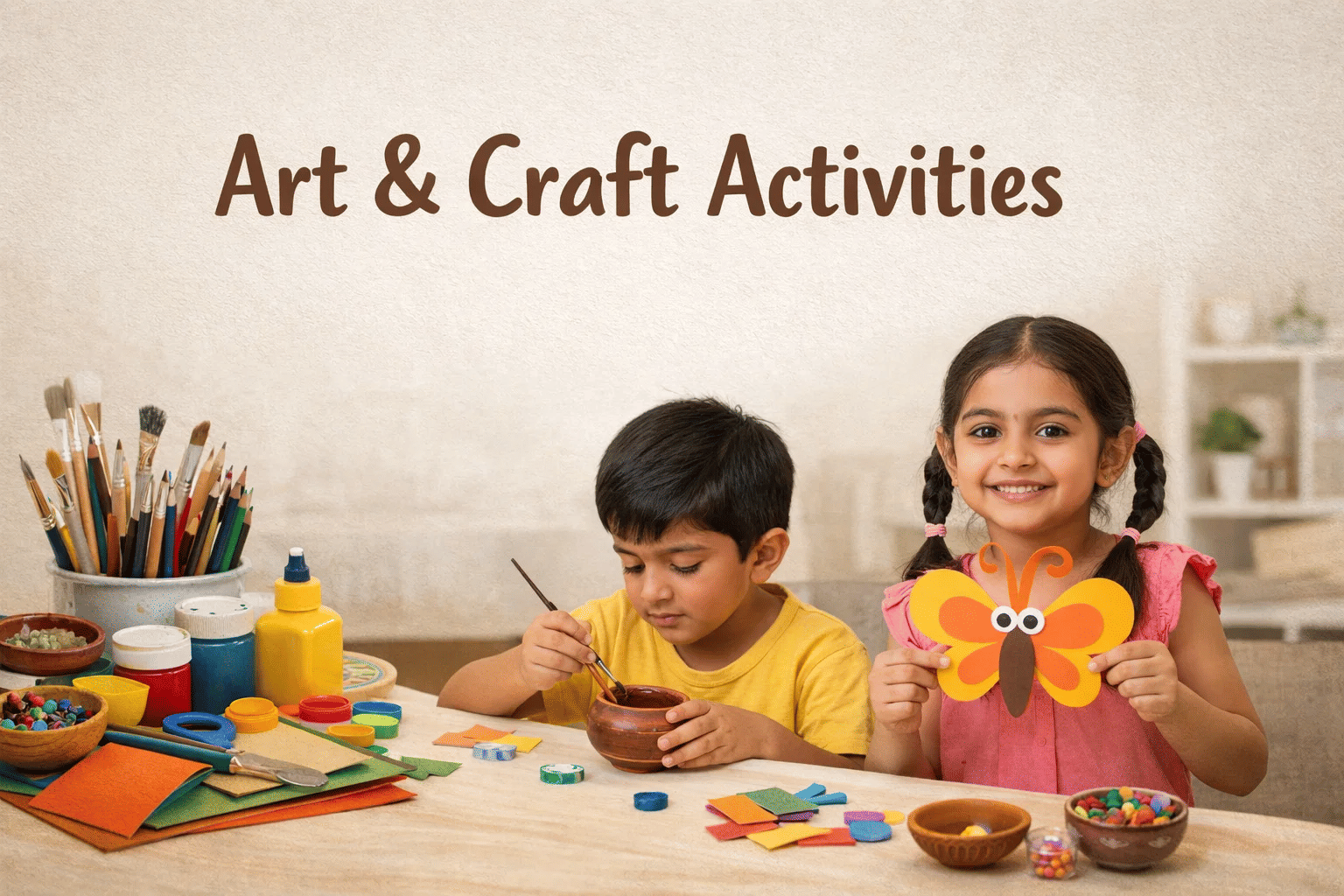
- Ages 1.5–3
- Low Prep
- Develops Creativity, Fine Motor & Self-Expression
Toddler art isn't about the final product. It's about the process. Resist correcting. Resist demonstrating. Just set it up and let them go. The messier the joy, the better the development.
Activity 07: Dot Marker Art
Dot markers (also called Do-a-Dot markers) are a toddler art staple. Tape paper to the floor or wall. No rules - just dot away. Grab printable dot-to-dot sheets for 2.5+ year olds.
Activity 08: Tape Resist Painting
Stick masking tape strips onto paper in any pattern. Paint over everything. When dry, peel the tape off to reveal the design. Even toddlers love the "reveal" moment.
Activity 09: Sticker Creations
Give them a sheet of paper and a mixed pack of stickers. No instructions. The act of peeling and placing stickers builds fine motor muscles and keeps 1–2 year olds occupied for a surprising stretch.
Activity 10: Roll-Out Paper Drawing
Tape a long stretch of craft paper to the floor. Give crayons, washable markers, stickers, stamps - anything. A big canvas removes all limitation and fuels imagination.
Activity 11: Scratch Art (Wax + Watercolor)
Color a sheet of paper with white crayon, then paint over it with watercolor. The wax resists the paint, revealing a "hidden" drawing. Older toddlers love the magic of the reveal.
Activity 12: Paint with Water (No-Mess Art)
Give them a clean paintbrush and a cup of water. Let them paint on the patio, a chalkboard, or dark construction paper. Completely mess-free. Great for before-nap calm-down time.
Movement & Gross Motor Activities
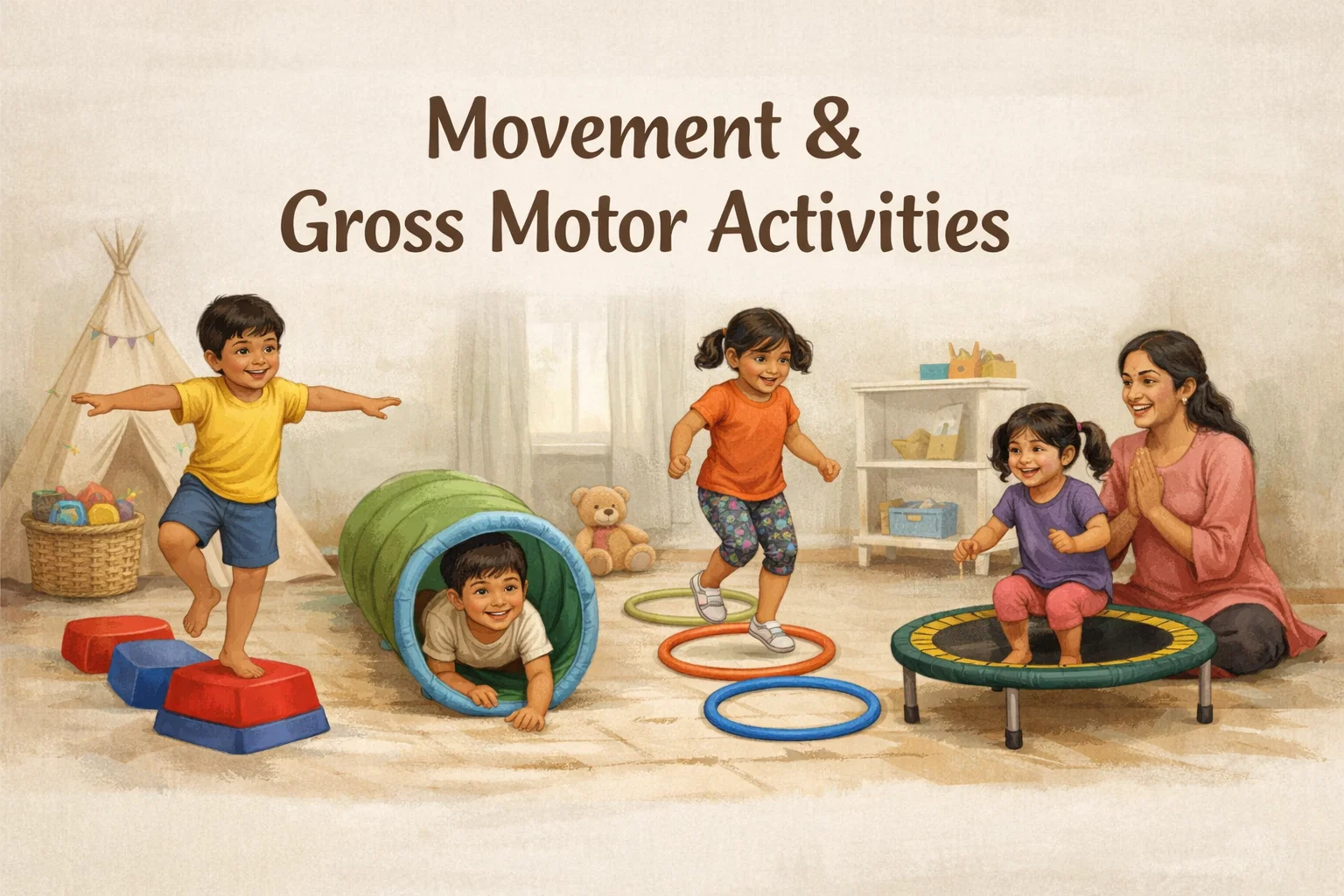
- Ages 1–3
- Zero Prep
- Burns Energy & Builds Coordination
Toddlers are built to move. If you're fighting the energy, you're losing. Channel it instead. These activities burn the physical energy that makes your evenings calmer - and they develop the gross motor skills pediatricians look for at checkups.
Activity 13: Painter's Tape Obstacle Course
Tape shapes, lines, and targets on your floor with painter's tape (it won't damage floors). Tell them to jump to the circle, tiptoe on the line, hop to the star. Works for 2–3 year olds learning shapes. Change the course weekly to keep it fresh.
Activity 14: Dance Party (With a Secret Agenda)
Put on music and just dance. But secretly: fast songs develop rhythm, slow songs develop body awareness. Call out "freeze!" to build impulse control. Add scarves or ribbons for sensory input.
Activity 15: Bubble Wrap Stomp
Tape bubble wrap to the floor and let them jump on it. The popping sound is an immediate dopamine hit for toddlers. Add a twist: ask them to pop only with their feet, only their hands, or only the left side.
Activity 16: Cardboard Box World
Give them a big cardboard box and absolutely nothing else. Watch what happens. Toddlers turn boxes into cars, houses, boats, and tunnels. Older toddlers enjoy decorating with crayons. Keep a few in rotation.
Activity 17: Pillow Mountain Climbing
Stack couch cushions and pillows into a pile. Let them climb, roll, and tumble in a safe, padded environment. Develops balance and spatial awareness while channeling the climbing instinct safely indoors.
Learning Activities for Toddlers
- Ages 2–3
- Low Prep
- Builds Cognitive Skills Without Feeling Like School
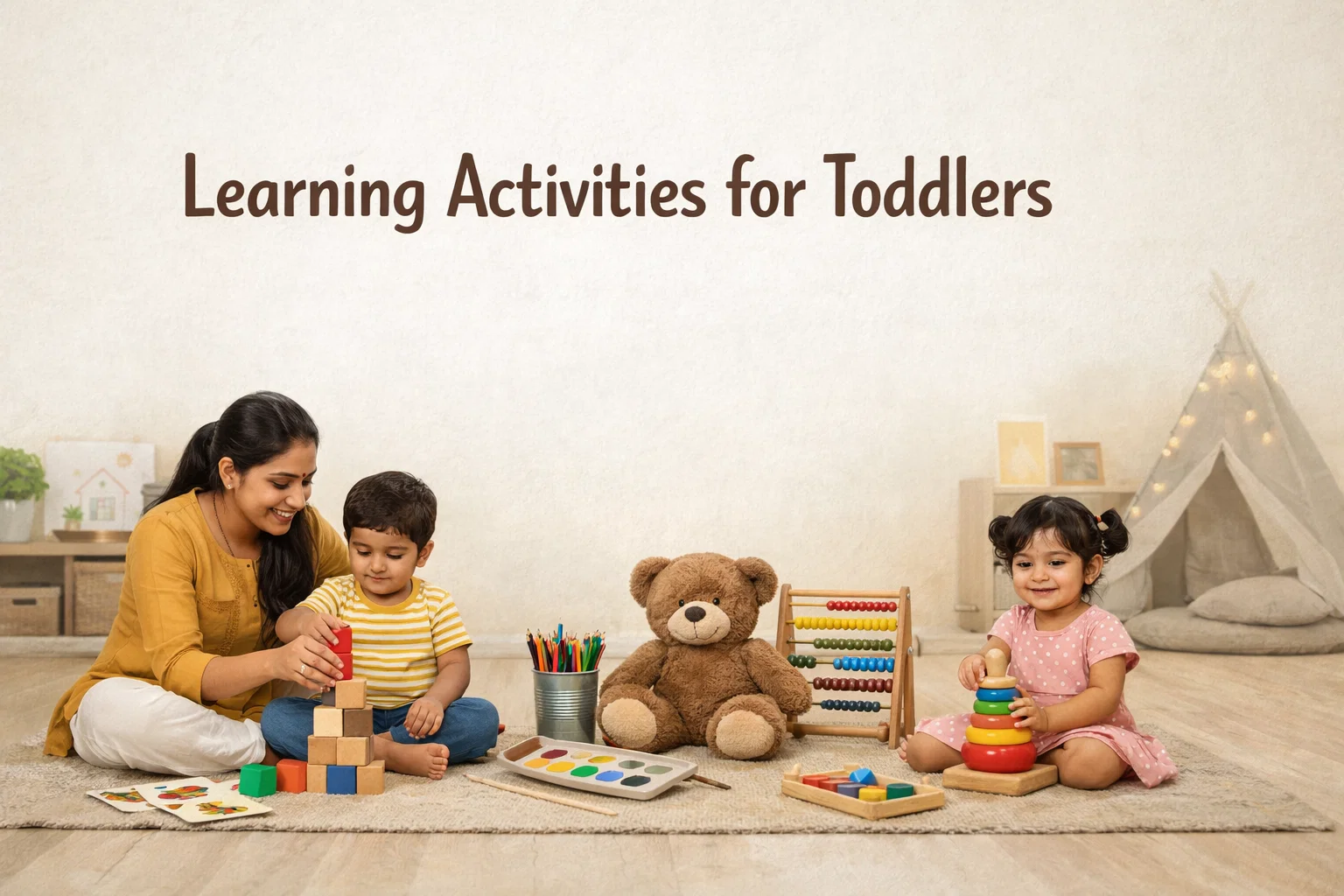
Toddlers learn through play - which means every activity is educational if you pay attention to the developmental wins hidden inside it. These activities are designed to build specific skills without feeling like flashcards or worksheets.
Activity 18: Pom-Pom Color Sort
Colored pom-poms + a muffin tin = instant color-sorting activity. Use tongs for an added fine motor challenge. Works for colors, sizes, or a mix of both.
Activity 19: Sticky Note Letter Hunt
Write letters (or numbers, or shapes) on sticky notes. Place them around the house. Call out "find the A!" and watch them run. Builds letter recognition with full-body engagement.
Activity 20: Coin Drop Jar
Cut a slot in a plastic container lid. Let them drop coins through the slot. Develops pincer grasp (critical for writing), and they love the clink. Name each coin for vocabulary building.
Activity 21: Pipe Cleaner Threading
Hand them a colander and a bunch of pipe cleaners. Weaving the pipe cleaners through the holes is intensely satisfying and builds the exact fine motor strength needed for holding pencils later.
Activity 22: Ladle Transfer Game
Two bowls: one with water and small toys, one empty. Task: transfer the toys using only a ladle or spoon. Sounds simple. Extremely challenging and engaging for a toddler working on coordination.
Activity 23: Kitchen Band
Pots, lids, wooden spoons, upside-down bowls. Let them bang, clang, and experiment with volume. Introduces early music concepts (loud/soft, rhythm) and lets them be as loud as they need to be.
Independent Play Activities
- Ages 2–3
- No Supervision Needed
- Builds Self-Reliance
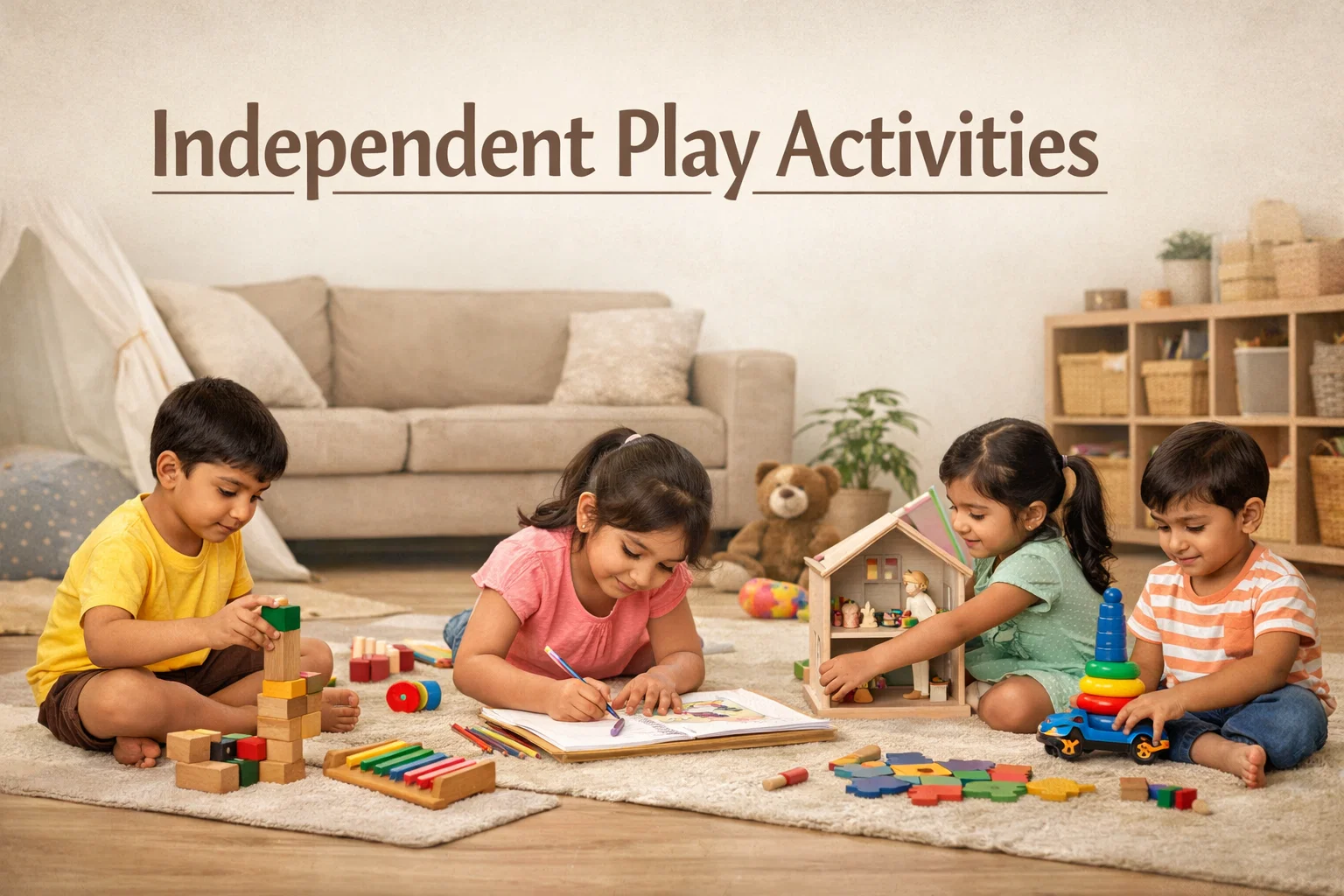
Independent play isn't selfish parenting - it's developmentally essential. Children who learn to entertain themselves build self-regulation, creativity, and focus that carries into school years. Here's how to set it up so it actually works.
Activity 24: Playdough with "Loose Parts"
Playdough is the king of independent play - but add loose parts (buttons, plastic animals, toothpicks, popsicle sticks) and watch the complexity and duration explode. 45 minutes is common.
Activity 25: Stacking Cups Tower
Any collection of same-sized cups (plastic, paper, party) works. Toddlers will stack, knock down, stack again. The repetition is not boring - it's how toddlers master spatial concepts.
Activity 26: Independent Book Nook
Set up a low basket of books in a cozy corner. Don't read to them - let them look through pages independently. This "self-reading" builds pre-literacy skills and the habit of turning to books.
Activity 27: Toy Car Wash
A bin of soapy water + an unused toothbrush + their toy cars = 30 minutes of focused, purposeful play. They're cleaning their "vehicles." The sense of responsibility is remarkable to watch.
Best Activities for 1-Year-Olds
- 12–23 months
- Focus on sensory, simple cause-and-effect, and object permanence
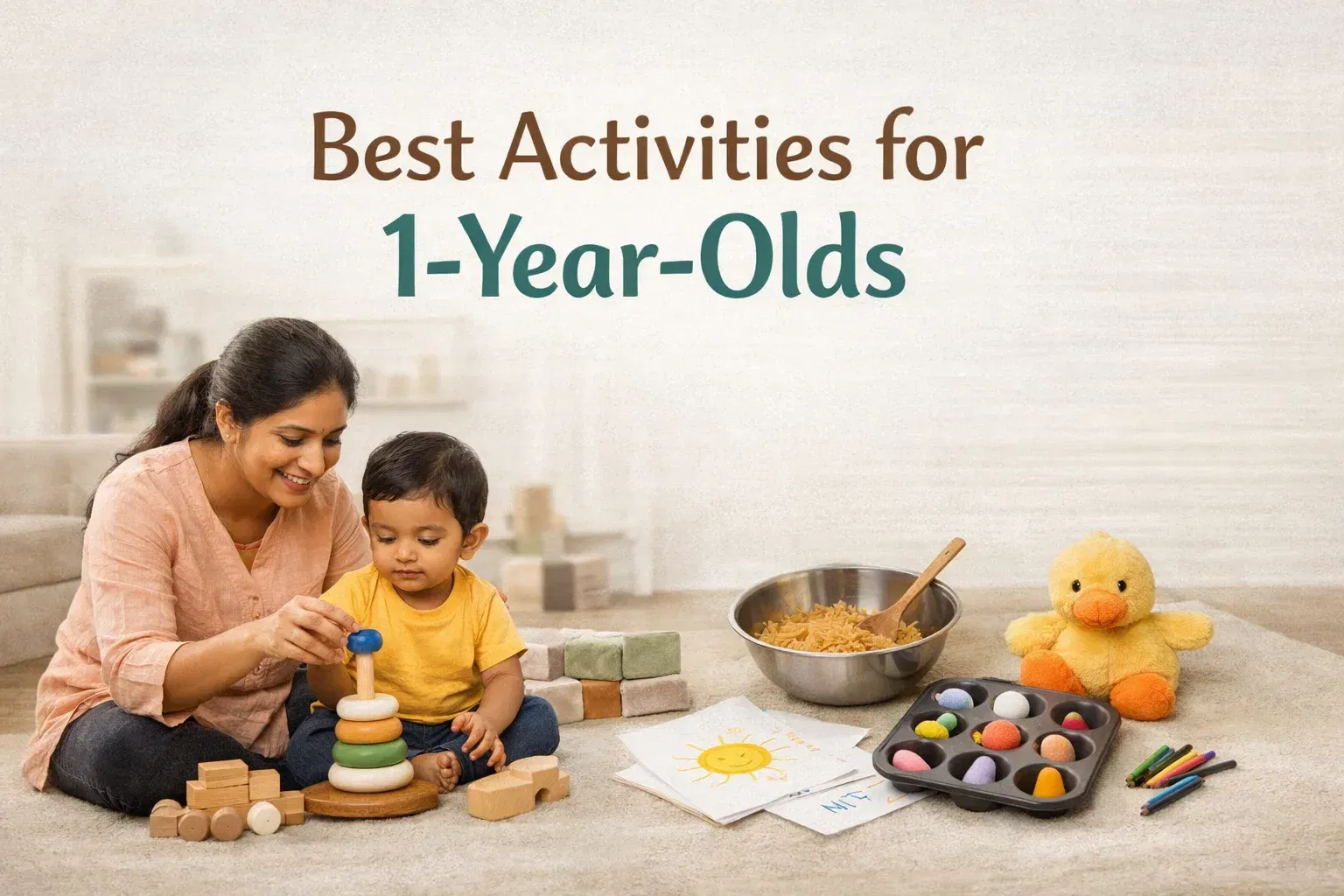
At 12–23 months, toddlers are just discovering that their actions cause reactions. The best activities are short (5–10 minutes), tactile, and involve repetition with slight variation. Complexity is the enemy here.
Activity 28: Object-in-Container Drop
Any safe container with a hole. Any safe object that fits. Drop it in. Pull it out. Drop it in. This is peak entertainment for 12–18 month olds and builds object permanence.
Activity 29: Peekaboo Variations
Classic peekaboo never gets old at this age. Vary it with blankets, pillows, or hiding toys under cups. Builds object permanence and social reciprocity at the same time.
Activity 30: Spoon on Pots
Wooden spoon + pots and pans on the kitchen floor. Endless. Loud. Deeply satisfying for a 1-year-old. And it develops rhythm, cause-and-effect, and hand strength simultaneously.
Activity 31: Fabric Scarf Pulling
Stuff colorful scarves or fabric strips into an empty tissue box or a tall cup. Let them pull them out one by one. Repack and repeat. Hours of "work" for a 1-year-old.
Best Activities for 2-Year-Olds
- Focus on sorting, pretend play, and language development
24–35 months
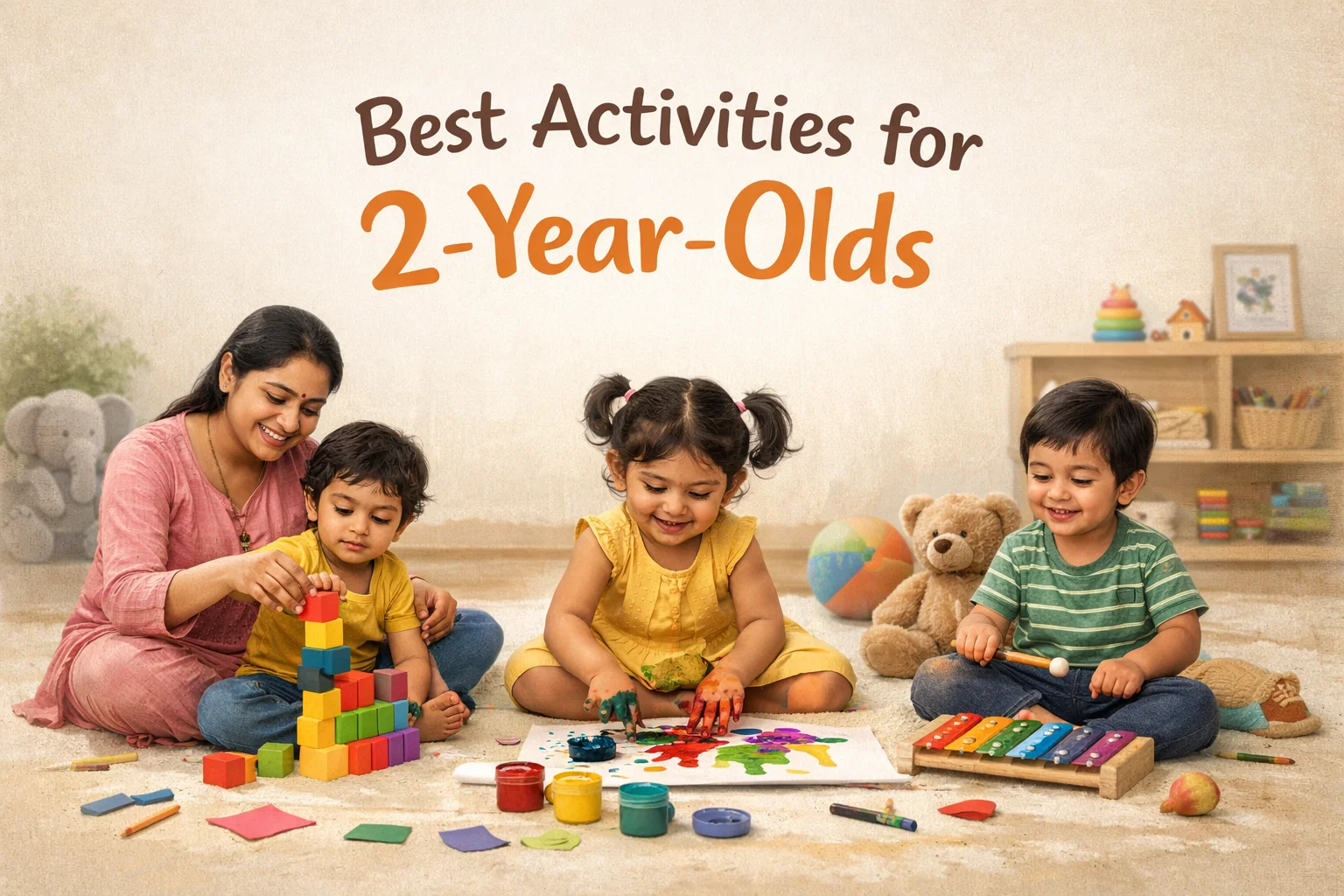
Two-year-olds are entering the golden age of parallel play and pretend. They love "being" something - a chef, a doctor, a builder. Activities that feed the imagination produce the longest engagement windows.
Activity 32: Doll / Stuffed Animal "Doctor"
Let them be the doctor. Set up a "hospital" with stuffed animals as patients. Give them safe tools (spoon, toy stethoscope, bandages). Language, empathy, and pretend play all at once.
Activity 33: Kitchen Helper
Give them a safe task: washing vegetables, pouring pre-measured ingredients, stirring. Being included is enormous to a 2-year-old. Builds vocabulary, measurement concepts, and connection.
Activity 34: Animal Sound Match
Lay out plastic animals. Make the sound; they find the matching animal. Reverse it: they make the sound, you find it. Builds vocabulary, categorization, and turn-taking.
Activity 35: Color Hunt Around the House
Call out a color. They race to find and bring you something that color. Fast-paced, gets them moving, and builds color recognition and vocabulary in the most natural way possible.
Best Activities for 3-Year-Olds
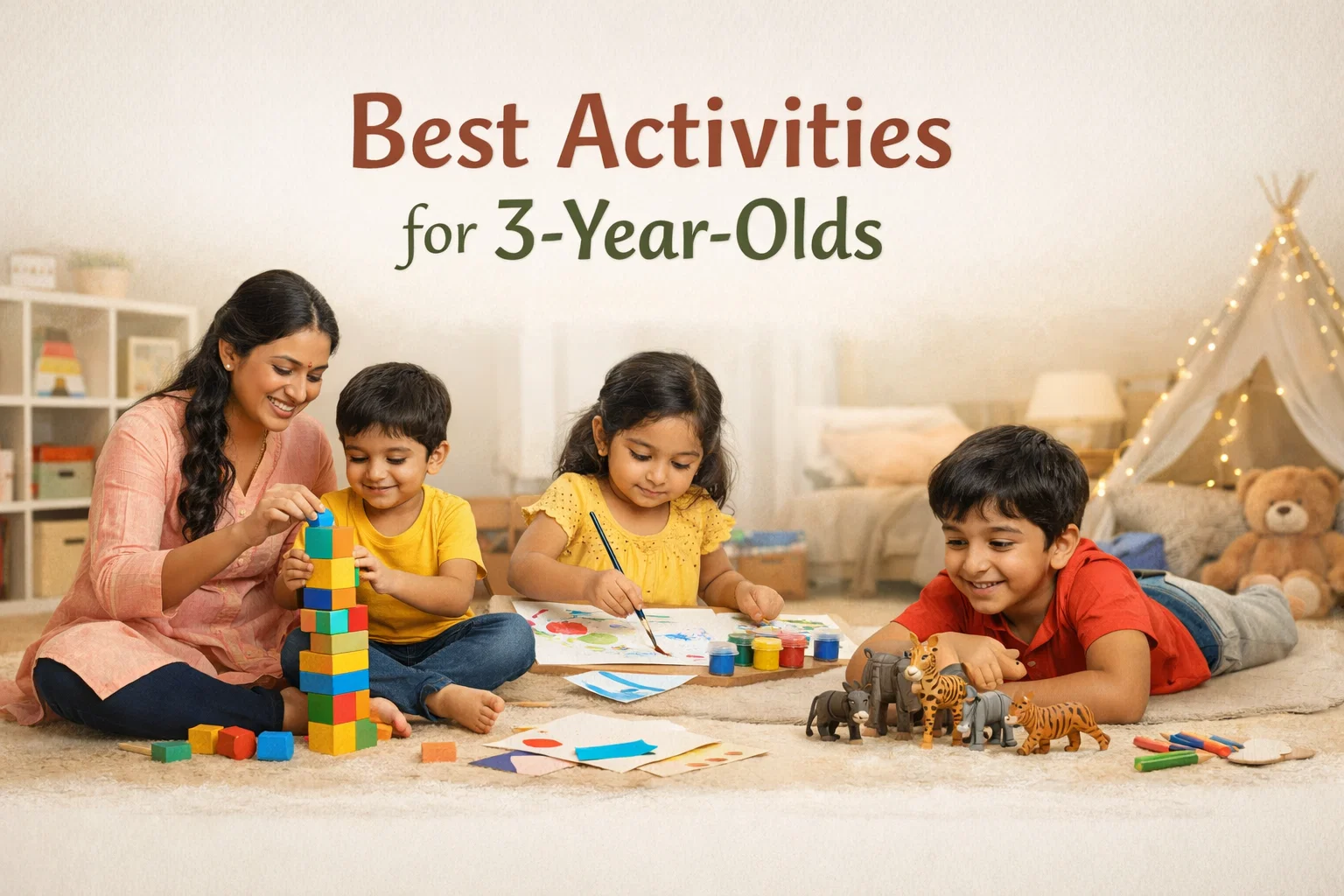
- Focus on creative projects, early literacy, and rule-based games
- 36–47 months
Three-year-olds are ready for multi-step activities and simple rules. They can follow 2-3 step instructions, sustain attention for 15–20 minutes, and enjoy feeling competent. Give them real challenges - they'll surprise you.
Activity 36: Mini Construction Project
Give them blocks, cardboard tubes, and tape. Set a challenge: "Build a bridge for this toy car." They'll work on it, adjust, fail, retry. Engineering thinking at 3 years old.
Activity 37: Story Creation
Give them 3 random objects. Ask them to make up a story about those objects. Record it on your phone. Three-year-olds tell wildly creative stories - and they love hearing them played back.
Activity 38: Simon Says
Classic for a reason. Builds impulse control, body awareness, and listening. Let them take turns being Simon - this is where the real developmental gold is.
Activity 39: Pattern Making with Household Objects
Set up a simple ABAB pattern with spoons and forks, or colored blocks. Ask them to continue it. Then let them make their own pattern for you to continue. Mathematical thinking starts here.
Bonus: 11 More Crowd-Pleaser Activities
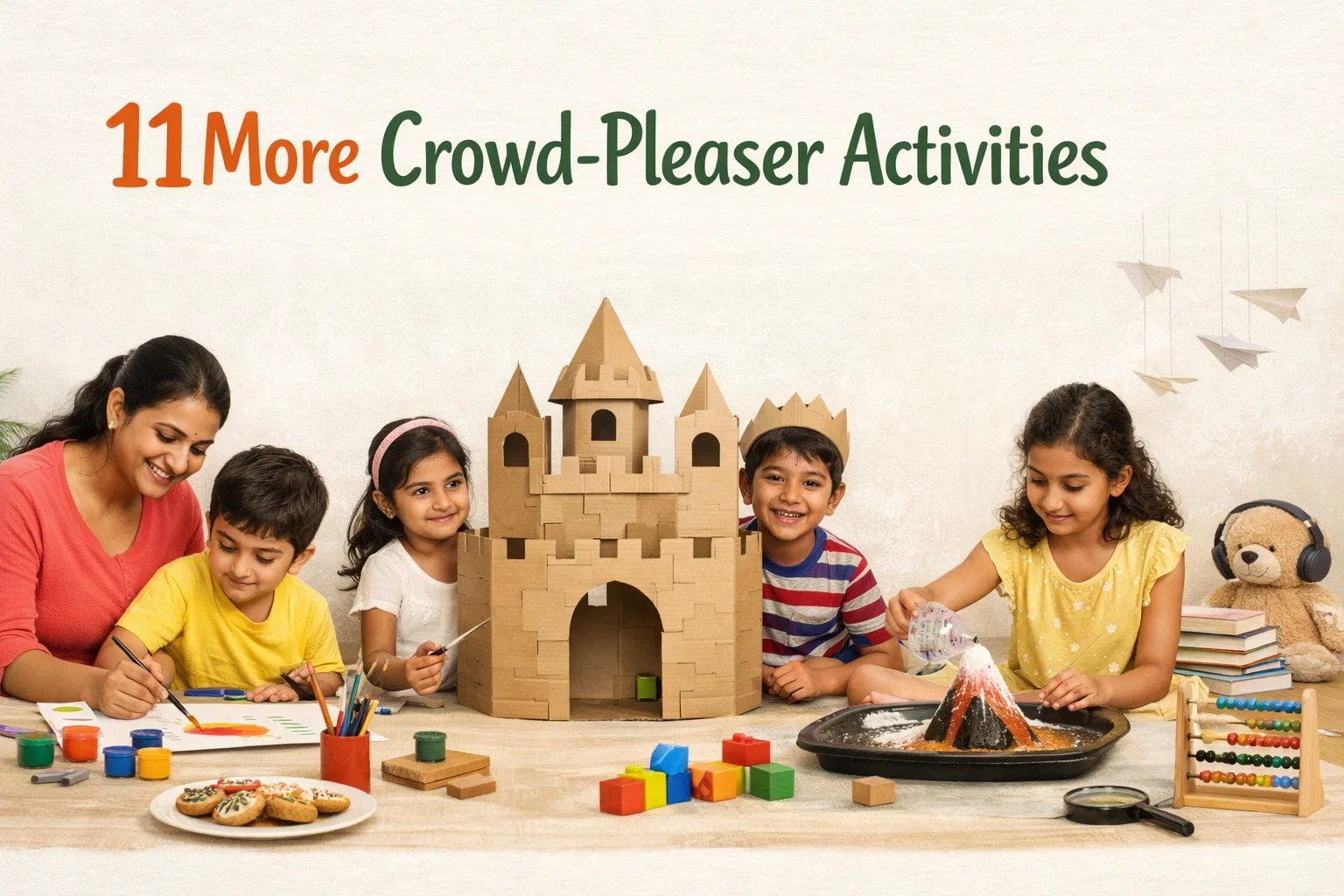
- Quick-reference list
- All ages
Activity 40: Sock Matching
Turn laundry into a game. Dump the sock pile. Challenge them to match pairs. Sorting, color recognition, and they actually help you.
Activity 41: At-Home Bowling
Plastic bottles + any ball = a hallway bowling alley. Count the pins knocked down for early number sense.
Activity 42: Bubble Foam Sensory Play
Blend a little dish soap with water in a blender. Pour the foam into a bin. Kids play in it for ages. Cleanup is just rinsing.
Activity 43: Hide-and-Seek Toys
Hide 5 small toys around a room while they watch. Then let them find them. Builds memory, spatial awareness, and the thrill of searching.
Activity 44: Dominoes Line-Up
Even toddlers enjoy setting up a domino row and knocking it over. If they knock it down early - that's the fun. No frustration needed.
Activity 45: Shaving Cream Tabletop
Spray shaving cream on a tray or protected table. Let them draw, smooth, and draw again. An erasable, tactile canvas. Cleans up with a paper towel.
Activity 46: Oobleck (Cornstarch + Water)
Equal parts cornstarch and water = a liquid when poured, solid when squeezed. Completely blows toddler minds. Cleans up with just water.
Activity 47: Blanket Fort
Chairs + a blanket = a magical fortress that transforms any activity inside it. Read books, eat snacks, or just exist in the fort. Duration: indefinite.
Activity 48: Tong Transfer
Kitchen tongs + pom-poms or crumpled paper balls + two bowls. Transfer from one bowl to the other. Fantastic fine motor challenge with intense concentration.
Activity 49: Music + Movement Cards
Draw action cards (hop, spin, crawl, freeze) on index cards. Pull one each time the music stops. Combines Simon Says energy with musical chairs excitement.
Activity 50: Plant Watering Helper
Give them a small watering can and let them water your plants (or a specific one). Builds responsibility, care for living things, and patience - plus they feel genuinely useful.
Frequently Asked Questions
How long should toddler activities last?
Most toddlers have an attention span of roughly 2–5 minutes per year of age. A 2-year-old might focus for 4–10 minutes; a 3-year-old, 6–15 minutes. Don't stress if they move on quickly - that's developmentally normal and healthy. The goal is engagement, not duration.
What are the best activities for toddlers with no materials?
Dance parties, Simon Says, blanket forts, hide-and-seek, peekaboo, and kitchen-band drumming require zero materials. Independent book-look time also costs nothing. You can fill an entire day with zero-purchase activities.
How do I get my toddler to play independently?
Start by playing alongside them for 5–10 minutes to "launch" the activity, then gradually step back. Keep the activity novel by rotating options. Activities with open-ended outcomes (playdough, building blocks, sensory bins) sustain independent play longest because there's no "right answer" to find.
Are screen-free activities better for toddlers?
The American Academy of Pediatrics recommends limiting screen time for under-2s (video calls aside) and keeping 2–5 year olds to 1 hour per day of high-quality programming. Screen-free activities develop fine motor skills, social skills, and focus that screens can't replicate - but the goal is balance, not perfection.
What activities develop fine motor skills in toddlers?
Anything involving pinching, threading, tearing, and transferring: sticker play, coin drops, pipe cleaner threading, tong transfers, playdough squishing, and colander pipe cleaners are all exceptional for fine motor development - the foundation of handwriting.