
Why Peanut Butter Is One of the Best Snacks for Kids
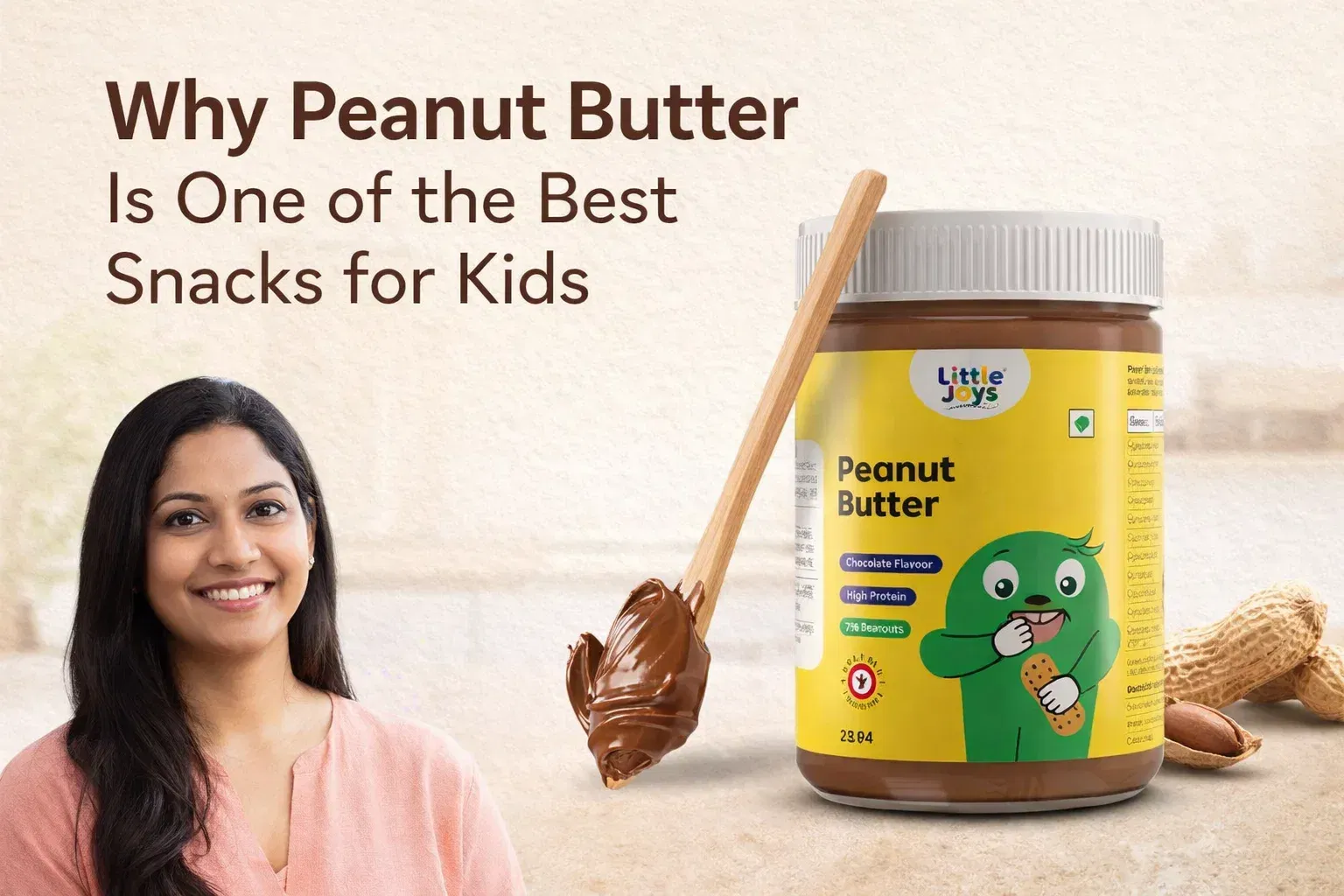
Peanut butter is one of the most nutritionally complete snack foods available for children - protein, healthy monounsaturated fats, Vitamin E, magnesium, and zinc in a single spread that most children accept readily. The problem is not peanut butter itself but what most commercial versions add to it: refined sugar, hydrogenated vegetable oil, and salt in quantities that undermine its natural benefits.
Little Joys Natural Peanut Butter is made with 100% roasted peanuts - no added sugar, no palm oil, no hydrogenated fats. The same nutrition, none of the additives.
-> View Little Joys Natural Peanut Butter
 Little Joys
The Nutritional Case for Peanut Butter
Protein
Peanut butter provides 25-28g of protein per 100g - among the highest of any common snack food available in India. A two-tablespoon serving (30g) delivers approximately 7-8g of protein. For children who resist dal and eggs, peanut butter on roti or with fruit is one of the most accepted high-protein snack formats.
Healthy fats for brain and growth
Around 50% of peanut butter's calorie content comes from unsaturated fats - primarily oleic acid (the same monounsaturated fat in olive oil) and linoleic acid (Omega-6). These fats support brain development, hormone production, and fat-soluble vitamin absorption. Unlike saturated or trans fats, they contribute to cardiovascular health in growing children.
Vitamin E
Peanut butter provides approximately 6mg of Vitamin E per 100g - a meaningful daily contribution. Vitamin E is a fat-soluble antioxidant that protects cell membranes, supports immune function, and works alongside almonds as one of the richest food sources of this nutrient.
What to Look for on the Label
The only ingredients that should appear in natural peanut butter are peanuts and optionally a small amount of salt. Any product listing sugar, glucose syrup, hydrogenated vegetable oil, or palm oil in the ingredient list is a processed peanut spread, not natural peanut butter.
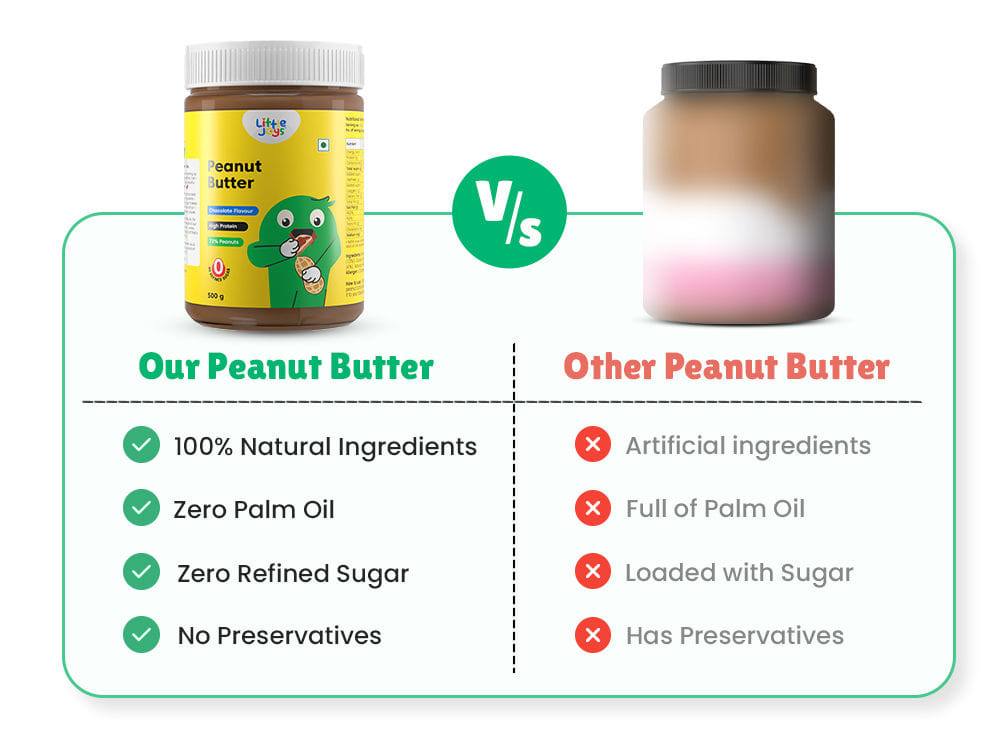
The difference matters because: added sugar increases daily sugar load for children who already consume sugar through other foods; hydrogenated oils introduce trans fats; and palm oil displaces the natural healthy fat profile that makes peanut butter nutritious in the first place. See Jaggery vs White Sugar for Kids for more on added sugar in children's foods.
Best Ways to Serve Peanut Butter for Children
On roti or whole grain bread - provides protein alongside complex carbohydrates for sustained energy. A roti with peanut butter is a complete after-school snack for ages 3 and above.
With banana - the combination of peanut butter's protein and fat with banana's natural sugar and potassium is one of the most practical and accepted snack combinations for young children.
In smoothies - one tablespoon blended into a NutriMix milk smoothie adds protein and fat, increasing satiety and nutritional density.
Stuffed in dates - pitted dates filled with peanut butter combine natural sweetness, fibre, and protein in one snack that children aged 4+ enjoy.
FAQ
Q: Is peanut butter safe for children with nut allergies?
Peanut allergy is one of the most common and severe food allergies in children. Introduce peanut butter for the first time at home, not at school, and in a small amount. If there is a family history of peanut allergy, introduce under medical guidance. Once tolerance is confirmed, peanut butter is safe for regular daily use.
Q: At what age can children start eating peanut butter?
Current guidance from paediatric allergy bodies recommends introducing peanut products from 6 months of age for most infants - earlier introduction is associated with lower risk of developing peanut allergy. Whole peanuts are a choking hazard under age 5; peanut butter thinned with warm water or spread in small amounts is the appropriate format for young children.
Q: How much peanut butter is too much for a child?
1-2 tablespoons per day (15-30g) is a practical daily amount for children aged 2 and above. Peanut butter is calorie-dense - around 600 calories per 100g - so large quantities displace other foods. As part of a balanced snack with fruit or roti, 1-2 tablespoons delivers meaningful nutrition without excess.