
When Water Isn't Enough: Electrolytes and Hydration for Kids
For an ordinary day, water is enough. A child running around the park, drinking when thirsty, eating normal meals - that child does not need a special drink, and most kids' "electrolyte" marketing is solving a problem your child does not have. Worth saying up front, because the honest answer to "does my kid need electrolytes" is usually no.
There is a narrower situation where it changes, and it is worth knowing exactly where the line is. When a child sweats heavily - a long afternoon in real Indian summer heat, an intense sport session, an outdoor sports day - they lose not just water but sodium and potassium, the minerals that help the body actually hold and use that water. Replacing water alone in those moments can leave a child still feeling drained. That is the real, specific case where electrolytes earn their place. Everyday thirst is not it.
First, learn the signs of dehydration, because they are easy to miss in a busy child. Fewer trips to the bathroom or darker-than-usual urine is the most reliable everyday signal. Add dry lips and mouth, unusual tiredness or crankiness, headache, or in a younger child fewer wet nappies and crying without many tears. Serious signs - sunken eyes, no urine for many hours, a child who is floppy or very hard to rouse - are a straight-to-a-doctor situation, not a drink-from-a-packet one.
One important boundary: for dehydration from illness - vomiting, diarrhoea, high fever - the right tool is ORS (oral rehydration solution) at the correct medical concentration, used as your doctor advises. A flavoured everyday electrolyte drink is not a treatment for a sick child. Keep those two separate.
Now the three-way choice parents actually face: water, an electrolyte drink, or a sports drink.
Water wins for everyday hydration, full stop. Cheap, sugar-free, always right for normal days.
Sports drinks are where a lot of parents go wrong. Many are loaded with sugar - often as much as a soft drink - plus colours and a sodium load designed for adult athletes, not a seven-year-old. For a child, that is mostly a sugar delivery drink wearing sports clothing. It is rarely the right call.
A kids' electrolyte drink sits between the two: useful specifically for heavy-sweat and heat days, ideally without the sugar dump. That "ideally" is the whole game, so here is the label rule. Look for a low or no added sugar formula (this matters more than any other line), electrolytes that make sense - sodium and potassium in sensible amounts - a product made for children rather than a shrunk-down adult sports drink, and a short ingredient list without unnecessary colours. If it reads like a soft drink, put it back.
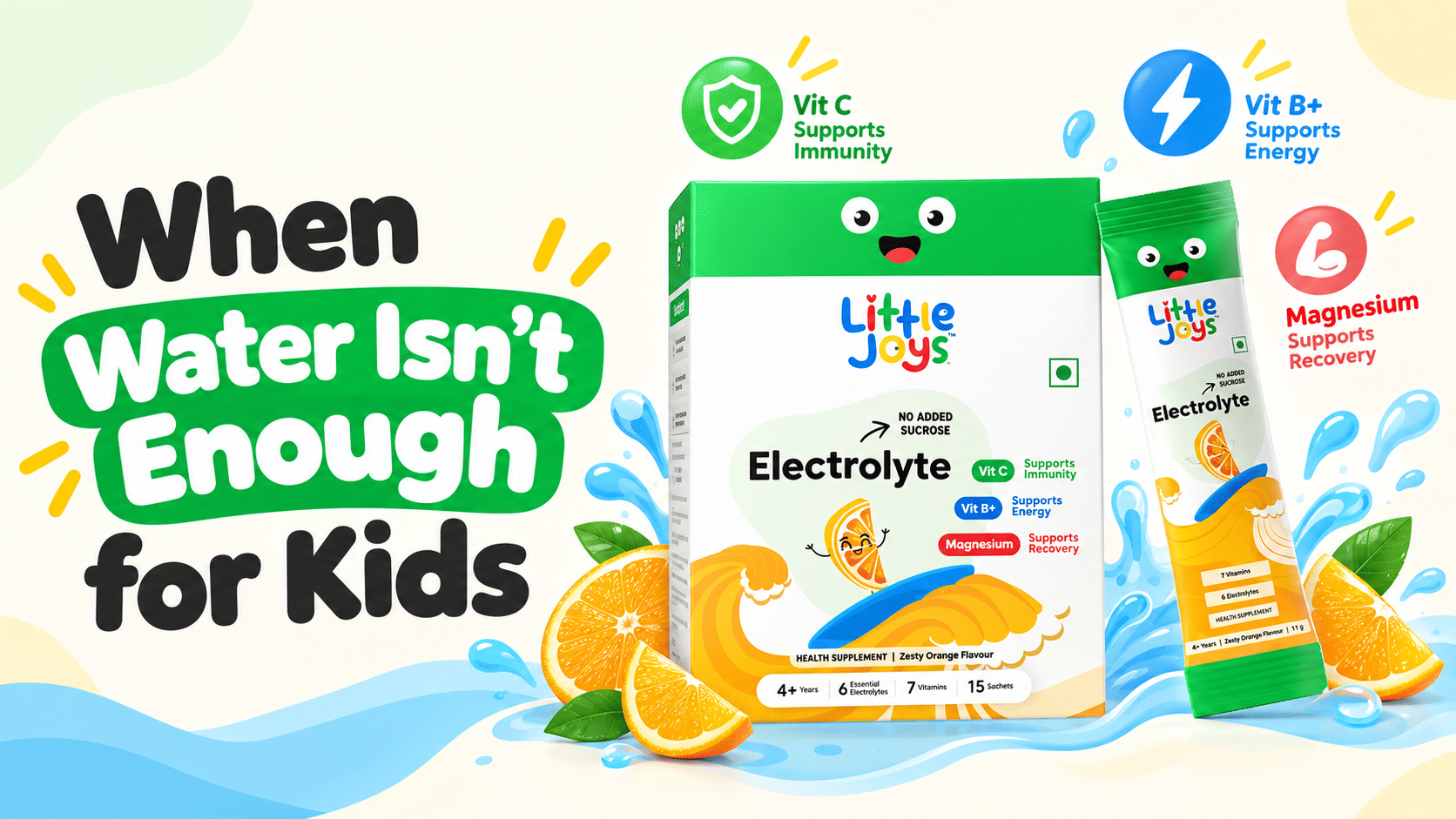
Little Joys makes a kids' Electrolyte drink (for ages 4 and up) built for exactly this - the hot-day, heavy-play hydration moment, made for children rather than borrowed from the adult sports aisle. Check the pack for its sugar and electrolyte content against the label rule above, and reach for it on the days that call for it, not as an everyday replacement for water.
Water most days, electrolytes on the genuinely sweaty ones, sports drinks rarely if ever. That is the whole system.
Frequently asked questions
Do kids need electrolyte drinks?
Not for normal days - water and food cover it. Electrolytes help specifically after heavy sweating from heat or intense activity, when water alone can leave a child still feeling drained.
Are sports drinks good for children?
Usually not. Many carry as much sugar as a soft drink, along with colours and a sodium level meant for adult athletes. For a child they are mostly a sugary drink; a lower-sugar kids' electrolyte or plain water is a better choice.
What are the signs of dehydration in kids?
Fewer bathroom trips or darker urine, dry lips and mouth, tiredness or crankiness, headache, and in babies fewer wet nappies and few tears when crying. Sunken eyes or a floppy, hard-to-rouse child needs a doctor immediately.
Should I give my child electrolytes when they have diarrhoea or vomiting?
Use ORS (oral rehydration solution) at the correct concentration, as advised by your doctor - that is the proper tool for illness-related dehydration, not a flavoured everyday electrolyte drink.