
What Is a Healthy Jam for Kids? A Buying Guide
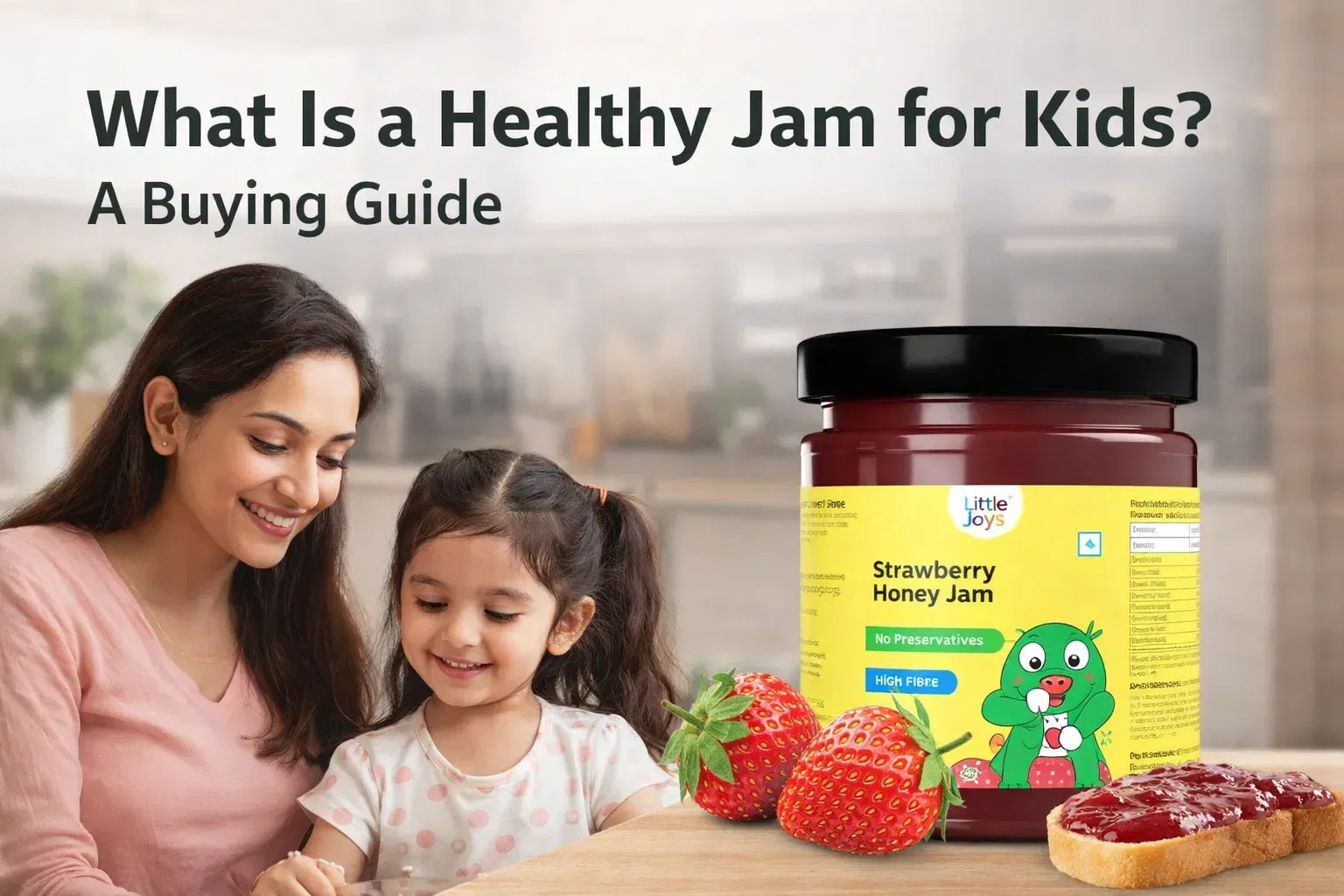
A healthy jam for children uses real fruit as the primary ingredient, a natural sweetener (honey, jaggery, or dates) instead of refined sugar, and nothing else. No glucose syrup, no pectin from unspecified sources, no artificial colour or preservative.
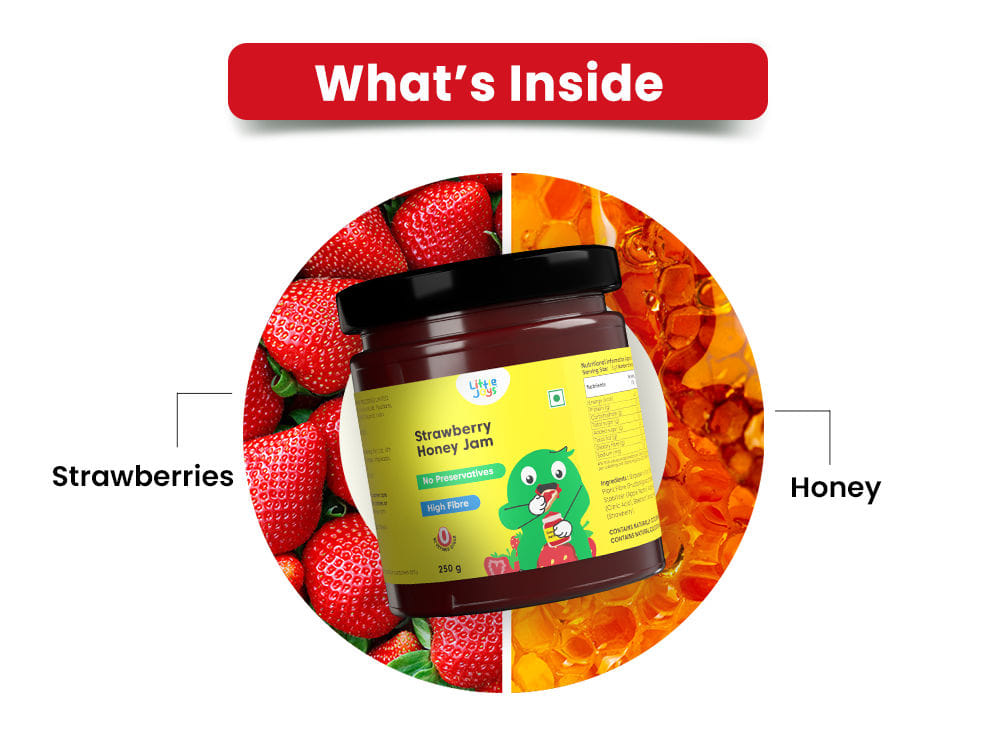
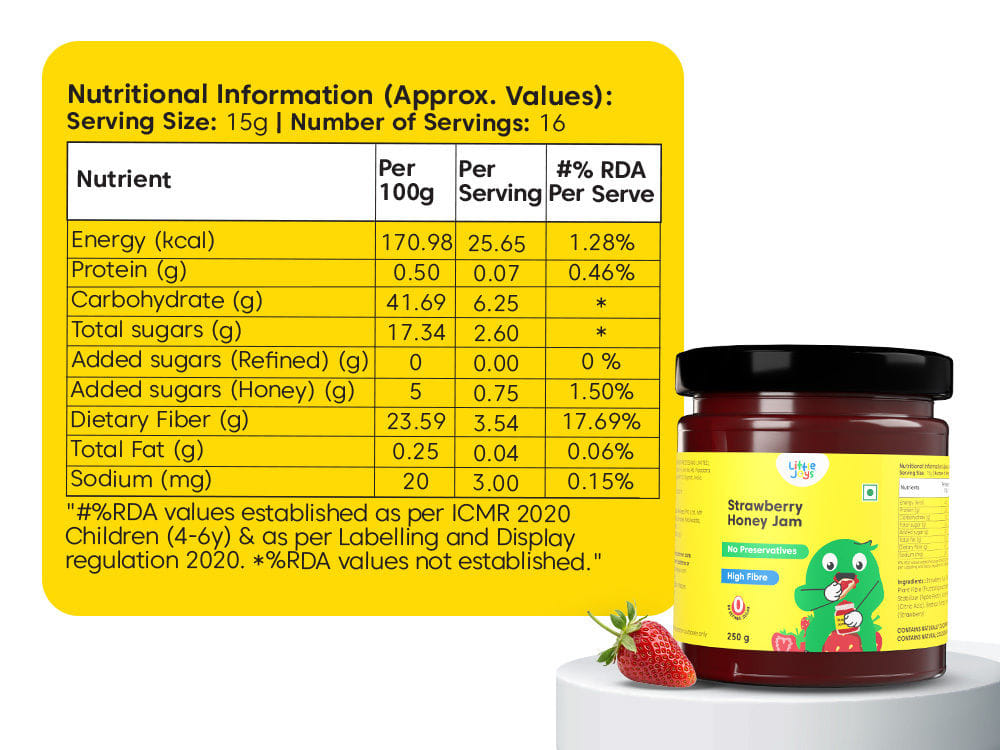
Little Joys Strawberry Honey Jam meets all of these criteria - real strawberries, honey as the only sweetener, no refined sugar, no artificial additives.
-> View Little Joys Strawberry Honey Jam
 Little Joys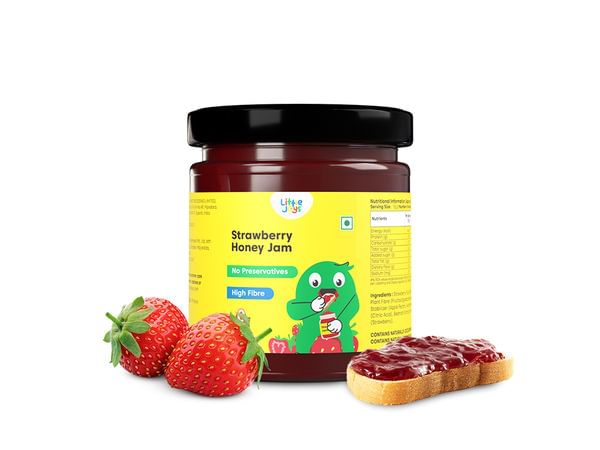
Why Most Commercial Jams Are Not Appropriate for Daily Use
Standard commercial jams in India are typically 40-65% sugar by weight. Two tablespoons (40g) of a standard jam provides approximately 20-25g of sugar - close to or exceeding the recommended daily free sugar limit for children under the WHO guidelines.
This sugar is almost entirely added refined sugar (sucrose or glucose-fructose syrup) with fruit providing colour and flavour. The fruit's natural fibre, Vitamin C, and antioxidants are largely destroyed during high-heat processing at this sugar concentration.
The result is a product that tastes like fruit but functions nutritionally as a sugar delivery mechanism on bread.
What the Label Should Say
Fruit as the first ingredient
The fruit percentage on a jam label tells you the actual fruit content. Anything below 40% fruit is more sugar than fruit. Genuine fruit-forward jams list fruit or fruit pulp as the first and primary ingredient.
Sweetener type
Honey, jaggery, and dates are the acceptable sweetener alternatives. All three provide trace minerals alongside sweetness and have a lower glycaemic impact than refined sucrose. The quantity still matters - even natural sweeteners in large amounts are a concern for daily use, so a jam with a moderate natural sweetener amount is better than one using large quantities even of jaggery.
No glucose syrup or corn syrup
These are processed sugar forms with no nutritional benefit and a higher glycaemic index than sucrose. Their presence in a jam labelled as "natural" or "healthy" is a clear indicator of misleading positioning.
No artificial colours
Strawberry jams should be the natural red-pink of strawberries. Bright red jams achieving their colour from Red 40 or Carmoisine are not appropriate for daily use in children.
No artificial preservatives
Modern food-grade preservation - high-quality sealing, refrigeration after opening, appropriate pH from natural fruit acids - is sufficient for safe jam storage without artificial preservatives.
When Jam Is Part of a Nutritious Snack
A roti or whole grain bread with a thin layer of natural fruit jam alongside a protein source (peanut butter, curd, paneer) makes a balanced snack. The jam provides natural sweetness, encourages eating, and - when made with real fruit and natural sweetener - contributes some antioxidants and minerals.
The key is portion and pairing. Jam on its own is a flavour component. Jam alongside protein creates a nutritionally complete snack that sustains energy rather than producing a sugar spike and crash.
Little JoysFAQ
Q: Is honey safe for children under 1?
No - honey should never be given to infants under 12 months due to the risk of infant botulism. Little Joys Strawberry Honey Jam is suitable for children from age 1 and above only.
Q: How much jam per day is appropriate for a child?
1-2 teaspoons (5-10g) per serving is a reasonable amount as part of a snack. This delivers natural sweetness and flavour without a significant sugar load. More than this per serving, or multiple servings daily, begins to add meaningfully to total free sugar intake.
Q: What is the difference between jam and fruit spread?
In Indian commercial labelling, jam typically refers to a cooked fruit product with added sugar. Fruit spread may refer to a product with higher fruit content and less added sweetener. The labels are not consistently regulated - always read the ingredient list rather than relying on the product category name.