
Walnuts for Kids: Brain Food or Just Hype?

Walnuts have been called brain food so consistently that most parents accept it without questioning what that actually means. The claim has real nutritional basis - but the mechanism is more specific than the marketing suggests, and understanding it helps you use walnuts more effectively.
Here is the actual science, along with how much children need and the most practical ways to include them.
Why Walnuts Are Genuinely Good for Brain Development
Alpha-linolenic acid (ALA) - the Omega-3 connection Walnuts are the richest plant-based source of ALA, an Omega-3 fatty acid. The body converts ALA to DHA - the long-chain Omega-3 that is the primary structural fat in the brain, accounting for approximately 15-20% of all fat in the cerebral cortex.
DHA is directly involved in the formation of neural connections, synaptic plasticity (the brain's ability to learn and adapt), and visual processing. Children with consistently low DHA show measurable differences in attention span, memory, and reading development compared to those with adequate intake.
The important caveat: ALA-to-DHA conversion is limited in humans - typically 5-15%. Walnuts are a meaningful contributor but are not a substitute for direct DHA sources (algal DHA, fatty fish) if brain development is the primary goal. They work best as part of a broader strategy.
Vitamin E for brain cell protection Walnuts are a good source of gamma-tocopherol, a form of Vitamin E that specifically protects brain cells from oxidative stress. Children are exposed to environmental oxidative stressors daily - pollution, UV exposure, inflammatory processes during illness. Vitamin E from walnuts provides antioxidant protection for neural tissue.
Polyphenols for cognitive function Walnuts contain a high concentration of polyphenolic compounds that cross the blood-brain barrier and directly support cognitive function. Research links higher dietary polyphenol intake to better working memory in children. Walnuts are among the highest polyphenol foods available.
Magnesium for concentration and sleep Walnuts are a good source of magnesium, which regulates neurotransmitter function. Adequate magnesium supports both concentration during the day and quality sleep at night - both directly relevant to a school-going child's cognitive performance.
How Many Walnuts Should a Child Eat Per Day?
| Age | Daily Recommendation |
|---|---|
| 1-3 years | 2-3 walnut halves (crushed) |
| 4-8 years | 3-4 walnut halves |
| 9-12 years | 4-5 walnut halves |
| Teens | 5-7 walnut halves |
These are consistent daily targets. Walnuts are calorie-dense (approximately 65 calories per 10g), so portion awareness is appropriate for young children with small appetites.
Best Ways to Serve Walnuts to Children
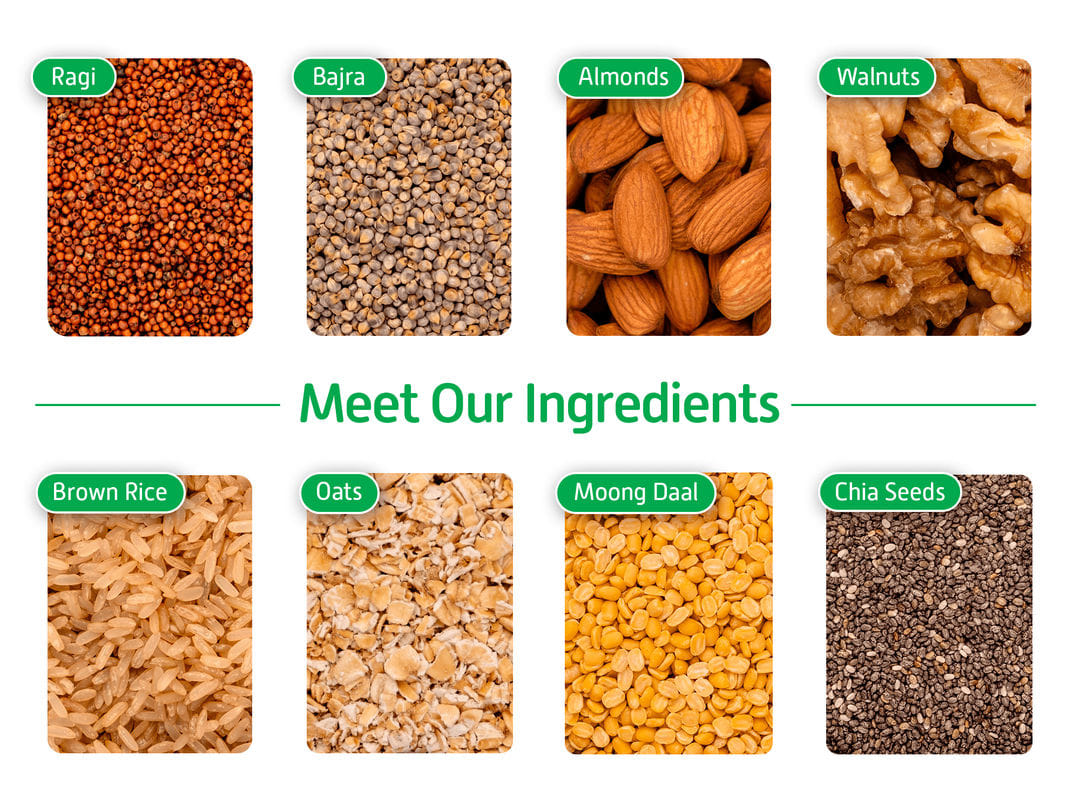
Little Joys NutriMix uses both walnuts and almonds as whole food ingredients in its base - providing ALA Omega-3, Vitamin E, and plant protein in every daily serving. Combined with ragi and bajra for the grain base, one serving covers multiple nutritional needs that would otherwise require several separate food sources.
Crushed into curd or porridge The most reliable method for children under 6. Crush 2-3 walnut halves and mix directly into curd, ragi porridge, or khichdi. The mild bitterness is masked by the base food, and the texture becomes unnoticeable.
Mixed into roti dough A small amount of finely crushed walnuts mixed into wheat or bajra roti dough is practically invisible. Most children eat the roti without noticing. Good for children who actively resist walnuts in any visible form.
As part of a nut mix from age 5+ Walnut halves combined with raisins, pumpkin seeds, and almonds as a snack is accepted by most school-age children. Keep portions small - a 10-15g mix is sufficient.
In a nutrition powder For children who consistently refuse nuts in any food form, a nutrition powder that includes walnuts as a base ingredient delivers the Omega-3 and Vitamin E benefit without requiring the child to eat the nut directly.
Walnuts vs DHA Supplements: Which Is Better?
For pure DHA delivery, a direct DHA source - algal oil or a DHA gummy supplement - is more effective than relying on ALA-to-DHA conversion from walnuts. The conversion is too limited to reliably meet DHA requirements for growing children through walnuts alone.
Where walnuts add value is in the broader nutritional package: Vitamin E, polyphenols, magnesium, and plant protein alongside the ALA. This whole-food matrix supports brain health through multiple pathways simultaneously - something an isolated DHA supplement cannot replicate.
The practical answer: use both. Walnuts daily for the whole-food matrix; a direct DHA source for consistent brain-specific Omega-3.
FAQ
Q: Are walnuts safe for children with nut allergies?
Walnut allergy is possible and can be severe. Tree nut allergies often involve cross-reactivity between species (walnuts, cashews, pecans). Children with any known tree nut allergy should be tested specifically for walnuts before introduction.
Q: Can walnuts help with ADHD or focus issues in children?
There is no clinical evidence that walnuts treat ADHD. However, consistent Omega-3 intake - which walnuts contribute to - is associated with improved attention and impulse control in children with suboptimal Omega-3 status. Walnuts are a supportive nutritional strategy, not a treatment.