
Vitamin C for Kids: Benefits, Sources & Dosage Guide
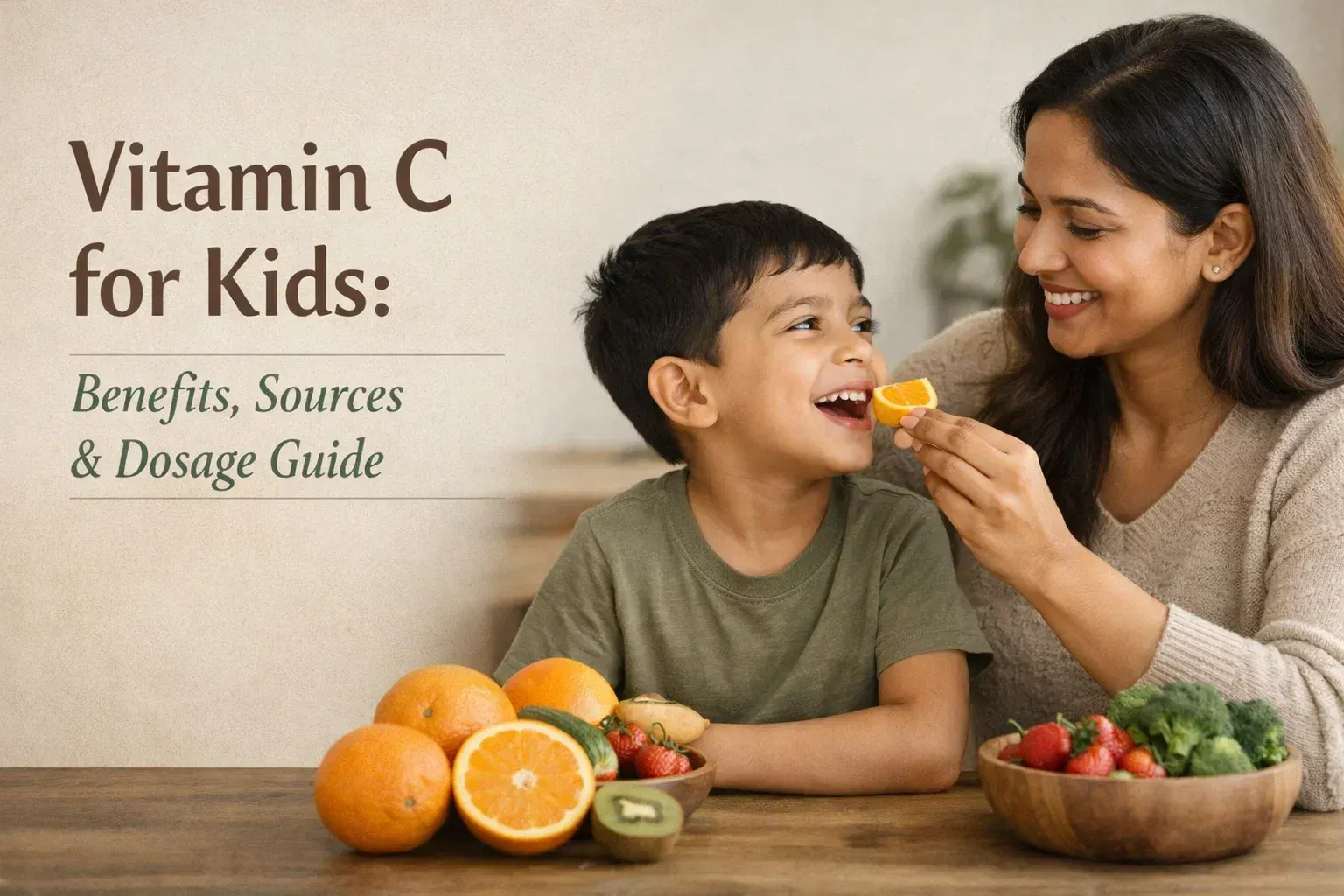
Vitamin C is the most talked-about immunity nutrient - yet most parents don't know how much their child actually needs, when food alone isn't enough, or which sources work best.
Here's everything that matters, without the noise.
What Vitamin C Actually Does in a Child's Body
It works across several systems at once:
Immunity: Stimulates production and function of white blood cells - the cells that identify and fight infections. Also acts as an antioxidant that reduces inflammation when the immune system is active.
Iron absorption: Vitamin C dramatically improves how well the body absorbs iron from plant-based foods like dal and leafy greens. Pairing an iron-rich meal with a Vitamin C source makes a real, measurable difference.
Collagen production: Essential for skin repair, cartilage, and connective tissue. Children low in Vitamin C heal slower and bruise more easily.
Antioxidant protection: Neutralises free radicals from infections, physical activity, and daily environmental exposure - especially relevant for children in urban areas.
How Much Does Your Child Need Per Day?
| Age | Daily Requirement |
|---|---|
| 1–3 years | 40 mg |
| 4–6 years | 40 mg |
| 7–9 years | 60 mg |
| 10–12 years | 60–80 mg |
| Teens | 80–100 mg |
Most children eating a varied diet get close to these numbers. The gap widens for picky eaters, children who avoid fresh produce, or during illness - when requirements go up significantly.
Best Sources of Vitamin C for Kids
1. Little Joys Multivitamin Gummies
For children who are picky eaters or don't eat enough fresh produce reliably, this is the most consistent daily source. Contains Vitamin C alongside Zinc - a combination that's significantly more effective for immunity than Vitamin C alone. Zero added sugar, chicory root fibre base, no artificial colours. Third-party tested. Suitable from age 2.
View Little Joys Multivitamin Gummies
 Little Joys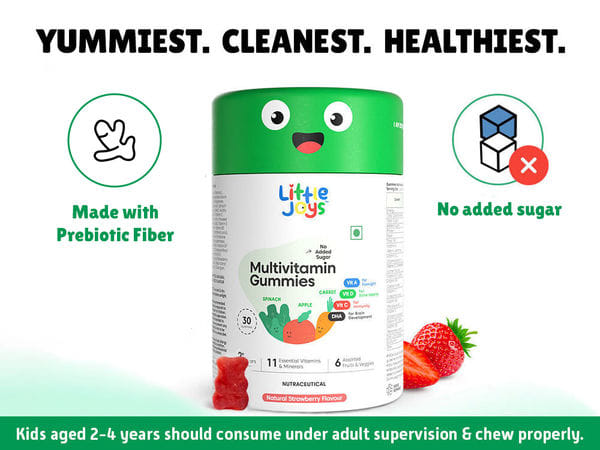
2. Amla (Indian Gooseberry)
The richest natural food source - roughly 600-700 mg per 100g, far more than any citrus fruit. A small amount covers daily needs entirely. Add amla powder to a smoothie, juice, or mixed into curd.
3. Guava
Around 200 mg per 100g. One small guava covers a toddler's full daily Vitamin C requirement. Easy snack, widely available, and most children enjoy it.
4. Red Bell Pepper (Capsicum)
More Vitamin C than an orange, especially when eaten raw. Works as a crunchy snack or chopped into sabzis and rice.
5. Tomatoes
A consistent everyday source that features in most Indian cooking regardless - dal, curries, chutneys. Not the richest source, but it adds up reliably across meals.
6. Citrus Fruits
Oranges, sweet lime, and lemon provide 50-60 mg per 100g. Reliable and familiar, though not the most concentrated source available.
When Does a Supplement Make Practical Sense?
Food is always the first choice. But a supplement earns its place when:
- Your child consistently avoids fruits and vegetables
- They're going through repeated infections during a school term
- They're recovering from illness - Vitamin C requirements spike during and after
- Their diet is heavily grain-and-dairy based with minimal fresh produce variety
What to Look for When Comparing Supplements
- Vitamin C paired with Zinc - far more effective for immune support together
- Age-appropriate dosage - 40–80 mg per serving for most children; mega-dose supplements are unnecessary and not designed for kids
- Zero added sugar - Unlike Little Joys's Multivitamin Gummies, many mainstream kids' chewables use sugar as the base, counteracting gut health benefits
- No artificial colours, flavours, or preservatives - matters for daily long-term use
- Third-party tested - confirms actual Vitamin C levels match what's on the label
FAQ
Q: Can you give a child too much Vitamin C?
The upper tolerable limit is 400–650 mg per day depending on age. Regular food plus a standard supplement stays well below this. Only high-dose standalone supplements would be a concern.
Q: Is orange juice enough for a child's daily needs?
A small glass gives roughly 40-50 mg - close to the daily need for young children. But it comes with sugar and no fibre. Whole fruit or amla is a better everyday option.
Q: Does cooking destroy Vitamin C?
Yes - heat degrades it significantly. Raw or lightly cooked vegetables retain more. A supplement or raw fruit daily is a reliable backup.
Q: Should my child take more Vitamin C when sick?
Yes. Requirements increase when the body is fighting an infection. Continuing daily supplementation through illness and recovery is a reasonable approach.
Q: Which is better - amla or citrus?
Amla contains 10-15 times more Vitamin C than an equivalent amount of orange. For Indian children, amla - fresh, dried, or as an extract in a supplement - is the most efficient source available.
Q: From what age can kids take Vitamin C supplements?
Most gummy multivitamins with Vitamin C are suitable from age 2. Always check the label for age suitability.