
Pea Protein for Kids: Is It Safe and Effective?
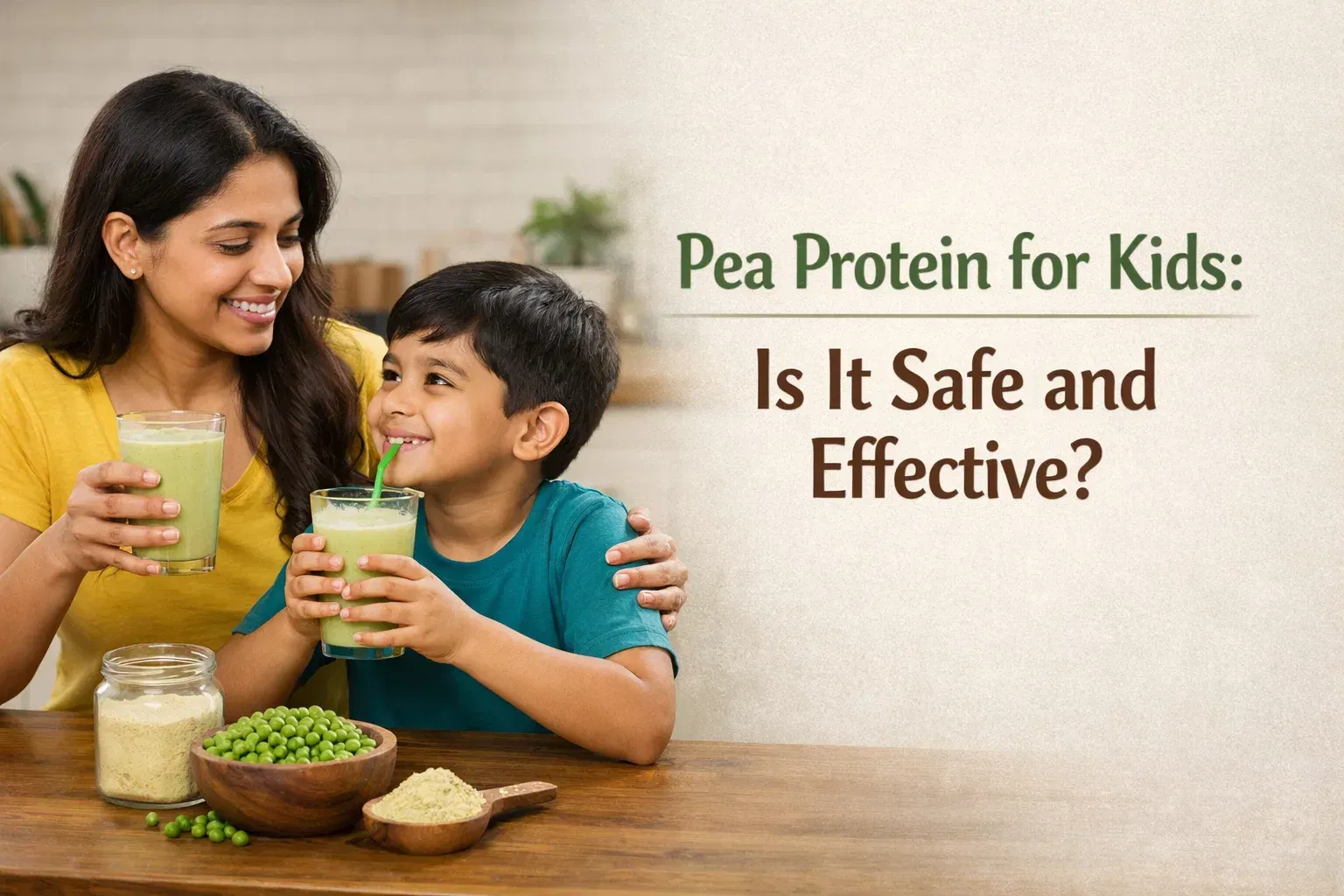
Pea protein has moved from niche sports nutrition into mainstream children's food products over the last few years. You will find it in nutrition powders, fortified snacks, and plant-based formulas increasingly targeted at Indian families.
Parents encountering it for the first time often have two questions: is it safe for my child? And does it actually work as well as dairy protein?
Here is a clear answer to both.
What Is Pea Protein?
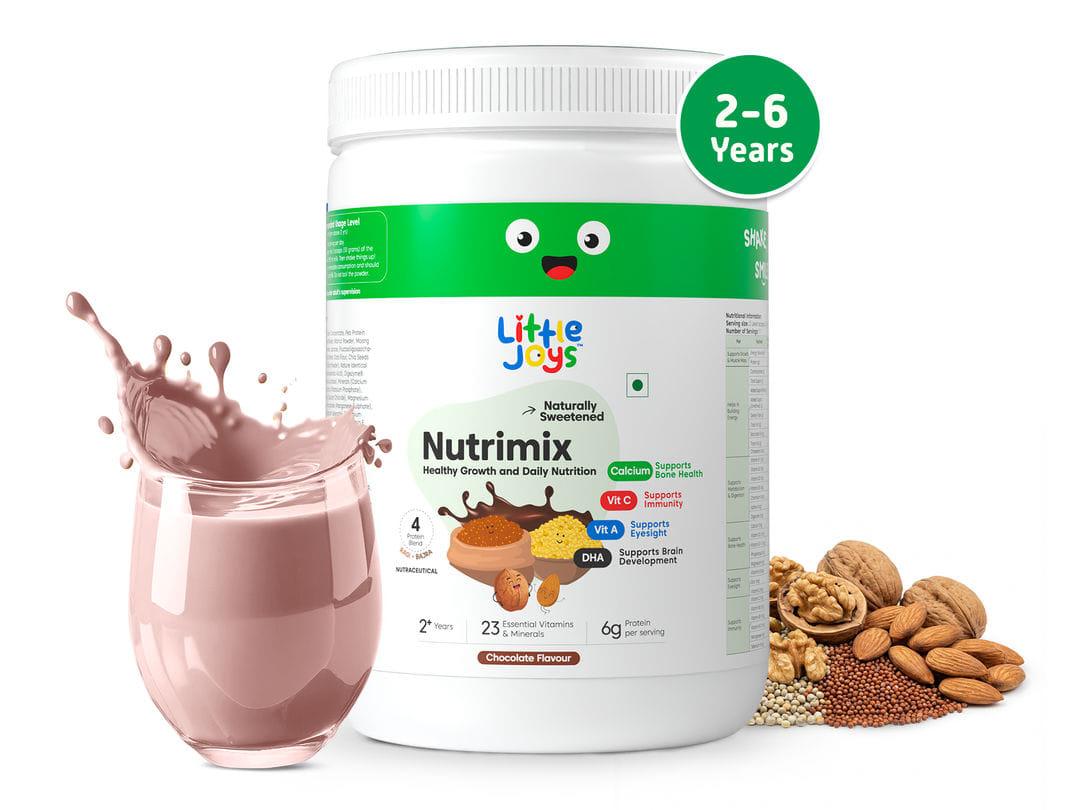
Pea protein is extracted from yellow split peas (Pisum sativum) through a process that isolates the protein fraction from the starch and fibre. The result is a concentrated protein powder - typically 80-85% protein by weight - that is naturally free from gluten, dairy, and most common allergens.
It is not the same as eating peas. Pea protein isolate is a processed ingredient, but the processing is physical (not chemical), and the safety profile for children is well established.
Is Pea Protein Safe for Children?
Yes - pea protein is safe for children from age 2 when used in age-appropriate amounts as part of a varied diet.
Key safety notes:
- Pea protein is naturally free from dairy, gluten, soy, and nuts - making it one of the most broadly allergen-safe protein sources available
- It does not contain the phytoestrogens found in soy protein that some parents are concerned about
- At the amounts found in children's nutrition powders (typically 2-5g per serving), there are no documented safety concerns
- High-dose standalone pea protein supplements designed for adult athletes are not appropriate for children - but these are a different product category entirely
Nutritional Value: How Does Pea Protein Compare?
Pea protein provides all nine essential amino acids, though it is relatively low in one - methionine. This is why quality children's products that use pea protein do not rely on it as a single source.
When combined with a complementary protein - such as rice protein, which is high in methionine - pea protein becomes a nutritionally complete protein source. This pea-rice combination is one of the most effective plant-based complete protein strategies and is increasingly used in well-formulated children's nutrition powders.
| Comparison | Pea Protein | Whey Protein | Egg White |
|---|---|---|---|
| Protein per 100g | 80-85g | 80-90g | 81g |
| Allergen status | Free from dairy, gluten, soy | Contains dairy | Contains egg |
| Digestibility score | High | Very high | Very high |
| Methionine level | Low | High | High |
| Suitable for vegetarians | Yes | No (whey is dairy) | No |
For vegetarian Indian families, pea protein is one of the most practical ways to deliver high-quality plant protein to children consistently.
Why Pea Protein Works Well in a Multi-Source Blend
Used alone, pea protein's low methionine is a limiting factor. Combined with brown rice protein (high in methionine), the blend becomes a complete protein with a digestibility score comparable to whey.
This is the approach used in quality children's nutrition products - not pea protein alone, but pea protein as part of a blend that covers the full essential amino acid spectrum.
The additional advantage of a multi-source blend is that each protein source brings its own micronutrient contribution. Pea protein adds iron. Rice protein adds B vitamins. Legume-based proteins add zinc and folate. The combination is nutritionally richer than any isolated single source.
Pea Protein in Little Joys NutriMix
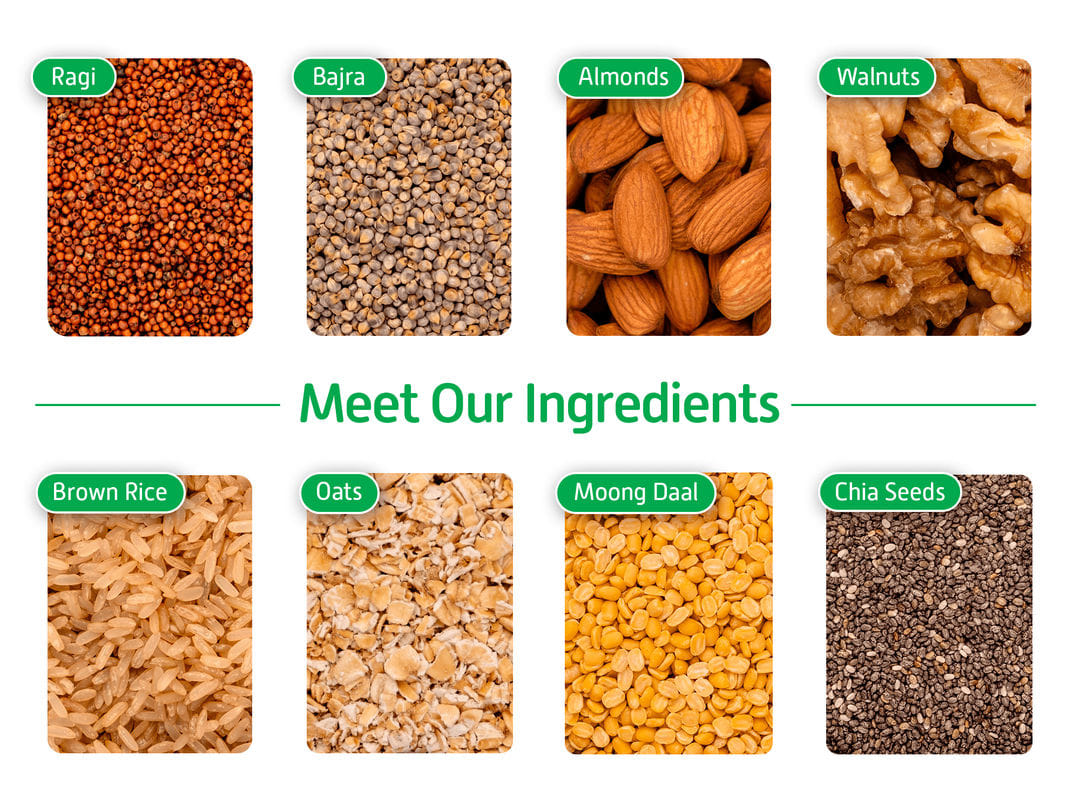
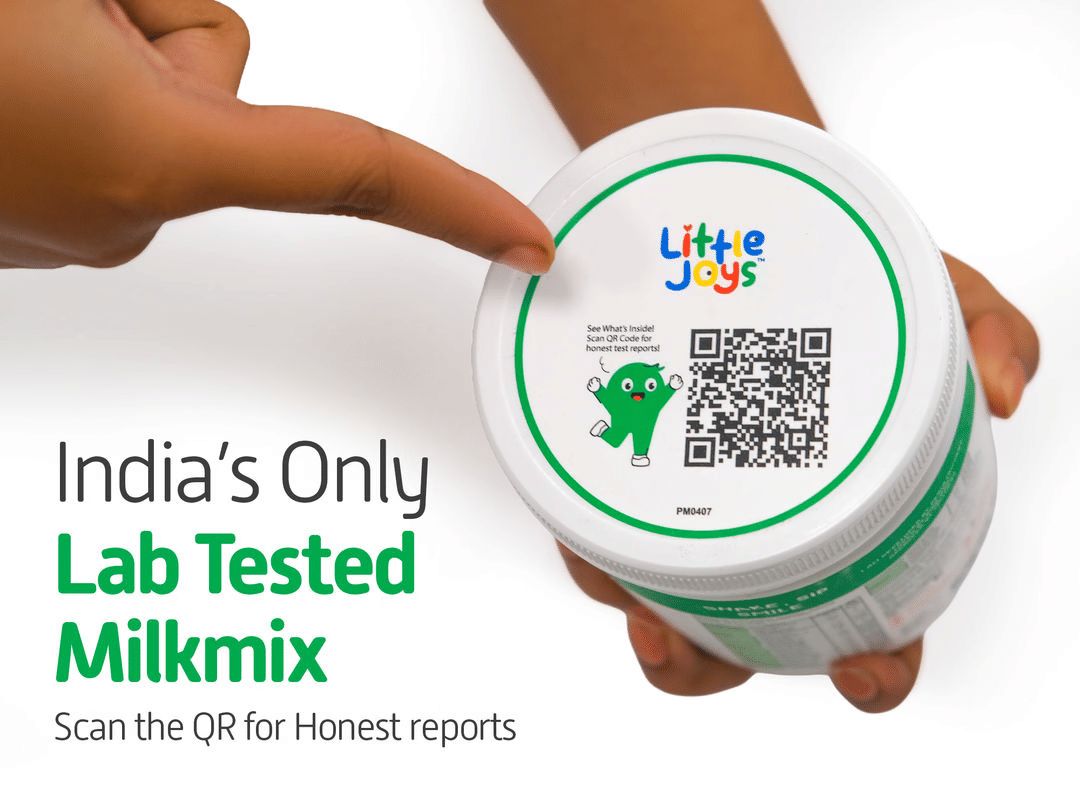
Little Joys NutriMix uses peas as one of several plant protein sources, alongside moong dal, brown rice protein, almonds, and walnuts. No single source dominates - the blend is designed to cover amino acid completeness and micronutrient diversity together.
This approach delivers meaningful protein per serving without the allergen concerns of whey, the phytoestrogen questions around soy, or the amino acid incompleteness of pea protein alone.
Combined with a ragi and bajra whole grain base, the result is a protein-rich, micronutrient-dense daily drink with zero refined sugar and no artificial additives. GMP certified and third-party tested.
FAQ
Q: Is pea protein better than whey for children?
Neither is universally better. Whey has a slightly higher digestibility score; pea protein is dairy-free and allergen-safe. For vegetarian families or children with dairy sensitivity, pea protein in a multi-source blend is the stronger practical choice. For non-vegetarian families without allergies, both are suitable.
Q: Can pea protein cause allergies in children?
Pea allergy is rare - rarer than dairy, soy, egg, or nut allergies. Children with known legume allergies (particularly to lentils or chickpeas) should check with a nutrition expert before introducing pea protein, as cross-reactivity is possible in some cases.
Q: Does pea protein affect taste in food products?
Pure pea protein has a mild, slightly earthy taste that can be noticeable in products where it is used at high concentrations. In well-formulated nutrition powders where it is one of several sources, the flavour contribution is minimal and masked by natural flavouring.