
Omega-3 and Vegetarian Kids: What's Actually Worth Knowing
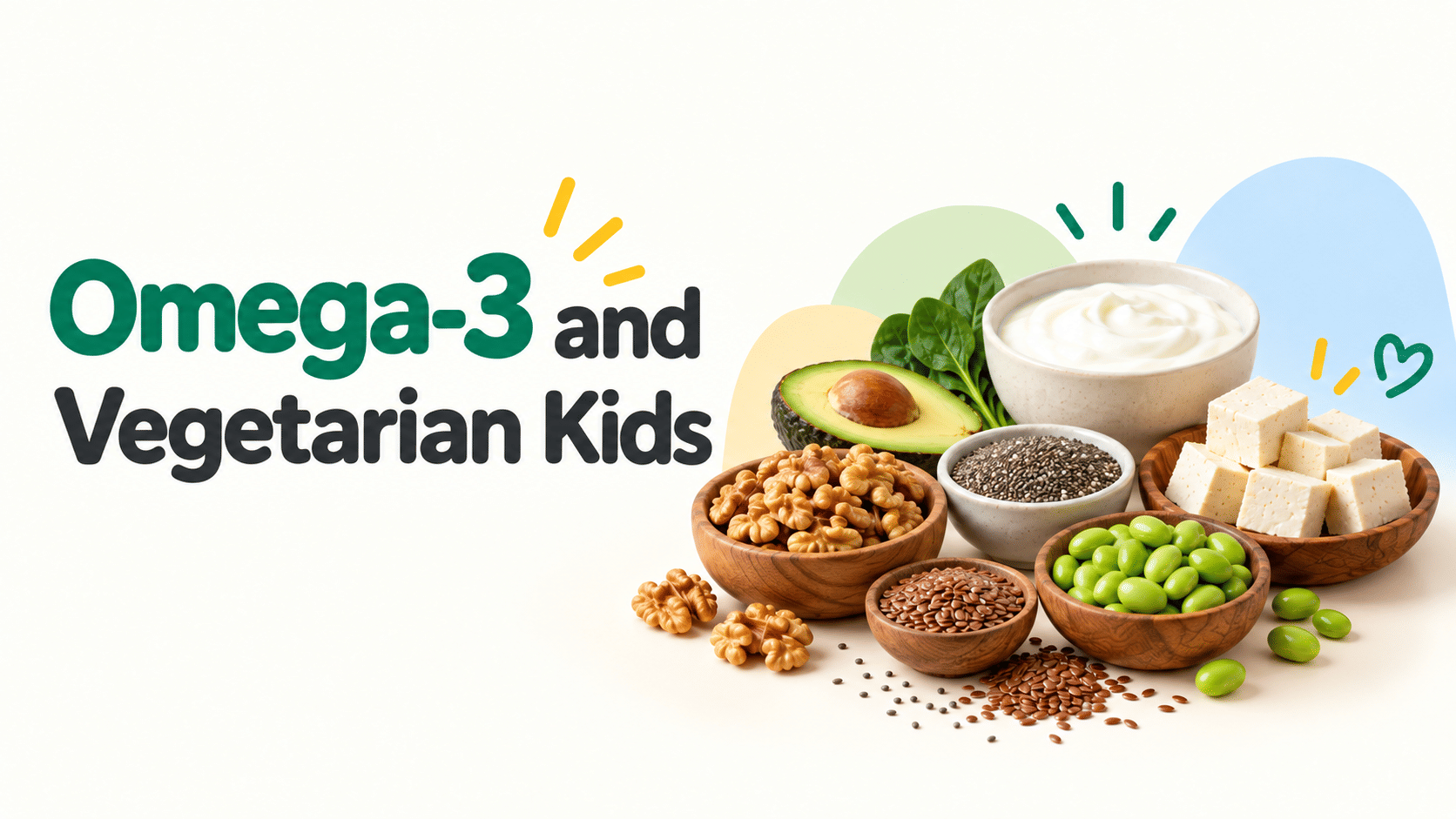
If your family is vegetarian and you have wondered whether your child is missing out on omega-3, here is the honest version: vegetarian kids get plenty of one kind of omega-3 and very little of the kind that matters most for the brain. That gap is real, it is specific, and it is the one genuine reason a vegetarian family might think about a supplement. Almost everything else you read on this topic is either overblown or trying to sell you fish oil you won't give a child anyway.
The confusion comes from the word "omega-3" covering three different things. ALA is the plant form - it is in flaxseed, chia, walnuts, mustard oil, soybean. If your child eats Indian home food, they are almost certainly getting ALA without you trying. EPA and DHA are the other two, found mainly in fish, and DHA in particular is the one the brain and eyes are largely built from. That is where vegetarian diets fall short.
 Little Joys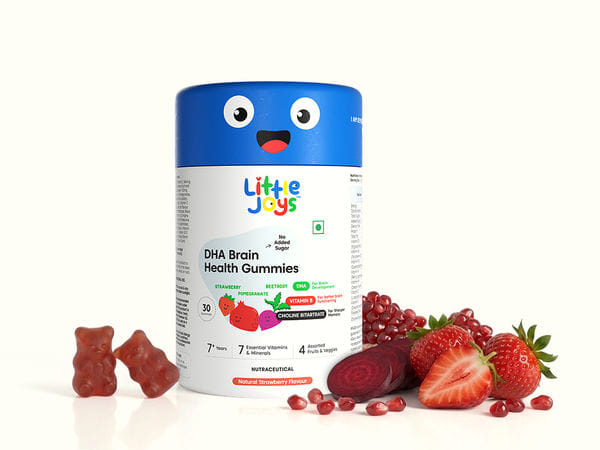
The catch is a conversion problem. The body can turn ALA into DHA, so in theory the flaxseed in your kitchen covers it. In practice the conversion is inefficient - only a small fraction of ALA becomes DHA, and it is less efficient still in some people. So a vegetarian child can be eating flax and walnuts daily and still be low on the DHA that matters, because the raw material is there but the factory runs slowly. This is the single fact worth taking away from the whole topic.
Which is why this isn't a call to panic, and it also isn't a reason to shrug. Two sensible things follow from it.
First, keep the plant omega-3 coming, because it is easy and it does contribute. A spoon of ground flaxseed in a chilla or smoothie, walnuts as a snack, chia in curd, mustard or soybean oil in cooking. None of this is exotic and all of it helps.
Second, if you want to close the DHA gap directly, look for a vegetarian DHA source rather than assuming flax alone gets there. The vegetarian route to actual DHA runs through algae - algal oil is where the fish get theirs in the first place - or through specially processed plant DHA. This matters when you are reading a label: "omega-3" on the front could mean only ALA, which for a vegetarian child is the part they already have. What you are checking for is DHA itself.
A quick word on what to ignore. You will see products promising sharper focus, better grades, a smarter child. Be skeptical of all of it. DHA is a building block the brain genuinely needs, and getting enough of it is worth doing - but no gummy turns into exam marks, and any brand implying it does has left honesty behind. The reason to care about DHA is that it is a real dietary gap for veg kids, not a shortcut to performance.
For a vegetarian family that wants to top up DHA specifically, Little Joys makes a DHA Brain Gummy for kids aged 4 and up that uses a vegetarian DHA source rather than fish oil, alongside choline and a few supporting vitamins. It is a way to cover the DHA gap for a child who won't eat fish - a supplement to a diet that is already doing the ALA part, not a brain booster. Read what is in it, check the age, and if you are unsure whether your child needs it, your paediatrician is the better guide than any label.
Frequently asked questions
Can vegetarian kids get enough omega-3?
They easily get ALA (from flaxseed, walnuts, chia, mustard and soybean oil), but usually fall short on DHA, the form most important for the brain, because the body converts ALA to DHA inefficiently. The plant part is easy; the DHA part is the gap.
Is flaxseed enough for my child's DHA?
Flaxseed is an excellent source of ALA, but relying on ALA-to-DHA conversion alone often isn't enough to reach optimal DHA. Flax is worth keeping in the diet; a vegetarian family wanting to close the DHA gap directly should look for an actual DHA source (algal or specially processed plant DHA).
Do omega-3 supplements make kids smarter or improve focus?
There is no honest basis for promising higher intelligence or better grades from an omega-3 supplement. DHA is a nutrient the brain is built from, and avoiding a deficit matters - but treat "makes your child smarter" claims as marketing, not fact.
What's a good vegetarian DHA source for kids?
Algae-based (algal oil) DHA is the main vegetarian route, since it is the original source fish get theirs from. Some kids' supplements use it or a processed plant DHA. Check the label says DHA specifically, not just "omega-3", and check the age suitability.
Little Joys