
Is Maltodextrin Safe? Side Effects, Risks & What Science Says for Babies, Kids & Adults
Maltodextrin is a common food ingredient in baby formulas, snacks, and adult foods. This guide explains its safety, side effects, and common misconceptions, helping parents and adults understand how much is safe, which foods contain it, and whether it’s truly harmful.
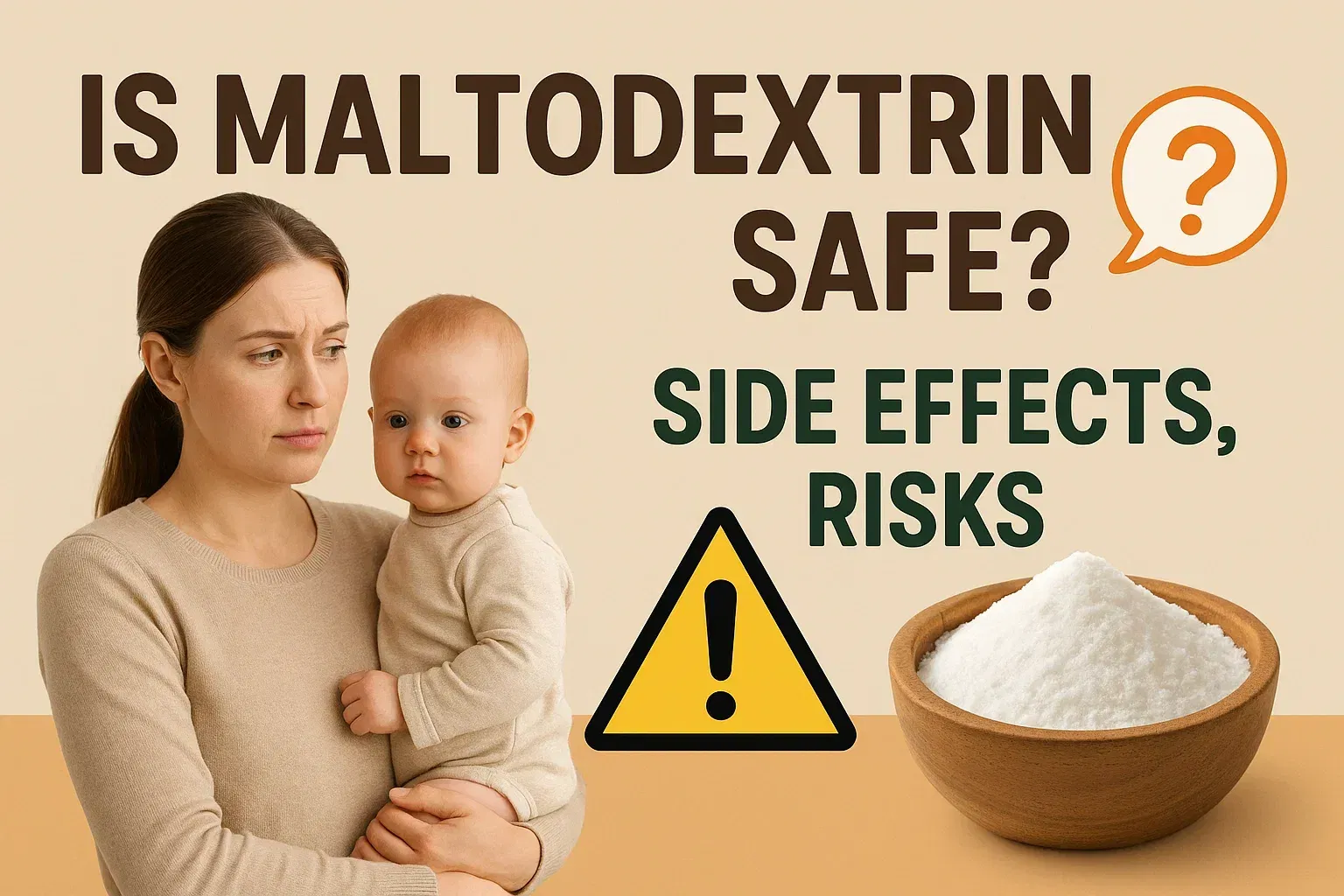
Maltodextrin is one of the most searched food ingredients among parents today. Questions like is maltodextrin safe, is maltodextrin harmful, maltodextrin dangers, does maltodextrin raise blood sugar, and even maltodextrin cancer risk often come up when moms read food labels-especially on baby and toddler products.
This guide breaks down the safety, side effects, and misconceptions in simple language, based on what is publicly known from global food authorities.
Is Maltodextrin Safe?
Maltodextrin is considered safe to eat by major global food safety authorities when consumed in normal food quantities. It can be unsuitable for people with high blood sugar or certain digestive issues.
Is Maltodextrin Safe? (Overview)
Maltodextrin is approved for use in food products by well-known regulatory bodies such as:
- The FDA (U.S.)
- The European Food Safety Authority (EFSA)
- WHO/FAO food safety guidelines (general carbohydrate category)
These bodies list maltodextrin as safe for consumption, including in infant and child nutrition, when used within regulated limits for food manufacturing.
However, this does not mean it is suitable for everyone in all quantities. Safety depends on how much is consumed, personal health, and the overall diet.
Maltodextrin Good or Bad?
Maltodextrin is neither “good” nor “bad” by itself; safety depends on the amount consumed and individual health conditions like diabetes or gut sensitivity. Try to avoid it if you can.

Nutrimix Chocolate Nutrition Powder
No refined sugar or maltodextrin.
Naturally sweetened with dates and jaggery.
5g of protein per serving of Nutrimix for kids aged 2-6 and 7-13 years
Boosts immunity with superfoods like ragi & bajra and 23 vitamins & minerals.
Possible Side Effects of Maltodextrin
While maltodextrin is safe for most people, some individuals may experience certain effects-usually when intake is high.
a) Blood Sugar Spikes
One of the most discussed concerns is whether maltodextrin raises blood sugar. Because it digests quickly, it can cause:
- Rapid glucose rise
- Higher glycemic response than table sugar
This matters most for people with diabetes, insulin resistance, or those monitoring blood sugar for medical reasons.
b) Allergies (Rare)
Very few cases of sensitivity to maltodextrin exist, usually tied to the source starch (such as corn). True allergies are rare.
c) Gut Issues at High Intake
In unusually large quantities, some report:
- Bloating
- Loose stools
- Discomfort
This is more likely when maltodextrin replaces whole foods in the diet. Normal amounts in packaged foods typically do not cause issues.
d) Cancer Risk Clarification
One of the most common questions is does maltodextrin cause cancer or whether there is a maltodextrin cancer risk. Current scientific literature does not classify maltodextrin as a cancer-causing ingredient. No evidence links regular dietary maltodextrin to cancer in humans.
Most online myths come from confusion between high-sugar diets, gut inflammation, and isolated studies on other carbohydrate compounds-not maltodextrin itself.
Does Maltodextrin Cause Cancer?
No scientific evidence shows that maltodextrin causes cancer in humans.
How Much Maltodextrin Is Safe Per Day?
There is no fixed “daily limit” set by global authorities. Instead, safety guidelines rely on standard food quantities.
A practical approach for parents and adults:
- Occasional intake → generally safe
- Moderate intake → safe for most people
- Very high intake → may cause digestive discomfort or high blood sugar
- Babies and toddlers → follow formula instructions and a paediatrician’s advice
Anyone with glucose issues should monitor how maltodextrin affects them individually.
Maltodextrin Safe to Eat?
Yes, maltodextrin is safe to eat in normal quantities. People with diabetes or digestive sensitivities should be cautious with large amounts.
Common Misconceptions About Maltodextrin
“Maltodextrin causes cancer”
As explained above, there is no evidence linking maltodextrin to cancer.
“All maltodextrin is unhealthy”
Not accurate. Maltodextrin is simply a carbohydrate. Health impact depends on:
- Portion size
- Frequency
- Overall diet pattern
“Organic maltodextrin is safer”
Organic maltodextrin comes from organically grown starch, but the processing and effect on the body are the same as regular versions.
“Maltodextrin is always bad for health”
It can be helpful for:
- Athletes needing quick energy
- People recovering from certain illnesses
- Babies who rely on formula for digestible carbohydrates
The idea that maltodextrin is universally harmful is not supported scientifically.
Is Maltodextrin Bad for Health?
Maltodextrin is not inherently bad for health; it becomes a concern only in excess or for people with specific medical conditions.
When to Be Cautious With Maltodextrin
While safe for the general population, certain groups should keep an eye on intake:
People With Diabetes or Prediabetes
Because it digests quickly, maltodextrin may raise blood sugar faster than expected.
Individuals With Gut Sensitivity
Large amounts can disrupt digestion.
Parents Choosing Products for Babies
For babies and toddlers, the presence of maltodextrin in formula or snacks is regulated, but always follow paediatric guidance when selecting new foods.
Is Maltodextrin Harmful?
Maltodextrin is harmful only when consumed in very large amounts or when someone has specific medical conditions like diabetes or gut sensitivity.