
Iron Deficiency in Kids: Signs, Causes and Solutions
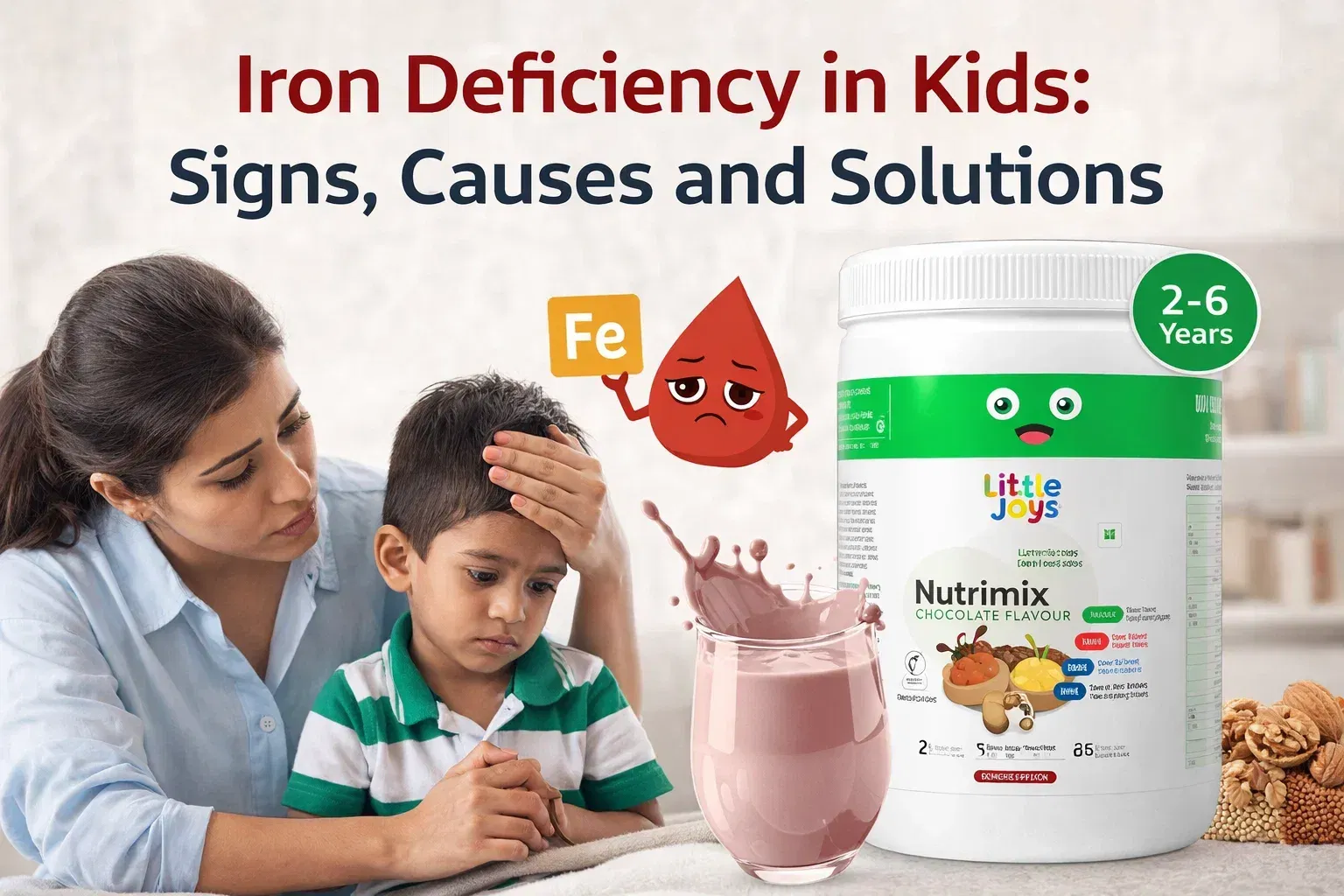
The most common warning signs of iron deficiency in children are pale inner eyelids, persistent fatigue despite adequate sleep, frequent illness, reduced appetite, and difficulty concentrating at school. Iron deficiency is the most widespread nutritional deficiency among Indian children - affecting an estimated 50-60% of children under 5 - and is frequently missed because its symptoms are easy to attribute to other causes.
Why Iron Matters
Iron produces haemoglobin - the protein in red blood cells that carries oxygen to every cell in the body. When iron is low, the consequences are system-wide: brain function slows, immune cells respond less effectively, physical energy drops, and growth slows in severe cases.
For children in rapid development, iron deficiency during the brain's critical growth window has effects that persist well beyond childhood. This is not a problem that resolves on its own.
Warning Signs to Watch For
Pale skin and pale inner eyelids
Lift your child's lower eyelid gently - the inner surface should be a healthy pink-red. Pallor here is a consistent early indicator of low haemoglobin.
Persistent fatigue
A child who is consistently tired despite adequate sleep, or who fatigues quickly during play, may be iron deficient. This is frequently attributed to temperament when the cause is physiological.
Reduced appetite and picky eating
Iron deficiency dampens taste sensitivity, which worsens food refusal and creates a cycle - low iron reduces appetite, reduced eating lowers iron further.
Frequent illness
Iron-deficient immune cells respond more slowly to infection. Children with low iron get sick more often and take longer to recover.
Most Common Causes
Low dietary iron intake is the primary cause. Indian vegetarian diets are often high in grains but low in high-absorption iron sources. Plant-based iron from dal, greens, and ragi is absorbed at 2-10%, compared to 15-35% for animal-source iron.
Vitamin C gap is the most actionable fix. Plant iron absorption doubles or triples when consumed alongside Vitamin C. A child eating dal without any Vitamin C source at the same meal is absorbing a fraction of the available iron.
Dietary Solutions
Ragi provides 3.9 mg of iron per 100g and bajra around 8 mg - both significantly higher than rice or wheat. Always pair with a Vitamin C source at the same meal.
Moong dal and other legumes provide plant iron alongside protein and folate. Amla - the richest natural Vitamin C source in India - added to any iron-rich meal significantly improves absorption.
Eggs provide haem iron with meaningfully higher absorption than any plant source. One egg daily is one of the most efficient iron interventions for children who eat them.
When a Supplement Is Needed
For children with diagnosed iron deficiency, dietary changes alone may not be sufficient in the short term. A supplement providing iron in bioavailable form (ferrous fumarate or ferrous gluconate rather than ferrous sulphate, which causes more digestive discomfort) alongside Vitamin C is the most effective approach.
Little Joys Multivitamin Gummies provide iron as ferrous fumarate alongside Vitamin C in the same daily gummy - the two delivered together, which is how they work best. Zero added sugar, no artificial colours, third-party tested, suitable from age 2.

Multivitamin Gummies for Kids
100% Safe | Paediatrician Recommended ✅ 11+ vitamins & minerals for your little one's daily nutritional needs. 🍎 Contains 6 real fruits & vegetables! Fulfills any nutrition gaps in diet due to fussy or picky eating. 🛡️ Contains Vitamin C, Turmeric (Haldi), Vitamin B12 & Zinc which are known to boost immunity. 🚫 ZERO ADDED SUGAR - Uses a prebiotic fibre chicory root as its base. Along with gut health and immunity benefits it provides natural sweetness to the gummy. 🚫 No artificial colours, flavours or preservatives. Only the YUMMIEST, CLEANEST, HEALTHIEST gummy!
FAQ
Q: How do I confirm iron deficiency without a blood test?
A combination of pale inner eyelids, persistent fatigue, frequent illness, and poor appetite strongly suggests iron deficiency. A blood test (complete blood count and serum ferritin) confirms it - a simple, affordable test worth doing if you notice multiple signs.
Q: Can iron supplements cause constipation in children?
Ferrous sulphate commonly causes constipation and stomach discomfort. Ferrous fumarate and ferrous gluconate are gentler alternatives. Gummy supplements with a prebiotic fibre base are particularly well-tolerated since the fibre supports gut motility alongside the iron.