
How Much Protein Does a Child Need Per Day?
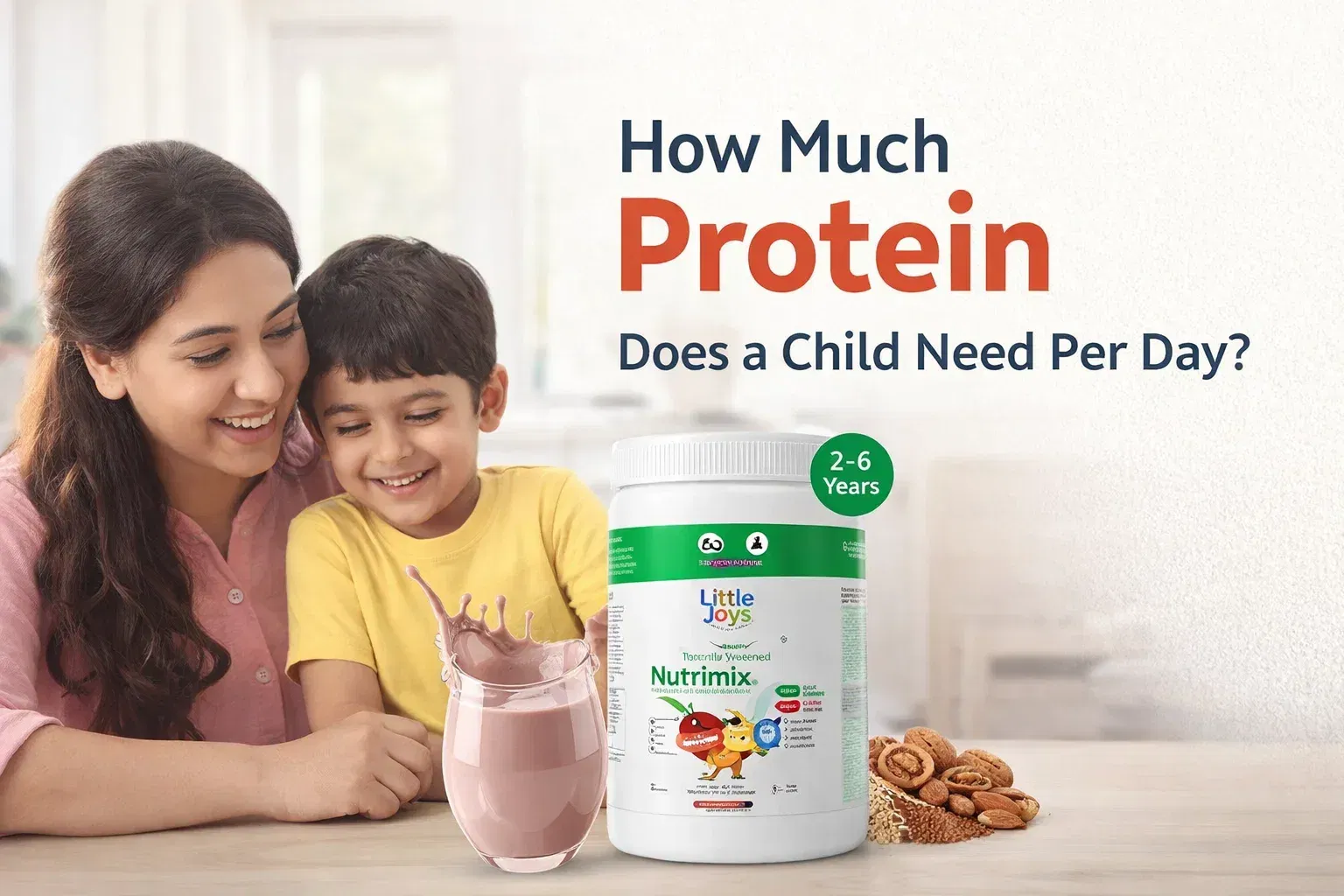
Parents asking how much protein their child needs are often working from guesswork - either worrying without reason or missing a genuine gap without realising it. The actual numbers are specific by age and body weight, and knowing them makes daily planning far more practical.
Protein Requirements by Age
| Age | Daily Protein Requirement | Per kg of Body Weight |
|---|---|---|
| 1-3 years | 13 g | 1.1 g/kg |
| 4-8 years | 19 g | 0.95 g/kg |
| 9-13 years | 34 g | 0.95 g/kg |
| Teen girls (14-18) | 46 g | 0.85 g/kg |
| Teen boys (14-18) | 52 g | 0.85 g/kg |
These are based on ICMR and international dietary reference values. They represent minimum requirements for healthy children. Children who are physically active, recovering from illness, or going through growth spurts need moderately more - adding 10-15% is a reasonable buffer.
How Much Protein Is in Common Indian Foods?
| Food | Serving | Protein |
|---|---|---|
| Moong dal cooked | 1 katori (200ml) | 14 g |
| Egg | 1 whole | 6 g |
| Paneer | 50g | 9 g |
| Curd | 100g | 3-4 g |
| Milk | 200ml | 6-7 g |
| Rajma cooked | 1 katori | 9 g |
| Almonds | 10 pieces (12g) | 3 g |
| Ragi roti | 1 medium | 2-3 g |
A practical daily tally for a 4-year-old (needs 19g): one egg at breakfast (6g) plus one katori moong dal at lunch (14g) already hits 20g from just two food items. For most Indian children eating dal and eggs regularly, protein deficiency is unlikely.
When Protein Gaps Are Most Likely
Very picky eaters who refuse dal and eggs
A child eating primarily rice, roti, biscuits, and fruit without reliable protein sources is genuinely at risk. Even a moderate daily protein gap over months contributes to slower growth, reduced muscle tone, and impaired immune function.
Practical Ways to Hit Daily Protein Targets
Make dal non-negotiable at lunch or dinner
A full katori of any dal covers 10-14g of protein - more than half the daily requirement for toddlers. If dal is refused in traditional form, blend it into rice or mix it into khichdi until acceptance builds.
Use a nutrition powder for persistent gaps
For children who consistently refuse dal, eggs, and dairy, a well-formulated nutrition powder covering plant protein from multiple sources fills the gap without requiring new food acceptance battles.
When choosing a protein supplement for children, look for multi-source plant protein covering lysine and methionine together, no added sugar, age-specific formulation, and third-party tested potency.
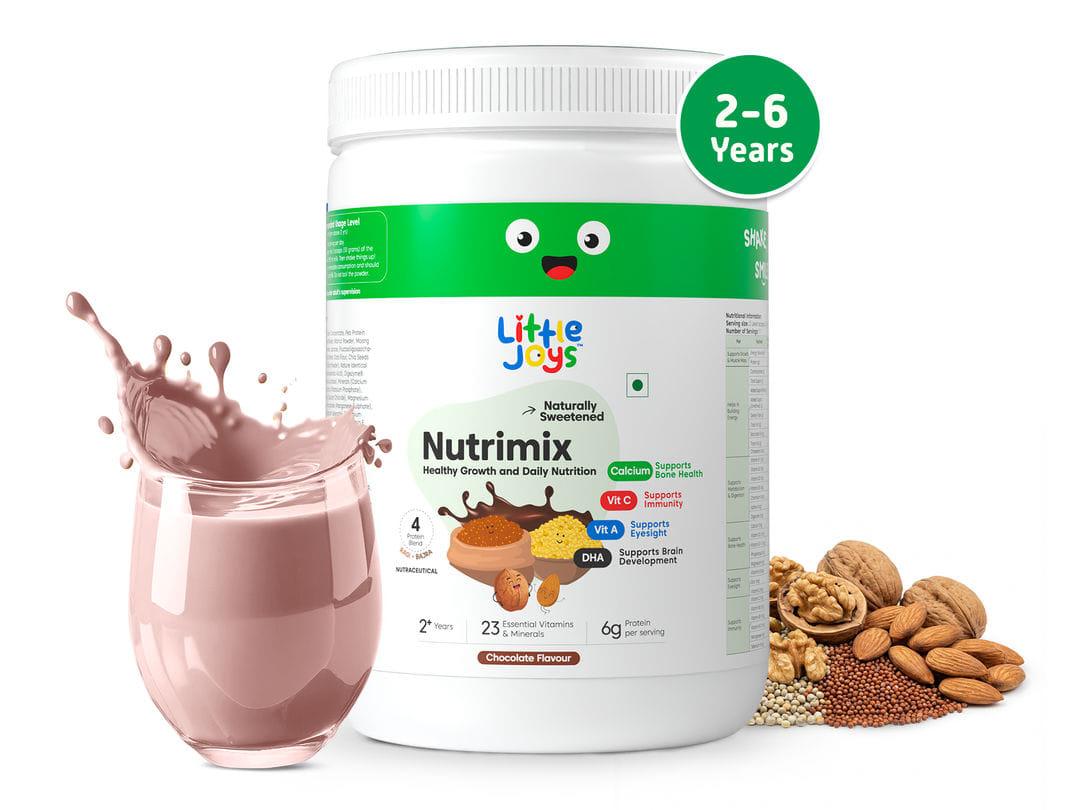
Little Joys NutriMix provides multi-source plant protein from moong dal, peas, brown rice protein, almonds, and walnuts. Built on a ragi and bajra base with 23 vitamins and minerals. Zero refined sugar, GMP certified, suitable from age 2.
FAQ
Q: Can children get too much protein?
At typical dietary amounts from whole foods, excess protein is uncommon and not a concern. Very high intake consistently above 2x daily requirements - primarily from concentrated adult supplements - can stress developing kidneys. Whole food protein sources rarely produce this.
Q: Does my child need a protein supplement?
Only if dietary protein consistently falls below requirements. For children eating dal, eggs, curd, or paneer regularly, a supplement is unnecessary. For picky eaters who refuse most protein sources, a daily nutrition powder is a practical safety net.