
Healthy Tomato Sauce for Kids: What to Look For
A healthy tomato sauce for children has tomatoes as the first and dominant ingredient, uses no added refined sugar, and contains no artificial preservatives or colours. Most commercial ketchup and tomato sauces do not meet any of these criteria - they are sugar syrups with tomato flavouring, not tomato products with sauce texture.
 Little Joys
_21kcg1.jpg?tr=w-600)
Here is how to read the label and what to buy instead.
Why Most Commercial Tomato Sauce Is Unsuitable for Daily Use
Standard commercial ketchup in India contains 20-25g of sugar per 100g - approximately one teaspoon of sugar per tablespoon of sauce. For children who use ketchup with every meal, the daily sugar contribution from sauce alone can be significant.
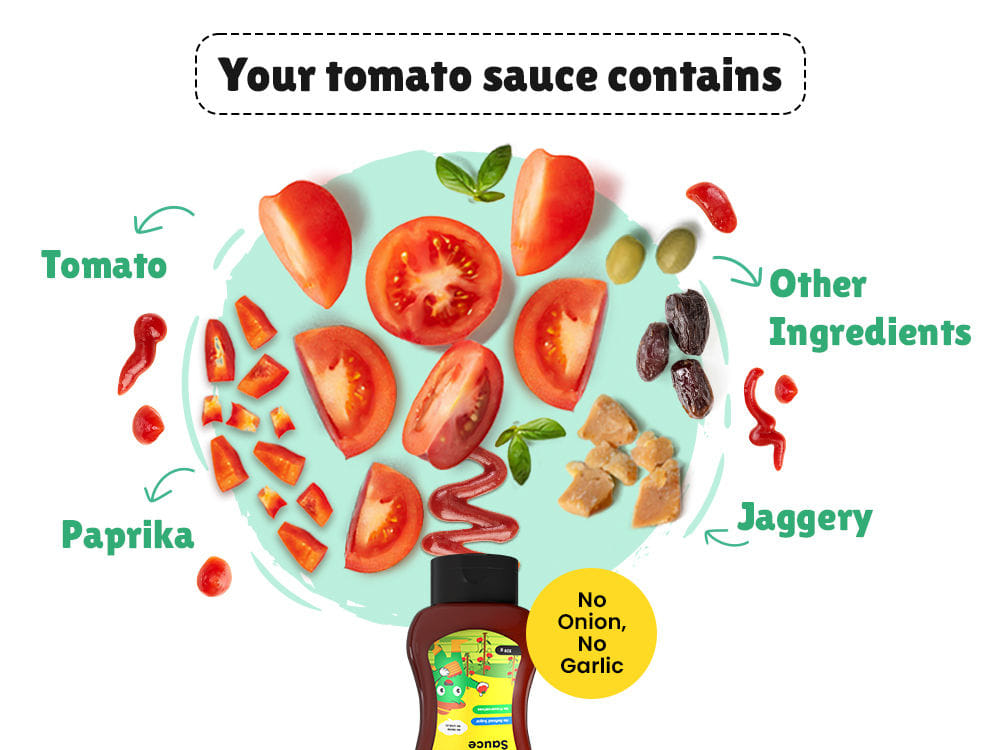
Beyond sugar, most commercial sauces contain:
- Acetic acid and sodium benzoate - preservatives used to extend shelf life for months; not appropriate for a daily condiment for children
- High sodium - between 700-1000 mg of sodium per 100g in many standard brands, contributing to a child's daily sodium load at a rate that adds up with regular use
- Modified starch or cornflour - used to thicken the sauce rather than actual tomato content
The tomato percentage in standard commercial ketchup is typically 12-25%. The remainder is sugar, vinegar, and starch. A genuinely tomato-based sauce should be 60-80%+ tomato content.
What a Clean Tomato Sauce Label Looks Like
Tomatoes listed first - and ideally with a stated percentage (60%+ is a good baseline)
No added refined sugar - some clean sauces use a small amount of natural sweetener or rely on the natural sugars in ripe tomatoes
Vinegar or lemon juice for preservation - natural acidulants that extend shelf life without synthetic preservatives
No artificial colours - a good tomato sauce is the natural colour of cooked tomatoes; bright red artificial colour signals dye, not tomato
No onion or garlic (for families who avoid them) - available in No Onion No Garlic variants for Jain households or children with specific dietary restrictions
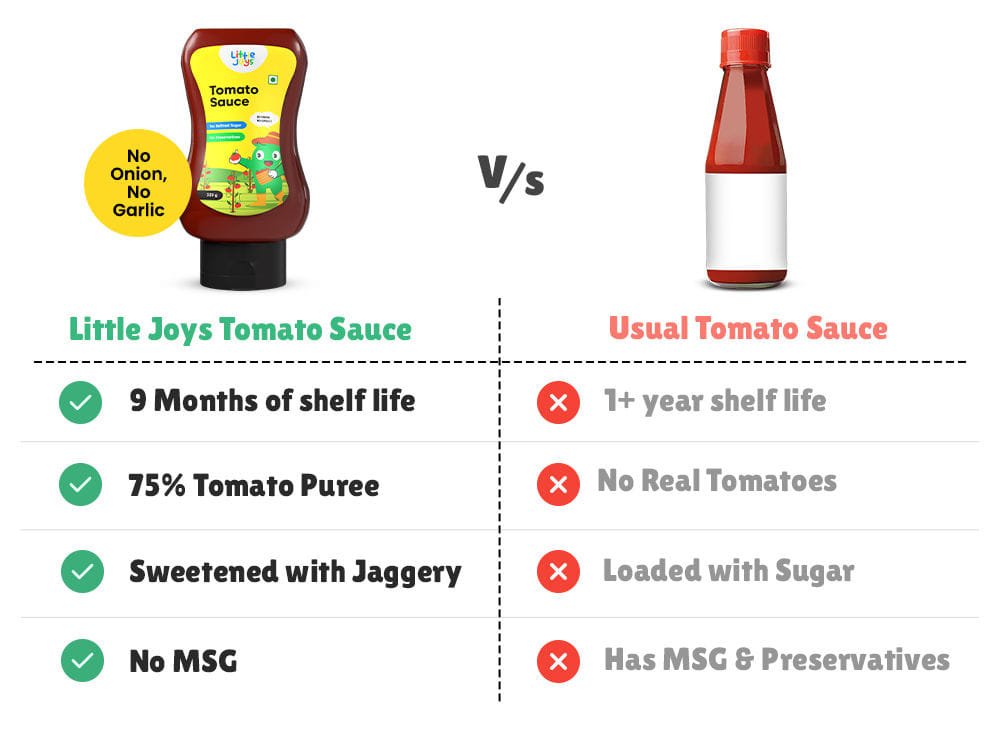
Little Joys Tomato Sauce
Little Joys Tomato Sauce is made with real tomatoes as the primary ingredient, no added refined sugar, and no artificial preservatives. Available in a No Onion No Garlic variant for families with dietary preferences, and in squeeze bottle formats for practical daily use.
-> View Little Joys Tomato Sauce - No Onion No Garlic
Little Joys-> View Little Joys Tomato Sauce Squeeze Bottle
Practical Uses for Children
Tomato sauce is a gateway food for many children - they eat foods with sauce that they refuse without it. Using a clean tomato sauce as a dip for bajra crackers, millet snacks, or vegetable fingers converts a condiment from a sugar vehicle into a tool for broadening dietary variety.
The sauce can also replace commercial ketchup in home cooking - as a base for pasta, as a dipping sauce for idli or dosa, or mixed into rice. The clean ingredient list makes regular daily use appropriate, which standard commercial ketchup is not.
FAQ
Q: How much sodium is in clean tomato sauce compared to standard ketchup?
Clean tomato sauces typically contain 200-400 mg of sodium per 100g - significantly lower than the 700-1000 mg in standard commercial ketchup. For children eating sauce daily, this difference is meaningful over time.
Q: Can tomato sauce be used from age 1?
Tomato is safe from 8-10 months as a cooked pureed food. A clean tomato sauce with no added sugar or preservatives is appropriate from age 1 as a condiment. Check that the sodium level is appropriate for the child's age - lower-sodium options are preferable for toddlers.
Q: Does cooking deplete the nutritional value of tomato sauce?
Cooking tomatoes actually increases the bioavailability of lycopene - the antioxidant responsible for the red colour. Cooked or processed tomato sauce is a better lycopene source than raw tomatoes. The Vitamin C content reduces somewhat during cooking, but the antioxidant and mineral content remains.