
Hazelnut Chocolate Spread vs Nutella: What's Healthier for Kids?
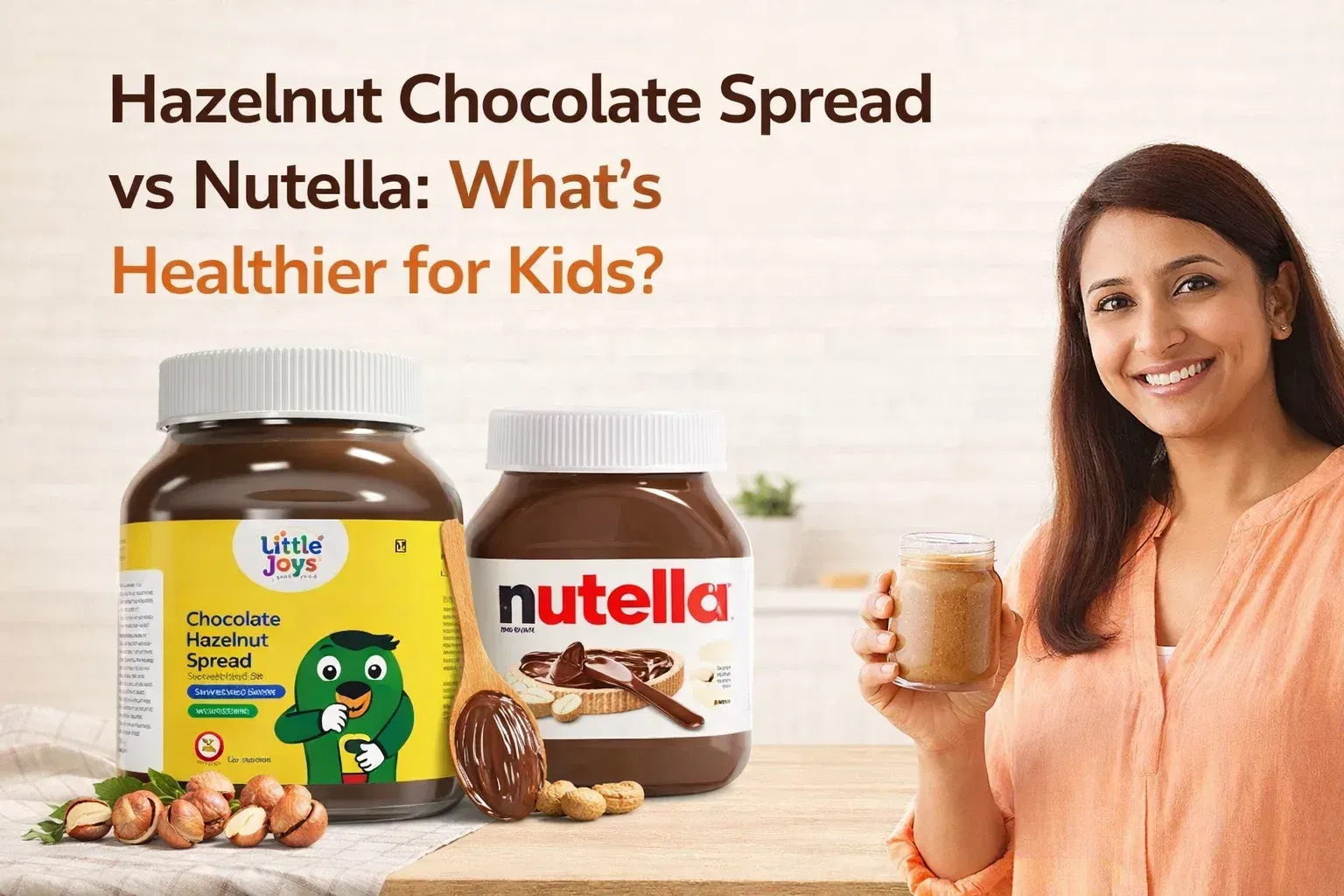
The short answer: a natural hazelnut chocolate spread made with real hazelnuts, natural cocoa, and no refined sugar is significantly healthier than Nutella. Nutella's first ingredient is sugar - at 57g per 100g, it is more accurately a sugar product with hazelnut flavour than a hazelnut product. Any spread that leads with hazelnuts and uses a natural sweetener is nutritionally incomparable.
Little Joys Hazelnut Chocolate Spread uses hazelnuts as the primary ingredient with natural cocoa and no refined sugar - the version of this product category that actually earns its health positioning.
-> View Little Joys Hazelnut Chocolate Spread
 Little Joys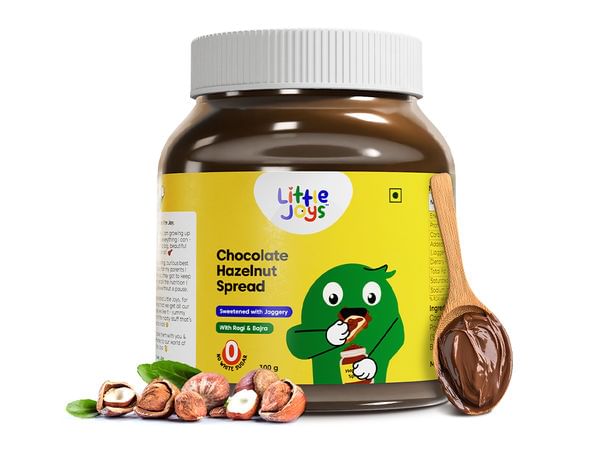
What Nutella Actually Contains
Nutella's ingredient list (in order of quantity): sugar, palm oil, hazelnuts (13%), cocoa, skimmed milk powder, whey powder, lecithin, vanillin.
The key issues for daily use in children:
Sugar as the primary ingredient - 57g of added sugar per 100g means two tablespoons (30g) contains approximately 17g of sugar. Against a World Health Organisation recommendation of under 25g of free sugars per day for children, a single Nutella serving consumes two-thirds of the daily limit.
Palm oil - present primarily to improve texture and shelf life. While not acutely harmful, palm oil is high in saturated fat and replaces the healthier unsaturated fats naturally present in hazelnuts.
Only 13% hazelnuts - the ingredient the product is named after makes up just over one-eighth of its composition. The protein and micronutrient contribution of this amount is minimal.
Vanillin - artificial vanilla flavouring rather than natural vanilla.
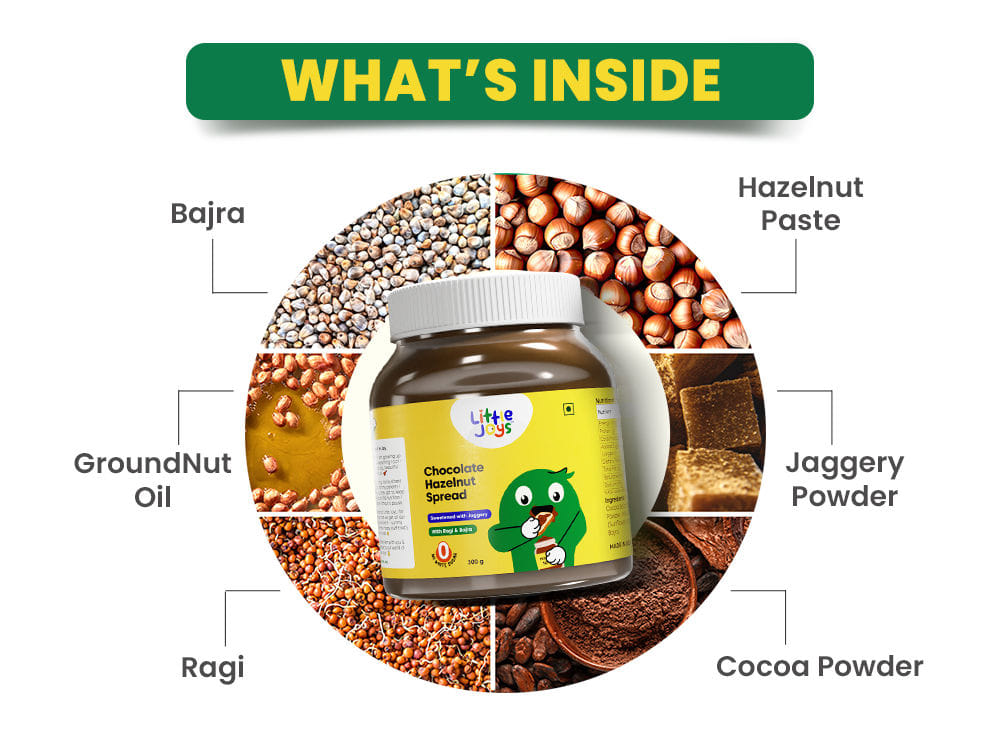
What a Better Alternative Looks Like
A genuinely nutritious hazelnut chocolate spread should have:
- Hazelnuts as the first ingredient - ideally 60-80%+ of the product
- Natural cocoa powder - not artificial chocolate flavouring
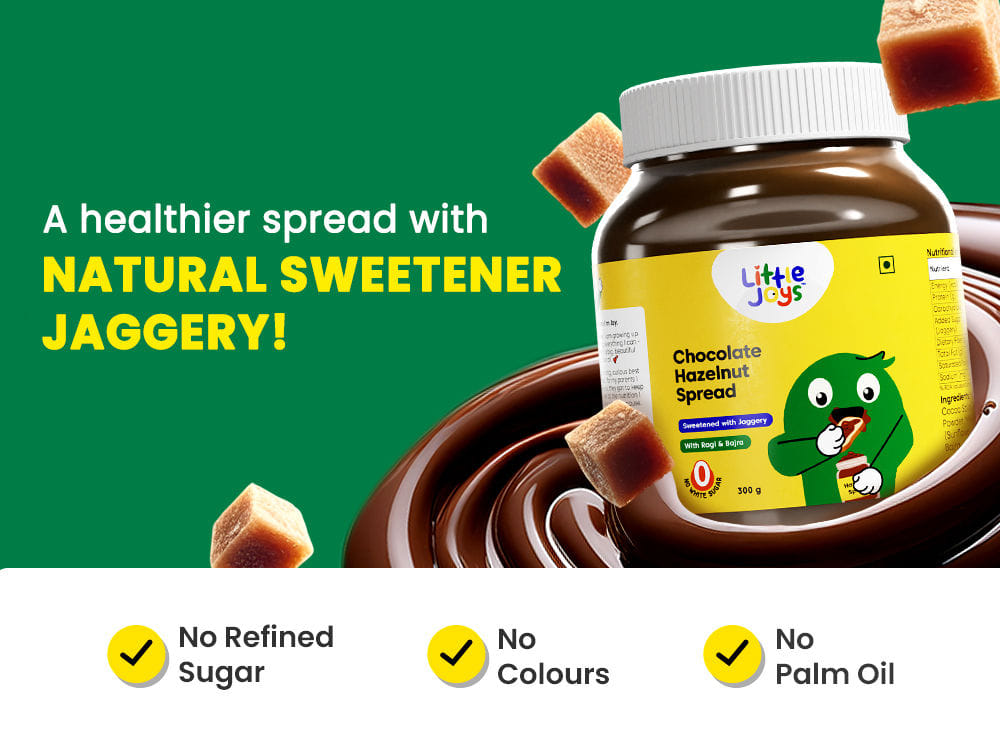
- Jaggery or dates as the only sweetener - not refined sugar or glucose syrup
- No palm oil - the hazelnut oil itself provides sufficient fat for spreadability
- No artificial flavouring
When hazelnuts are the dominant ingredient, the product provides: 15g+ of protein per 100g, Vitamin E, magnesium, copper, and manganese alongside the healthy fat profile of the nut itself.
Direct Comparison
| Feature | Natural Hazelnut Spread | Nutella (100g) |
|---|---|---|
| Primary ingredient | Hazelnuts (60-80%) | Sugar |
| Added sugar | None (natural sweetener) | 57g refined sugar |
| Hazelnut content | 60-80% | 13% |
| Palm oil | No | Yes |
| Protein | 12-15g | 6g |
| Antioxidants | Natural cocoa flavanols | Partially processed cocoa |
Practical Use for Children
A natural hazelnut chocolate spread at 1-2 tablespoons daily on roti, with fruit, or in a smoothie is a genuinely nutritious snack. The same amount of Nutella delivers primarily sugar and palm oil with minimal nutritional return.
Little JoysFor children who currently eat Nutella daily, switching to a natural hazelnut spread made with real ingredients is one of the most impactful single snack swaps available - reducing daily sugar load significantly while maintaining the flavour format children already accept. For the broader context on sugar-free snacks for kids, the principles are the same.
FAQ
Q: Why is Nutella so popular if it is primarily sugar?
Nutella's widespread adoption was driven by decades of marketing positioning it as a nutritious breakfast food. The hazelnut and cocoa framing created a health halo that the actual ingredient list does not support. It is an effective children's product from a taste perspective - its ingredients are optimised for palatability, not nutrition.
Q: Do natural hazelnut spreads taste different to children who are used to Nutella?
Natural hazelnut spreads with less sugar taste less sweet and more intensely of hazelnut and cocoa. Children transitioning from Nutella may initially notice the difference. A 2-week transition period - mixing a small amount of natural spread with the child's existing spread, gradually shifting the ratio - is the most effective approach to building acceptance without rejection.
Q: Is hazelnut allergy a concern?
Hazelnuts are tree nuts and can cause allergic reactions. Introduce hazelnut-containing products for the first time at home in a small amount, particularly for children who have not eaten tree nuts before. Hazelnut allergy is less common than peanut allergy but warrants the same careful first introduction.