
Electrolytes for Kids: When and Why Do Children Need Them?
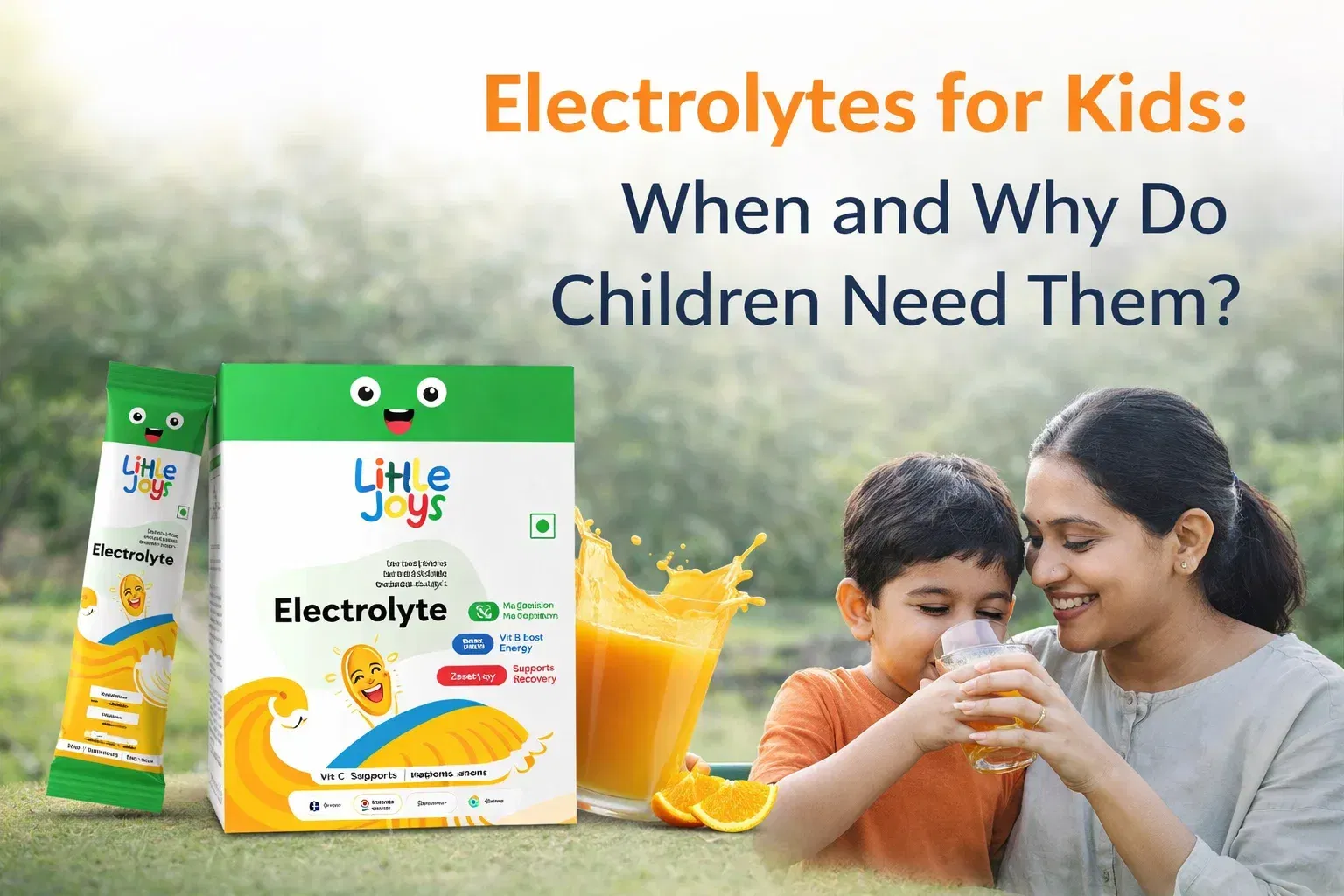
Children need electrolytes - sodium, potassium, and magnesium - when they have lost meaningful fluid through sweat, fever, vomiting, or diarrhoea. Plain water replaces fluid but not electrolytes, so replacing only water after significant loss can worsen cellular hydration rather than improving it. For most low-activity days, a balanced diet provides adequate electrolytes without supplementation. Active summer days, illness recovery, and travel are when targeted electrolyte support makes a practical difference.
 Little Joys
_90wpqr.jpg?tr=w-600)
What Electrolytes Do
Electrolytes are minerals that carry an electrical charge and regulate fluid balance at the cellular level. The key ones for children are:
Sodium - the primary extracellular electrolyte. Controls how much water the body retains around cells. When sodium drops, cells cannot hold water effectively even when total fluid intake is adequate - which is why children can drink large amounts of plain water in summer and still feel fatigued and headachey.
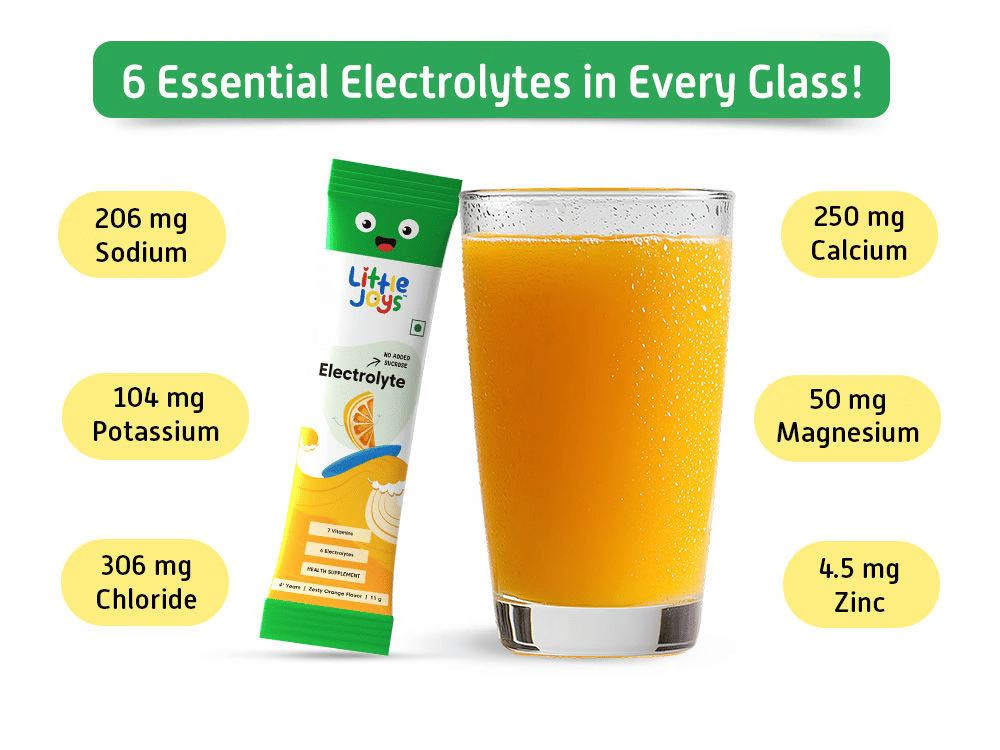
Potassium - the primary intracellular electrolyte. Regulates nerve signalling and muscle contraction. Low potassium causes muscle weakness and cramps - the "growing pains" type leg cramps many children experience after outdoor activity in summer.
Magnesium - supports muscle relaxation and energy production. Depleted by both sweat and stress. Deficiency presents as restlessness, muscle twitching, and disrupted sleep - symptoms that peak during summer months of high activity.
When Children Need Electrolyte Supplementation
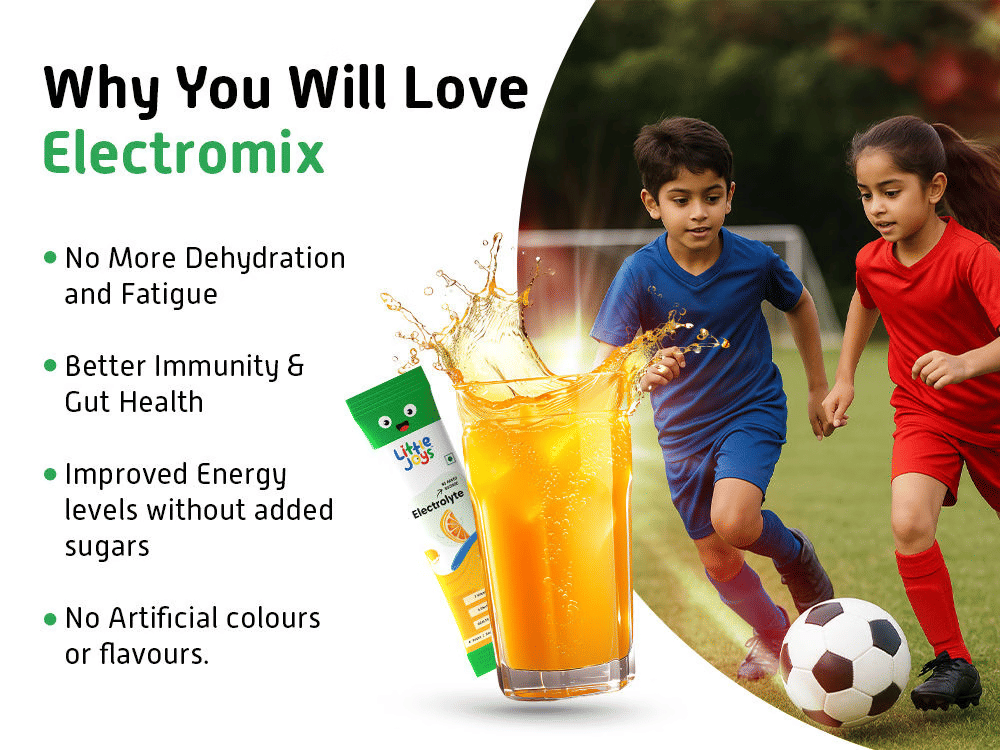
After 30-60 minutes of outdoor play in summer heat - children sweating actively in temperatures above 35°C lose sodium and potassium at rates that plain water cannot replenish.
During fever - elevated temperature increases sweating and metabolic demand. Electrolyte replacement during fever improves recovery speed more than plain fluids alone.
After vomiting or diarrhoea - acute illness depletes electrolytes rapidly. While ORS (Oral Rehydration Solution) addresses clinical dehydration, a gentle electrolyte drink supports maintenance hydration during milder illness.
Long travel days - air conditioning in cars and trains is dehydrating. Passive electrolyte depletion over 4-6 hours of travel causes the fatigue and irritability many parents attribute to car-sickness.
When Plain Water Is Sufficient
On cool or indoor days with limited physical activity, a balanced diet provides adequate electrolytes from food - curd, dal, banana, coconut water. Electrolyte supplementation is not necessary on every day regardless of conditions. It addresses an active physiological need, not a daily maintenance one.
What to Look for in a Children's Electrolyte Product
- Sodium, potassium, and magnesium together - not sodium alone
- No added refined sugar - commercial sports drinks often contain 15-25g of sugar per serving, which worsens dehydration over time by displacing electrolyte absorption
- Age-appropriate sodium concentration - adult electrolyte formulas may be too concentrated for young children
- Natural flavouring - artificial colours and flavours are unnecessary in a hydration product
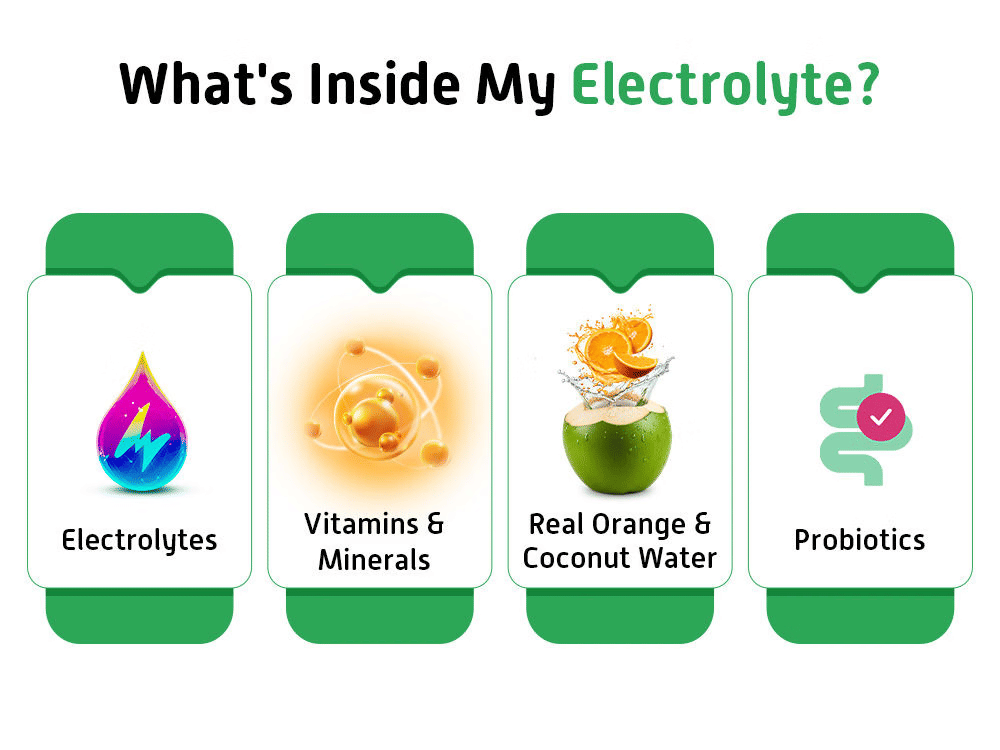
Little Joys Electrolytes provides the sodium, potassium, and magnesium combination with natural flavouring and no added refined sugar. Designed for children from age 2.
-> View Little Joys Electrolytes
Little JoysFAQ
Q: Can children have electrolyte drinks every day?
On active summer days or days with outdoor play, daily use is appropriate. On indoor or low-activity days, plain water and dietary electrolytes from food are sufficient. Electrolyte drinks are not harmful daily but are most valuable when there is an active physiological reason - heat, activity, or illness.
Q: Is coconut water a good electrolyte source for children?
Yes - coconut water provides potassium and sodium naturally and is well-tolerated by most children. It is a practical everyday electrolyte food rather than a supplement. For high-activity situations or illness recovery where losses are greater, a dedicated electrolyte product provides more targeted and reliable replenishment.
Q: Are commercial sports drinks like Gatorade appropriate for children?
Most commercial sports drinks contain 15-25g of added sugar per 500ml serving and were formulated for adult athletes. They are not appropriate for daily use in children. A no-added-sugar electrolyte product designed specifically for children is the better option for regular use.