
DHA for Kids - Complete Benefits, Sources & Guide
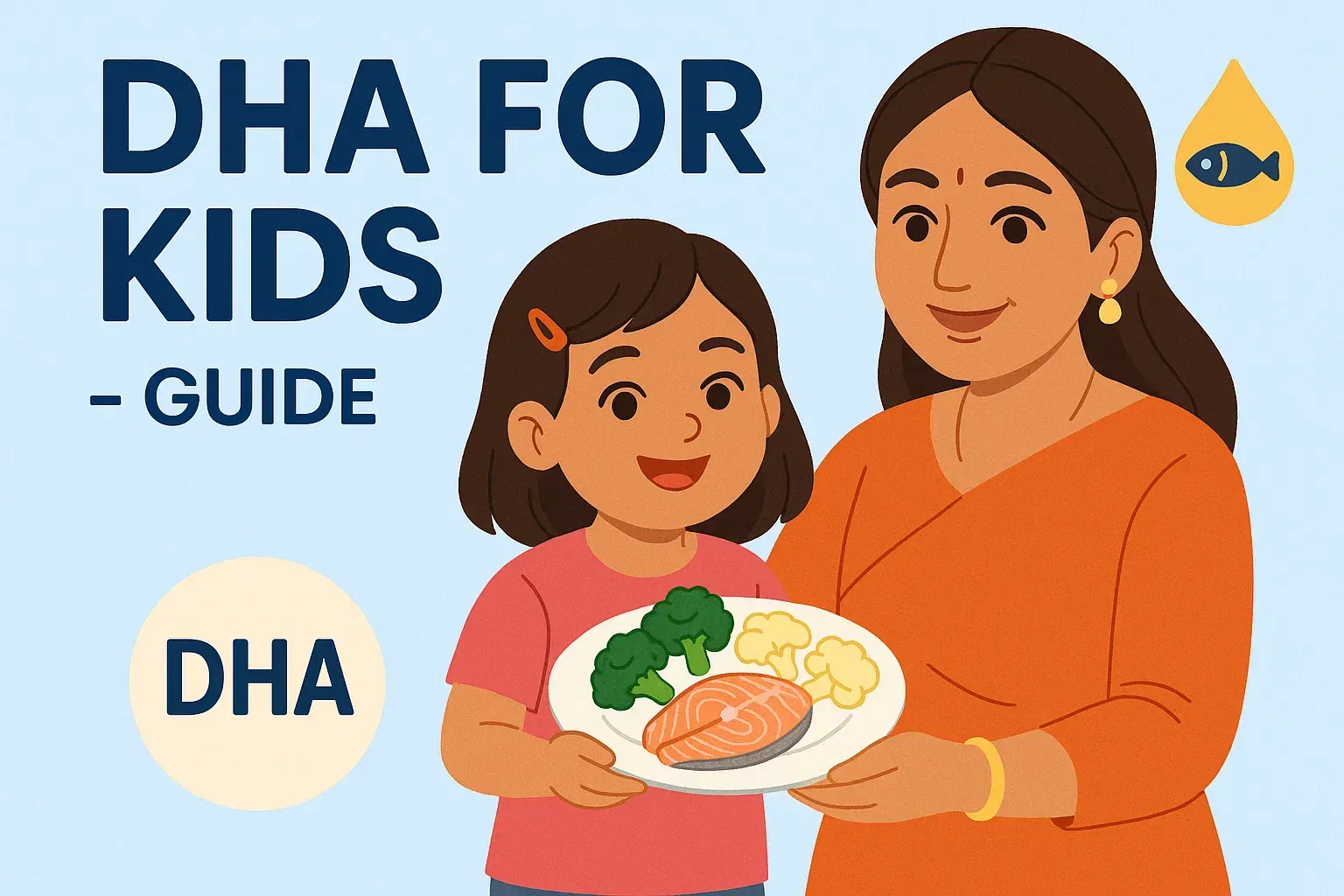
Every mom wants her child to stay curious, focused, and full of energy. One nutrient that quietly helps make that happen is DHA-a type of healthy fat that supports brain and eye development.
What Is DHA and Why Do Kids Need It?
DHA (docosahexaenoic acid) is an omega-3 fatty acid that plays an important role in early brain and vision development. Think of it as the brain's building block. During the first two years of life, DHA accumulates in the fetal brain at exceptionally high rates-particularly during the last trimester and throughout infancy. Without adequate DHA, your child's brain literally cannot develop optimally.
Why it matters:
Kids can’t make DHA on their own, so it needs to come from food or supplements. In many Indian homes where fish isn’t eaten often, small changes can help fill this gap.
5 Key Benefits of DHA for Children
1. Supports focus, learning and healthy brain growth.
DHA is essential for neuronal growth and synaptic connectivity. Children with adequate DHA show improved memory, faster learning, better problem-solving abilities, and superior academic performance.
2. Enhanced Focus & Concentration
Struggling with attention at school? DHA supports neurotransmitter function-the brain chemicals responsible for focus and sustained attention. DHA supports attention and focus in growing children
3. Crystal-Clear Vision Development
DHA comprises a crucial component of the retina. Adequate DHA supports visual acuity development and may prevent future vision health issues. Your child's eyes are developing rapidly during these years.
4. Emotional Balance & Mood Stability
DHA influences emotional regulation and mood. Children with optimal DHA levels show better emotional stability and reduced behavioral issues.
5. Strengthen Immunity & Gut Health
Beyond the brain, DHA has anti-inflammatory properties that strengthen immunity and support healthy gut bacteria-essential for overall health and disease prevention.
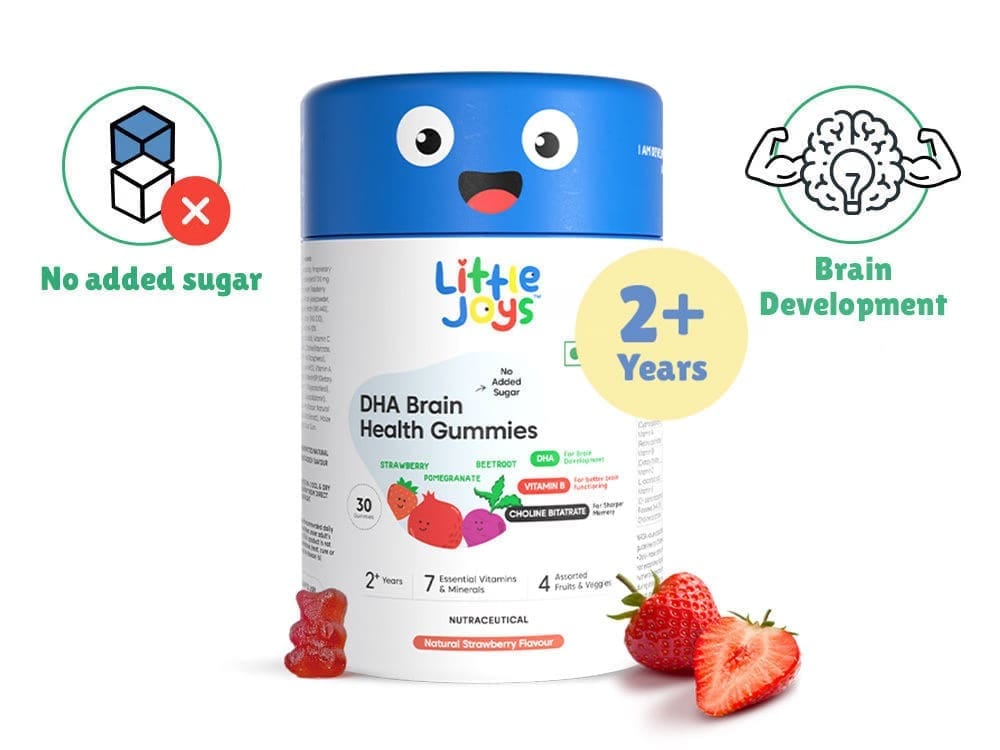
DHA Omega3 Brain Gummies 2+ yrs | Little Joys
Little Joys' DHA Brain Gummies boost memory, concentration and long term brain development!
Powered by DHA & Choline + with 8 nutrients and 4 delicious fruits and veggies.
Zero added sugar | Pediatrician Recommended | 100% Safe
Best DHA Food Sources for Indian Kids
Plant-Based Sources (Less Efficient Conversion):
- Flaxseeds (Alsi) – convert slowly to DHA
- Walnuts – beneficial but requires high consumption
- Chia seeds – plant-based omega-3
- Mustard oil – traditional Indian option
Fish & Seafood (Most Bioavailable):
- Salmon – richest source, 2-3g per serving
- Tuna – 1-2g per serving
- Mackerel – 1-2g per serving
The Vegetarian Challenge: Plant sources contain ALA (alpha-linolenic acid), which your body must convert to DHA. This conversion is extremely inefficient-only 5-10% converts. A handful of walnuts won't deliver adequate DHA compared to a fish serving.
The Real-World Problem: DHA Gap in Indian Kids' Diets
Many Indian diets may be low in DHA, especially where fish isn’t common. Why?
- Fish isn't eaten regularly in many households (once weekly or less)
- Vegetarian families have no direct DHA source (plant conversion is too weak)
- Picky eaters refuse both fish and nuts
- Busy routines make consistent fish preparation impossible
The result? Growing children show subtle signs: difficulty concentrating, slower learning progress, mild hyperactivity, or vision strain that parents often attribute to screen time.
DHA Omega3 Brain Gummies 2+ yrs | Little Joys
Little Joys' DHA Brain Gummies boost memory, concentration and long term brain development!
Powered by DHA & Choline + with 8 nutrients and 4 delicious fruits and veggies.
Zero added sugar | Pediatrician Recommended | 100% Safe
Bridging the DHA Gap: Practical Solutions
Option 1: Consistent Fish Intake
2-3 servings of oily fish weekly provides adequate DHA. But this requires consistency and kids must cooperate.
Option 2: Strategic Fortified Nutrition
Fortified foods combined with B vitamins and minerals designed for kids can help bridge nutritional gaps. Products specifically designed for Indian kids (containing nutrient-dense ingredients like ragi and bajra for absorption) ensure your child gets concentrated DHA alongside other essential nutrients.
Option 3: Quality Supplements
When food alone isn't sufficient, omega-3 supplements designed for kids (liquid or capsule formats) deliver measured DHA-though gummies contain lower amounts and require consuming too many.
Quick Action Plan for Parents
Step 1: Assess your child's current DHA intake (how often do they eat fish or nuts?)
Step 2: If less than 2 fish servings weekly, add a DHA source
Step 3: Choose between: increasing fish (if kids will eat it), adding plant sources consistently, or using fortified children's nutrition products
Step 4: Monitor for improvements-better concentration, improved focus, clearer thinking
Bottom Line:
DHA is non-negotiable for your child's brain development. Whether through fish, plant sources, or strategic nutrition products, ensuring adequate daily DHA during these critical developmental years is one of the highest-ROI investments in your child's cognitive future.